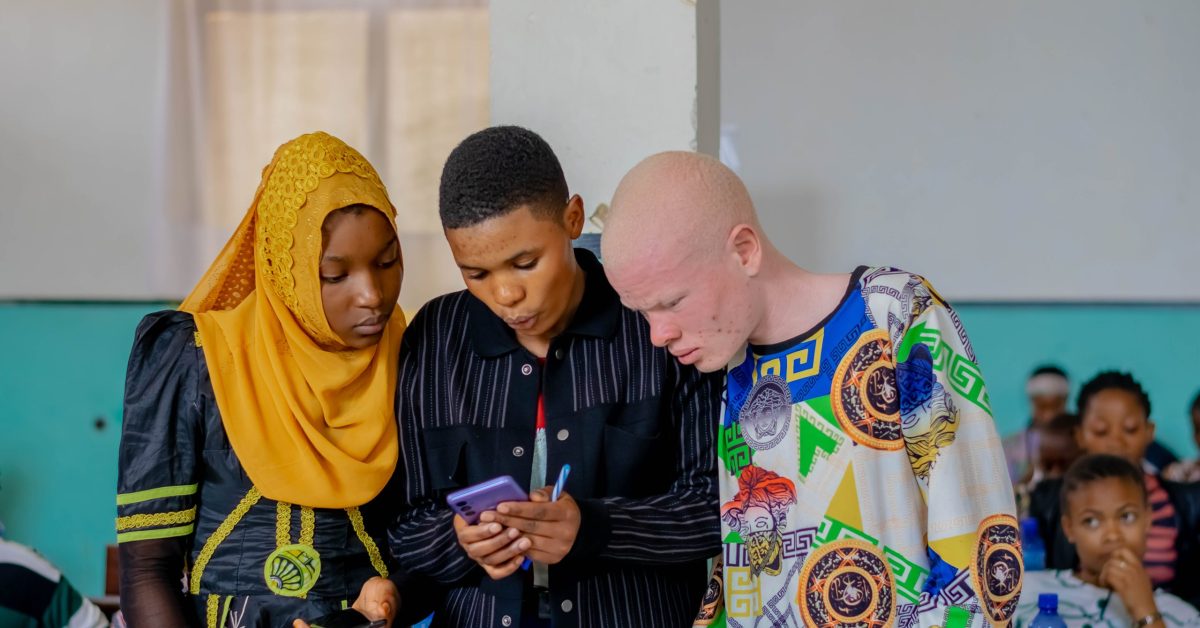
We unite school-aged children to fix our failing education system.

We unite school-aged children to fix our failing education system.
For the past three years, CERC helped 54 secondary schools to embed anti-corruption and transparency protocols in the education system in South Kivu.

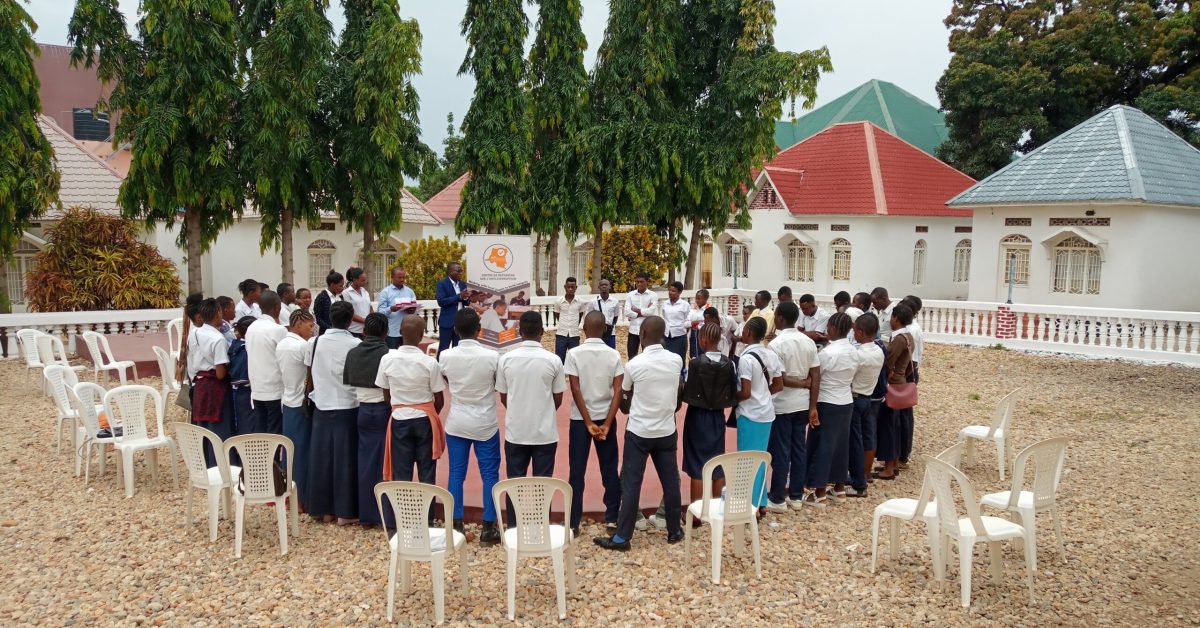
Since 2017, CERC has established Integrity Clubs in the Democratic Republic of the Congo. Students aged 14-19 learn about Integrity and monitor projects and services in their community, including their schools. The student monitors use our technology tool DevelopmentCheck to report problems and fixes.

Integrity Clubs allowed students, parents, and the public to get information on critical parameters of the schools (water and library availability, class size, toilet suitability, number of students in a class, qualification of teaching staff), the school budgets and spending. In this way, Integrity Clubs supported the government’s education reform program by making schools more accountable and inclusive.

Integrity Clubs- how they work

Integrity Education

Integrity is taught in schools by teachers trained by CERC, ensuring that students understand how corruption functions and how acting with Integrity can overcome corruption challenges.

Meetings, Forums and Networks

Regular Integrity Club (IC) meetings enable students to expand on their experience of corruption and participate in activities designed to recognize corruption as a global problem. Forums and networks between ICs and partners encourage group collaboration.

Training in monitoring

Once students are educated in Integrity, they can identify when corruption challenges delivering projects and services in their communities. Monitoring requires training in accessing information, engaging with stakeholders, and using our tech tool DevelopmentCheck to fix problems.

Highlights:

  • Between 2017 and 2020 we trained 810 students in 54 Integrity Clubs across South-Kivu
  • Students used DevelopmentCheck to monitor 54 infrastructure projects and services for their communities, achieving an average Fix-Rate of 32% of instances where corruption had caused problems in their delivery.
  • The youth demonstrated to themselves and to others that the power to make a positive difference in their lives and their communities that they have the agency to make a difference.
  • Students (ages 14-18) have proven themselves to be extremely positive agents of change, exhibiting a motivation to improve the services and projects that are delivered to their communities.
  • Teaching youth the benefits of acting with integrity and the skills to practice and demand it in real-life situations gives them the confidence to always choose integrity over corruption throughout their lifetimes.
  • Youth are empowered to continue to participate in civil society throughout their lifetimes.
  • Project and service providers expect to be monitored by students, incentivizing them to act with integrity and improving the quality of goods they deliver.
  • Even in contexts where the status of girls is low, over 40% of monitors we have trained are female.

Quotes

With Integrity Clubs established in 54 secondary schools in South-Kivu under this initiative, combined with the use by more than eight hundred students of the tech tool “DevelopmentCheck”, to monitor the transparency, participation and efficiency of education services; now, parents and students have better ability to hold schools accountable for the quality of education services provided,” said Heri Bitamala, Executive Director.

“It is crucial to introduce this Student-led Monitoring approach in implementing the DRC Education and Training Sector Strategy 2016-2025, which introduced a free primary and secondary education system. As direct beneficiaries of the quality and inclusive education services this strategy promises, students have the right to hold the government and providers accountable through this successful social accountability mechanism,” he added.

The DevCheck app provides key information on operation, budgets and performance of schools for students, parents, teachers and the whole community, which can be used in policy debates, budgeting and setting development priorities at the school level,” said Ngoya Bundu Harmonie, CERC Project Coordinator. Kahindo Ndjungu confirmed this, ITIP Principal in Uvira, who said, “Thanks to Local Education Clusters meetings organized in our high school, the entire process became clearer and more transparent.”

Integrity Club convinced school officials to build extra toilets and classrooms

Integrity Club convinced school officials to build extra toilets and classrooms

Access to education is a major challenge for children living in South Kivu. Children living in rural areas study in poor conditions. Schools are overcrowded and often lack equipment, water and sanitation facilities, and adequate teaching and learning materials.

CERC is an independent organization that works with young people to build integrity and good governance in the eastern Democratic Republic of Congo. With the help of young community monitors, CERC ensures that the funds allocated for community projects are properly distributed so that the projects benefit the intended beneficiaries.

In October 2017, CERC launched an initiative to improve education in South Kivu by engaging young people through Integrity club. CERC established 54 Integrity Clubs in the South-Kivu and trained 810 students were trained as community monitors to ensure quality education accessible to all children. CERC’s training on Community Integrity Building (CIB) enables monitors to assess quality and availability of equipment and infrastructure, the performance of the teaching team, collect evidence, conduct beneficiary surveys, verify findings as well as engage with stakeholders such as headteacher, parent committee, and teachers association to fix problems.

To ensure that the school deliver better education and improve its infrastructure, 15 monitors from Institut Itara trained by CERC have been monitoring their school since February 2018. In April 2018, community monitors discovered that the school’s infrastructure was dirty and dangerous. They also discovered that school facilities could not cope with the demand. This meant that the school had only three washrooms for 590 students and that some classrooms were overcrowded. The school’s ability to ensure better access to education has been seriously compromised, putting students at risk.

Subsequently, these monitors decided to bring these issues to the school’s management so that immediate solutions could be implemented.

A new block of toilets was completed after community monitors convinced school officials to build extra toilets.

In April 2018, after issues were reported, the school management has immediately undertaken to repair the broken desks and launch the construction of a block of three classrooms with available funds.

Requiring more resources for the construction of additional toilets for students, especially separate toilets for girls, an Education Cluster meeting was convened in august 2018 and included community monitors, the parent committee, the school principal to discuss resources to be mobilized for the construction of extra toilets for students. During the meeting, resources were identified, and the construction works were planned to start in October 2018 and to be completed in March 2019.

In September 2018, the new 3 classrooms were completed and the construction of a block of eight latrines started in October 2018 and was completed as planned.

As a result, students at Institut Itara are now benefiting from better sanitary facilities and constructed classrooms with enough space to fit all students on the school benches. 

A story from our Founder

I funded the Anti-Corruption Research Center based on a lifelong passion to see DRC institutions more accountable, inclusive, free from corruption and responsive to expectations and aspirations of Congolese citizens.

I was born and raised in Eastern Congo, a region characterized by war and poverty, fostered by endemic corruption. Although I was deeply affected, I was fascinated by the strength and inspiration of young people to find solutions to these most pressing accountability and governance challenges. I felt a powerful sense of responsibility to help these young people. Wanted to give a voice to these extraordinary unsung leaders and share their valuable lessons with the world. At the age of 20, I made a conscious decision to make it my life’s mission.

Since then, I have directly trained over 3,000 young people as community monitors, including in South Kivu, North Kivu and Kinshasa, who together have created and implemented solutions ranging from accessible and clean drinking water, accessible and safe schools, access to education for children at risk of exclusion, to sorting rubbish in urban areas. It can be shown that their work has benefited over a million people through social impact projects created, and through improved services and infrastructure.

Through these experiences, I had the chance to meet hundreds of local champions from the poorest regions of DRC, Nepal, Uganda Burundi and Kenya. I have found that the answers to corruption lie in the participation of young people who live in the environment plagued by corruption. These unsung leaders had implemented solutions to lift their communities out corruption and bad governance. My dream is to bring the unique leadership and successes of these young local heroes to the world’s attention, with the aim of creating an innovative approach for youth participation in building integrity.

And from this passion, the Centre de Recherche sur l’Anti-Corruption was born.

Warm wishes,
Heri Bitamala

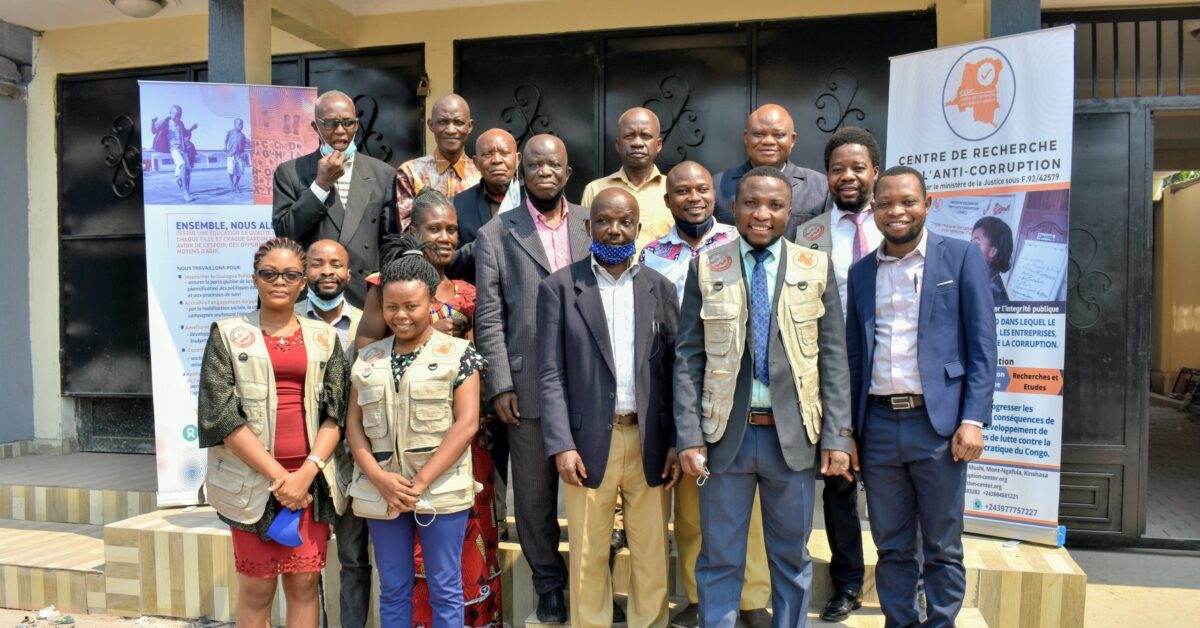
A new anti-corruption association launched in DRC

We are delighted to announce the launching of the Non-for-Profit Organisation centered on anti-corruption named “Centre de Recherche sur l’Anti-Corruption” in acronym “CERC”, a landmark effort to bring the citizens together to fight against corruption in the Democratic Republic of the Congo. The country is however notoriously corrupt, and it is difficult to say exactly how and where its foreign aid is used. The natural resources of the DRC are exploited for the personal gain of politicians, which keeps growth rates lower than they could be and stifles the middle class, who have no voice.

Notable donors in the DRC include the United States of America, China, the United Kingdom, Belgium, and the World Bank provides billions of dollars in infrastructure development programs to the country. How is it then, that, although funded or built, the failing rate of infrastructures is one of the highest in the Great Lake Region! Although obvious, the answer lies in corruption, opaque institutions, and a lack of responsiveness by the government to its citizens. Often donor assistance to foreign development goes to a most corrupted country without a prevention strategy!

Policymakers and civil society stakeholders must scale up efforts to improve governance and the anti-corruption agenda in DRC because good governance is central to economic development and to realizing the Millennium Development Goals (MDGs). In order to alleviate the incidence of corruption, there is a need in DRC to build key oversight institutions aimed to strengthen parliamentary integrity, judiciary integrity, the ombudsman integrity, the integrity in the public procurement system, and the various community integrity programmes.

Thus, the CERC was created to strengthen the capacity of citizens and CSOs to demand services as a right, marking a significant shift in long-standing efforts to establish a society in which integrity is a key principle followed by all citizens.

Our mission therefore is to Improve citizens’ integrity culture in Democratic Republic of the Congo by developing anti-corruption strategies and advocating for accountability.

Join us in this great struggle, to give the Democratic Republic of the Congo the place it deserves in the world.

Thank you!