

Accountability
The ability of stakeholders to check that we do what we say we do.
Training and mentoring that help institutions build integrity – and eliminate, minimise and prevent systemic corruption.

Low institutional integrity, which includes corruption, is one of the significant obstacles to development. It has harmful and devastating implications, particularly for the poor and disadvantaged groups.
It undermines citizens’ trust in public institutions, distorts markets and increases poverty, discrimination and inequality. Corruption happens simply because it is possible, so solutions to prevent it focus on corrupt behaviour within organisations. Inspired by Integrity Action, we understand integrity to be the alignment of four factors.
The ability of stakeholders to check that we do what we say we do.

The ability to deliver quality and perform well.

Behaving impartially and reliably with a public purpose.
Corruption is the abuse of a position of power for personal gain. Control and sanctions are essential, but we help clients restore health to their whole organisation by increasing its institutional integrity.
We offer holistic, innovative and practical tools and approaches that break taboos and the culture of cynicism, and restore employees’ trust that corruption can be dealt with effectively.
Integrity assessments and transparency and accountability analyses find systemic vulnerabilities to corruption and their main causes.
Long-term anti-corruption strategies, integrity plans, codes of ethics and integrity pacts, developed with the people who will apply them.

Workshops, courses, coaching and peer-to-peer exchange help leaders and staff act with integrity – and build it in others.

We facilitate internal change and reform at every level, and build relations with the community to deal with corruption together.
Local governments, ministries, agencies, public enterprises, private businesses and civil society organisations can call on CERC for:
Local governments, ministries and public agencies that want to assess and reduce their exposure to corruption.
Codes of ethics and integrity pacts between public institutions and business.
Community integrity building, as with six organisations from South and North Kivu in 2018.
278 teachers and 138 school principals from 150 secondary schools trained in 2022.
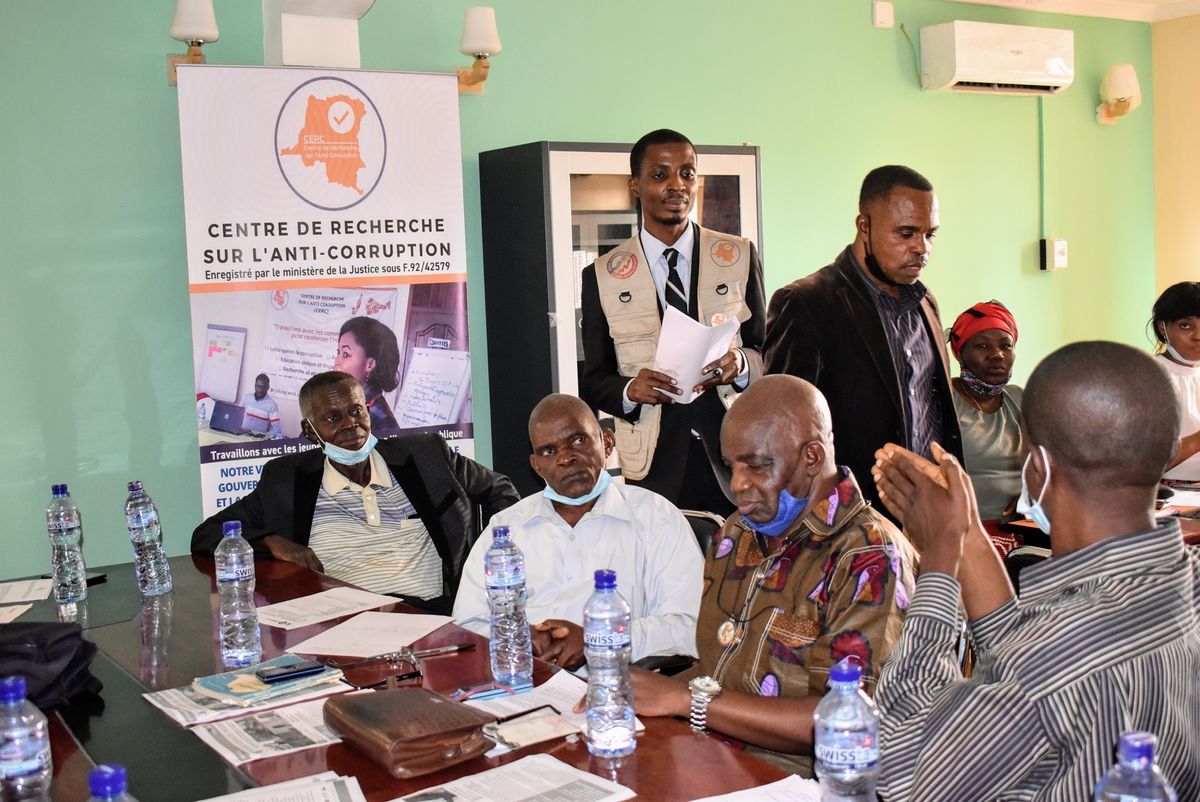
In June and July 2021, CERC conducted in-depth assessments and studies on corruption and lack of accountability in education with 54 senior government education officials and 19 accountability practitioners and anti-corruption experts from civil society, teachers’ unions and religious associations. The work included 4 consultative workshops, the Integrity KAP survey in 41 secondary schools and a review of existing studies. Its findings and recommendations were used to influence policy and stimulate debate on corruption in education.
In June 2018, we supported an Integrity Exchange Workshop in Bukavu: 13 participants from six civil society organisations of South and North Kivu and the provincial Ministry of Education learned community integrity building and how to run an advocacy campaign.
In September 2022, we trained 278 teachers and 138 school principals from 150 secondary schools in Kinshasa and Bukavu in integrity building and anti-corruption measures in the school system.
In December 2024, with the Congolese Association for Access to Justice (ACAJ), we trained civil society members and a blogger, who committed to three principles: adopt an ethical compass, cultivate integrity and avoid grey areas.


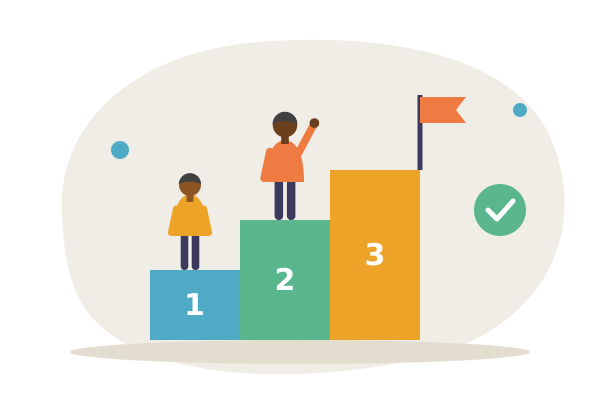
Our Theory of Change adopts a holistic approach to promoting integrity through knowledge & capacity-building, movement building, and influencing…
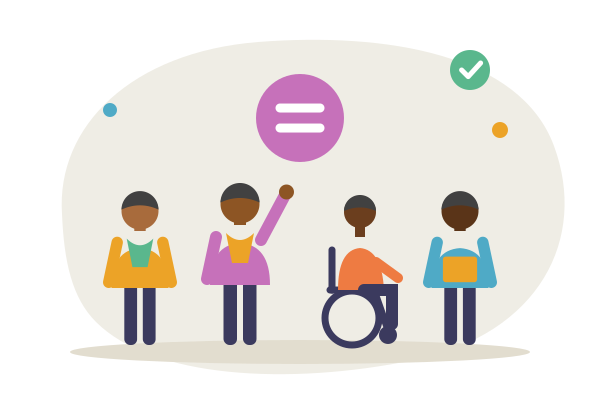
Every child deserves a quality education. It is the surest path out of poverty and towards a fairer Congo. Yet across the DRC, girls face unequal…

Problems we are addressing: Corruption in education has a significant impact on the ability of young people to access future opportunities and…

In the Democratic Republic of the Congo, the justice sector institutions lack the capacity and independence to advance its own reform and provide…
The Democratic Republic of the Congo is working hard to advance the implementation and enforcement of provisions under both Chapter II (Preventive…

In the Democratic Republic of the Congo (DRC), the number of victims of human trafficking is estimated at more than one million, most of them victims…

In eastern Congo, organised crime and corruption feed each other: armed groups tax trade and travellers, goods cross the borders without paying…
Help us bring integrity and accountability to more schools, communities and public services in the DRC.

CERC’s assistant
Hello! I’m Exaucée, CERC’s assistant. Ask me about CERC, our work, our apps, our reports, or how to donate, partner or report corruption.
Do not share personal information here. To report a case of corruption, use the whistleblowing page: it protects you.
Report what you see in your school or health centre. Your feedback helps make education and health services in the DRC better and more transparent.
 EduCheckMonitor your school: teacher attendance, school fees, water and sanitation, equipment.Go to EduCheck (opens in a new tab)
 HealthCheckMonitor your health centre: quality of care, medicines, fees and hygiene.Go to HealthCheck (opens in a new tab)
 GovCheckA problem in your neighbourhood or with a public service? Report it to your city or commune, and advocate until it is solved.Go to GovCheck (opens in a new tab)
 UNCAC TrackerFollow how the DRC implements the UN Convention against Corruption.Go to UNCAC Tracker (opens in a new tab)