

Theory of Change
Development promises are often not delivered as they should be. Our theory of change sets out how CERC addresses this.
What’s the problem?
Governments, donors and companies promise schools, health centres, roads and clean water. Too often, these promises are not delivered as they should be.
In the DRC, poor services are part of daily life: promised schools that are never built, health centres without medicines, teachers who are absent or paid for ghost posts, illegal fees charged to families, emergency funds that never reach the sick.
These failures damage the health, education and rights of millions of people. They erode trust between citizens and the State – and, in the East, they fuel conflict.
Download our 2027–2030 strategy (PDF)Why corruption matters
Who is affected?
Poor services affect all citizens1, but first of all people living in poverty, people who cannot read or do not know their rights, and those at risk of exclusion:
- women and girls
- people with disabilities
- displaced people and refugees
- young and older people
- Indigenous peoples
- people in rural and remote areas
- people without secure jobs
- people living with HIV
- ethnic, linguistic or religious minorities
What change do we want to see?
Our visionA Congo in which government, public institutions, politics, businesses and civil society are free from corruption.
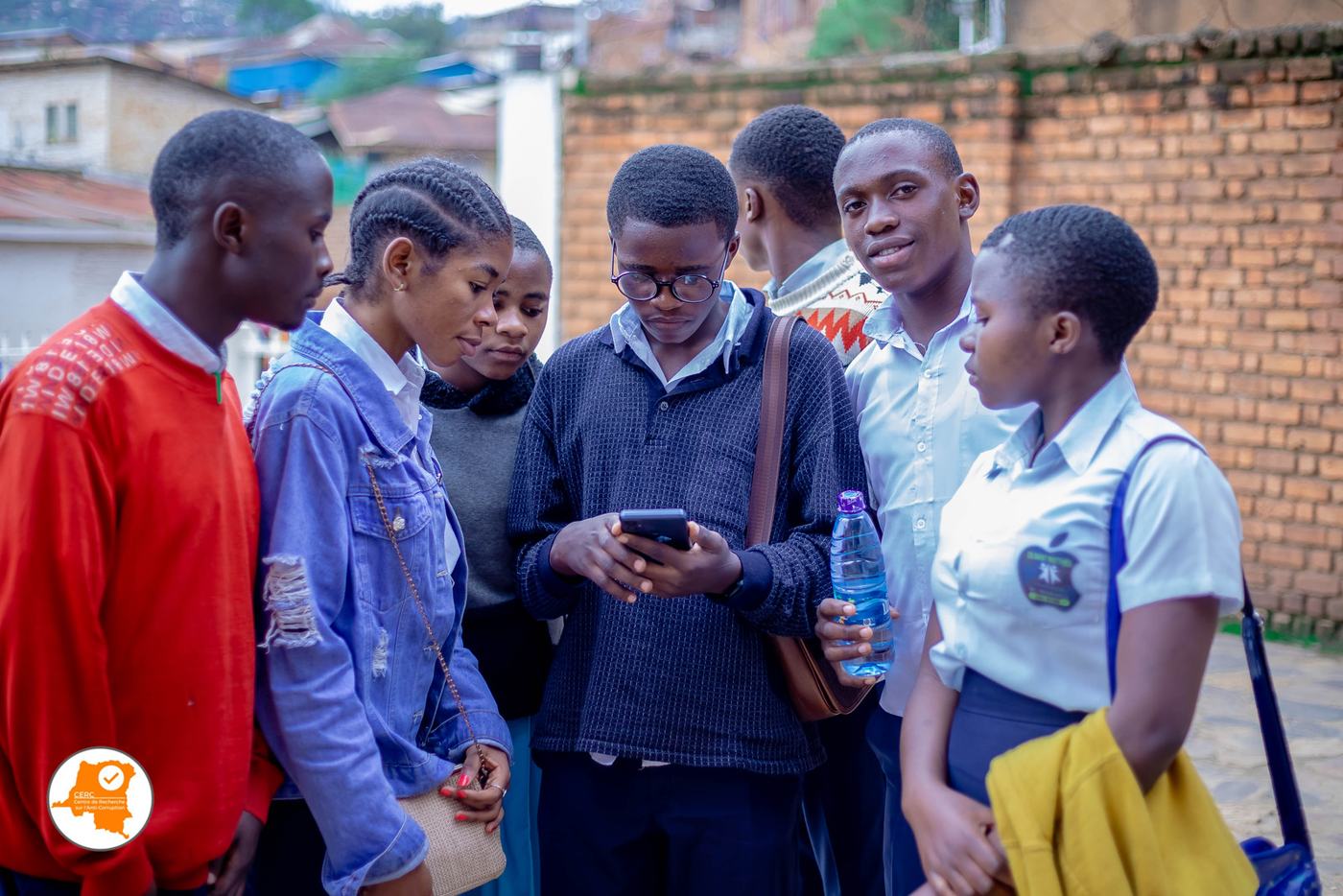
Our missionEmpower young people with the skills and tools to create positive change towards more accountable, open and inclusive institutions and public services.
We work for all citizens, starting with those most at risk of exclusion. This is the principle of the Sustainable Development Goals: leave no one behind2.
Our theory of change in detail: what we do, the changes we aim for and the assumptions it rests on.
CERC’s theory of change
Why corruption persists
Citizens do not know
Budgets, service standards and who is responsible for what remain opaque.
Citizens cannot act
Their voices – above all those of young people, women and marginalised groups – are rarely heard, and redress is weak.
Institutions do not answer for their work
Weak oversight, strong impunity, laws – including the United Nations Convention against Corruption – poorly applied.
Corruption has become the norm
Many see it as inevitable, or as the only way to get a service.
If corruption is documented with reliable evidence, if citizens – young people first – know their rights, adopt values of integrity, monitor public services and report abuse safely, if citizens and officials talk to solve problems together, and if a united civil society advocates for stronger institutions and laws, then problems get fixed, officials become accountable, impunity recedes and public services improve for all – because corruption thrives on secrecy, silence and isolated citizens, and retreats where information, participation and oversight meet.
The changes we expect, in four areas
People
Citizens, young people and public officials who are informed, able and ready to act: they report, propose and take part in decisions.
Values
Integrity becomes a shared norm: corruption is no longer accepted as fate, at school or in the community.
Institutions
Schools, health centres, administrations, oversight bodies and courts more transparent and responsive: problems reported are fixed, abuse is sanctioned.
Laws and policies
A stronger anti-corruption framework that is really applied, in line with the United Nations Convention against Corruption, informed by evidence from the ground.
The long-term impact: public resources that serve the people, quality public services accessible to all, institutions people can trust, and a fairer, more peaceful society.
Our assumptions
- Officials respond when a problem is public, documented and raised collectively: one in three of the problems our students found has already been fixed.
- Young people are the best drivers of lasting change in norms.
- Citizens get involved if they are protected and see concrete results.
- In a fragile State, change is gradual: we aim for measurable progress and adjust our work to what we learn.
Download our 2027–2030 strategy (PDF)
Notes
- By “citizens” we mean everyone who lives in the DRC and uses its public services, whatever their nationality.
- United Nations, Transforming our world: the 2030 Agenda for Sustainable Development, 2015: “we pledge that no one will be left behind”.


