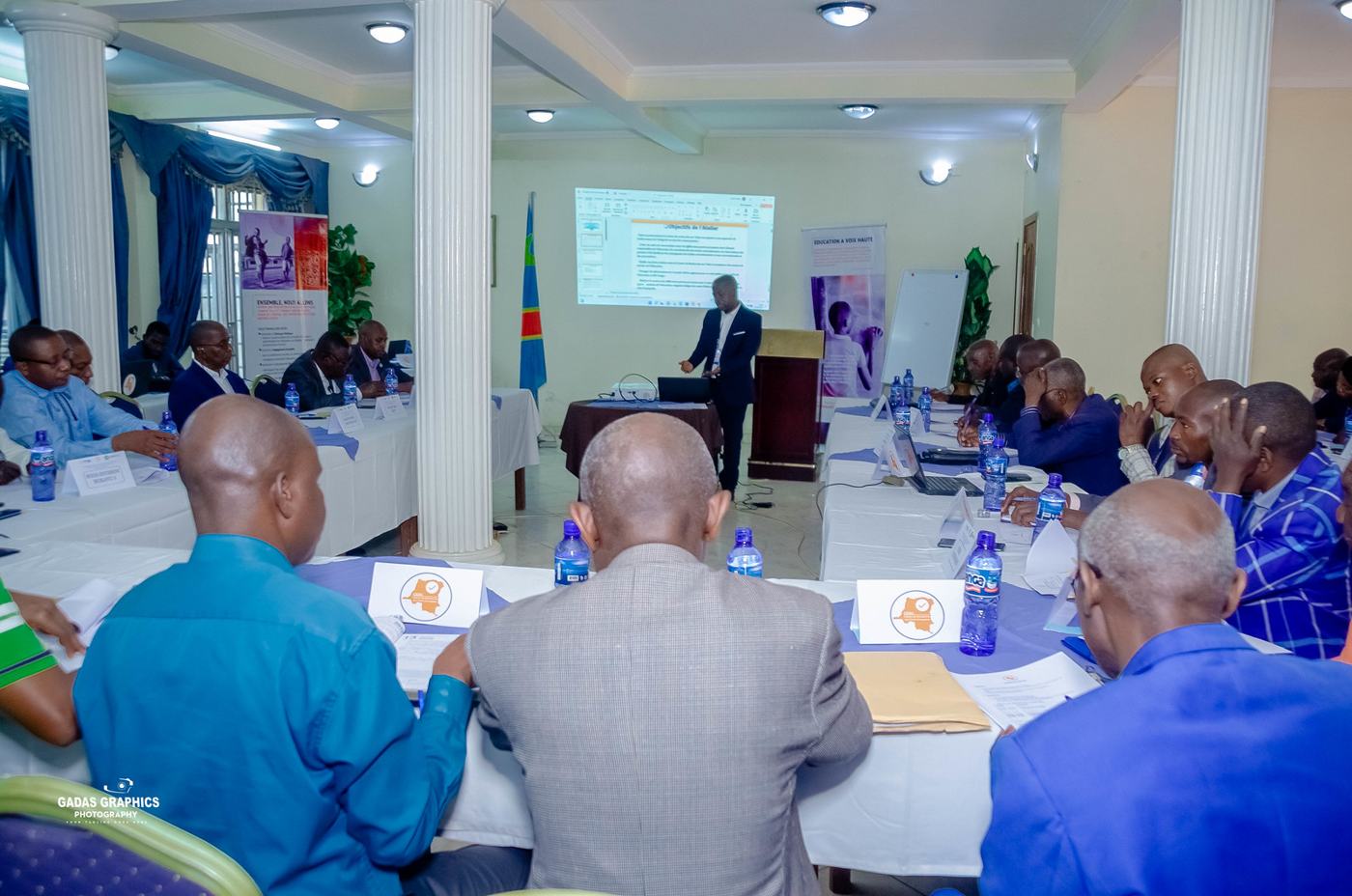
Corruption is not just an administrative problem. It destroys trust between citizens and the state, weakens public institutions, slows economic development, and deprives millions of Congolese people of essential services such as education, healthcare, clean water, and security.
In the Democratic Republic of Congo, corruption affects many sectors of national life, including natural resource management, public procurement, taxation, justice, security, education, and local governance. When systems serve private interests instead of the public good, the most vulnerable communities suffer the consequences.
Corruption Costs Lives
Every diverted public fund means fewer schools built, fewer hospitals equipped, fewer roads maintained, and fewer opportunities for young people. In many communities, citizens are forced to pay illegal fees to access public services that should be available to everyone.
Corruption in the health and education sectors deepens poverty and social inequality. It also reduces the quality of public services and limits the future of entire generations.
Corruption Fuels Insecurity and Conflict
In conflict-affected regions, corruption often enables the illegal exploitation of natural resources, influence trafficking, and impunity. When institutions are weak and justice systems are compromised, armed groups, criminal networks, and corrupt economic actors benefit from instability.
Fighting corruption is therefore also a fight for peace, stability, and the protection of civilians.
Corruption Destroys Public Trust
When citizens lose confidence in public institutions, democracy weakens. Young people become discouraged, civic participation declines, and abuses become harder to challenge.
Transparency and accountability are essential for strengthening the rule of law and rebuilding trust between public authorities and citizens.
Why Fighting Corruption Matters
Combating corruption means:
protecting public resources;
promoting social justice;
strengthening democracy;
improving public services;
encouraging responsible investment;
defending citizens’ rights;
building a fairer future for all.
The fight against corruption requires the commitment of public institutions, civil society organizations, journalists, youth, women, researchers, and ordinary citizens.
The Role of CERC
Centre de Recherche sur l’Anti-Corruption works to promote integrity, transparency, and good governance in the Democratic Republic of Congo. Through research, civic education, advocacy, and community engagement, the Centre contributes to exposing corrupt practices and encouraging a culture of public accountability.
We believe that a more transparent Congo is possible.
Fighting Corruption Starts With All of Us
Every citizen can contribute to change by:
reporting abuses;
refusing bribes;
promoting ethical leadership;
supporting transparency;
defending the public interest.
Corruption thrives in silence. Together, we can build a more just, accountable, and transparent society.
Our approach
Development works best when young people take part in solving their community’s problems: when they work with their leaders so that their needs are met and public commitments are kept. To get there, we combine four approaches.
Diagnose
We study corruption problems and draw findings and evidence that serve as a baseline for better-informed debate and new anti-corruption projects.
Build coalitions
We build and support partnerships and coalitions of civil society organisations to fight corruption more effectively.
Engage youth
We engage citizens and young people to promote integrity more actively in their schools and communities.
Dialogue
We hold policy dialogues with officials and policymakers on anti-corruption strategies.
Why young people
Why young people matter
We believe that communities cannot thrive if they fail to offer a bright future for younger generations.
Young people today are more connected than ever thanks to the tools that allow them to discuss, share and collaborate. This offers an unprecedented comparative perspective in the society and the replication of good practices from one place to another.
Young people are more mobile and dynamic. We can develop their know-how and their ability to make decisions in order to generate new ways to support the local development.
Young people are often marginalized by hierarchical, opaque and unequal decision making structures and are better placed to change these systems if they have the tools, knowledge and resources they need
More than half of the Congolese population is now under 40 years and it is imperative to engage this group in the development of a system that works better for them
Sustainable Development Goal 16
Peace, justice and strong institutions
That is why we are determined to help young people develop their skills to participate in building institutions that are open, inclusive and responsive and free from corruption. This helps build strong institutions and support the United Nations Sustainable Development Goal (SDG 16)’s:
Target 16.3
Promote the rule of law and ensure equal access to justice
Target 16.4
Combat organized crime and illicit financial and arms flows
Target 16.5
Substantially reduce corruption and bribery
Target 16.6
Develop effective, accountable and transparent institutions
Target 16.7
Ensure responsive, inclusive and representative decision-making
Target 16.8
Strengthen the participation in global governance
Target 16.9
Provide universal legal identity
Target 16.10
Ensure public access to information and protect fundamental freedoms
Target 16.a
Strengthen national institutions to prevent violence and combat crime and terrorism
Target 16.b
Promote and enforce non-discriminatory laws and policies
Strategy 2027–2030 · Eastern Congo
Strategy 2027–2030: a clean reconstruction of post-conflict eastern Congo
For peace to hold in eastern Congo, reconstruction must be clean: honest public servants coming back, schools and health centres rebuilt and given back to the people, public revenue collected digitally and accounted for, and every dollar of aid – including emergency health funds – reaching where it should.