Annual Report 2023–2024

CERC’s work in 2023 and 2024: in schools, with members of parliament, at universities, in the justice sector and at the United Nations.

Translated from the original French edition.

Download the report (PDF)

1

About this report

This report presents the work of the Centre de Recherche sur l’Anti-Corruption (CERC) in 2023 and 2024: in schools, with members of parliament, at universities, in the justice sector and at the United Nations.

In 2023 and 2024, CERC continued the Students Acting for Accountability and Quality of Education project, funded by the Global Partnership for Education through Education Out Loud (January 2022 – June 2024). In 2024, with RCN Justice & Démocratie, it implemented the anti-corruption component of the Justice Reform Support Programme (PARJ2), funded by the European Union, and of the REPLIC project: a social alert system against corruption in the justice sector in Kinshasa, university integrity clubs and journalism.

With the African Parliamentarians’ Network Against Corruption (APNAC DRC), CERC took its proposed law on Integrity Clubs and integrity education to the National Assembly. CERC also took part in United Nations meetings on corruption and sustainable development, published analyses on political financing and on integrity in infrastructure projects, and trained civil society actors to prevent and fight corruption.

Our mission

The mission of CERC is to advance knowledge of the causes and consequences of corruption and support the development of new anti-corruption policies and initiatives in the Democratic Republic of the Congo. CERC aims to empower young people with skills and tools to create positive change towards more accountable, open, and inclusive institutions and public services.

Our vision

A Congo in which government, public institutions, politics, businesses, and civil society are free from corruption.

2

2023–2024 at a glance

Two years of work to bring integrity into schools, the law, universities, the justice sector and the international agenda.

US$157,587

2023 expenditure of the Students Acting for Accountability and Quality of Education project (Education Out Loud)

US$19,295

2024 expenditure of the partnership with RCN Justice & Démocratie (PARJ2 and REPLIC, European Union and DGD)

97

policymakers at two consultation workshops in Kinshasa and Bukavu (2023)

61

students from 4 universities in Kinshasa brought together against corruption (December 2024)

3
Students Acting for Accountability and Quality of Education

Integrity in schools

Secondary schools in which all students can – and do – successfully demand accountability from the education institutions they rely on.

Funded by the Global Partnership for Education through Education Out Loud (Operational Component 2) with Oxfam IBIS, the project ran for 30 months, from January 2022 to June 2024. CERC received US$361,361 for the project in 2022 (with the US$751 Year Zero balance brought forward) and US$68,816 in 2023. It works with secondary schools in 6 municipalities of South Kivu and 6 municipalities of Kinshasa on the delivery of the DRC Education and Training Sector Strategy 2016–2025, so that students, especially girls, receive accountable, inclusive and equitable quality education services.

The projectFour objectives

  1. 50 senior education officials, 6 civil society organizations and 10 parliamentarians working closely with CERC to embed anti-corruption and accountability protocols in the education sector;
  2. 2,250 students aged 14 to 19 engaged and supported to become active agents of positive change, championing anti-corruption and accountability behaviour and demanding that education reforms meet their needs;
  3. 150 secondary schools supported to embed Integrity Clubs, to ensure the long-term sustainability of anti-corruption and accountability efforts in the education sector;
  4. student-led advocacy and campaigns attracting wider support and demand for anti-corruption and accountability measures in education.

Our approachCommunity Integrity Building

Students are trained as community integrity monitors in Integrity Clubs. They monitor school infrastructure and the delivery of education services and share their findings on CERC’s online platform EduCheck. The problems they identify are discussed and solved in Education Clusters, where parents, students, teachers and authorities work together; the evidence is then used for advocacy with education authorities.

2023Consultation workshops in Kinshasa and Bukavu

In 2023, two multi-stakeholder consultation workshops were held in Kinshasa and Bukavu, bringing together 97 policymakers to review policies, programs, and curricula related to integrity and anti-corruption in secondary schools. Government officials, educators and NGOs took part in shaping anti-corruption strategies and fostering a culture of integrity within educational institutions.

4
With APNAC DRC

Integrity education in the law

For every Congolese student to benefit, integrity education must be written into law and into the school curriculum. In 2023, CERC signed a memorandum of understanding with the African Parliamentarians’ Network Against Corruption (APNAC DRC) to support integrity reforms in public sectors, with an agenda to reform the education sector.

Developed with members of parliament, education experts and civil society actors, CERC’s draft law provides for Integrity Clubs – structures within schools, composed of elected students tasked with promoting integrity and transparency – and an Integrity Education course integrated into the regular curriculum in all secondary schools across the country.

In April 2024, CERC and APNAC DRC took the bill to the National Assembly and called for widespread support from the population and civil society to make it a reality.

5
EduCheck and CitizenEye

Technology for transparency

In 2023, CERC developed the CitizenEye web and mobile application, which allows citizens to document and report the irregularities they observe in infrastructure projects – misappropriation of funds, corruption, poor construction quality. With real-time notifications and geolocation, citizens can send evidence directly to funders and government; the application is also a channel for citizens to voice their concerns and demand accountability.

In schools, Integrity Club members use EduCheck to report school issues and the fixes they obtain. Alongside the technology, CERC runs training workshops, community meetings and awareness campaigns so that citizens know their rights and how to advocate effectively.

6
PARJ2 and REPLIC, with RCN Justice & Démocratie · 2024

Accountable justice with integrity

In 2024, CERC set up a social alert system in Kinshasa so that citizens could report corruption in the justice sector, and organised civil society’s response to these alerts.

On 1 April 2024, CERC and RCN Justice & Démocratie (RCN J&D) signed a specific partnership agreement to implement the anti-corruption component of the second phase of the Justice Reform Support Programme (PARJ2), funded by the European Union, and of the project Acting for an Accountable, Plural and Honest Justice in the Congo (REPLIC), co-funded by the Belgian Directorate-General for Development Cooperation and Humanitarian Aid (DGD). These projects contribute to result 14 of axis 4 of the National Justice Reform Policy (2017–2026).

Concluded until 31 December 2024, the agreement first covered the social alert and response system. An amendment signed on 12 August 2024 added support to university anti-corruption clubs and journalism. In all, CERC received US$19,295 for this partnership in 2024.

March–May 2024Setting up the social alert system

With technical support from RCN J&D, CERC developed the system’s tools: a guide to the social alert system, a memorandum of understanding with the focal points and an implementation strategy.

The system was run by a network of 9 focal points, appointed by civil society organisations and anti-corruption networks – ACVDP, PONJA PONJA, C4, GREM, COCOLUCO, AFEVOPHA and CERC – to collect and pass on corruption complaints from their communities. On 6 May 2024, RCN J&D handed CERC 9 phones and 8 SIM cards, which CERC distributed to the focal points with their transport and communication allowances.

June–July 2024Support from judicial authorities

CERC met the prosecutors and heads of division of the public prosecutor’s offices of Kalamu, Ndjili and Matete to present the social alert system. Mission orders allowed 7 focal points to access the courts. Several judicial authorities authorised the display of the system’s toll-free number in their jurisdictions.

To find resource persons within the justice system, CERC also ran small surveys among litigants and traders near prosecutors’ offices and courts, to identify magistrates known for their integrity.

May–July 2024Awareness raising

  • From 15 May 2024, word-of-mouth awareness raising among the general public, and participation in partners’ activities in Kisenso, Ndjili and the CPA neighbourhood: about 45 people reached.
  • From 8 June 2024, awareness raising among litigants and the managers of restaurants and small shops near the courts of Ndjili and Kalamu: about 60 people (27 women and 33 men).
  • 70 posters with the toll-free number, out of 150 planned, put up in June 2024 at the prosecutors’ offices, high courts and peace courts of Kalamu, Ndjili and Matete, and at the Ndjili notary office, with the authorities’ approval.
  • 250 leaflets printed in July 2024 for Kalamu and Matete; 80 had been handed out by the end of the month, as the public transport strike of 29 July interrupted the activities.

The message was simple: “Together, let us say no to corruption, by reporting corrupt acts and practices in the justice sector.”

May–July 2024Alerts and responses

CERC received its first 3 alerts in May 2024. By the end of June, it had received and documented 7, of which 3 could not be followed up because the victims or witnesses withdrew for fear of reprisals. The alerts came from the focal points, public speaking forums, awareness-raising activities and the toll-free number.

CERC responded through advocacy with judicial authorities – notably with ACVDP, in Kalamu and Ndjili, from 8 June 2024 – and by advising and assisting litigants. On 26 July 2024, it supported ACVDP in following a case before the Kalamu high court about a piece of evidence that had disappeared.

Documented cases (the people are not named)

  • Arbitrary arrest. In April 2024, a resident of Lemba was arrested and beaten by police officers for no reason, until he lost consciousness. His family filed a complaint with the military prosecutor’s office, but the case did not move forward, and the family suspected that the investigating magistrate had been bribed. CERC went to the military prosecutor’s office on 15 and 16 May 2024 for advocacy and advised the victim.
  • Release of a suspect. According to the victim’s family, a judicial police officer released, for 100,000 Congolese francs, a young man arrested for assaulting and injuring a woman; once free, he threatened to kill the victim and her family.
  • Land dispute. In Kimbanseke, a woman who had won a land dispute at several levels saw her case dropped by the prosecutor’s office, and had to pay to obtain the decision.
  • Assault at work. An employee of a public company, beaten by his superior after claiming his mission allowance, filed a complaint with the public prosecutor’s office. The magistrate heard witnesses without hearing the complainant, while the accused claimed to have bribed the prosecutor’s office. The complainant challenged the magistrate.
  • Child custody. In July 2024, a mother accused her former husband of paying a magistrate of a children’s court to obtain custody of their children. CERC followed up and documented the case.
7
Youth anti-corruption project incubator · PARJ2 and REPLIC, 2024

Students against corruption

From September to December 2024, CERC supported students from four universities in Kinshasa to set up integrity clubs and act against corruption at university and in the justice system.

Selected by RCN J&D through a call for expressions of interest to raise young people’s awareness of the fight against corruption, CERC ran the Youth Anti-Corruption Project Incubator. Its aim: to help mobilise students as citizens against corruption, particularly at university and in the justice sector.

September–November 2024Four university integrity clubs

CERC supported the creation of integrity clubs in four universities: the University of Kinshasa, the Pan-African University, the Reverend Kim University and Bel Campus University. Each club had up to 15 students – as many women as men, 30% of them marginalised or under-represented students – led by a president and a vice-president.

Each club held three meetings, on the project and its partners, the legal and institutional framework against corruption, and the role of students. The students studied the United Nations Convention against Corruption, the African Union Convention on Preventing and Combating Corruption, the SADC Protocol against Corruption and national legislation, and the institutions in charge of enforcing them.

They identified the legal obstacles to fighting corruption in the DRC: the lack of a special anti-corruption law, of a law on access to information and of a law protecting whistleblowers. Ready to report corruption but afraid of reprisals, they included in their joint roadmap advocacy with the National Assembly for the adoption of a whistleblower protection law.

3 December 2024Inter-club meeting and diagnosis

On 3 December 2024, the inter-club meeting brought together 61 students (18 women and 43 men) from the four universities at the Pan-African University. With an expert recruited by CERC, they diagnosed corrupt practices at university and drew up a joint action plan.

Practices identified among teachers

Money paid to pass (“lidabo”); sexual corruption in exchange for grades; forced sale of books as a condition for passing; nepotism in recruiting assistants; undeserved grades; grades deliberately lost; bribes to enter the exam room.

Practices identified among students

Exams taken by someone else (“merco”); bribed invigilators; gifts to assistants before exams; swapped exam papers (“kotisa-bimisa”); falsified grades; favouritism, tribalism and influence peddling.

October–December 2024Journalism

To reach a wider audience, CERC worked with the online media Habari RDC, which published articles on the activities – including awareness raising among Bel Campus University students and the creation of a network of students against corruption in Congolese universities – with a focus on the sexual corruption identified by the students.

2024Training modules

CERC’s training sessions used modules prepared by anti-corruption expert Paulin Kibendelwa: understanding corruption (definitions and offences under the Congolese Criminal Code), the legal and institutional framework against corruption, and monitoring corruption.

8
Special consultative status with ECOSOC since 2021

CERC at the United Nations

December 2023Tenth Conference of the States Parties to the UNCAC

CERC Representatives Mr Musa Nzamu (Programme Manager) and Heri Bitamala (CEO) attended the Tenth Conference of the States Parties to the United Nations Convention against Corruption (CoSP) virtually, held in Atlanta, United States, from 11 to 15 December 2023. Their contributions focused on the nexus between corruption, financing crime and conflict in Eastern Congo, and on strategies to mitigate these challenges.

9–10 May 2024United Nations Civil Society Conference, Nairobi

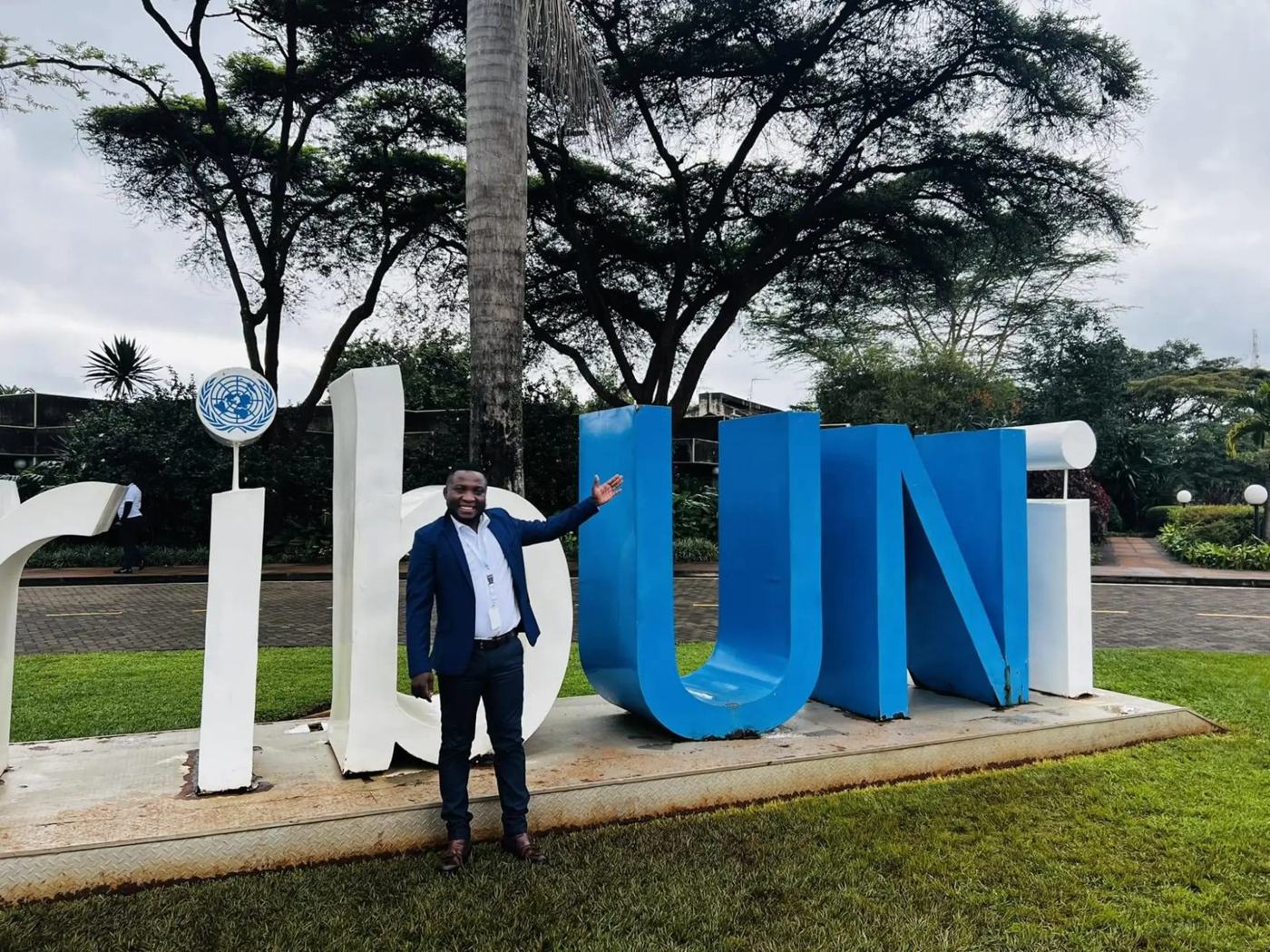
The Centre de Recherche sur l’Anti-Corruption was honoured to take part in the United Nations Civil Society Conference in Nairobi on 9 and 10 May 2024. CERC shared its reports, which show how corruption affects the achievement of the Sustainable Development Goals and can also be an obstacle to the implementation of the Pact for the Future. During the conference, CERC shared its experiences and its digital tools for the future.

9
2024

Research and advocacy

April 2024Illicit political financing

Building on its report on the DRC’s implementation of the UN Convention against Corruption, CERC analysed the financing of political parties. Despite the legal framework (Law 004/02 of 15 March 2004 and Law 08/005 of 10 June 2008), CERC points to the absence of an authority responsible for supervising and enforcing political financing rules, political parties not reporting their annual financial statements, and the lack of sanctions. CERC recommends an independent supervisory authority, deterrent sanctions and regular, public financial reports by political parties.

March 2024Building infrastructure with integrity

Corruption in infrastructure projects financed by international aid and public resources leads to cost overruns, poor-quality work and delays. CERC’s model combines technology – the CitizenEye application – with citizen advocacy, so that communities can detect and prevent corruption and hold officials and contractors to account.

10
CERC and ACAJ training in Kinshasa, December 2024
With ACAJ, Kinshasa, 4–6 December 2024

Training civil society

From 4 to 6 December 2024, CERC and the Association Congolaise pour l’Accès à la Justice (ACAJ) held a three-day training in Kinshasa, led by Paulin Kibendelwa and Jonathan Musa Nzamu, CERC’s Provincial Director. ACAJ members and a blogger from Habari RDC worked on strengthening their capacity to prevent, detect and fight corruption.

The training aimed to raise awareness of the root causes and consequences of corruption; to equip participants with legal, practical and ethical tools to prevent, report and fight it; and to strengthen the capacity of NGOs, citizens and the media to promote transparency and integrity. Participants committed to three principles – adopt an ethical compass, cultivate integrity and avoid grey areas – and received certificates.

11
2023 and 2024 financial years – unaudited

Financial review

This financial review covers the 2023 and 2024 financial years. It is based on CERC’s financial reports to its donors: the 2023 financial report of the Education Out Loud project, the financial reports sent to RCN Justice & Démocratie and the agreement signed with this partner. Project accounts are kept in US dollars, on a cash basis. The 2023 and 2024 figures have not been audited.

All projectsConsolidated statement – all projects

Income, expenditure and balances of all projects combined, for 2024 and 2023 compared with 2022. The 2023 expenditure of the Education Out Loud project is available in three categories only, so the comparison uses these three categories.

Income and expenditure2024
US$
2023
US$
2022
US$
Income received
GPE / Oxfam IBIS – Education Out Loud–68,816.00361,361.00
USAID / IREX – Youth Excel–6,746.0551,529.10
RCN J&D – REPLIC (EU, DGD)19,295.00––
CERC’s own resources–1,934.73–
Total income received19,295.0077,496.78412,890.10
Expenditure, all projects combined
Programme activities17,120.00101,836.96168,350.36
Direct project support (staff, travel and running costs)2,000.0039,216.41152,081.80
Administration, audit and bank charges175.0016,533.6325,386.29
Total expenditure19,295.00157,587.00345,817.45
Income less expenditure0.00−80,090.2267,072.65
Balance brought forward from the previous year–80,090.2213,013.07
Adjustments (see the statement of funds)––4.50
Balance carried forward to the next year0.000.0080,090.22

Not audited: financial reports to RCN Justice & Démocratie (REPLIC only; Education Out Loud had spent all its funds by December 2023). Not audited: 2023 financial report of Education Out Loud to Oxfam IBIS; Youth Excel: final IREX disbursement. Education Out Loud spent its US$88,771 audited balance from 2022 and its January 2023 instalment; Youth Excel received the final IREX disbursement for expenditure already reported. Partly audited: the Education Out Loud project was audited by DWAC (notes 1 to 4; the audit rounds its total, so the categories add up to US$1 more); Youth Excel is not audited (December 2022 financial report approved by IREX, notes 5 and 6, less the expenditure to December 2021, which is that of 2021). Education Out Loud income: the two transfers of 2022 (US$361,361). The project’s audit opens with US$751 in cash on 1 March 2022: the Year Zero balance of US$746.50 brought forward and US$4.50 of adjustment – CERC’s ledger took over US$746.41 and the bank account also held US$5.06 of CERC’s own funds kept for fees: US$751.47, shown as US$751 by the audit, which works in whole dollars.

Statement of funds, by grant

For each grant: the balance brought forward from the previous year, the funds received, the funds spent, the funds returned to the donor or transferred to another grant (and adjustments), and the balance carried forward. A negative balance means spending ahead of funding. Each line says whether its figures are audited, and by which audit.

Grant and donorBrought forward
US$
Received
US$
Spent
US$
Returned, transfers
US$
Carried forward
US$
2023
Youth Excel – Youth Represent DRC1
CERC’s own resources · Not audited – Final IREX disbursement; financial report to IREX; CERC’s own resources
−8,680.788,680.78–––
Students Acting for Accountability and Quality of Education2
Global Partnership for Education, through Oxfam IBIS · Not audited – 2023 financial report to Oxfam IBIS
88,771.0068,816.00157,587.00––
Total 202380,090.2277,496.78157,587.00––
2024
REPLIC – Agir pour une justice redevable, plurielle et intègre au Congo3
European Union and Belgium (DGD), through RCN J&D · Not audited – Financial reports to RCN Justice & Démocratie
–19,295.0019,295.00––
Total 2024–19,295.0019,295.00––

1 Youth Excel – Youth Represent DRC, 2023. Final IREX disbursement (US$6,746.05). The US$1,934.73 of expenditure above the award – the “cash available” of CERC’s December 2022 report to IREX – was paid from CERC’s own resources (members’ contributions): the project closes at zero.

2 Students Acting for Accountability and Quality of Education, 2023. Resources 2023: the audited US$88,771 balance from 2022 – of which US$7,120 of cash advances still to be justified at the end of 2022 – and the US$68,816 instalment of January 2023, all reported as spent in 2023 (US$157,587). The 2023 financial report to Oxfam IBIS is not audited: it does not show how the US$7,120 of advances were justified.

3 REPLIC – Agir pour une justice redevable, plurielle et intègre au Congo, 2024. Received quarterly and fully spent (April–December 2024).

Policy 002Compliance and reporting standards

This section applies to this report the corrections made on CERC’s financial accountability page (cerc.cd/en/our-financial-accountability/): the compliance of each grant with Policy 002, every difference between reports, accounts and audits – explained, or open and shown in red – and the score of this report against the reporting standard of Policy 002, for a target of 80%.

Compliance with Policy 002: 75%

Average of the rules met (1), partly met (½) and not met (0) by each grant in 2023, 2024.

Grant and year – rules partly or not metLevel
Youth Excel – Youth Represent DRC
2023 · External audit; Expenses approved and supported
Partly compliant
75%
Students Acting for Accountability and Quality of Education
2023 · External audit; Expenses approved and supported
Partly compliant
75%
REPLIC – Agir pour une justice redevable, plurielle et intègre au Congo
2024 · External audit; Expenses approved and supported
Partly compliant
75%

Differences between reports, accounts and audits

DifferenceAmount
US$
Explained – Education Out Loud: advances not justified at 31 December 2022
Cash held US$81,651 against a balance of US$88,771 (2022 audit). The US$7,120 are three advances for activities under way, listed in CERC’s fourth-quarter report to Oxfam IBIS: US$5,000 for identifying and training education clusters, US$2,000 for a mission to Bukavu, US$120 for transport to equip the Integrity Clubs. The 2023 ledger shows the cluster work starting in January 2023. The three advances were justified or refunded by June 2025 (CERC’s statement). These documents are kept by CERC and not audited.
7,120.00
Explained – Education Out Loud: funds fully spent by December 2023
The project ran until June 2024. The funds received (US$430,177 plus the US$751 of Year Zero) were all spent by December 2023, including expenses such as the approved flight of CERC’s Executive Director to Geneva for a United Nations activity (CERC’s statement). No funds remained for January–June 2024, so there is no financial report for that period. The 2023 report is not audited.
–
Explained – Youth Excel: spending above the award, covered by CERC
The USAID/IREX subaward was funded by advances against monthly financial reports, each approved by IREX, which paid US$90,781.86 in all, the last instalment in February 2023. Cumulative spending reported to IREX at December 2022 was US$92,716.59: the US$1,934.73 above the funds received – the “cash available” of CERC’s December 2022 report – were paid from CERC’s own resources (members’ contributions). The project closes at zero.
1,934.73

Budget and actual, REPLIC 2024

Budget
US$
Actual
US$
Rate
Running costs (office supplies, communication, bank charges)175.00175.00100%
Social alert system and civil society response14,295.0014,295.00100%
Youth project incubator: journalism and university anti-corruption clubs4,825.004,825.00100%
Total19,295.0019,295.00100%

Partnership agreement with RCN Justice & Démocratie of 1 April 2024 and its amendment of 12 August 2024 (budget US$19,295, €17,826.13); financial reports to RCN J&D.

Follow-up of the 2022 audit and of Oxfam IBIS’s recommendations

Finding or recommendationStatus
2022 audit – US$7,120 of cash advances not justified at 31 December 2022.Done
by June 2025 – CERC’s statement
2022 audit – US$2,517 more administrative staff costs in the financial report than in the general ledger.Done
by June 2025 – CERC’s statement
2022 audit – US$5,158 spent without the donor’s formal approval (rental deposits US$3,800, unbudgeted staff US$1,358).Done
by June 2025 – CERC’s statement
2022 audit – US$3,800 of accommodation costs of a 152-day mission without terms of reference or mission reports.Done
by June 2025 – CERC’s statement
2022 audit – Purchases above the procurement threshold (US$1,250) insufficiently documented: selection method and competition not always followed (other information, without effect on the opinion).Done
by June 2025 – CERC’s statement
2022 audit – US$5,100 of salaries paid for months not covered by a contract (March, April and December 2022; other information).Done
by June 2025 – CERC’s statement
Oxfam IBIS – A functional Board of Directors with democratic governance powers (condition for the 2023 disbursements).Done
Oxfam IBIS – A single authorised signatory on the bank account.Done
Oxfam IBIS – Annual audit of the project accounts.Under way
Oxfam IBIS – No internal audit team.Done
by June 2025 – CERC’s statement
Oxfam IBIS – A more detailed electronic inventory tool.Done
by June 2025 – CERC’s statement
Oxfam IBIS – Attendance lists kept by the programme team, apart from the payment sheets.Done
by June 2025 – CERC’s statement

Reporting standard of Policy 002: 65%

This report is below the target of 80%: the criteria not met show what CERC must still provide.

CriterionStatus
Funds received, by donor and project (IV.12)
Income by donor and project.
Met
Expenditure by category (II.6.4)
Education Out Loud 2023 in three categories only.
Partly met
Budget and actual, by budget line (II.6.4)
REPLIC: budget of US$19,295 by line, 100% spent (added in this report); Education Out Loud 2023: no budget by line.
Partly met
Cash position at year end (II.6.4)
Balances from the statement of funds; no bank statement or cash count published.
Partly met
Commitments and balances owed (II.6.4)
Balances owed, from the statement of funds.
Met
Statement of funds, by grant (III.2.2)
Statement of funds by grant.
Met
Comparison with the previous year (II.6.4)
2024 and 2023 compared with 2022.
Met
External audit: auditor and opinion (III.3.2)
2023 and 2024 are not audited.
Not met
Audit findings and follow-up action plan (III.3.5)
The findings of the 2022 audit and Oxfam IBIS’s recommendations are published with the status of each; the detailed action plan is kept internal (CERC’s plan of January 2023, Oxfam IBIS’s follow-up, the Board minutes of 10 February 2023).
Met
Differences between reports, accounts and audits explained (III.3.3)
Every difference between reports, accounts and audits is explained; the 2022 audit findings were regularised by June 2025 (CERC’s statement, not yet audited).
Met
Compliance with the financial policies assessed (Policy 002)
Assessed in this report.
Met
Assets and equipment (inventory) (VI.8, VII.1)
No fixed-asset register or inventory is published.
Not met
Financial report approved by the Board of Directors (IV.12)
No record of the Board’s approval of the financial report is published.
Not met

Restricted fundsFunded projects

All of CERC’s income in 2023 and 2024 was restricted to projects.

ProjectDonorReceived inFunds received
US$
Students Acting for Accountability and Quality of EducationGlobal Partnership for Education, through Education Out Loud (Oxfam IBIS)Jan 202368,816
Youth Excel – Youth Represent DRCUSAID, through IREXFeb 20236,746
Social alert system and Youth Project Incubator (PARJ2 – REPLIC)European Union and Belgian Development Cooperation (DGD), through RCN Justice & Démocratie202419,295

Only the funds actually received in 2023 and 2024 are shown. The balance of US$88,771 carried forward from 2022 on the Education Out Loud project had been received in 2022.

  • Students Acting for Accountability and Quality of Education – Integrity Clubs in 150 secondary schools in South Kivu and Kinshasa, where students monitor the quality of education services and advocate for improvements.
  • Youth Excel – Youth Represent DRC – The final IREX disbursement for the project carried out in Kinshasa in 2021 and 2022 and extended to 28 February 2023.
  • PARJ2 – REPLIC – A social alert system against corruption in the courts of Kinshasa, civil society’s response to alerts, university integrity clubs and journalism.

IncomeIncome

In 2023, the income of the Education Out Loud project amounted to US$157,587: the balance carried forward from 2022 (US$88,771), as shown in the project’s 2022 audit, and the instalment received in January 2023 (US$68,816).

In February 2023, CERC received the final disbursement of the Youth Excel project from IREX, US$6,746.05, and the project closed on 28 February 2023 after a one-month no-cost extension. In all, the project received US$90,781.86: US$32,506.71 in 2021, US$51,529.10 in 2022 and US$6,746.05 in 2023. The cumulative expenditure reported to IREX at December 2022, US$92,716.59, exceeded this by US$1,934.73, which CERC paid from its own resources (members’ contributions).

In 2024, CERC received US$19,295 from RCN Justice & Démocratie for the PARJ2 – REPLIC partnership, agreed on 1 April and extended by the amendment of 12 August. Funds were transferred quarterly, based on the quarter’s budget forecast and on justified expenditure.

ExpenditureExpenditure

In 2023, CERC spent US$157,587 on the Education Out Loud project, in line with the expenditure forecasts: 65% on the four project objectives – including US$72,101.53 on the Integrity Clubs and their monitoring –, 25% on direct project support and 10% on administration, audit and bank charges (note 1).

In 2024, CERC spent US$19,295 on the PARJ2 – REPLIC partnership: US$175 on running costs, US$14,295 on the social alert and response system and US$4,825 on the Youth Anti-Corruption Project Incubator (note 2).

Funding policyOur sources of funding

CERC is funded by institutional donors, directly or through partner organisations, through grants restricted to projects. Each project has its approved budget; CERC reports to its donors through narrative and financial reports with supporting documents, and project accounts are audited as each donor requires – the Education Out Loud project was audited for 2022.

Note 1Education Out Loud project – income and expenditure 2023

ItemUS$
Income
Balance carried forward from 202288,771.00
Instalment received in January 202368,816.00
Total income 2023157,587.00
Expenditure
Category 1 – the four project objectives101,836.96
– objective 1: high-level advocacy and policy engagement5,836.22
– objective 2: Integrity Clubs and monitoring72,101.53
– objective 3: training of teachers and principals, Education Clusters15,995.72
– objective 4: student-led advocacy and campaigns7,903.49
Category 2 – direct project support39,216.41
Category 3 – administration, audit and bank charges16,533.63
Total expenditure 2023157,587.00

Note 2PARJ2 – REPLIC partnership – expenditure 2024

Expenditure for the period from 1 April to 31 December 2024, by line of the agreement of 1 April 2024 as amended on 12 August 2024.

ItemUS$
Running costs175.00
Office supplies55.00
Communication60.00
Bank charges60.00
Social alert system and response14,295.00
Setting up the social alert system in communities6,500.00
– communication for the 9 focal points (10 months)2,250.00
– transport for the 9 focal points (10 months)2,250.00
– supervision per diem2,000.00
Civil society response to alerts in Kinshasa7,795.00
– transport (advocacy meetings)2,500.00
– media (press briefing or advocacy programme)750.00
– legal assistance3,000.00
– awareness raising1,545.00
Youth anti-corruption project incubator4,825.00
Journalism1,000.00
Support to university anti-corruption clubs3,825.00
Total expenditure 202419,295.00

Equivalent to €17,826.13.
12

Our partners

CERC thanks the partners who made this work possible in 2023 and 2024: the Global Partnership for Education and Oxfam IBIS through Education Out Loud, RCN Justice & Démocratie, the European Union and the Belgian Development Cooperation (DGD), the member organisations of the focal point network, the University of Kinshasa, the Pan-African University, the Reverend Kim University, Bel Campus University, Habari RDC, the African Parliamentarians’ Network Against Corruption (APNAC DRC), the Association Congolaise pour l’Accès à la Justice (ACAJ), the UNCAC Coalition, the education authorities of South Kivu and Kinshasa, and the students, teachers, parents and school leaders of the Integrity Clubs.

Global Partnership for EducationOxfamRCN Justice & DémocratieUNCAC CoalitionMinistry of Education