Students Acting for Honesty, Integrity and Equality (SHINE) 2017–2020

CERC’s first project: Integrity Clubs in secondary schools in Uvira and Bukavu, where students trained in community monitoring got their schools’ classrooms, toilets and water fixed.

Translated from the original French edition.

Download the report (PDF)

1

SHINE at a glance

Students who know how to monitor their school’s services, hold it to account and get problems fixed.

810

students trained in 54 Integrity Clubs in South Kivu, 2017–2020

32%

average fix rate of the problems students reported, 2017–2020

300

monitors trained in the first year, 152 of them girls

US$132,620.62

received from Integrity Action, 2017–2020; every period audited

2
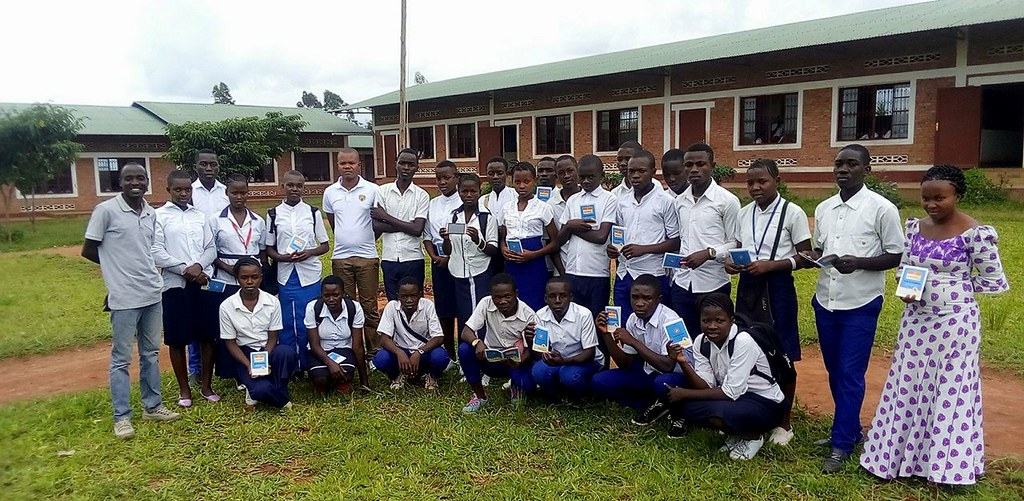
The Integrity Club of Institut Itara, Luvungi, in 2018
Integrity Action · NORAD · Sida

The project

SHINE set out to promote transparency and social accountability in education by mobilising students to monitor the services of their secondary schools.

Students Acting for Honesty, Integrity and Equality (SHINE) was CERC’s first project; CERC was founded in April 2017. It was funded by NORAD and Sida through Integrity Action, which also provided its Community Integrity Building method, its Integrity Clubs guide and the DevelopmentCheck monitoring tool. Project years ran from October to September: year 1 from 1 October 2017 to 30 September 2018, year 2 from 1 October 2018 to 30 September 2019, then a third phase to the end of 2020.

ContextSchools that lack everything

In the DRC, free education is a constitutional right, but the education system is still largely funded by parents. Schools lack equipment, sanitation, running water and teaching materials, and staff are underpaid, often irregularly. For CERC, this lack of transparency and poor service delivery stem above all from a missing culture of integrity.

ApproachIntegrity Clubs and community monitoring

SHINE combined integrity education, in Integrity Clubs at school, with community monitoring on the ground using information technology. Trained in anti-corruption, citizenship, transparency and accountability, inclusion and gender equality and leadership, students used DevelopmentCheck to monitor their school’s services – class sizes, toilets, water, library, teachers’ attendance and qualifications, budgets and spending – and infrastructure projects in their communities, then looked for solutions with school managers, parents and providers in joint working group meetings.

Year 1Four expected results

  1. CERC is able to build anti-corruption measures into the education sector, directly benefiting 300 young monitors;
  2. 300 committed and supported young monitors aged 14 to 19 are active agents of positive change;
  3. secondary schools are encouraged and supported to take on Integrity Clubs and make them last;
  4. an exemplary success attracts wider support and demand for anti-corruption measures in education.
3
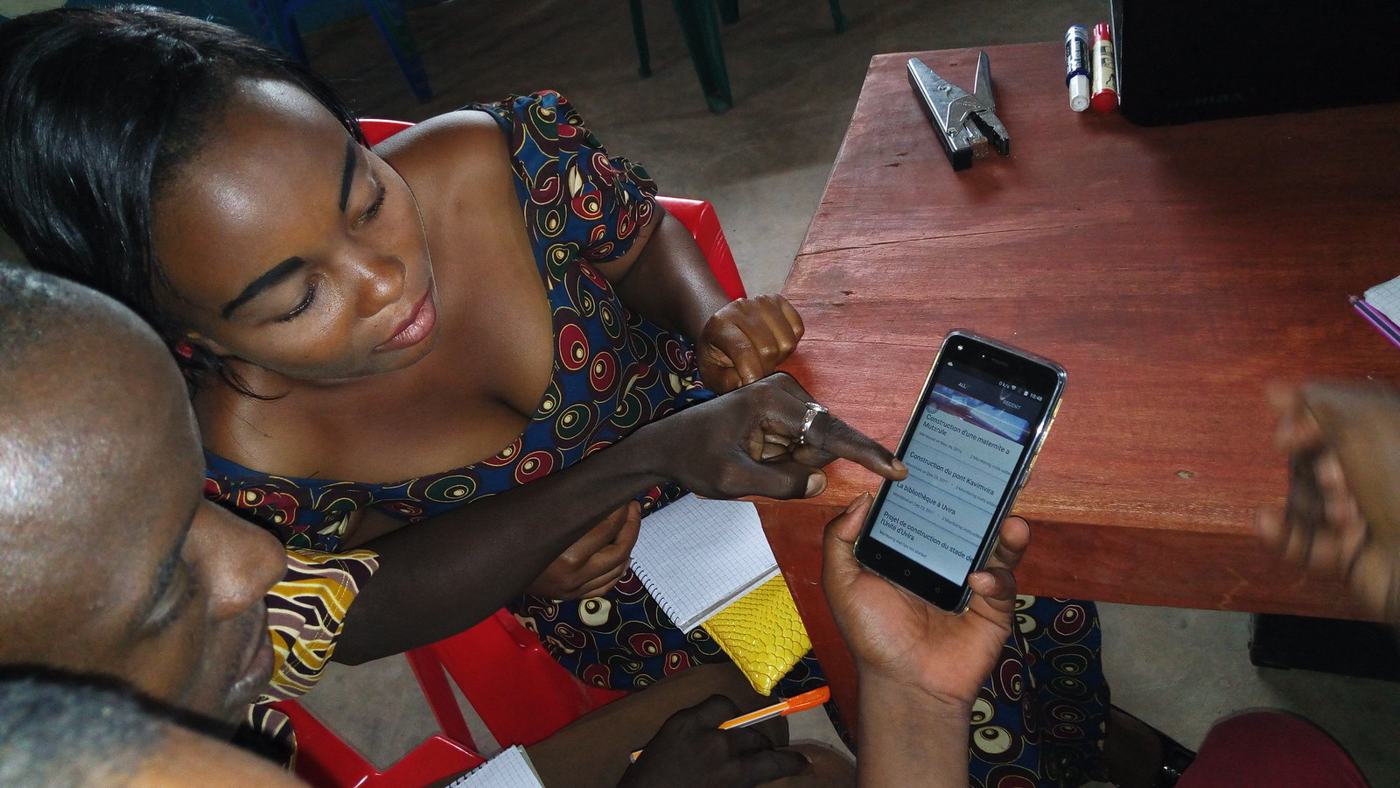
A participant learns to use DevelopmentCheck, training of trainers in Sange, January 2018
October 2017 – September 2018

Year 1: the first clubs in Uvira

In December 2017, CERC launched Integrity Clubs in 20 secondary schools in Uvira territory and trained their first trainers.

November–December 2017Training and launch

From 27 November to 1 December 2017, five CERC staff members took Integrity Action’s full Community Integrity Building training in Dar es Salaam, Tanzania, where they tested the new version of DevelopmentCheck. On Friday 8 December 2017, CERC launched Integrity Club activities in 20 secondary schools in Uvira territory.

Two four-day trainings of trainers followed, from 20 to 23 December 2017 in Uvira town and from 2 to 5 January 2018 in the Ruzizi plain: 20 principals, 40 teachers and 60 club leaders trained – for each school, two teachers, the principal and three club leaders.

February–September 2018300 monitors follow their schools

300 students – 152 girls and 148 boys – were trained as community monitors. From February 2018 they monitored the infrastructure and education services of 20 secondary schools in Uvira, Kiliba, Sange, Luberizi, Bwegera and Luvungi, worth more than US$1 million: 20 services and 21 infrastructure projects. The clubs received small grants for their monitoring and advocacy, and a weekly radio magazine, “The Integrity Builders”, in Swahili and French on two community radio stations, broadcast their debates. In Bukavu, an integrity exchange workshop brought together 13 people from 6 local organisations and 2 representatives of the Ministry of Education.

Case study“The Integrity Club saved my life”

At Institut Itara in Luvungi, monitors found students sitting three or four to a desk, 70 to 90 in a classroom built for 50, rain pouring onto them, and only three toilets for 590 students. After their meetings with the school management and stakeholders, new classrooms were built in 2018 and a block of eight latrines, with separate toilets for girls and boys, was started.

“The Integrity Club saved my life.”

Yvette Rosalive Meucca, Integrity Club leader

In 2018, according to CERC’s annual report, 1,780 students in Uvira were able to study in safer conditions thanks to the clubs’ monitoring and advocacy.

4
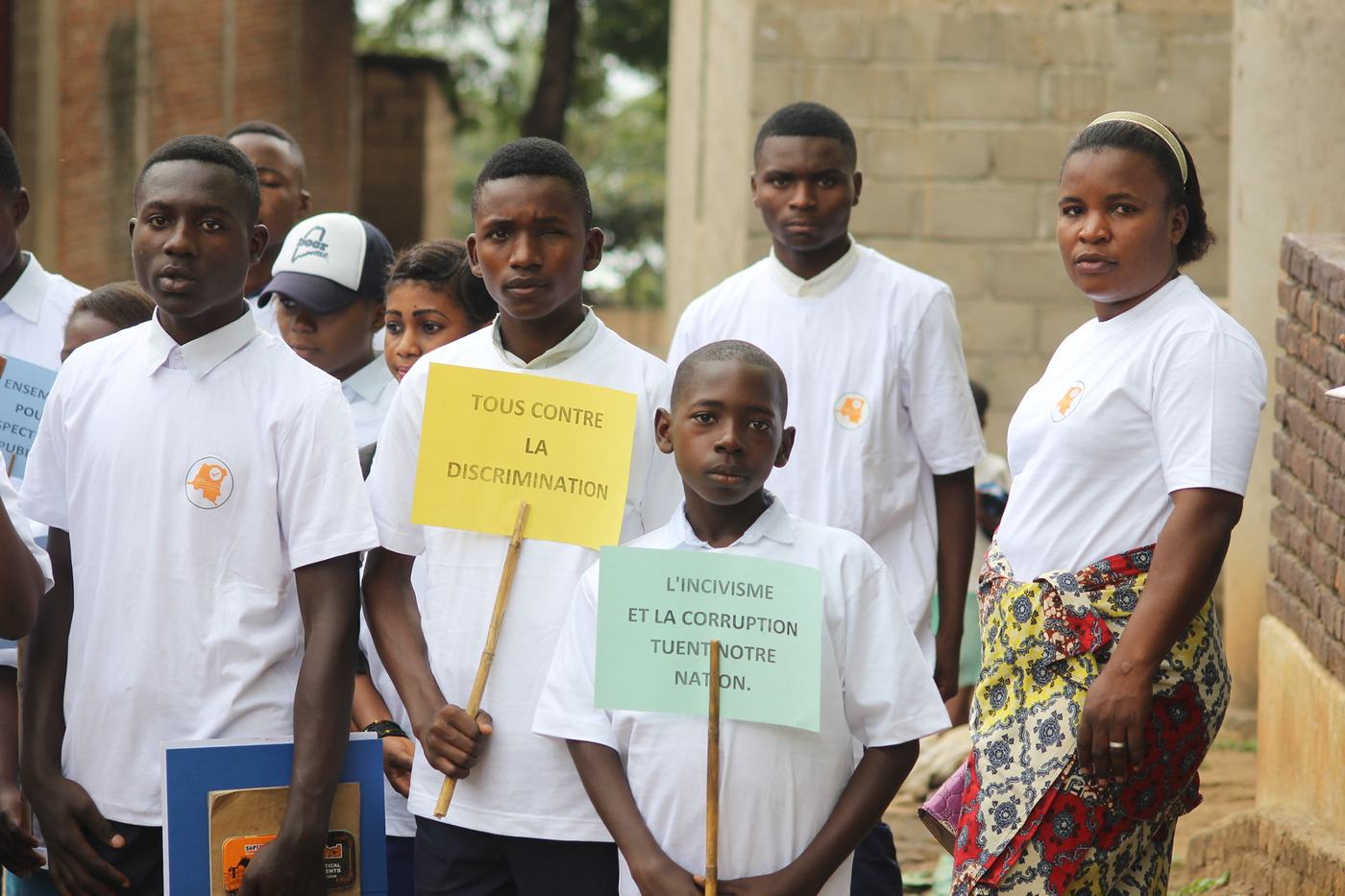
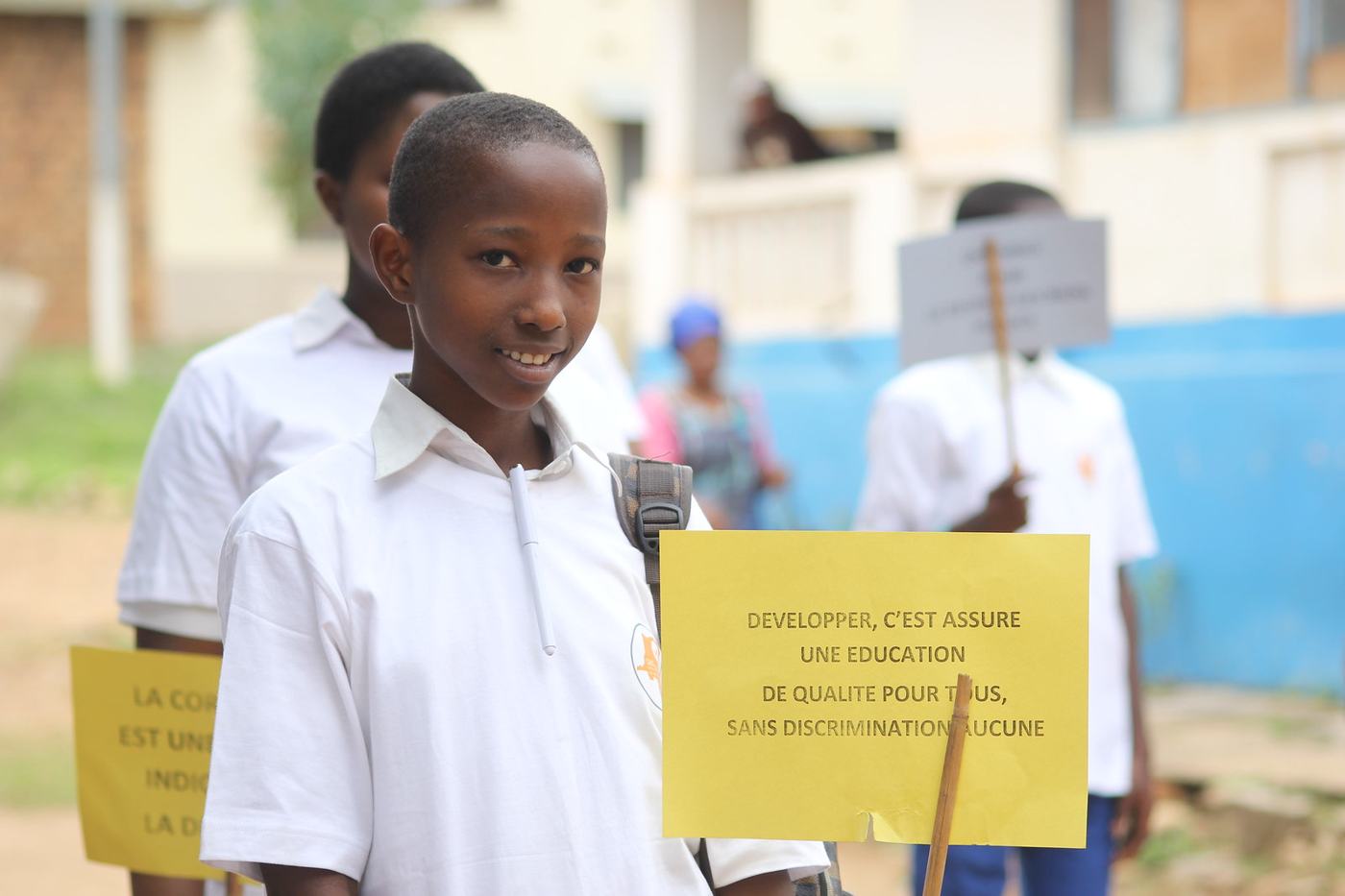
Integrity Club students with their placards, International Anti-Corruption Day, Uvira, December 2018
Uvira and Bukavu

2018–2020: from 20 to 54 Integrity Clubs

The clubs spread from the Ruzizi plain to Bukavu, and students took their demands all the way to the provincial government.

2018–2019Clubs in Uvira and Bukavu

In 2018, 15 new clubs joined the first 20 in Uvira. On 8 and 9 December 2018, International Anti-Corruption Day, CERC mobilised 35 secondary schools in Uvira under the theme “United against corruption for development, peace and security”. In 2019, according to the annual report, 55 Integrity Clubs were operating in secondary schools in Uvira and Bukavu, and CERC had a network of 1,000 young people.

In January and February 2019, school facilitators – educators appointed by principals to guide the clubs – were trained in the anti-corruption legal framework. The clubs held debates, sketches, paintings and short films; at Institut Guido Maria Conforti, members made a painting against corruption at school. Monitors travelled close to 5 km every month between Luberizi and Tengetenge to follow the rehabilitation of an irrigation canal.

December 2019 – 2020All the way to the provincial government

In December 2019, 100 club members marched against corruption at provincial level and handed the authorities a memorandum calling on them to act against corruption in education and to rehabilitate and equip schools. In 2020, South Kivu’s education officials agreed that Integrity Clubs be rolled out across the region.

“Thanks to the joint working group meetings held in our school, the whole process has become clearer and more transparent.”

Kahindo Ndjungu, principal of ITIP Uvira

2017–2020 in all810 students, 54 clubs, 32% of problems fixed

Between 2017 and 2020, CERC trained 810 students in 54 Integrity Clubs in South Kivu. With DevelopmentCheck they monitored 54 infrastructure projects and services in their communities and achieved an average fix rate of 32% of the cases where corruption had caused problems. Over 40% of the monitors trained were girls. Classrooms were built, facilities rehabilitated, toilets built, desks repaired and tiles replaced; by 2020, 13 schools monitored had water in their toilets.

5
October 2018

The internal evaluation of year 1

In October 2018, CERC evaluated the first year of the project: relevant, effective and efficient, with “professional and transparent” management – but still too small in scale.

The internal evaluation was carried out by Douce Kanyeba Songolo, Monitoring, Evaluation and Learning Officer, and Heri Bitamala, then Programme Officer, using adapted World Bank evaluation criteria: relevance, effectiveness, efficiency, impact and sustainability. It draws on the project documents, a field mission from 15 September to 4 October 2018 with students, teachers, principals, community members and providers, and a survey of club members at the start and end of the year.

ResultsYear 1 targets met

IndicatorTargetResult
Young monitors aged 15 to 19300300, 152 of them girls
Young people still active in the clubs at year end300277
Girls among club members50%52%
Girls among club leaders30%48%
Members from groups at risk of exclusion15%4.6%
Integrity Clubs2020, 19 of them active
Young people reached by the clubs2,0001,623
Impact measured by the Fix Score15%43%

ImpactStudents who turn down corruption

Between the start and the end of the year, club members’ answers changed markedly:

  • those who would report a suspicion of corruption to the authorities rose from 41% to 93%;
  • those willing to give a teacher a gift to improve their marks fell from 64% to 11%;
  • those who define integrity correctly rose from 51% to 94%; those who know how to monitor a public project or service, from 55% to 93%;
  • those who think “people like me can make a difference by fighting corruption”, from 59% to 94%;
  • those who strongly agree that women and men should have the same job opportunities, from 28% to 52%.

The trainings for teachers and club leaders had a multiplier effect: they in turn trained 240 other club members and more than 1,600 students in other schools.

FindingsStrengths and weaknesses

The project was “unquestionably relevant”, it reached most of its planned results while staying within the budget agreed with Integrity Action, and “project management was professional and transparent”. The evaluation also points to weaknesses: good-quality trainings that could not be repeated, for lack of funds; a still small scale – 20 of the 303 secondary schools in Uvira territory; the inclusion target for young people at risk of exclusion missed; still weak skills in using DevelopmentCheck (only 41% of members said they could at the end of the year); and no explicit exit strategy in the partner schools.

RecommendationsBuild on the gains

  1. Develop a new project that builds on SHINE, which had only begun to reduce corruption at local level;
  2. strengthen collaboration and synergies with other NGOs, especially in training.
6
Every period audited by Group BEAG

Funds received and expenditure

CERC received CDF 93,925,930 from Integrity Action for year 1, CDF 73,202,400 for year 2 and US$31,320.20 for phase 3. The accounts of the first two years were kept in Congolese francs; they are converted into US dollars at the Banque Centrale du Congo’s average rate for the year in which most of each period falls (CDF 1,622.52 per dollar in 2018, CDF 1,647.76 in 2019), as on our financial accountability page. CERC made no contribution of its own.

PeriodReceivedReceived
US$
Spent
US$
Year 1 · Oct 2017 – Sep 2018CDF 93,925,93057,888.9256,272.27
Year 2 · Oct 2018 – Sep 2019CDF 73,202,40044,425.4044,786.65
Phase 3 · Oct 2019 – Dec 2020US$31,320.2030,306.3027,798.84
Total 2017–2020132,620.62128,857.76

Phase 3: US$31,320.20 received according to the 2020 audit, of which US$1,013.90 (at the audit’s rate of CDF 2,000 per dollar) is the year 2 balance already counted. Balance at the end of 2020: US$3,521.36, owed to Integrity Action; with the US$241.50 exchange difference, it accounts for the gap between funds received and spent (in francs, the balances chain exactly). The funds of October–December 2019 fall between two audits.

Year 1CDF 91,302,880 spent, 89.1% of the budget

91.65% of the CDF 102,481,500 budget was received. Spending went to staff (CDF 32,520,000), programme activities – trainings, clubs and monitoring, awareness raising and advocacy (CDF 39,991,100) –, rent, running costs and equipment (CDF 6,196,080), professional fees (CDF 3,138,200) and overheads (CDF 9,457,500). The workshop planned in Kinshasa with civil society organisations was held in Bukavu, the December 2017 campaign did not take place and the clubs were supported for only eight months out of twelve. Balance at 30 September 2018: CDF 2,623,050.

Year 2CDF 73,797,647 spent, 97.9% of the budget

With the year 1 balance, the project had CDF 75,825,450. The clubs’ recognition ceremony was postponed to December 2019, as students could not be mobilised during the long holidays. Balance at 30 September 2019: CDF 2,027,803.

Phase 3US$27,798.84 spent in 2020

In 2020, CERC spent US$27,798.84: salaries (15,605.58), work with schools (4,799.45), training (1,203.05), clubs and monitoring (826.60), advocacy (953.44), professional fees (45.15), communication, printing and supplies (2,227.52) and overheads (2,138.05). At 31 December 2020, the audit records the balance of US$3,521.36 as a debt to Integrity Action.

AuditsUnqualified opinions

The accounts were audited by Group BEAG (Uvira), with reports signed by Armand Aluma, chartered accountant, for year 1 (29 October 2018), year 2 (14 October 2019) and the 2020 accounts: each time an unqualified opinion. The auditors recommended surprise cash counts, a better inventory, compliance with purchasing procedures and payment of taxes and social contributions on salaries; CERC began paying them during year 2, and some recommendations were still to be implemented in 2019.

7

Our partners

CERC thanks Integrity Action, NORAD and Sida, the principals, teachers, facilitators and parents of the partner schools in Uvira and Bukavu, the education authorities of South Kivu, the community radio stations that broadcast the clubs’ debates, and above all the students of the Integrity Clubs.

Integrity ActionSouth Kivu Province