Youth Represent DRC, CERC’s Youth Excel project in Kinshasa, funded by USAID through IREX: a network of youth organisations doing research, a Data Summit and 45 young people supported back into work.
Young people as researchers, innovators and leaders of change in Kinshasa.
10
youth-led and youth-serving organisations in the Kinshasa ICON
9
organisations in a joint Quick Impact Project
45
unemployed and underrepresented young people supported towards socio-economic reintegration
US$90,781.86
received from IREX in all: US$32,506.71 in 2021, US$51,529.10 in 2022 and US$6,746.05 in 2023
2
Summary
Youth Excel helped young people in Kinshasa produce the evidence that should guide the programmes and policies that affect them.
This report presents Youth Represent DRC, the Youth Excel project implemented in Kinshasa by the Centre de Recherche sur l’Anti-Corruption (CERC), with funding from the United States Agency for International Development (USAID) through IREX and technical support from Search for Common Ground (SFCG). It covers the activities and results of 2022 and the project’s expenditure at 31 December 2022, under sub-agreement FY22-YOUTH_EXCEL-CERC-01 (funds received: US$90,781.86 in all – US$32,506.71 in 2021, US$51,529.10 in 2022 and the final US$6,746.05 in February 2023).
In 2022, the network of 10 youth-led and youth-serving organisations formed by CERC presented its research at a Data Summit in Kinshasa in August. Nine of these organisations then joined forces in a Quick Impact Project for the socio-economic reintegration of 45 unemployed and underrepresented young people.
IREX fully approved CERC’s November 2022 report and approved the December 2022 report. The final disbursement of US$6,746.05 was scheduled for payment on 2 February 2023, and a one-month no-cost extension carried the project through 28 February 2023.
3
Youth Excel: Our Knowledge, Leading Change
About the project
Youth Excel is a global initiative funded by USAID and led by IREX. It strengthens youth leadership by supporting youth-led and youth-serving organisations to generate evidence through implementation research, improve development programmes using data, and foster dialogue between young people and decision-makers. CERC was selected by IREX, together with its consortium partners, to implement the project in the DRC as Youth Represent DRC.
Implementation research is a mixed-methods approach to collecting data during programme implementation in order to improve it. It helps teams learn how to adapt tested programmes to new contexts, scale up, achieve cost-effectiveness and strengthen impact.
GoalsWhat the project aimed to achieve
Diverse youth in Kinshasa create and lead data-informed, inclusive youth development at local, national and global levels.
Youth-led and youth-serving programmes strengthen their ability to gather and use evidence about their programmes to strengthen and expand their impact.
Youth in Kinshasa disseminate learning from their implementation research so that the evidence can inform programmes and policies.
Youth and adults use data as an inclusive intergenerational language to collaborate and inform decision-making.
Youth-led and place-based networks facilitate collaboration between public, private and civil society actors to expand development impact.
ApproachHow CERC worked
Support youth organisations and networks to address local development issues through implementation research.
Strengthen skills in digital leadership, data leadership and advocacy.
Be inclusive: prioritise gender and social inclusion in every activity.
Strengthen intergenerational partnerships through issue-based collaborative networks and data summits.
Promote research and advocacy: synthesise and share youth evidence to influence development agendas and policies.
4
Activities and results in 2022
2021–2022A network of youth organisations doing research
The work built on the issue-based collaborative network (ICON) formed in 2021: 10 youth-led and youth-serving organisations in Kinshasa, including one LGBTQI-led organisation and two organisations led by people living with disabilities. Trained by CERC in implementation research and in gender equality and social inclusion, the young members of the network designed and carried out research on how to include underrepresented and marginalised young people in education and workforce development programmes, and compiled their findings in final knowledge products.
August 2022ICON Data Summit in Kinshasa
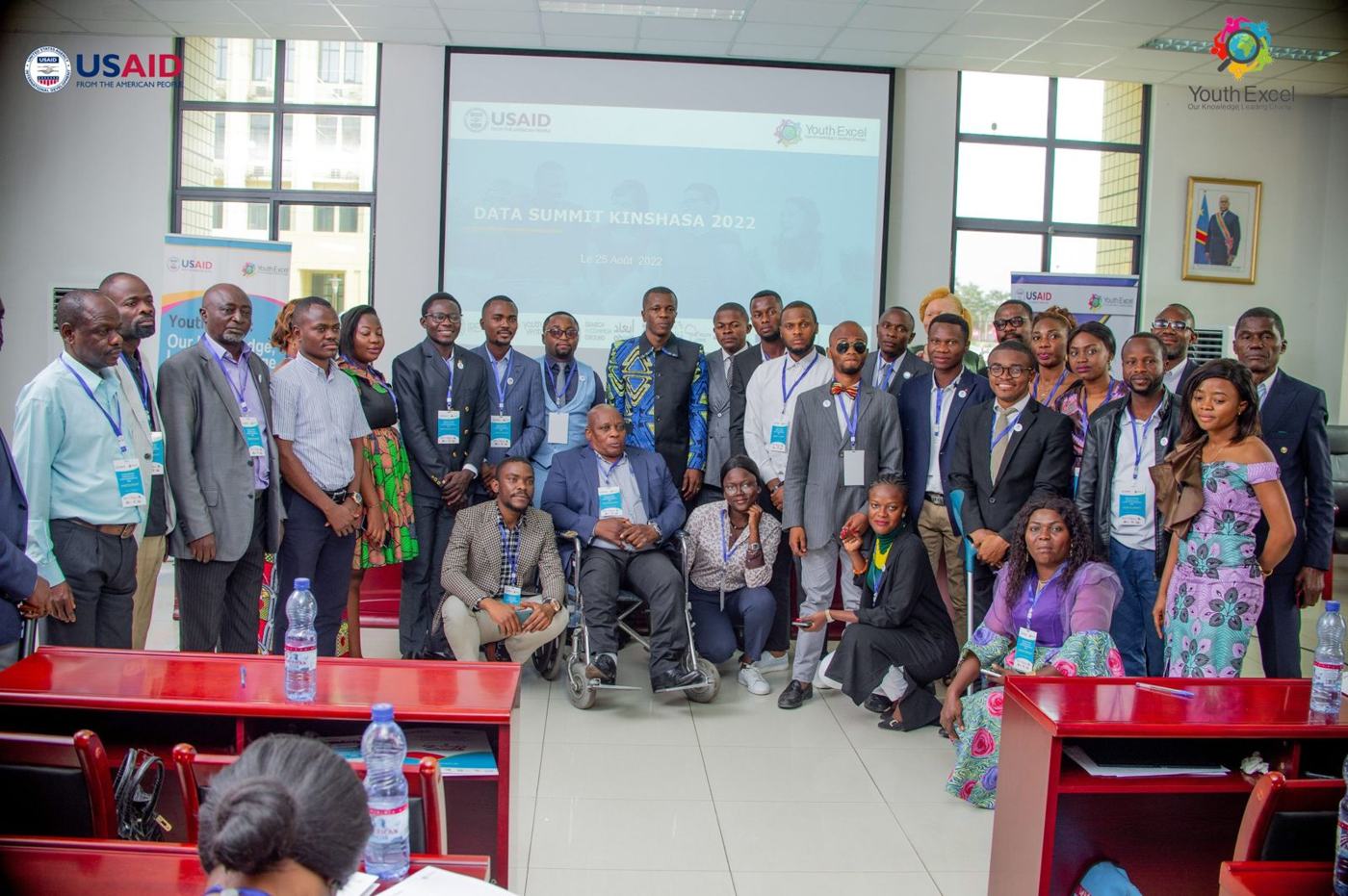
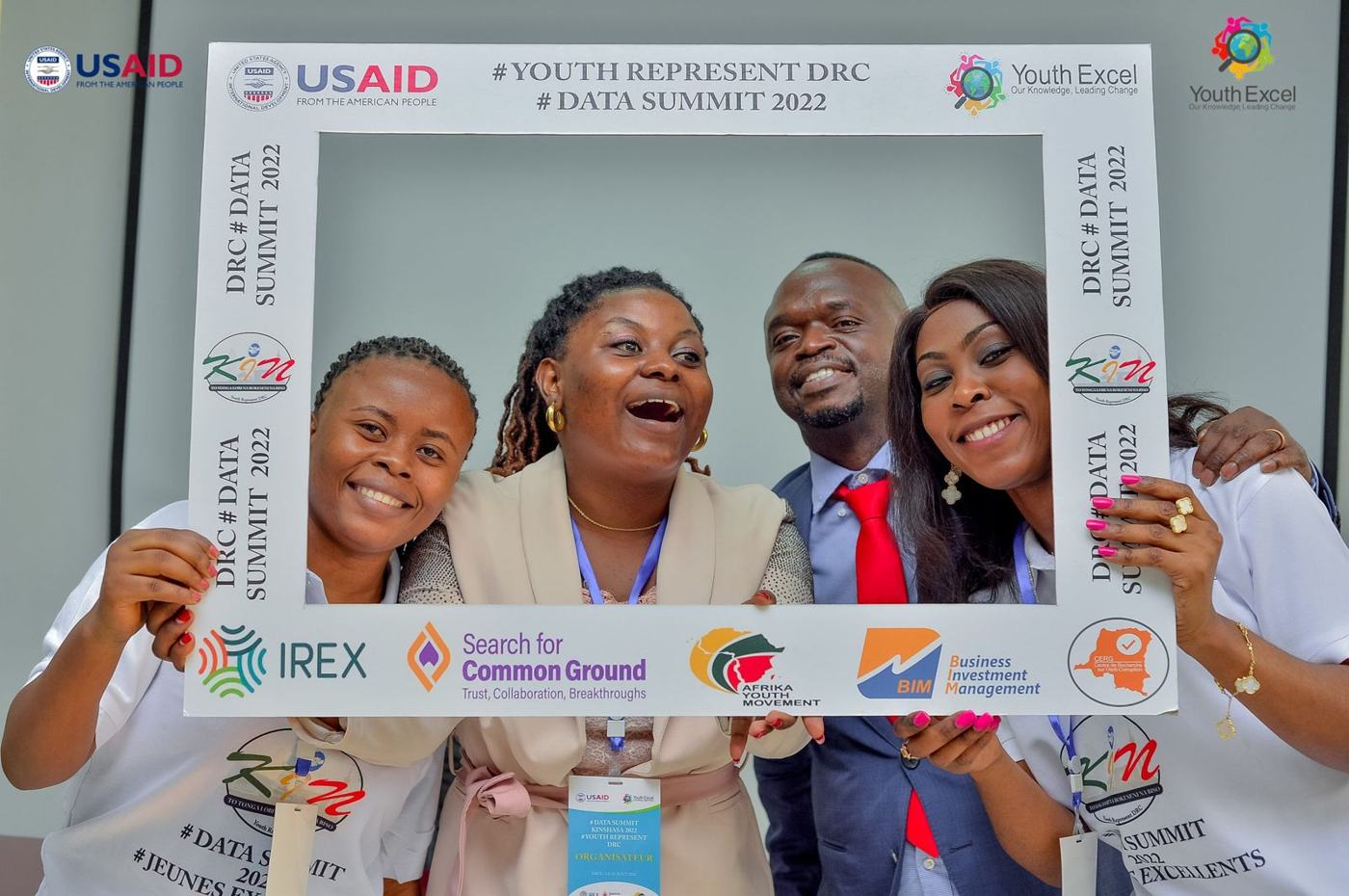
In August 2022, CERC, in partnership with IREX and SFCG, held the ICONs Data Summit in Kinshasa. The summit was part of the Youth Excel ICONs, a youth participatory research project in Kinshasa and North Kivu that aimed to improve the ability of underrepresented youth to sustain positive livelihood outcomes and to support them in advancing development agendas.
Under the theme “Increasing inclusion of underrepresented and marginalised young people in education and in workforce development programmes”, the ICON participants presented their final knowledge products to a diverse range of stakeholders.
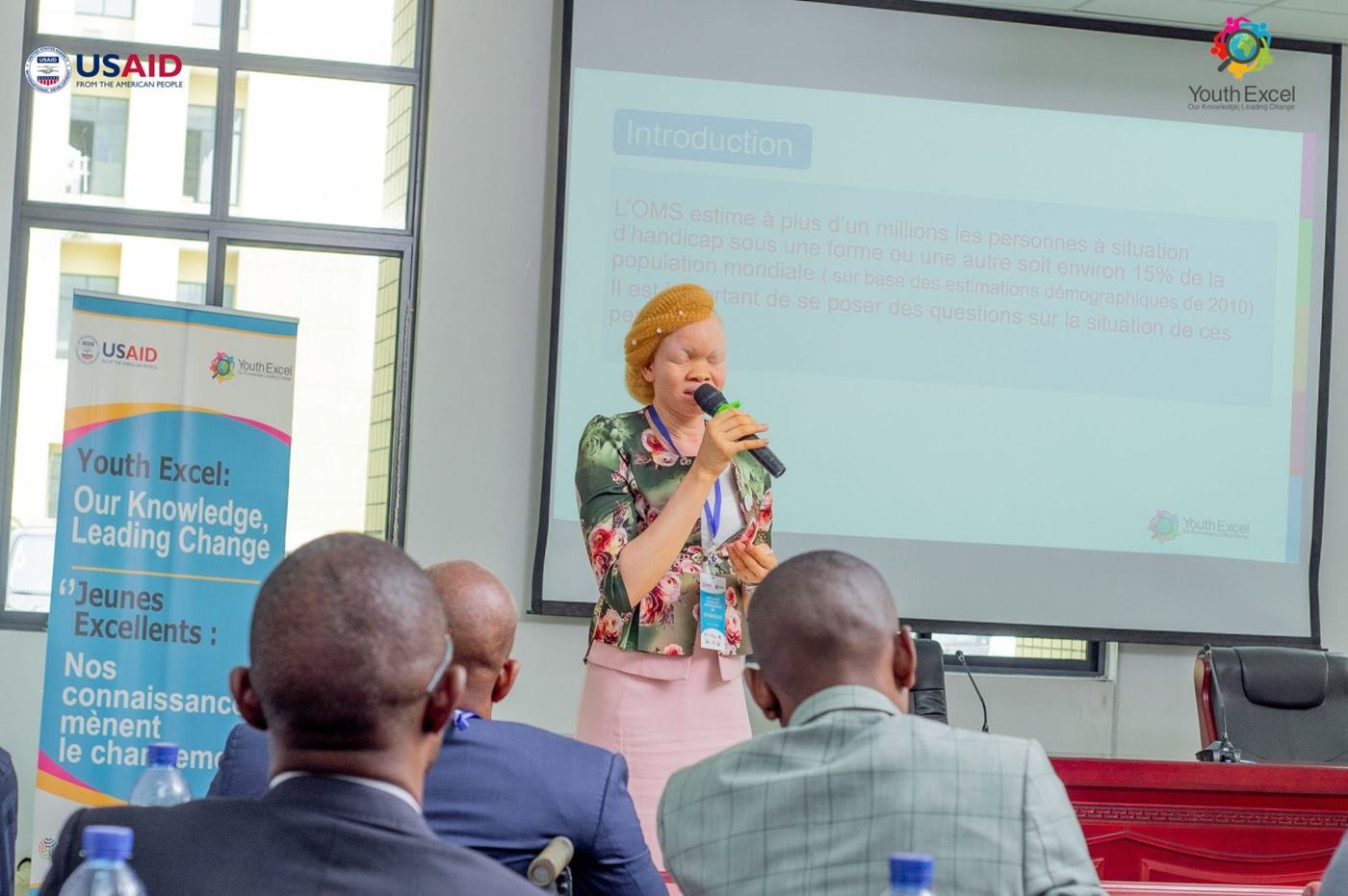
Figure 1: A participant presents at the Youth Represent DRC Data Summit. Kinshasa, August 2022. Photo: CERC
November 202245 young people supported back into work
Building on their research, 9 organisations trained under the ICON project joined forces to design and implement a joint Quick Impact Project (QIP), “Socio-Economic Reintegration of 45 Unemployed and Underrepresented Youth in Kinshasa”.
The project offered the 45 young people vocational training, capacity-building workshops, mentoring and access to resources to look for a job or start a business. Group activities and networking helped them build a supportive community and exchange ideas and experiences.
In December 2022, CERC delivered the ICON trainings of Activity 4. The micro-grants for income-generating activities, the printing of the training participation certificates and the monitoring and evaluation visits were planned for the following weeks, pending the validation of the November report.
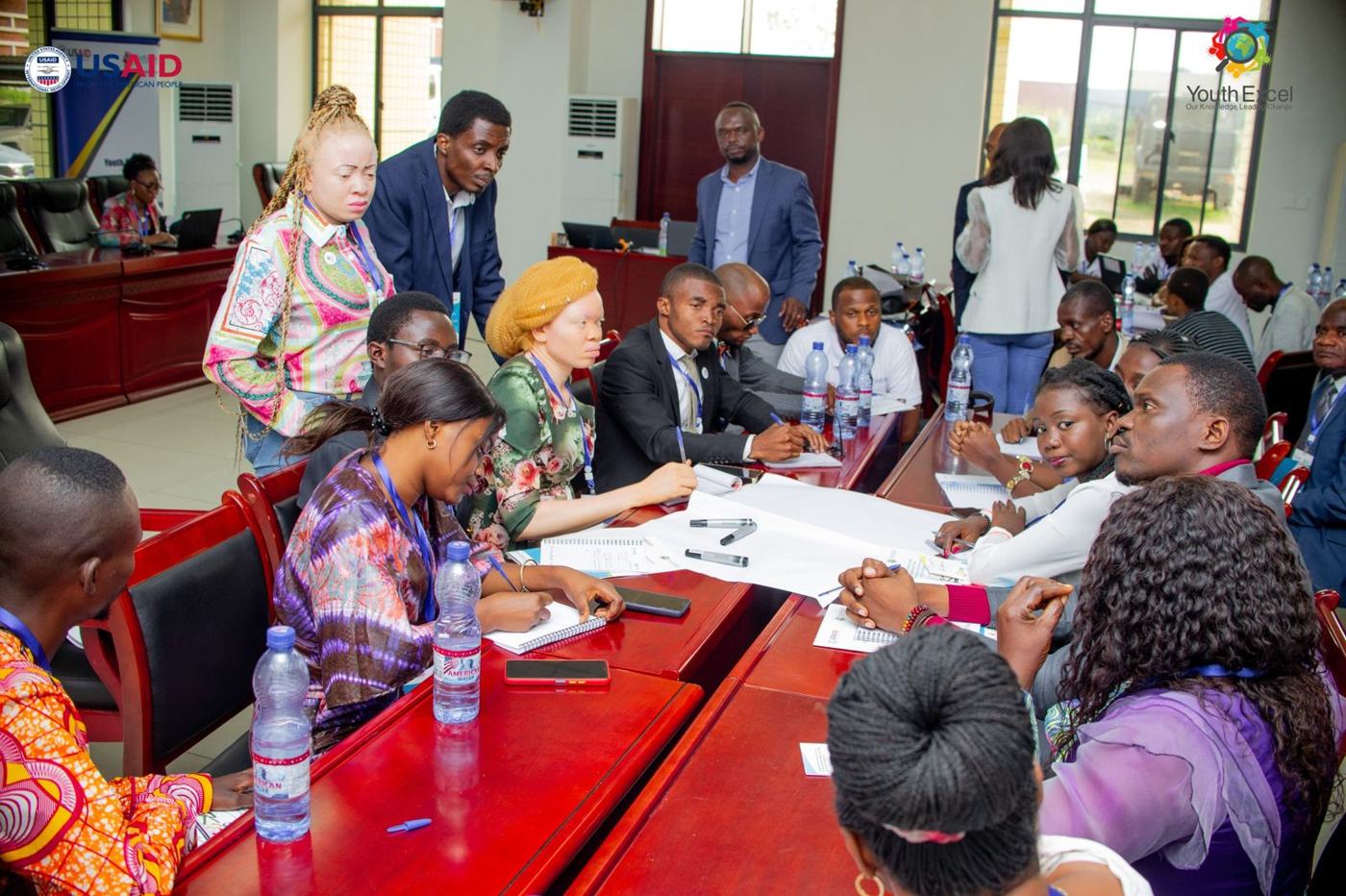
Figure 2: Group work at the Youth Represent DRC Data Summit. Kinshasa, August 2022. Photo: CERC
Results in 2022
Youth research findings and knowledge products presented to stakeholders at the Data Summit in Kinshasa (August 2022).
9 youth organisations of the ICON engaged in a joint Quick Impact Project.
45 unemployed and underrepresented young people supported towards socio-economic reintegration in Kinshasa.
Monthly financial reports for November and December 2022 approved by IREX.
5
Reporting and close-out
November 2022 report: fully approved by IREX.
December 2022 report: approved by IREX.
Final disbursement: US$6,746.05, scheduled for payment on Thursday 2 February 2023.
No-cost extension: one month, through 28 February 2023, to complete the remaining activities.
ThanksOur partners
CERC thanks USAID and IREX for their trust and support, Search for Common Ground for its technical support, and the youth-led and youth-serving organisations of the Kinshasa ICON and the young people who took part in the project, as researchers, innovators and leaders of change.
6
Financial report for December 2022, approved by IREX – not audited
Expenditure
The figures below are those of CERC’s Monthly Financial Report and Cash Advance Form for 1–31 December 2022, under sub-agreement FY22-YOUTH_EXCEL-CERC-01, as approved by IREX. Amounts are in US dollars.
To 31 December 2022Budget and expenditure
Budget category
Approved budget
Expenditure December 2022
Cumulative expenditure
Budget variance
Labor
31,636.66
2,286.39
34,551.13
−2,914.47
Fringe benefits
19,860.01
1,586.16
23,578.01
−3,718.00
Travel
3,480.00
200.00
1,806.65
1,673.35
Equipment
0.00
0.00
0.00
0.00
Supplies
900.00
0.00
910.00
−10.00
Contractual
10,000.00
0.00
3,870.00
6,130.00
Other direct costs (ODC)
23,150.52
3,189.00
20,124.73
3,025.79
Subtotal direct costs
89,027.19
7,261.55
84,840.52
4,186.67
Indirect costs
8,500.72
651.16
7,876.07
624.65
Total expenses
97,527.91
7,912.71
92,716.59
4,811.33
Youth Excel – by yearExpenditure and funds received, 2021 and 2022
The expenditure to December 2021 is that of 2021 (2020–2021 report, note 2); the 2022 expenditure is the cumulative expenditure to 31 December 2022 less 2021.
Budget category
2021 US$
2022 US$
Cumulative to 31/12/2022
Salaries and fringe benefits (labor and fringe)
18,150.72
39,978.42
58,129.14
Travel
392.00
1,414.65
1,806.65
Supplies
785.00
125.00
910.00
Contractual
–
3,870.00
3,870.00
Other direct costs (ODC)
2,410.00
17,714.73
20,124.73
Indirect costs
2,023.78
5,852.29
7,876.07
Total expenditure
23,761.50
68,955.09
92,716.59
Funds received from IREX
32,506.71
51,529.10
84,035.81
Funds received: US$32,506.71 in 2021 and US$51,529.10 in 2022; the final disbursement, US$6,746.05, was received in February 2023 – US$90,781.86 in all.
December 2022Cash and advance request
Budget category
Cumulative advances to date
Cash available
Projected expenses
Advance requested
Labor
32,156.01
−2,395.12
0.00
2,395.12
Fringe benefits
21,926.93
−1,651.08
0.00
1,651.08
Travel
1,406.65
−400.00
531.77
931.77
Equipment
0.00
0.00
0.00
0.00
Supplies
910.00
0.00
0.00
0.00
Contractual
6,000.00
2,130.00
3,330.00
1,200.00
Other direct costs (ODC)
20,562.73
438.00
512.16
74.16
Subtotal direct costs
82,962.32
−1,878.20
4,373.93
6,252.13
Indirect costs
7,819.54
−56.53
437.39
493.92
Total expenses
90,781.86
−1,934.73
4,811.32
6,746.05
The advance requested, US$6,746.05, was the final disbursement of the sub-agreement.
December 2022Expenditure log
Expense
Category
US$
Salaries of the project staff
Labor
2,286.39
Statutory contributions, housing, medical care and transport of the project staff
Fringe benefits
1,586.16
Rent contribution, November 2022
ODC
300.00
Office internet connection, November
ODC
89.00
Per diem, field staff
Travel
200.00
Activity 4 ICON – trainings
ODC
2,800.00
Subtotal direct costs
7,261.55
Indirect costs
651.16
Total, December 2022
7,912.71
Micro-grants for income-generating activities (Activity 4 ICON), per diem, monitoring and evaluation, and the printing of training participation certificates were pending the validation of the November report.