This annual report, covering the period from January 2018 to December 2018, highlights progress made by Centre de Recherche sur l’Anti-Corruption to create and strengthen the demand for transparency, and to catalyse positive change in policies and practices for effective control of corruption and for promotion of good governance in the country.
2018 was a year that will be remembered by many as the year that the DRC elected a new President.
Meanwhile the corruption in mining sector and in electoral process in DR Congo, the devastating suicide attacks and Ebola widespread in Beni region highly registered news headlines. By the close of the year, it was hard to find much to celebrate or find hope in.
While this gloomy narrative is one that many people will recognize, we at CERC also saw many reasons to remain hopeful in 2018. In the following pages you will read some of the stories that inspired us over the year.
Our community monitors and volunteers worked tirelessly to reduce corruption and build integrity in their schools and communities, often at great personal risk, and with some exceptional results. The results are transformational for people living in communities affected by the widespread corruption. They are proof that investment in local efforts can reduce corruption and build integrity, even in some of the most difficult contexts. In many instances this work is highly scalable and replicable, but this requires willingness from international donors to shift the balance of power in favour of local integrity builders, which includes providing greater levels of funding.
This annual report, covering the period from January 2018 to December 2018, highlights progress made by Centre de Recherche sur l’Anti-Corruption to create and strengthen the demand for transparency, and to catalyse positive change in policies and practices for effective control of corruption and for promotion of good governance in the country.
What follows here shows a glimpse of how we continued to intensify demand for promoting good governance, and sustained our efforts to amplify the voice against corruption, which in many cases catalysed positive changes.
I take this opportunity to commend Government leaders both at the National and local levels who have always received us with open hands and have been ready and willing to partner with us. And with this partnership, we have registered positive change.
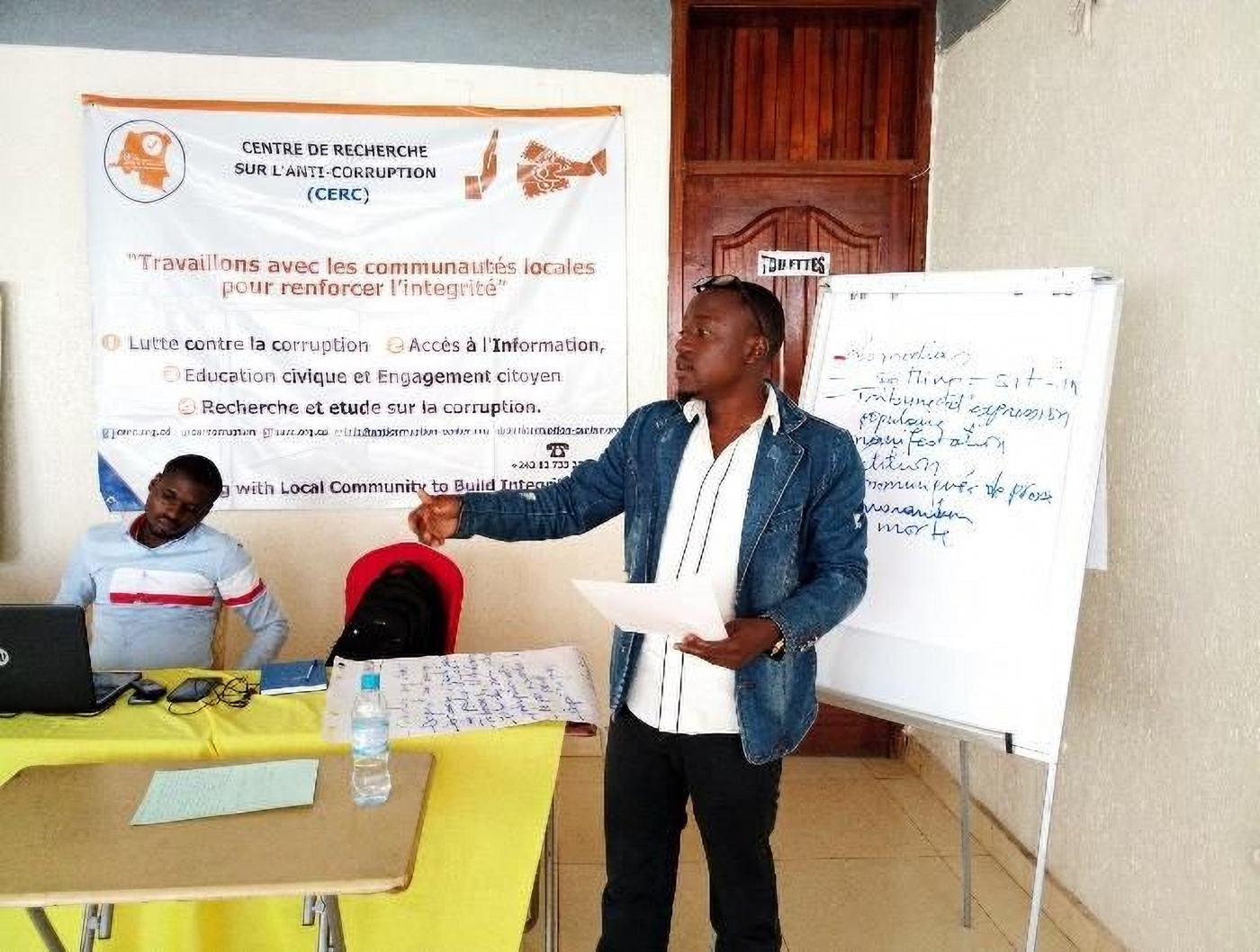
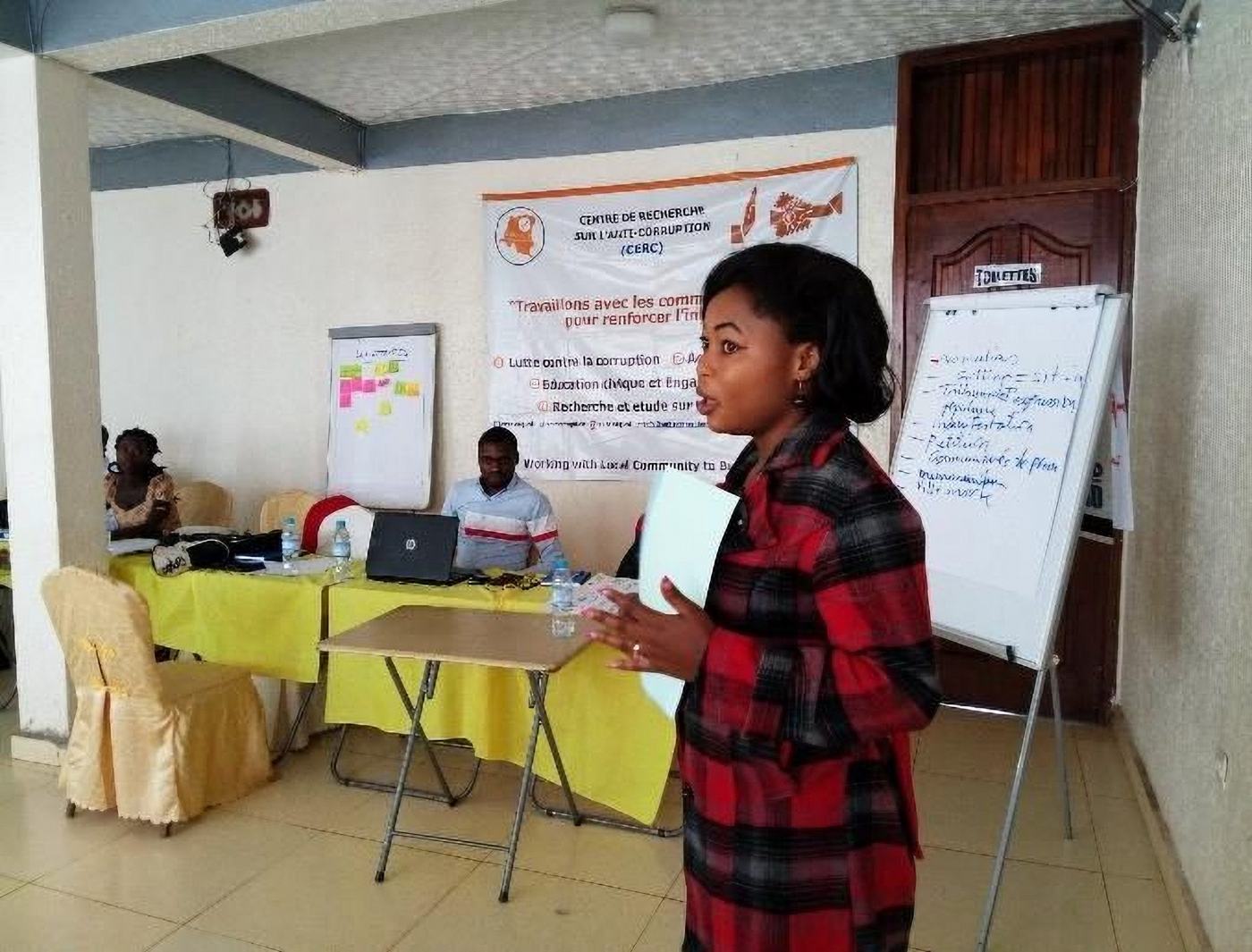
CERC is cognizant of the fact that capacity building plays a significant role in strengthening the skills, competences and abilities of the people and communities in fighting corruption in DR Congo. Thus, CERC has been able to offer capacity building to a number of stakeholders specifically relating to transparency and accountability. As a lead Anti-Corruption organization in Eastern Congo, we deliberately initiated and or joined different networks and coalitions of likeminded organizations which collaborations we greatly recognize.
We have made significant progress, but we have a long way to go. Our confidence and inspiration rest in the credibility and integrity of what we do and more importantly in the growing public support at large, for which it is our solemn responsibility to catalyse change. Moving forward, we would sincerely welcome your ideas, critiques and suggestions to strengthen our journey ahead.
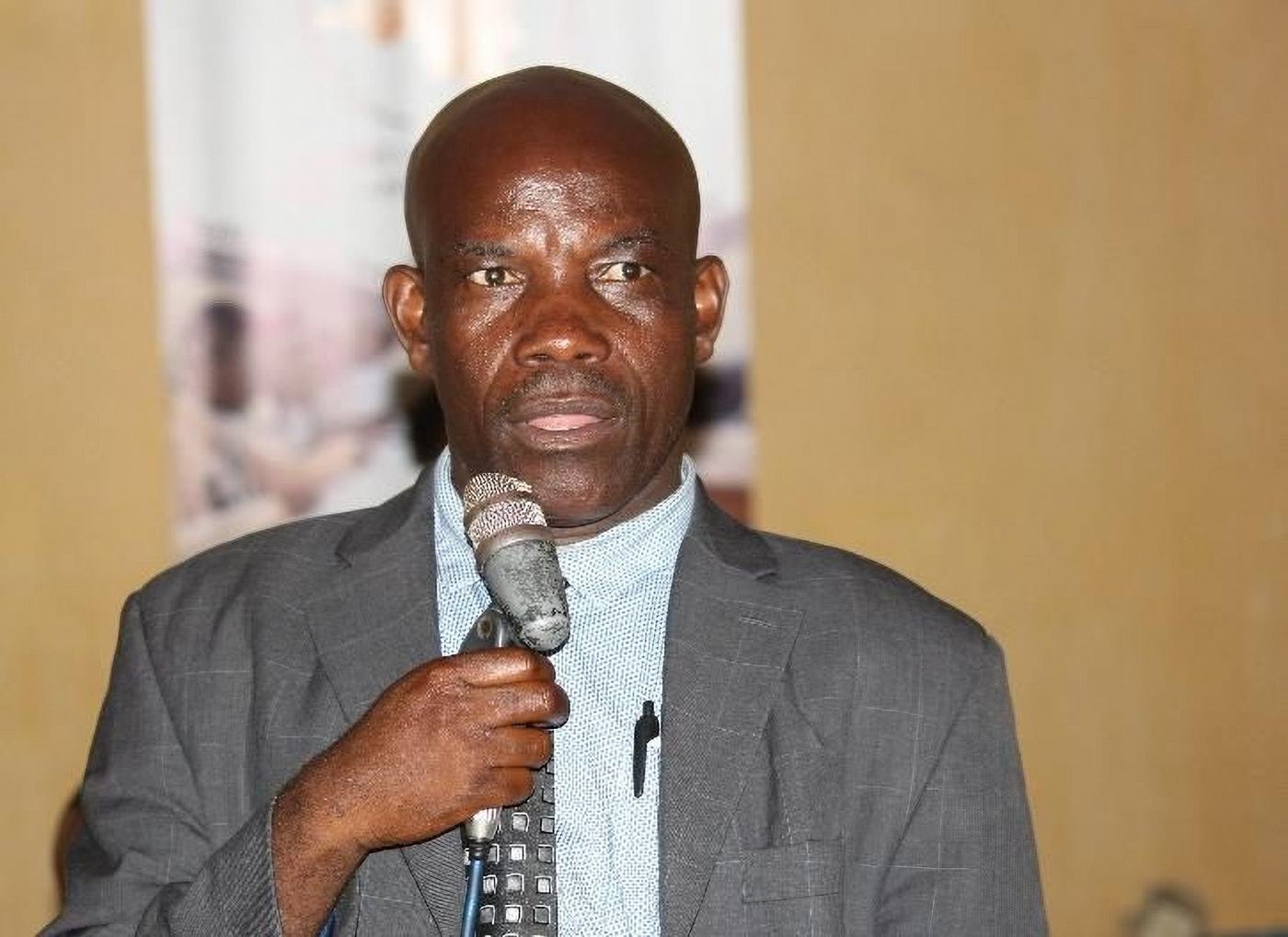
Heri Bitamala Executive Director
2
About us
Centre de Recherche sur l’Anti-Corruption, established in April 2017. It is a Congolese Non-Governmental Organisation (NGO) that aims at curbing corruption in its various forms and promoting the principles of good governance. Its main objective is to engage citizens to fight against corruption, thus advance the concepts of transparency and accountability. Moreover, CERC aspires at strengthening the respect of basic human rights as declared in both the Congolese Constitution and International Charters.
The organization resorts to any necessary means to fight corruption, improve quality of life, and encourage civil society to take measures towards transparency and accountability.
CERC advocates for reform by focusing on systemic improvement of public services and by building coalitions with other anti-corruption stakeholders, including the government, parliamentarians, the private sector, media institutions, the international community, and civil society organizations.
3
Our approach
Our approach is to work across four interdependent areas including power of local people, values, institutions and laws.
Establishing itself to be a movement against corruption, we believe that local people are central to the resolution of their own problems. Integrity is rarely sustainable if it is imposed on people from the outside and we must promote public demand for integrity using bottom-up approach.
As we seek sustained change, we clearly recognize that ethics and values are key drivers, and we must educate people to live with their highest ethical values.
We know that effective law enforcement is crucial to prevent a culture of impunity. We also believe that institutions across our societies must improve their transparency, in order to counter corruption and provide accountability to all.
4
Our Strategy
Our ambitious four-year strategy (2017–2021) aims to deliver more impact for communities affected by mismanagement and corruption in public services.
Our strategy stems from our commitment and passion to provide young people risking their lives in fighting corruption in a challenging environment with the resources they need to carry out their work, and to amplify their voices and their actions.
In its attempt to reduce corruption, CERC implements its strategy along the lines of the four following goals:
Goal 1:Diagnose corruption issues and use findings as a reference to stimulate more informed debates and formulate further projects on anti-corruption
Goal 2:Build and support partnerships and coalitions of civil society organizations to fight corruption more effectively.
Goal 3:Engage citizens and young people in promoting integrity more actively
Goal 4:Build organizational governance foundations and operational structure.
5
CERC impact highlights
Led by local people, we tackle the causes of corruption at the root, and rebuild hope after decades of widespread corruption and mismanagement that undermined the social services in South-Kivu. We are dedicated to making integrity a practical option for as many people as possible, and these figures highlight some key successes in 2018.
20Integrity clubs were supported with 15 new ones created in secondary schools in Uvira.
645people directly involved through integrity Building programme:
525students
35principals
70teachers
277girls reached through Integrity Clubs.
47people with disabilities involved
193complaints of corruption reported. In 2018, these cases mainly concern land disputes (25% of all cases unrelated to corruption), and justice cases (19%). Contacts approaching ALAC to learn about its mission represent 2% of the total workforce. Finally, 15% of contacts come to denounce a case of corruption.
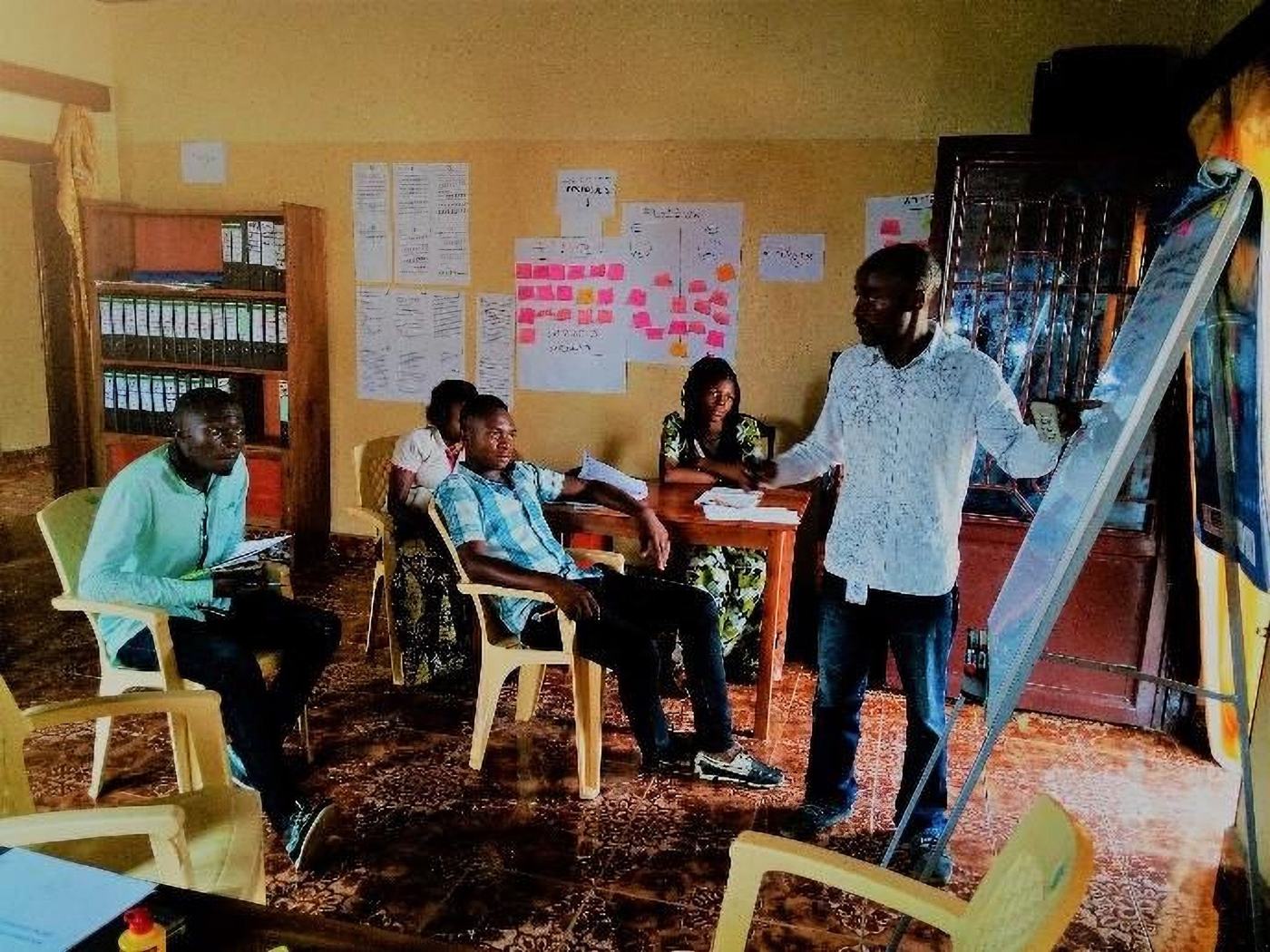
13people from 6 local organisations and 2 Ministry of Education representatives came together for “Integrity Exchance Workshop” in Bukavu to analyse causes of corruption and future prospects of integrity. They also received full Community Integrity Building training.
A weekly radio magazine “The Integrity Builders” produced in Swahili and French aired on 2 community radio stations throughout Uvira, reaching an estimated 2000 households in communities where electricity and televisions are rare luxuries.
5 million +global media impressions.
16+Articles published about Integrity Clubs. CERC uses a number of social media platforms to reach out to a wide range of people. CERC has a Facebook page – CERC- Centre de Recherche sur l’Anti-Corruption which has so far attracted new 5,000 likes in 2018.
Students participating in CERC programming around the Uvira territory reported being significantly more confident when it comes to overcoming barriers to education, making decisions about their education, setting goals for themselves and voicing their own opinions.
Increasing our advocacy to the government through hosting an event with government officials, UN mission representatives and local Civil Society Organizations.
1780students across Uvira able to study in safer condition as a result of fast, effecitve monitoring and advocacy works of Integrity Clubs.
6
Progress against our strategic plan in 2018
Now in the second year of our strategy, we made some encouraging progress towards our goals, which are outlined below:
7
Goal 1: To diagnose corruption issues and use findings as a reference to stimulate more informed debates and formulate further anti-corruption projects.
Corruption analysis, research and information is dominated by external actors, think tanks and universities. While much of this research is valuable, very little of it is based on the experience and knowledge from local practitioners on the frontline of corruption, or is led by local organizations. When the local perspective is missing, the context analysis is incomplete and, at worst, can be dangerously misleading. We aim to change this.
Highlights for 2018Households Corruption Perception Report
In 2017, we published the report on Households Corruption Perception, produced following a citizen’s consultation in 7 territories of South-Kivu interviewed around 980 people. In 2018, the report was disseminated among local Civil Society organizations and directly shared with government institutions cited as more corrupted. The report was additionally distributed during multi-stakeholders’ meetings with UN Office for the Coordination of Humanitarian Affairs (OCHA), and were esteemed as a key resource in the field by our partners.
Advocacy and Legal Advice Center (ALAC)
On January 2018, we launched the Advocacy and Legal Advice Center (ALAC), based on a model developed by Transparency International (TI), implemented in more than 30 countries throughout the world, and adapted to the specificities of the Congolese context.
The ALAC project has permitted CERC to mobilize pro bono lawyers in charge of handling corruption cases. Programs on local radio stations have also broadened the reach of ALAC to people living outside the Uvira city.
For the year 2018 more specifically, 193 people contacted our ALAC to obtain legal advice. These contacts were made via our CERC office, via dedicated WhatsApp number and by email. The high rate of reporting is attributable to the awareness-raising activities, as well as the broadcast of radio spots and communication materials, which have improved ALAC's visibility.
Of the 193 CAJAC contacts in 2018, 83% seek legal assistance for cases unrelated to corruption. The fact that many contacts express grievances unrelated to corruption is a recurring problem that CERC faces. In 2018, these cases mainly concern land disputes (25% of all cases unrelated to corruption), and justice cases (19%). Contacts approaching ALAC to learn about its mission represent 2% of the total workforce. Finally, 15% of contacts come to denounce a case of corruption. Nearly half of these contacts are young people.
The vast majority (89%) of the corruption reports were sent to the OSCEP (Observatoire pour la Surveillance de la Corruption et l’Ethique Professionnelle) to the High Court with files in support. The ALAC team also compiled complaint files (7% of the denunciations) and wrote letters to the concerned government institutions (4% of cases).
Nevertheless, the halting of the ALAC project appears inevitable at the end of 2018, since no grant no grant could be secured by CERC during the year, despite its efforts to seek funding.
People Choosing Integrity Blog
We have launched in December 2018, an online platform called “People Choosing Integrity” so we can better highlight the voice of people who actively engage in promoting integrity, through the ‘Integrity Building mapping feature. Through this platform, we will produce a monthly mapping update for live incidences of corruption and integrity building initiatives, increasing the capacity of People Choosing Integrity to provide focus and expert analysis of data on corruption and integrity building.
In 2019, we will ensure the People Choosing Integrity blog highlights the best local analysis of corruption issues and integrity building responses and increase online engagement with the site through better interactivity.
8
Goal 2: Build and support partnerships and coalitions of civil society organizations to fight corruption more effectively
Local organisations rarely have the opportunity to engage with governments and others with power. There are many reasons for this, including a lack of knowledge among government leaders, local organisations and the UN of the presence of local organisations, the logistical difficulties local organisations face in travelling to and communicating with governments, and the dominance of a model of aid delivery that involves donors and governments engaging with a small number of large INGOs.
We are determined to change this. We believe that when local people have the chance to share their knowledge and views with those in power, the policies and practice of governments and others are more likely to address the needs and realties of those living in communities affected by endemic corruption.
What we do?
We work with allies across different sectors increase advocacy, support and a greater participation in decision making, policy and practice for integrity building.
We invest in fundraising to build strong relationships with supporters, and to diversify and grow our income. Through our marketing and communications activities, we reinforce our position among key audiences as a leader in locally-led integrity building, and in mapping, convening and supporting local integrity builders.
Highlights for 2018Local Voice for Integrity
In 2018 we supported an Integrity Exchange Workshop in Bukavu, with 6 local integrity builders coming together from across the South-Kivu and North-Kivu provinces to discuss the current and future prospects for integrity.
The objective of the workshop was to foster networking and exchange of practical experience and good practice in the following specific thematic:
Effective integrity building training for Civil Society Organizations;
Involving CSOs in monitoring development projects/services implementation, including monitoring impact and using technology;
Public participation in development, implementation and monitoring of community projects and services.
Advocacy: − Planning and conducting advocacy campaign to raise awareness for transparency in education sector.
The initiative allows local organizations to learn from each other, share best practice, and exchange useful ideas and strategies on ways to build integrity and prevent corruption their communities.
Advocating for greater support to local integrity builders and for the adoption of the Access to information legislation.
In DRC, access to information legislation is a necessity that would allow civil society to obtain information on governments, private corporations and international organizations’ activities.
In coalition with the DRC chapter of African Parliamentarians Network against Corruption (APNAC) and the Collectif24, we advocate for the adoption of the Access to Information legislation which will enhance transparency and accountability and to strengthen the rule of law and civic participation in DRC through access to information and protection for individuals who report corruption (“whistleblower protection”).
Though the year, we advocated for greater support to local integrity builders through our active participation in a variety of thematic groups and meetings, including the Education Cluster, the Child Protection Working Group, the Gender Equality Working Group at the United Nation Office of the Coordination of Humanitarian Affairs (UN OCHA).
We participated in several outreach events and activities including festivals and talks in order to increase the outward facing work of CERC. This helped increase brand awareness, drive interest in CERC’s mission and reach out to new members of the public in person and through radio programs.
We also facilitated meeting with high profile figures and funders, including a meeting with South-Kivu Provincial ministries and Steven Sharp, the Counterpart International’s Country Director, to discuss community-based integrity building.
Plans for 2019 include:
Visit development agencies and embassies including Canada, Sweden, Belgium, Netherlands and Switzerland.
Continue to develop and improve story gathering from beneficiaries to support fundraising and advocacy
Develop a proposal for institutional and advocacy funding.
Attend relevant funding meetings and reach out to new donor communities.
9
Goal 3: Engage citizens and young people in promoting integrity more actively
CERC through this goal focuses on transparency and accountability in general service delivery with specific emphasis on education. Integrity Action funded projects under this thematic area and a lot has been achieved with in the year.
Highlights for 2018Inclusive Social Accountability
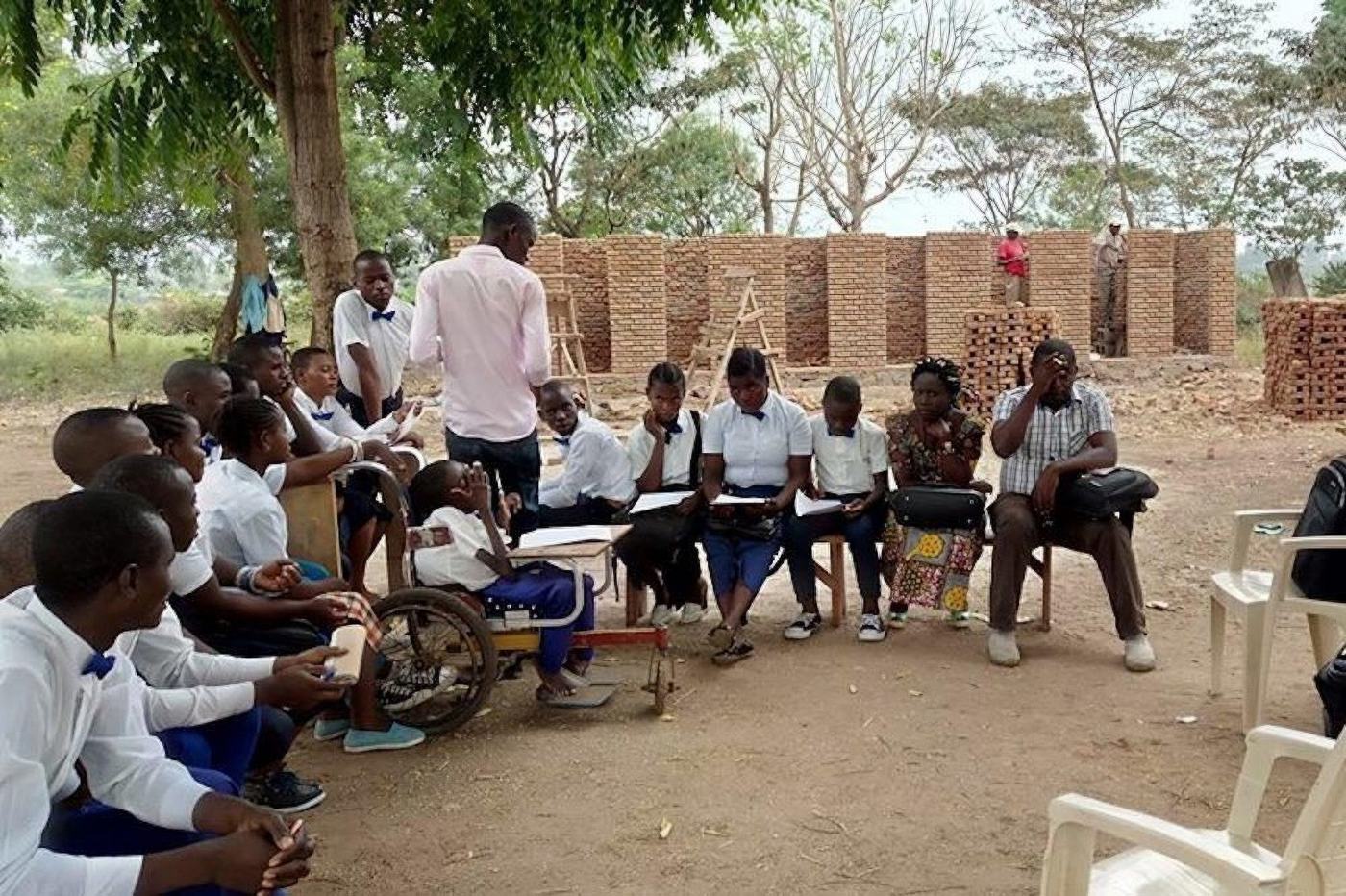
Student Acting for Honesty, Integrity and Equality (SHINE) is a community monitoring project that aims to promote transparency and social accountability in the Congolese education sector by mobilizing and engaging students to track the provision of services in secondary schools. The project uses an innovative approach, which combines integrity education through Integrity Clubs in school and on-the-ground community monitoring with the use of information and communication technology (ICT).
During the period of 2018, the program supported 300 students, 40 teachers and 20 principals from 20 secondary schools and empowered them with resources and skills to combat inefficient and corrupt education services and infrastructure projects in Uvira. The communities covered by the project were: Uvira, Kiliba, Sange, Luberizi, Bwegera and Luvungi.
Youth involved in the project received thematic and technical training on: Anti-Corruption, Citizenship, Transparency and Accountability, Inclusion and Gender Equality, Leadership, and Community Integrity Building. Throughout the training sessions, youth leaders learned to identify the issues related to corrupt governance, to mobilize stakeholders to increase transparency and accountability of secondary schools. In addition to training, the project provided small grants (not exceeding 200 USD) amounting to 3500 USD to support youth monitors in monitoring education services in schools and infrastructure projects at the community level that encouraged transparency
Case study 1: Community monitors convinced school officials to build extra toilets and classrooms”
In some parts of conflict-torn DRC, efforts are being made to help children transform their schools and communities.
Instability, poverty and natural disasters in the Democratic Republic of Congo have undermined efforts to deliver basic services such as education, resulting in the deterioration of many schools across the country. Millions of children, girls in particular, have very limited or no access at all to education. Among the other major factors, pervasive corruption in the education sector hinders schools’ ability to provide effective education. But in Eastern Congo efforts are being made to help children to transform their schools and communities as a whole.
Children who are already distressed by violence and poverty can be fragmented by corruption that never finds practical solutions.
The Centre de Recherche sur l'Anti-Corruption is implementing a project called "Student Acting for Honesty, Integrity and Equality," funded by Integrity Action, which has been generating great impact on secondary education in the DRC.
This project aimed at mobilize youths to monitor the implementation of education infrastructures and services and collaborate with stakeholders to make sure problems are fixed.
With a lack of adequate school building and education materials, 300 students (148 boys and 152 girls) were trained as community monitors to inspect delivery of education services and advocate with decision-makers and key stakeholders to find and implement solutions to education problems.
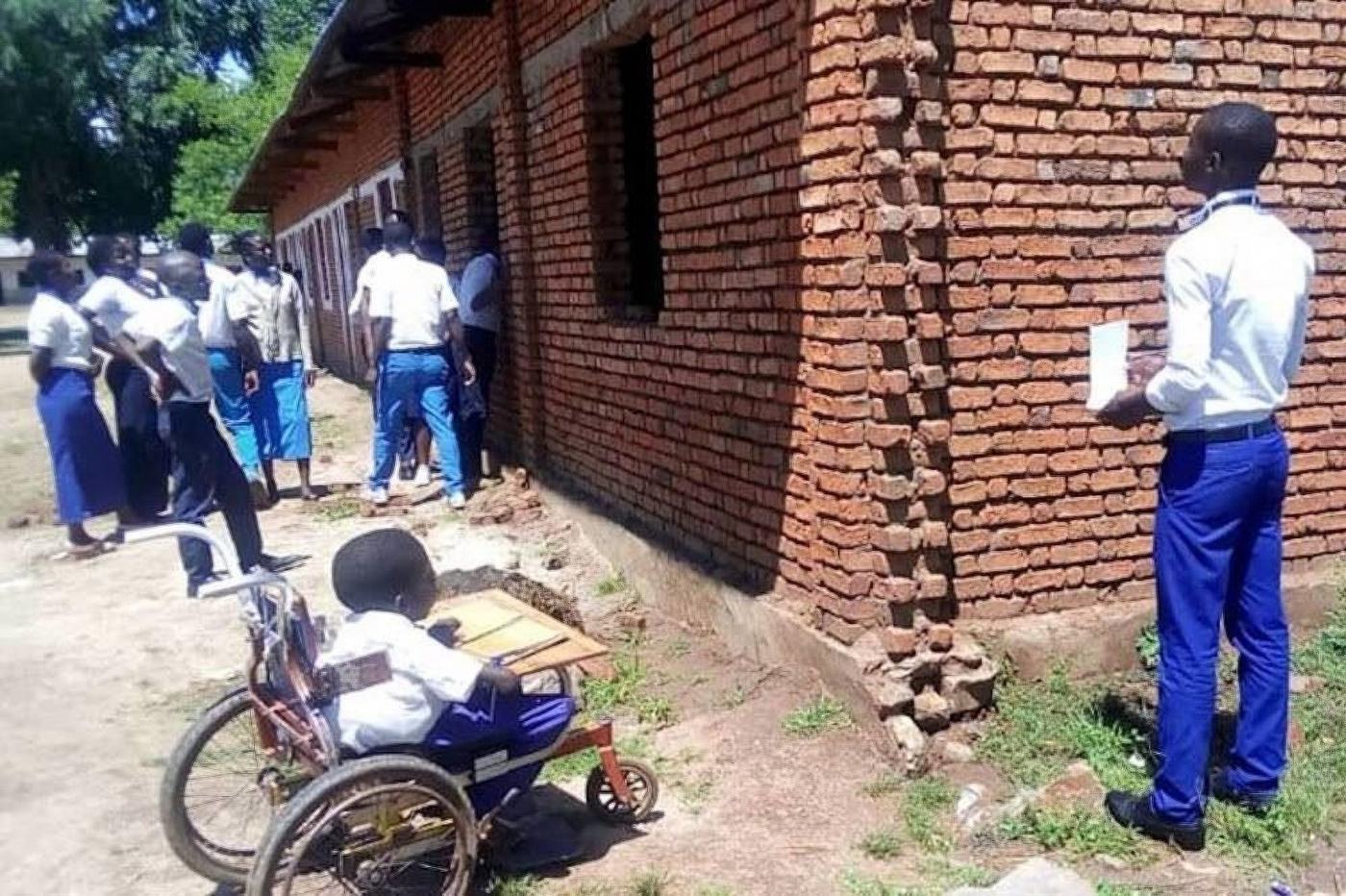
Figure 1 New toilets have been built at a school after monitor advocacy
Since February, these students have monitored infrastructure and education services in 20 secondary schools, valued at over $1 million, and contributed to the resolution of 22% of problems identified within education.
Yvette Rosalive Meucca, an Integrity Club leader, says “the Integrity Club saved my life”.
Formed in January by the CERC, a group of community monitors began overseeing the delivery of education services at a school in Luvungi.
During monitoring, they discovered that their school did not meet the minimum standards of education because the toilets and some classrooms were insufficient for the number of students enrolled.
This meant that some students were sitting three or four on the same desk, reaching 70 to 90 students in a classroom built for only 50.
In some classrooms, when it rained water was pouring over the students - this situation means that classes had to be interrupted until the end of the rain. In addition, there were only three toilets for 590 students.
Then they decided to bring together all the key stakeholders to raise awareness of the issues in order to find consensual solutions. During meetings, they managed to convince school officials to build extra toilets and classrooms.
In October 2018, the new classrooms were completed and a block of eight latrines is under construction, while the school continues fundraising to rehabilitate other classrooms.
As a result, students in improved schools are now benefiting from better sanitary facilities and constructed classrooms with enough space to fit all students on the school benches.
One school in Luvungi also incorporated gender-sensitive elements into school by constructing separate sanitary facilities for girls and boys.
Gender Equality and Social Inclusion
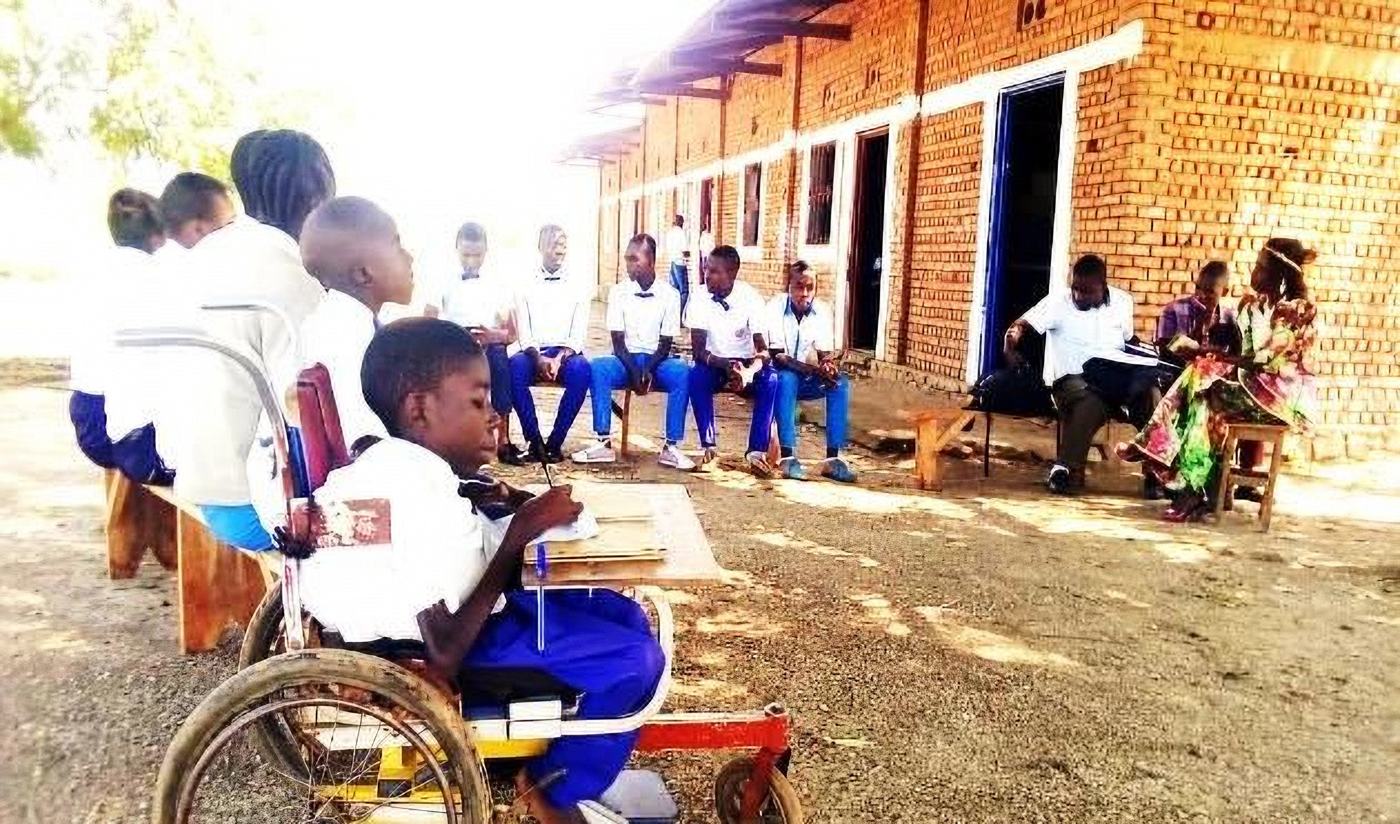
It’s well known that empowerment and participation can enable youth and people living with disabilities and those form marginalized groups to have the knowledge and skills to behave responsibly and to play an active role in social, economic and political decision-making. CERC actively sought the participation of students of marginalized minority groups that faced a variety of barriers and challenges due to their identity and systemic oppression in that context.
With the SHINE project, CERC was integrated gender equality and social inclusion into every aspect of the Community Integrity Building program.
Our partner’s schools was supported to reduce inequalities and exclusion.
With this investment, we have empowered women, girls, and all individuals at risk of exclusion within the communities in which CERC works to act with and demand integrity, actively taking part in building institutions to promote a state that is open, accountable and responsive to their need.
The students from the minority groups that engaged took on additional leadership roles within the group were empowered by their participation and were able to monitor the delivery of education and infrastructure services in their schools and communities. The participation had multiplier effects for those students, who, in many cases, were experiencing less exclusion due to their participation. Moreover, the participation of diverse youth strengthened the group.
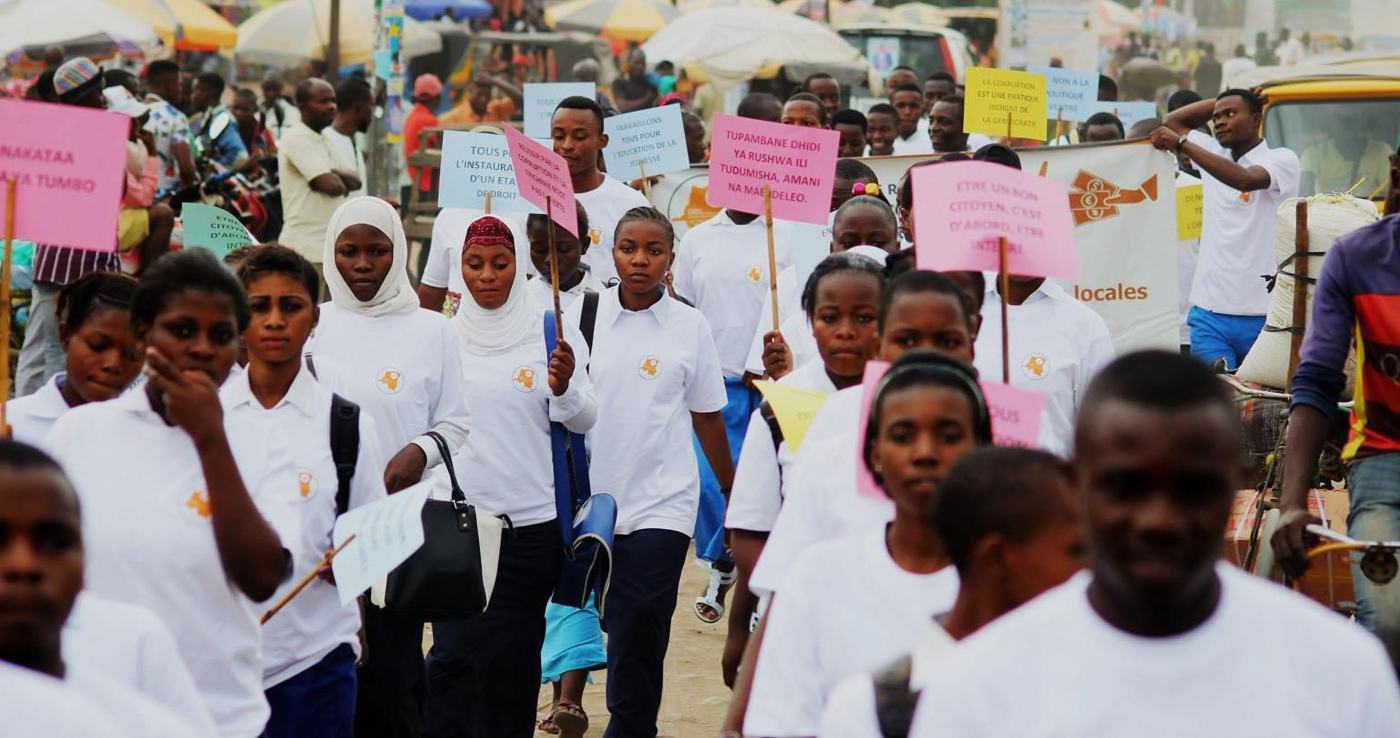
Celebrating the international anti-corruption day
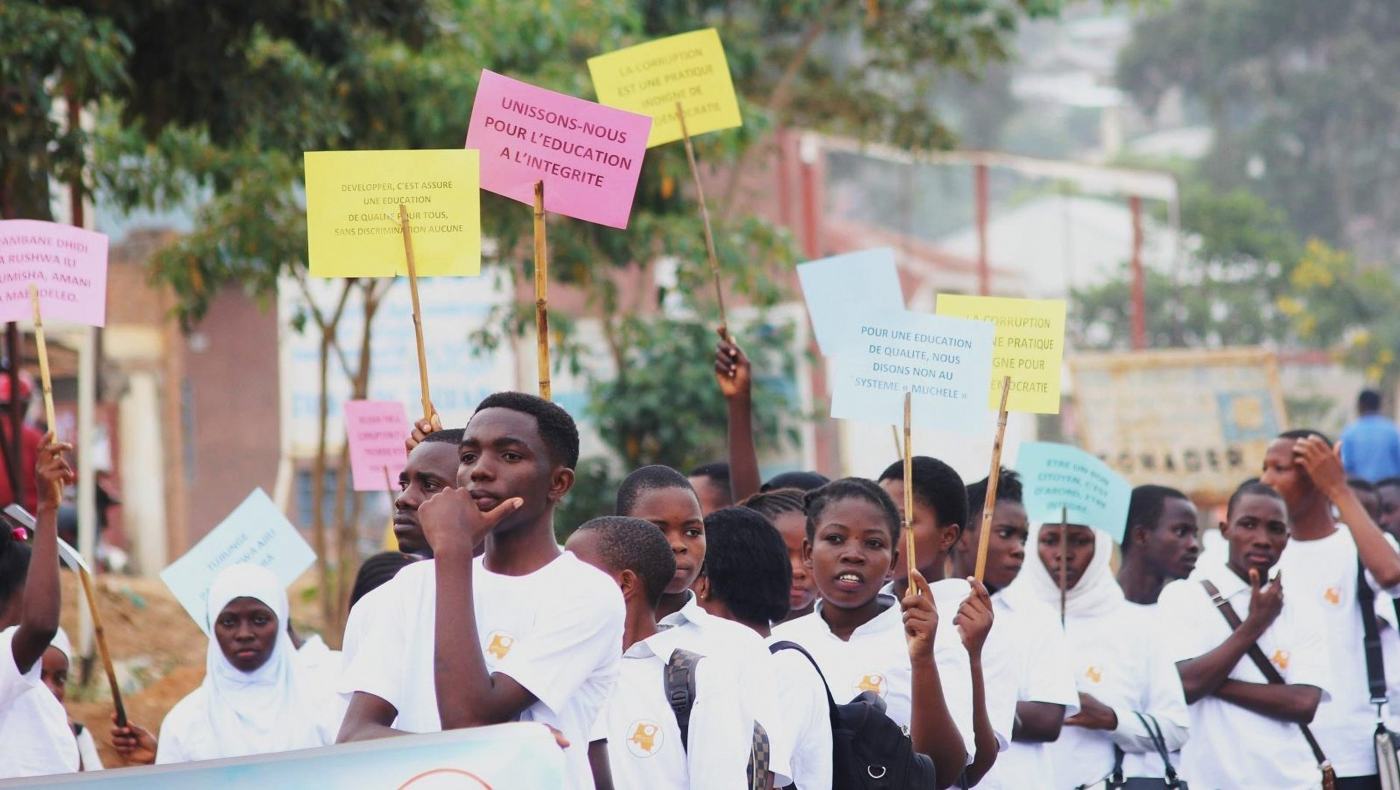
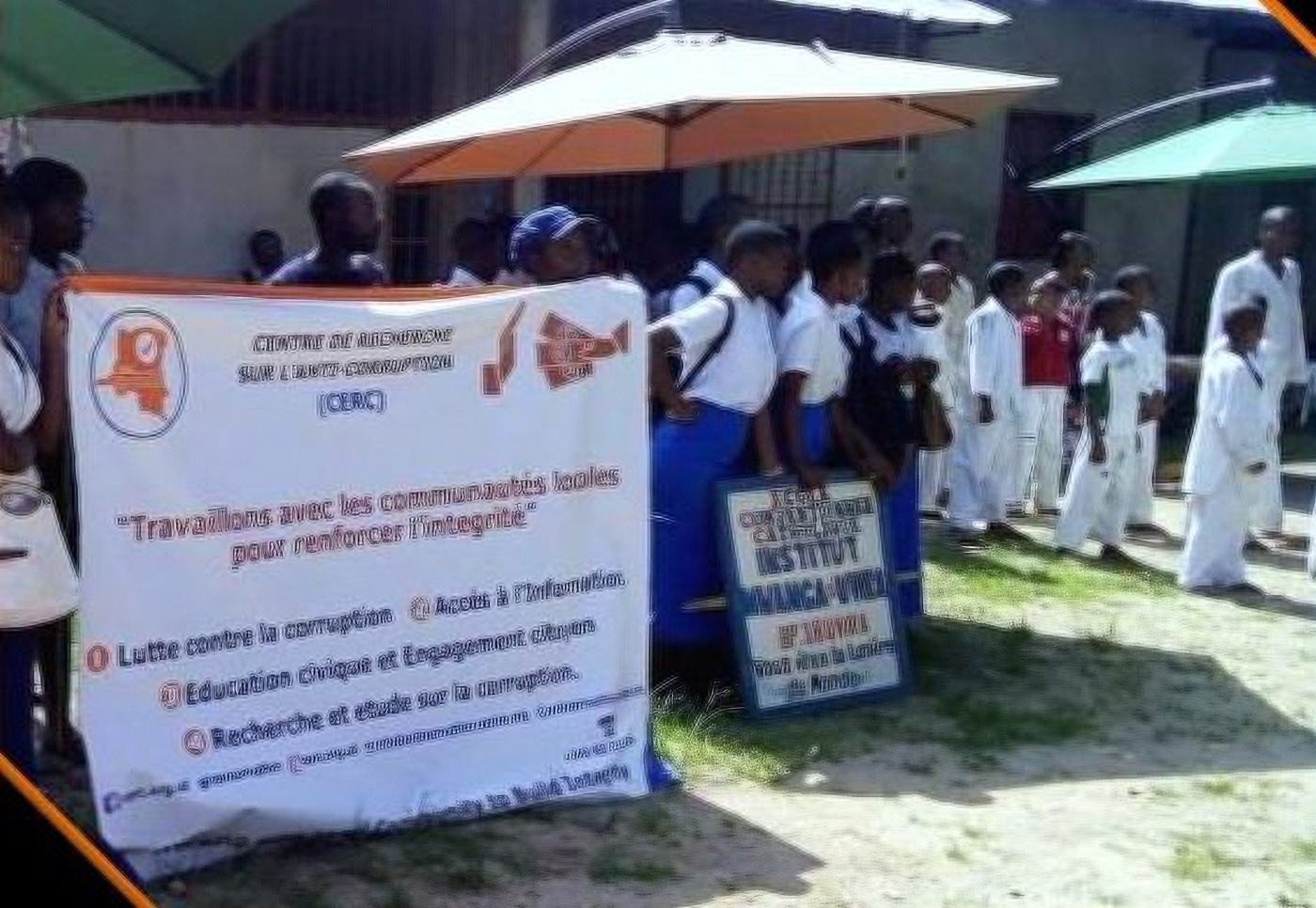
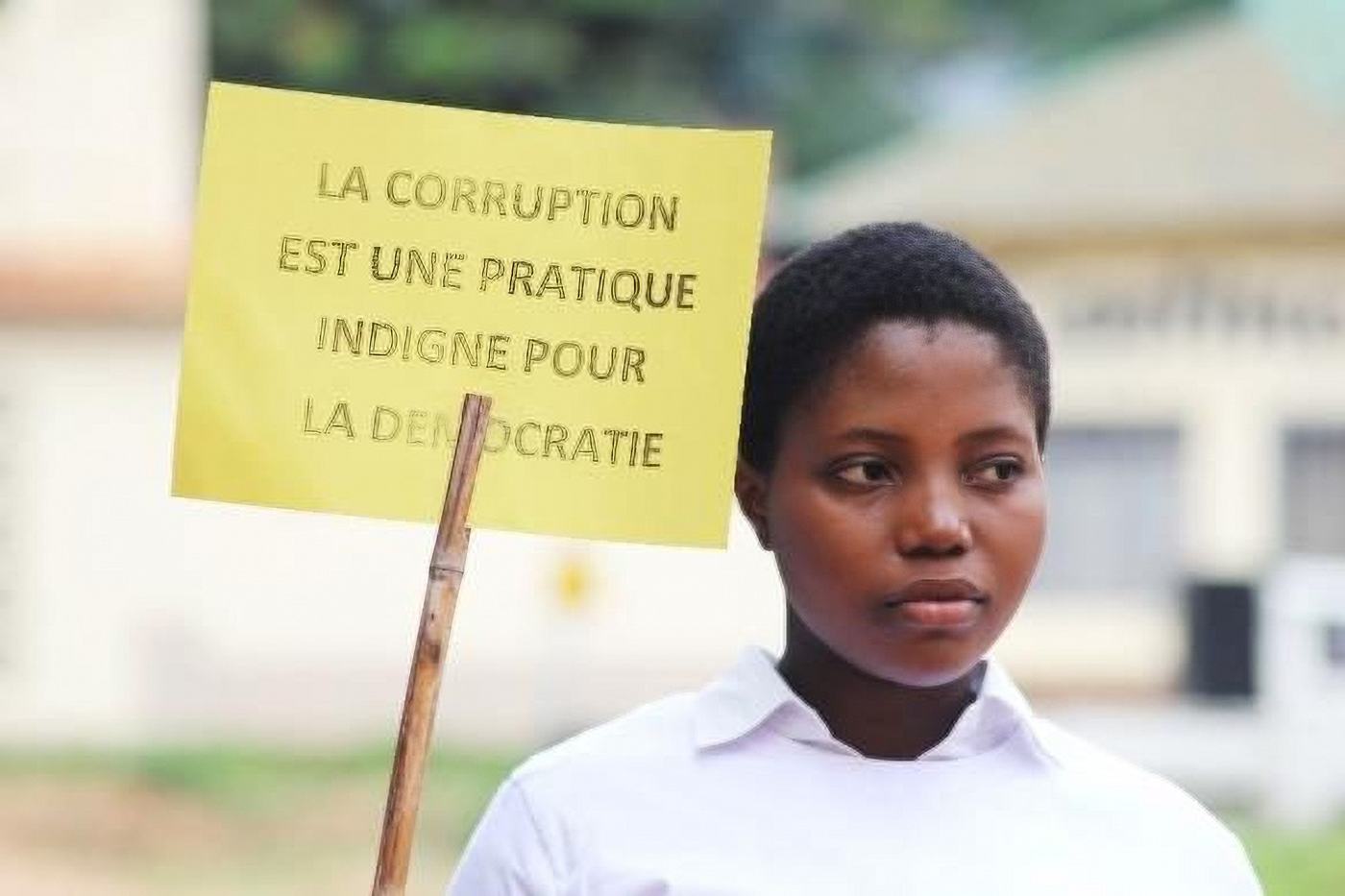
On 8 and 9 December 2018, CERC worked with 35 secondary schools in Uvira to engage students in the commemoration of the International Anti-Corruption Day under the slogan of “United Against Corruption for Development, Peace and Security”.
Students from 35 secondary schools in Uvira march on International Anti-Corruption Day.
The objective of the campaign was to raise public awareness about corruption costs in education, bring their attention to the national and local efforts to address corruption and promote Integrity and Good Governance in education.
The 2018 campaign has had remarkable success in getting public commitments from national governments to combat corruption, strengthening dialogue between civil society and governments, and raising people’s awareness about the costs of corruption and encouraging them to take a stand against it.
CERC Executive Director, Heri Bitamala issued an official statement on International Anti-Corruption Day, stressing the importance of addressing corruption to build responsive, capable and inclusive institutions that meet the needs of their people.
The campaign have had a strong media outreach. National level activities prior to, on and after International Anti-Corruption Day were widely covered by radio programmes. The events associated with the campaign’s launch were also promoted through social media (via Twitter and Facebook), thereby helping to reach thousands of people.
Furthermore, we organized public outreach events such as 3 kilometers march, which attracted large crowds. CERC estimates that approximately 15000 people were reached through the campaign.
10
Recognition and thanks
As always, we owe a debt of gratitude first to our community monitors and teachers, who are working on the frontlines of conflict and corruption, at great personal risk, to stop corruption and build integrity. We continue to be inspired by their bravery and are honoured to be working with them.
As in previous years, we could not have achieved our goals without the support of a range of donors and supporters. We are grateful for the continued financial support of the Integrity Action for our work in South-Kivu.
We are also very thankful to our individual Donors who continue to sustain CERC and to believe in what we do. As in previous years, we would like to thank Netsuite for providing us with free Accounting Application, which helps to improve our financial reporting.
Last but not least, we would like to thank the staff and volunteers of Centre de Recherche sur l’Anti-Corruption, who have dedicated significant time and effort to making sure that the organization is achieving impact for those living in corrupt environments.
11
Year ended 30 September 2018 – audited statements of the SHINE project
Financial review
This financial review covers the project Students Acting for Honesty, Integrity and Equality (SHINE), funded by Integrity Action and implemented by CERC from 1 October 2017 to 30 September 2018. It is based on the project’s audited financial statements. The accounts were audited by Group BEAG (Bureau d’Études, Audit et Capacitation en Gestion), Uvira, South Kivu; the report, signed by ALUMA Armand, principal auditor and chartered accountant (Expert-Comptable agréé), is dated 29 October 2018. The audit was carried out in accordance with international standards on auditing and covers the receipts and expenditure, the assets and equipment, and the cash position of the project. All amounts are in Congolese francs (CDF), as in the audit report.
All projectsConsolidated statement – all projects
All of CERC’s income for the period came from one project, SHINE. This is the first year of funding: there is no previous year to compare with.
Income and expenditure
Oct 2017 – Sep 2018 CDF
Income received
Integrity Action / NORAD – SHINE
93,925,930
Total income received
93,925,930
Expenditure, all projects combined
Staff costs
32,520,000
Programme activities
39,991,100
Rent, running costs and equipment
6,196,080
Professional fees, staff training and audit
3,138,200
Administration and overheads
9,457,500
Total expenditure
91,302,880
Income less expenditure
2,623,050
Balance brought forward from the previous year
–
Balance carried forward to the next year
2,623,050
Categories: staff costs (salaries and benefits); programme activities (work with students, schools, communities and youth organisations, research, advocacy, awareness raising and training of beneficiaries); travel and transport where reported separately; rent, running costs and equipment (rent, office, utilities, communication, supplies, printing, equipment, other direct costs and bank charges); professional fees, staff training and audit; administration and overheads. Audited: SHINE audit, year 1 (notes 1, 3 and 4).
Statement of funds, by grant
For each grant: the balance brought forward from the previous year, the funds received, the funds spent, the funds returned to the donor or transferred to another grant (and adjustments), and the balance carried forward. A negative balance means spending ahead of funding. Each line says whether its figures are audited, and by which audit.
Grant and donor
Brought forward CDF
Received CDF
Spent CDF
Returned, transfers CDF
Carried forward CDF
Students Acting for Honesty, Integrity and Equality (SHINE)1 Integrity Action (NORAD) · Audited – SHINE audit, year 1
–
93,925,930
91,302,880
–
2,623,050
Total
–
93,925,930
91,302,880
–
2,623,050
1Students Acting for Honesty, Integrity and Equality (SHINE), Oct 2017 – Sep 2018. First year of the grant. Closing balance: 2,623,050 CDF.
Policy 002Compliance and reporting standards
This section applies to this report the corrections made on CERC’s financial accountability page (cerc.cd/en/our-financial-accountability/): the compliance of each grant with Policy 002, every difference between reports, accounts and audits – explained, or open and shown in red – and the score of this report against the reporting standard of Policy 002, for a target of 80%.
Compliance with Policy 002: 100%
Average of the rules met (1), partly met (½) and not met (0) by each grant in Oct 2017 – Sep 2018.
Grant and year – rules partly or not met
Level
Students Acting for Honesty, Integrity and Equality (SHINE) Oct 2017 – Sep 2018
Compliant 100%
Differences between reports, accounts and audits
None for these years.
Reporting standard of Policy 002: 88%
This report meets the target of 80%.
Criterion
Status
Funds received, by donor and project (IV.12) SHINE grant from Integrity Action (NORAD).
Met
Expenditure by category (II.6.4) By category and budget heading.
Met
Budget and actual, by budget line (II.6.4) Budget and actual by heading: 89.1% of the budget spent (audit, note 3).
Met
Cash position at year end (II.6.4) 2,623,050 CDF at 30 September 2018 (audited).
Met
Commitments and balances owed (II.6.4) Balance carried forward to year 2 of SHINE.
Met
Statement of funds, by grant (III.2.2) Statement of funds by grant.
Met
Comparison with the previous year (II.6.4) First year of funding.
Not applicable
External audit: auditor and opinion (III.3.2) Group BEAG: true and fair view.
Met
Audit findings and follow-up action plan (III.3.5) The auditor’s observations are reported; no follow-up action plan is published.
Partly met
Differences between reports, accounts and audits explained (III.3.3) No unexplained difference.
Met
Compliance with the financial policies assessed (Policy 002) Assessed in this report.
Met
Assets and equipment (inventory) (VI.8, VII.1) Equipment of 7,576,000 CDF (audit, note 5).
Met
Financial report approved by the Board of Directors (IV.12) No record of the Board’s approval of the financial report is published.
Not met
Restricted fundsFunded projects
The figures in this review cover one restricted grant: Integrity Action’s funding for the SHINE project.
Project
Donor
Period
Received CDF
Students Acting for Honesty, Integrity and Equality (SHINE)
Integrity Action / NORAD
Oct 2017 – Sep 2018
93 925 930
SHINE – A community monitoring project in Uvira that supported 300 students, 40 teachers and 20 principals from 20 secondary schools, through Integrity Clubs, to monitor education services and infrastructure projects; small grants amounting to 3500 USD supported the youth monitors.
IncomeIncome
Over the period, the project received 93 925 930 CDF from Integrity Action / NORAD in three instalments: 51 006 890 CDF, 32 519 040 CDF and a third instalment of 10 400 000 CDF paid as an advance. CERC’s own contribution was 0 CDF (note 1).
ExpenditureExpenditure
Expenditure totalled 91 302 880 CDF, 89,1% of the budget of 102 481 500 CDF (note 3): 81 845 380 CDF on the seven direct project headings and 9 457 500 CDF on overheads. Personnel, the largest heading, was spent in full (32 520 000 CDF). Training & capacity building used 19 994 500 CDF of its 28 100 000 CDF budget (71,2%), and advocacy & policy engagement 2 999 550 CDF of 4 500 000 CDF (66,7%). Other costs directly related to the project – communications, office supplies, printing and bank charges – were overspent (6 196 080 CDF, 134,7% of budget), and overheads slightly exceeded their budget (101,5%).
According to the auditor, expenditure did not reach 100% mainly because the training of civil society organisations planned in Kinshasa was held in Bukavu, the budget being too small for Kinshasa (flights, accommodation, training costs) and too large to be fully spent in Bukavu, as all participants came from North and South Kivu. Bank charges were well above budget (248,0%), owing to fees on transfers through FBNBank and its intermediary bank in the USA and the Central Bank of Congo’s levy on transfers above the equivalent of US$10 000; CERC changed banks to reduce them.
Receipts of 93 925 930 CDF less expenditure of 91 302 880 CDF left a balance of 2 623 050 CDF at 30 September 2018, held in CERC’s cash box (note 4). The auditor also certified the project’s assets and equipment, valued at 7 576 000 FC (note 5).
AuditIndependent auditor’s report
On the basis of the checks carried out, our opinion is that the financial statements of the Students Acting for Honesty, Integrity and Equality (SHINE) project, closed at 30 September 2018 by the financial and accounting services of CERC, give a true and fair view, in all material respects, of the situation and of its position at 30 September 2018, in accordance with the accounting rules, CERC’s procedures and Integrity Action’s guidelines for the justification of expenditure.
Without calling this opinion into question, the auditor noted that the project’s budget narrative, the financial reporting tool (an MS Excel database), the electronic and paper cash books and the supporting documents for all sampled expenditure were in place. The main observations concern shortcomings in applying CERC’s procedure manuals for the purchase of goods and the management of human resources: no regular or surprise cash counts, an inventory of project assets of limited quality, income tax and social contributions not paid on staff salaries, employment contracts not validated by the State employment office, and low salaries that do not reflect the positions actually held or living conditions in the area.
Funding policyOur sources of funding
CERC is funded by institutional donors, through grants restricted to projects, and by individual donors. In 2018, Integrity Action funded the SHINE project: CERC accounted for the project’s expenditure under Integrity Action’s guidelines for the justification of expenditure, and the project accounts were independently audited for the period to 30 September 2018. Netsuite provided CERC with a free accounting application, which helps to improve its financial reporting. No grant could be secured during the year for the ALAC project, despite CERC’s efforts to seek funding; for 2019, CERC planned to develop a proposal for institutional and advocacy funding and to reach out to new donor communities.
Note 1Receipts by instalment and source of funding, 1 October 2017 – 30 September 2018
Year 1 instalment
Integrity Action / NORAD
CERC
Total
First
51 006 890 CDF
0 CDF
51 006 890 CDF
Second
32 519 040 CDF
0 CDF
32 519 040 CDF
Third (advance)
10 400 000 CDF
0 CDF
10 400 000 CDF
Total
93 925 930 CDF
0 CDF
93 925 930 CDF
Note 2Receipts against budget
Item
Budget CDF
Actual CDF
Variance CDF
Rate
Receipts and expenditure planned in the budget
102 481 500
93 925 930
8 555 570
91.65 %
Note 3Project expenditure against budget
Budget heading
Budget CDF
Actual CDF
Variance CDF
Rate
1. Personnel
32 520 000
32 520 000
0
100,0%
2. Awareness raising, sensitization and engagement with schools and communities
6 245 000
4 846 950
1 398 050
77,6%
3. Training & capacity building
28 100 000
19 994 500
8 105 500
71,2%
4. Integrity Clubs expenses and monitoring
13 800 000
12 150 100
1 649 900
88,0%
5. Advocacy & policy engagement
4 500 000
2 999 550
1 500 450
66,7%
6. Technical assistance & professional fees
3 400 000
3 138 200
261 800
92,3%
7. Other costs directly related to the project (comms, office supplies, printing, bank charges)
4 600 000
6 196 080
-1 596 080
134,7%
Total
93 165 000
81 845 380
11 319 620
87,8%
8. Overheads (max 10%)
9 316 500,0
9 457 500
-141 000
101,5%
Total project budget, including overheads
102 481 500
91 302 880
11 178 620
89,1%
Note 4Cash position at 30 September 2018
Item
Amount CDF
Total receipts
93 925 930
Total expenditure
91 302 880
Balance at 30 September 2018
2 623 050
The cash balance of 2 623 050 CDF was held in CERC’s cash box.
Note 5Project assets and equipment
The auditor certified the project’s assets and equipment, valued at 7 576 000 FC: 2 office desks, 3 plain wooden tables, 2 wooden shelves, 3 wooden shelving units, 6 red-wood cane chairs, 1 printer, 1 laptop, 1 desktop computer, 2 wheeled office chairs, 1 power generator, 1 Wi-Fi modem, 10 ITEL Android phones and 10 TECHNO Android phones.
Source: audit report of Group BEAG (ALUMA Armand, Expert-Comptable agréé), 29 October 2018 (translated from French). Full report: audit report 2017–2018 (PDF).