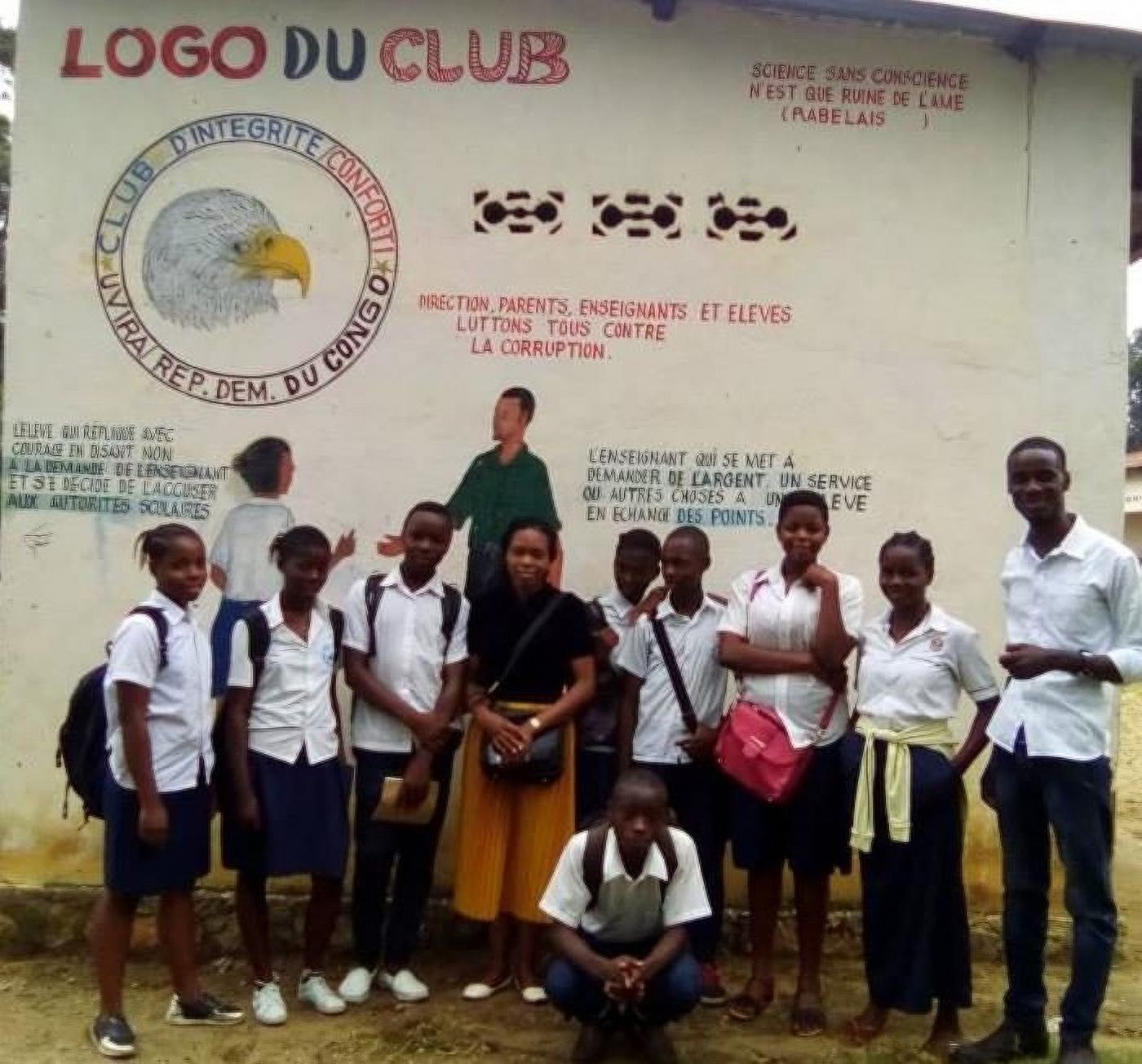
This financial review covers the second year of the project Students Acting for Honesty, Integrity and Equality (SHINE), from 1 October 2018 to 30 September 2019, carried out by CERC with funding from Integrity Action (NORAD, project reference NORAD/SHINE/DRC2). It is based on the project’s financial statements, closed at 30 September 2019 by the finance and accounting services of CERC, and on the audit report of Group BEAG (Group Bureau d’Études, Audits et Capacitation en Gestion, Uvira), principal auditor Aluma Armand, chartered accountant (Expert Comptable Agréé), dated 14 October 2019, in Uvira. The audit was conducted in accordance with international standards on auditing. Amounts are in Congolese francs (CDF), as in the audit report. The figures for 1 October 2018 – 30 September 2019 have been audited.
All projectsConsolidated statement – all projects
Income, expenditure and balances of all projects combined, compared with the previous year (October 2017 – September 2018).
| Income and expenditure | Oct 2018 – Sep 2019
CDF | Oct 2017 – Sep 2018
CDF |
|---|
| Income received | | |
| Integrity Action / NORAD – SHINE | 73,202,400 | 93,925,930 |
| Total income received | 73,202,400 | 93,925,930 |
| Expenditure, all projects combined | | |
| Staff costs | 24,960,000 | 32,520,000 |
| Programme activities | 34,040,597 | 39,991,100 |
| Rent, running costs and equipment | 5,382,250 | 6,196,080 |
| Professional fees, staff training and audit | 2,563,300 | 3,138,200 |
| Administration and overheads | 6,851,500 | 9,457,500 |
| Total expenditure | 73,797,647 | 91,302,880 |
| Income less expenditure | −595,247 | 2,623,050 |
| Balance brought forward from the previous year | 2,623,050 | – |
| Balance carried forward to the next year | 2,027,803 | 2,623,050 |
Categories: staff costs (salaries and benefits); programme activities (work with students, schools, communities and youth organisations, research, advocacy, awareness raising and training of beneficiaries); travel and transport where reported separately; rent, running costs and equipment (rent, office, utilities, communication, supplies, printing, equipment, other direct costs and bank charges); professional fees, staff training and audit; administration and overheads. Audited: SHINE audit, year 2. Audited: SHINE audit, year 1 (notes 1, 3 and 4).
Statement of funds, by grant
For each grant: the balance brought forward from the previous year, the funds received, the funds spent, the funds returned to the donor or transferred to another grant (and adjustments), and the balance carried forward. A negative balance means spending ahead of funding. Each line says whether its figures are audited, and by which audit.
| Grant and donor | Brought forward
CDF | Received
CDF | Spent
CDF | Returned, transfers
CDF | Carried forward
CDF |
|---|
Students Acting for Honesty, Integrity and Equality (SHINE)1
Integrity Action (NORAD) · Audited – SHINE audit, year 2 | 2,623,050 | 73,202,400 | 73,797,647 | – | 2,027,803 |
| Total | 2,623,050 | 73,202,400 | 73,797,647 | – | 2,027,803 |
1 Students Acting for Honesty, Integrity and Equality (SHINE), Oct 2018 – Sep 2019. Opening balance: the year 1 balance of 2,623,050 CDF (notes 1 and 4 of the audit). Closing balance at 30 September 2019: 2,027,803 CDF. In US dollars, each year is converted at its own average rate, hence a small difference of US$24.76 between the year 1 closing and the year 2 opening balances.
Policy 002Compliance and reporting standards
This section applies to this report the corrections made on CERC’s financial accountability page (cerc.cd/en/our-financial-accountability/): the compliance of each grant with Policy 002, every difference between reports, accounts and audits – explained, or open and shown in red – and the score of this report against the reporting standard of Policy 002, for a target of 80%.
Compliance with Policy 002: 100%
Average of the rules met (1), partly met (½) and not met (0) by each grant in Oct 2018 – Sep 2019.
| Grant and year – rules partly or not met | Level |
|---|
Students Acting for Honesty, Integrity and Equality (SHINE)
Oct 2018 – Sep 2019 | Compliant
100% |
Differences between reports, accounts and audits
| Difference | Amount
US$ |
|---|
Explained – SHINE: exchange rates of years 1 and 2
The SHINE accounts were kept in Congolese francs. The year 1 balance (2,623,050 CDF) is US$1,616.65 at the 2018 rate (1,622.52) and US$1,591.89 at the 2019 rate (1,647.76) used for year 2: US$24.76, an exchange difference only; in francs the balances chain exactly. | 24.76 |
Explained – SHINE: October–December 2019
The SHINE balance was 2,027,803 CDF at 30 September 2019 (year 2 audit) and 13,460,680 CDF at 31 December 2019 (CERC’s 2019 financial report): +11,432,877 CDF net, the first phase 3 funds from Integrity Action less the quarter’s spending (US$5,716.44 at 2,000 CDF per US$). The 2020 audit opens with these 13,460,680 CDF converted at 2,000 CDF per US$: US$6,730.34. The quarter itself lies between two audits. | 5,716.44 |
Reporting standard of Policy 002: 88%
This report meets the target of 80%.
| Criterion | Status |
|---|
Funds received, by donor and project (IV.12)
SHINE grant from Integrity Action (NORAD). | Met |
Expenditure by category (II.6.4)
By category and budget heading. | Met |
Budget and actual, by budget line (II.6.4)
Budget and actual by line: 97.9% of the budget spent (audit, note 3). | Met |
Cash position at year end (II.6.4)
2,027,803 CDF at 30 September 2019 (audited). | Met |
Commitments and balances owed (II.6.4)
Balance carried forward; owed to Integrity Action. | Met |
Statement of funds, by grant (III.2.2)
Statement of funds by grant. | Met |
Comparison with the previous year (II.6.4)
Compared with October 2017 – September 2018. | Met |
External audit: auditor and opinion (III.3.2)
Group BEAG: true and fair view. | Met |
Audit findings and follow-up action plan (III.3.5)
The auditor’s observations (procurement procedures) are reported; no follow-up action plan is published. | Partly met |
Differences between reports, accounts and audits explained (III.3.3)
Exchange difference of US$24.76 explained. | Met |
Compliance with the financial policies assessed (Policy 002)
Assessed in this report. | Met |
Assets and equipment (inventory) (VI.8, VII.1)
Equipment of 2,918,000 CDF (audit). | Met |
Financial report approved by the Board of Directors (IV.12)
No record of the Board’s approval of the financial report is published. | Not met |
Restricted fundsFunded projects
All the figures in this review relate to one project, funded by a grant from Integrity Action, with funding from NORAD, and restricted to that project.
| Project | Donor | Period | Received
CDF |
|---|
| Students Acting for Honesty, Integrity and Equality (SHINE), year 2 | Integrity Action (NORAD) | Oct 2018 – Sep 2019 | 73,202,400 |
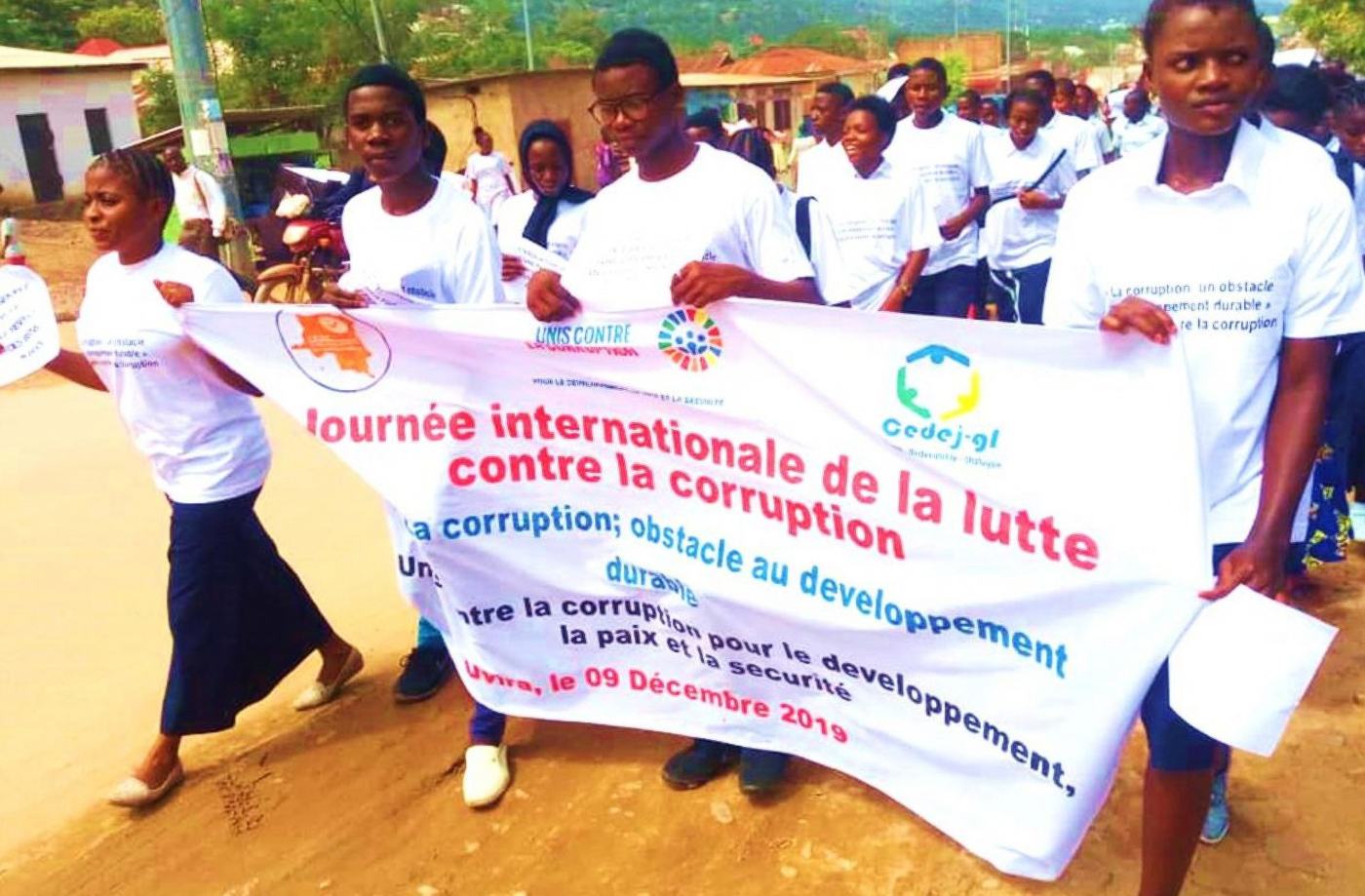
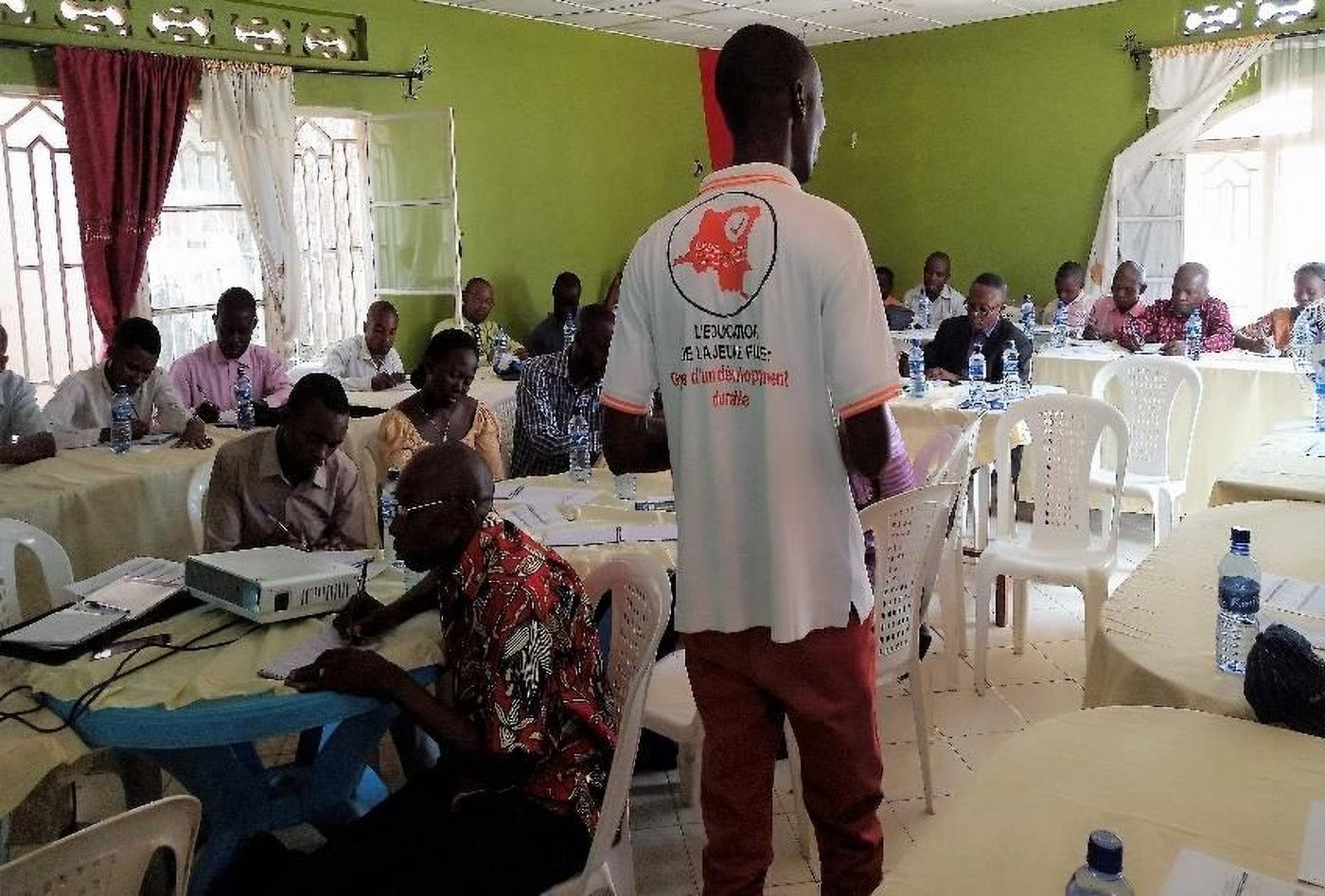
- SHINE – Integrity Clubs in 55 secondary schools in Uvira and Bukavu (South Kivu), through which students, parents and the whole community hold schools accountable for the quality of education services; training of School Facilitators, teachers, headteachers and Integrity Club leaders; tablets for youth monitoring; and advocacy and policy engagement through joint working group (JWG) meetings.
IncomeIncome
The funds available to the project for the year amounted to 75 825 450 CDF: the balance from year 1 (2 623 050 CDF) and two tranches of 36 601 200 CDF each from Integrity Action/NORAD (note 1). In all, Integrity Action transferred 73,202,400 CDF during the year (note 4); CERC made no contribution of its own to the project’s funds.
The auditor notes that the balance from year 1 had not been taken into account in resource planning (note 4).
ExpenditureExpenditure
Expenditure at 30 September 2019 amounted to 73 797 647 CDF, against a budget of 75,368,480 CDF including overheads: an expenditure rate of 97.9 % and a variance of 1,570,833 CDF (note 3). Direct project costs amounted to 66,946,147 CDF and overheads to 6,851,500 CDF. The main headings were personnel (24,960,000 CDF, spent in full), training and capacity building (12,587,147 CDF), Integrity Clubs expenses and monitoring (11,949,500 CDF), and awareness raising, sensitisation and engagement with schools and communities (5,903,150 CDF).
Spending exceeded the budget on two lines. On line 3.a, spending reached 128.4 % of the budget because the global partners workshop, planned in Kenya, took place in Nepal, and the flights cost more; bank charges (line 7.a) reached 115.3 % of the budget. Nothing was spent on line 3.c because the awards ceremony was postponed to December 2019, as students could not be brought together during the long holidays (June–September).
AuditIndependent auditor’s report
Group BEAG audited the accounts of the SHINE project for the period from 1 October 2018 to 30 September 2019, in accordance with international standards on auditing. The auditor’s opinion reads:
“On the basis of the checks carried out, our opinion is that the financial statements of the Students Acting for Honesty, Integrity and Equality (SHINE) project, closed at 30 September 2019 by the finance and accounting services of CERC, give a true and fair view, in all material respects, of the position and its state at 30 September 2019, in accordance with the accounting rules, the procedures of CERC and Integrity Action’s guidelines for the justification of expenditure.”
Aluma Armand, Principal Auditor, Group BEAG
Without qualifying this opinion, the auditor noted that the main observations concern gaps in applying CERC’s procedure manuals for the purchase of goods, and the partial implementation of the previous audit’s recommendations.
Funding policyOur sources of funding
CERC is funded by institutional donors, through grants restricted to projects, and by donations from its supporters. In 2018–2019, the SHINE project was funded by Integrity Action, with funding from NORAD. The project has its approved budget; expenditure is justified in accordance with CERC’s procedures and Integrity Action’s guidelines for the justification of expenditure, and the project accounts are independently audited – the year 2 audit also reviewed the implementation of the previous audit’s recommendations.
Note 1Funds available, 1 October 2018 – 30 September 2019
| Tranche | Integrity Action/NORAD | CERC | Total |
|---|
| Balance from year 1 | 2 623 050 CDF | 0 CDF | 2 623 050 CDF |
| First tranche | 36 601 200 CDF | 0 CDF | 36 601 200 CDF |
| Second tranche | 36 601 200 CDF | 0 CDF | 36 601 200 CDF |
| TOTAL | 75 825 450 CDF | 0 CDF | 75 825 450 CDF |
Note 2Income, budget and actual (CDF)
| Item | Budget
CDF | Actual
CDF | Variance
CDF | Rate |
|---|
| Planned income | 75,368,480 | 73,797,647 | 1,570,633 | 97.9 % |
As printed in the audit report. The difference between 75,368,480 and 73,797,647 is 1,570,833 CDF, the variance shown at the foot of the expenditure table below.
Note 3Overall project expenditure, budget and actual (CDF)
| Code | Description | Budget | Actual | Variance | Rate |
|---|
| 1 | Personnel |
| 1.a | Executive Director (Programme Manager) | 5,760,000 | 5,760,000 | 0 | 100.0% |
| 1.b | Project Coordinator | 3,840,000 | 3,840,000 | 0 | 100.0% |
| 1.c | Project Coordinator | 4,800,000 | 4,800,000 | 0 | 100.0% |
| 1.d | Finance Manager (GFP & Comm Officer) | 3,840,000 | 3,840,000 | 0 | 100.0% |
| 1.e | Advocacy & Policy Engagement | 2,880,000 | 2,880,000 | 0 | 100.0% |
| 1.f | Monitoring and Evaluation Officer | 3,840,000 | 3,840,000 | 0 | 100.0% |
| Subtotal | 24,960,000 | 24,960,000 | 0 | 100.0% |
| 2 | Awareness raising, sensitisation and engagement with schools and communities |
| 2.a | Transportation during engagement with schools and comm | 1,680,000 | 1,605,750 | 74,250 | 95.6% |
| 2.b | Event catering, staffing, venue hire | 1,300,000 | 1,298,500 | 1,500 | 99.9% |
| 2.c | Outreach and Media Coverage | 3,000,000 | 2,998,900 | 1,100 | 100.0% |
| Subtotal | 5,980,000 | 5,903,150 | 76,850 | 98.7% |
| 3 | Training & Capacity Building |
| 3.a | Global partners workshop: 2 flights, visas, travel insurances and meals during travel | 3,636,800 | 4,670,647 | -1,033,847 | 128.4% |
| 3.b | Teachers, Headteachers and IC Leaders trainings | 8,000,000 | 7,916,500 | 83,500 | 99.0% |
| 3.c | Annual Transparency and Anti-Corruption Awards ceremony and Donors events | 1,600,000 | 0 | 1,600,000 | 0.0% |
| Subtotal | 13,236,800 | 12,587,147 | 649,653 | 95.1% |
| 4 | Integrity Clubs expenses and monitoring |
| 4.a | Staff transportation during monitoring & engagement with other schools | 3,400,000 | 2,755,500 | 644,500 | 81.0% |
| 4.b | Tablets for Youth Monitoring | 2,400,000 | 2,394,000 | 6,000 | 99.8% |
| 4.c | Reimbursement for Integrity Clubs expenses | 6,800,000 | 6,800,000 | 0 | 100.0% |
| Subtotal | 12,600,000 | 11,949,500 | 650,500 | 94.8% |
| 5 | Advocacy & Policy Engagement |
| 5.a | Transportation | 1,440,000 | 1,398,700 | 41,300 | 97.1% |
| 5.b | Event catering, staffing, venue hire during JWGs meetings | 1,280,000 | 1,246,600 | 33,400 | 97.4% |
| 5.c | Accommodation | 960,000 | 955,500 | 4,500 | 99.5% |
| Subtotal | 3,680,000 | 3,600,800 | 79,200 | 97.8% |
| 6 | Technical assistance & Professional Fees |
| 6.a | Expert fees/consultants – only as required | | 0 | 0 | |
| 6.b | Monitoring & Evaluation | 1,800,000 | 1,563,300 | 236,700 | 86.9% |
| 6.c | Audit Fees | 1,000,000 | 1,000,000 | 0 | 100.0% |
| 6.d | Translation Services | 0 | 0 | 0 | |
| Subtotal | 2,800,000 | 2,563,300 | 236,700 | 91.5% |
| 7 | Other costs directly related to the project (comms, office supplies, printing, bank charges) |
| 7.a | Bank Charges | 960,000 | 1,106,650 | -146,650 | 115.3% |
| 7.b | Communication | 1,600,000 | 1,577,500 | 22,500 | 98.6% |
| 7.c | Textbooks and ICs training materials production | 2,700,000 | 2,698,100 | 1,900 | 99.9% |
| Subtotal | 5,260,000 | 5,382,250 | -122,250 | 102.3% |
| Total | 68,516,800 | 66,946,147 | 1,570,653 | 97.7% |
| 8 | Overheads (max 10%) | 6,851,680 | 6,851,500 | 180 | 100.0% |
| Total project budget including overheads | 75,368,480 | 73,797,647 | 1,570,833 | 97.9% |
Note 4Cash balance at 30 September 2019
| Item | Amount CDF |
|---|
| Balance from year 1 of the project | 2,623,050 |
| Total income transferred by Integrity Action | 73,202,400 |
| Total expenditure | 73,797,647 |
| Balance at 30 September 2019 | 2,027,803 |
The auditor notes that the previous year’s balance had not been taken into account in resource planning, which explains the difference between the variance in the financial report (1,570,832.62 CDF) and the cash balance (2,027,803 CDF).
The audit also certifies the project’s assets and equipment for year 2, of 2 918 000 FC: one laptop, one voltage converter, one cupboard, one router and 17 smartphones.
Source: audit report of Group BEAG, 14 October 2019 (translated from French; amounts in Congolese francs, CDF, as in the original). Full report: audit report 2018–2019 (PDF).