Annual Report 2020–2021

The Administration Board is pleased to present its 2020-2021 report and the fund accountability statement covering January 1, 2020, and December 31, 2021.

Download the report (PDF)

1

CERC Annual Report FY 2020 and 2021

The Administration Board is pleased to present its 2020-2021 report and the fund accountability statement covering January 1, 2020, and December 31, 2021. The fund accountability statement complies with the Articles of Association and Accounting and Reporting Procedures.

Who we are

CERC is a DRC-based nonprofit organization that empowers youth and local communities to solve complex problems related to corruption.

Founded in April 2017 to find answers to the following questions:

  • How can communities obtain better services using integrity?
  • How can we teach integrity to equip the next generation of leaders to say no to corruption?
  • How can integrity be a sustainable response to conflict and instability in eastern Congo?

We have begun to answer these challenging questions by directing our attention to research and investments in education. Through these focus areas, we helped communities and young people build the skills necessary to hold their leaders accountable, cultivate a new generation of ethical leaders, and to combat inefficient and corrupt public services and infrastructure projects in DRC.

Our mission

Our mission is to advance knowledge on the causes and consequences of corruption and support the development of new anti-corruption policies and initiatives in the Democratic Republic of the Congo.

Our vision

CERC is working towards a Congo in which :

  • Government, Politics, Businesses, Civil Society are free from corruption.
  • Individuals and groups are empowered with knowledge and skills to take action to claim and defend their human rights and the rights of others.
  • Local leadership capacity emerges to influence decision-makers and hold governments accountable to the needs and aspirations of citizens;
2

Executive summary

2021 saw the revision of CERC's strategic plan in consultation with all staff and board members. The reviewed strategy contains four ambitious goals underpinned by the following core values: accountability, innovation, equality and non-discrimination, meaningful participation, equitable partnership, mutual respect, and trust. Our new strategy is summarized on page 4.

The last twenty-four months have been challenging for our team working towards this strategy and our shared values. The COVID-19 crisis has significantly impacted fundraising, and we were forced to reduce our operations by closing the Uvira and Bukavu offices in South Kivu. Even if COVID-19 brought specific challenges to our organization, it also provided us an opportunity to understand better our weaknesses as an organization. Now, we reflect on our successes, failures, and progress and use what we have learned to strengthen our organization most effectively.

Our revised strategy 2022-2025 provides mitigation measures against the impact of Covid-19 and future crises that may affect our operations and functioning. With this strategy, we demonstrate our willingness to innovate and take bold steps to accomplish our mission of holding the powerful accountable for the common good.

CERC continues to work in highly challenging conditions, and we are expecting the years ahead to be wealthy. We remain encouraged by and grateful for the continued support and generosity of existing donors and new donors who joined us this year and have helped us keep our work going.

Highlights of the year included:

  • In 2020, CERC was accredited as an ordinary member of the UNCAC Coalition. The UNCAC Coalition is a global network of over 350 civil society organizations (CSOs) in over 100 countries, committed to promoting the ratification, implementation, and monitoring of the UN Convention against Corruption (UNCAC).
  • In 2020, CERC was approved as a Catalyst 2030 member - a global movement of social innovators to achieve the Sustainable Development Goals (SDGs).
  • In July 2021, the United Nations granted CERC the United Nations Economic and Social Council (ECOSOC) 's special consultative status.
  • In 2021, CERC received USD 32,506.71 from the United States Agency for International Development (USAID) through the International Research & Exchanges Board (IREX).
  • In 2021, CERC received 23,986.00 USD from the Global Partnership for Education through OXFAM IBIS to prepare the Students Acting for Accountability and Quality of Education in Kinshasa and South-Kivu.
  • In 2021, CERC brought together over 600 education stakeholders for a series of consultations, focusing on improving accountability in education.
  • In 2021, The UNCAC Coalition Secretariat commissioned the CERC to produce the Civil Society Report on the implementation by the Democratic Republic of the Congo of the United Nations Convention Against Corruption (UNCAC). The report shared a hundred recommendations to GODRC and will be shared widely with policymakers and the sector, used in briefings to several coalitions, and referenced by the UN.
  • In 2021, CERC deepened its commitment to growing the role of young people in local development by supporting 10 youth-led initiatives across Kinshasa with funding support from the United States Agency for International Development (USAID).
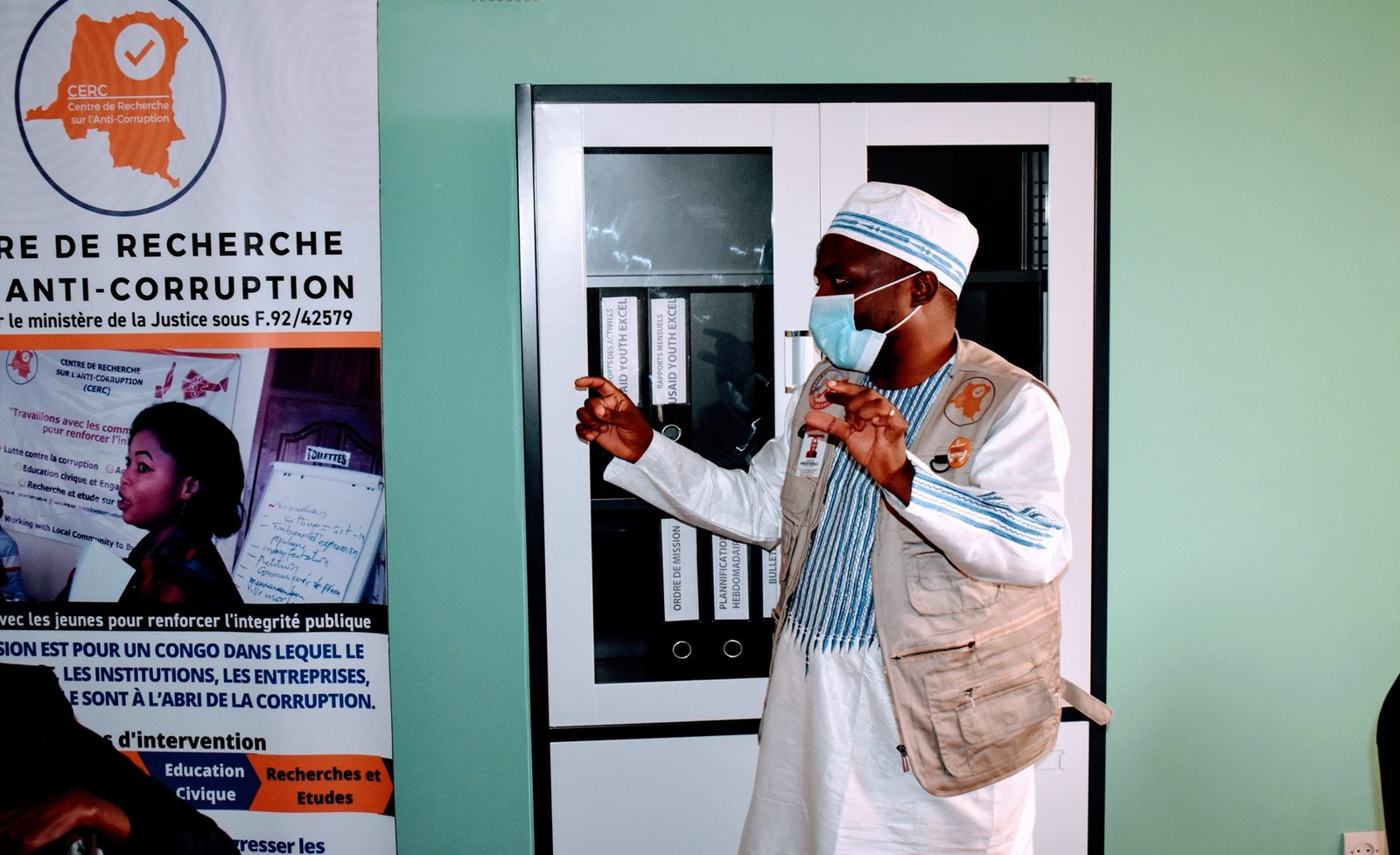
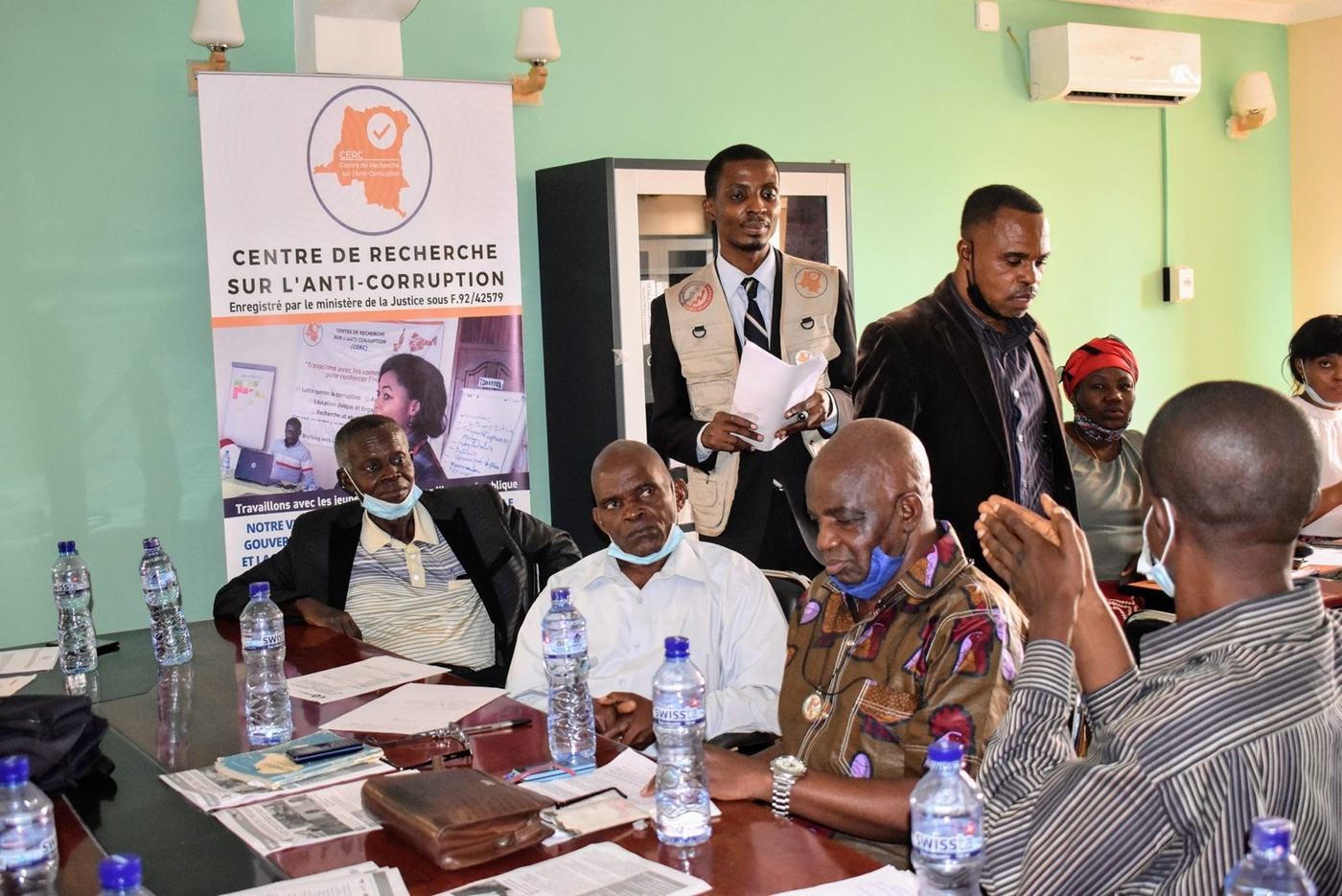
Senior education officials during a consultative workshop in Kinshasa
Figure 1: Senior education officials during consultative workshop in Kinshasa, 27 July 2021. Photo: Heri Bitamala, CERC
3

CERC strategic goals

In 2020 and 2021, we focused on four prioritized and strategic goals. We perceive them as a single integrated activity, each reinforcing the others. These four prioritized activities impact four critical areas of Congolese society: the people, values, institutions, and laws.

Goal 1:

Diagnose corruption issues and use findings as a reference to stimulate more informed debates and formulate further projects on anti-corruption

Goal 2:

Build and support partnerships and coalitions of civil society organizations to fight corruption more effectively+3

Goal 3:

Engage citizens and young people in promoting integrity more actively

Goal 4:

Build governance foundations and operational structures and processes for scaling up anti-corruption and integrity building works in other provinces

4

Our values

Equality & non-discrimination

  • We affirm our commitment to equality, social justice, and respect for human dignity for all.
  • Our efforts to advance equality and non-discrimination are pillars on which we build our programs.
  • We work to overcome the imbalances in power that led to inequalities to establish equality between men, women, and those who do not identify as one or the other – in society and within our organization.
  • We do not discriminate based on race, religion, ability, age, sex, sexual orientation, gender identity, or social status in our interactions and with external stakeholders. We recognize and work to alleviate the impact of intersecting forms of discrimination.
  • We prevent violence, discrimination, and harassment in all their forms in the context of our programs and internal operations.

Meaningful participation

  • Meaningful participation is a fundamental right. It is a crucial ingredient in achieving empowerment and realizing all human rights.
  • We intentionally create opportunities for participation and build the capacity of those who face barriers to participation.
  • Meaningful participation of our team members and partners in all stages of our project cycle is critical to our success.
  • We view stakeholders and beneficiaries as crucial agents of change – not mere recipients – and encourage their active engagement and participation as mutual learning and co-creation opportunities.
  • We foster a climate that encourages the free expression of opinions and ideas, and we consider the views of others.

Accountability

  • We are accountable to our stakeholders and the beneficiaries of our actions and act consistently with our human rights principles and values.
  • We maintain a high level of integrity and transparency.
  • We respect our commitments to stakeholders, beneficiaries, and each other.
  • We transparently communicate our expectations and engage in regular dialogue with stakeholders, beneficiaries, and each other to ensure follow-up.
  • We recognize and learn from our mistakes.

Mutual respect and trust

  • We respect and trust each other and those with whom we work.
  • We listen to and try to understand our colleagues, partners, and others.
  • We recognize the critical role of open dialogue in our success.
  • Our openness and transparency build confidence and contribute to the fulfillment of our mission.

Equitable partnership

  • Collaboration is fundamental to the success of our mission.
  • We develop strategic alliances and partnerships based on a shared vision and priorities with those who share our commitment to advancing human rights and integrity.
  • We recognize that we cannot be successful unless we work in mutually beneficial, sustainable partnerships.
  • We recognize and respect the knowledge and experience of our partners, and our partnerships provide a forum for mutual learning.
  • We recognize that equitable partnerships require investments of time and energy and that open dialogue is critical to acknowledge and address power dynamics within these relationships.

Innovation

  • We seek to be at the forefront of integrity and anti-corruption education practice to respond to the evolving needs in the communities where we work.
  • We strive to make use of new technological advances and learning to enhance the reach and impact of our programs.
  • We learn from our experiences and create innovative solutions that drive our mission and motivation.
5

Progress in 2020 and 2021

Goal 1Diagnose corruption issues and use findings as a reference to stimulate more informed debates and formulate further projects on anti-corruption

Although corruption and lack of accountability in public and private sectors is a well-known phenomenon, whether people talk about it openly or not will depend on reliable sources of information.

Achievements in 2021

Result 1: Consultations with education stakeholders in South Kivu and Kinshasa

In June and July 2021, CERC conducted specific, in-depth assessments, research, and studies on corruption and lack of accountability in the DRC education sector with 54 senior government education officials and 19 accountability practitioners and anti-corruption experts from Civil Society Organizations, teachers Unions, religious associations. The studies and assessments included holding 4 consultative workshops and the Integrity KAP Survey in 41 secondary schools in South Kivu and Kinshasa and a compilation of existing studies on corruption, youth participation, and accountability-related issues.

The studies' findings and recommendations were assessed and used as a reference to influence policy changes or stimulate further debate on the corruption and accountability issues in the DRC education sector.

Result 2: CERC participated in the Anti-Corruption States-General organized by the Ministry of Justice

From 19 to October 23, 2021, CERC participated in the Anti-Corruption States-General organized by the Ministry of Justice to support the United Nations Development Program (UNDP). The purpose of the State-General was to diagnose the root causes of corruption and propose recommendations for improvements.

The 5-day meeting allowed CERC to share its formulations and recommendations for the effective implementation of anti-corruption measures in the Democratic Republic of the Congo. It was an opportunity for CERC to discuss with government officials the transparency of the UNCAC review mechanism and the Civil Society's role.

Result 3: CERC participated in the validation workshop of the new DR Congo Anti-Corruption Strategy

From November 29 to December 3, 2021, CERC was invited to contribute to the development and validation workshop of the New National Anti-Corruption Strategy organized by the DR Congo Prevention and Anti-Corruption Agency (APLC). APLC developed this strategy with the support of state and non-state experts based on the 2010 national strategy and the recommendations from the November 2021 Anti-Corruption States-General.

Result 4: Civil society independent report on the implementation of the United Nations Convention against Corruption (UNCAC)

The Democratic Republic of Congo has been a ratifier of the United Nations Convention against Corruption since September 23, 2010. By ratifying this binding international instrument, the DRC has committed itself to promoting and strengthen measures to prevent and combat corruption more effectively.

As an active member of the UNCAC Coalition, in June 2021, CERC has been commissioned by the Coalition to conduct the CSO Parallel assessment of the UNCAC implementation by the Democratic Republic of the Congo in its second cycle covering Chapter II (Preventive Measures) and Chapter V (Asset Recovery).

As a methodology, CERC met between June 11 to December 1, 2021, with state and non-state actors to collect data and assess the implementation of UNCAC provisions by the Democratic Republic of Congo in law and practice. The research's findings were used to produce a parallel civil society report highlighting the Democratic Republic of Congo's efforts, evidence of good practices, and gaps in implementing preventive and punitive anti-corruption and asset recovery measures.

The UNCAC articles and topics that receive particular attention in CERC parallel assessment in 2021 are those covering preventive anti-corruption policies and practices (Article 5), preventive anti-corruption bodies (Article 6), public sector employment (Article 7.1), codes of conduct, conflicts of interest and asset declarations (Arts. 7, 8 and 12), reporting mechanisms and whistleblower protection (Arts. 8.1 and 8.4 and 13.2), political financing (Article 7.3), public procurement (Article 9.1), the Management of public finances (Article 9), judiciary and prosecution service (Article 11), private sector transparency (Article 12), access to information and participation of society (Arts. 10 and 13.1), and measures to prevent money laundering (Article 14). It also covers the articles covering anti-money laundering (Articles. 52 and 58), measures for direct recovery of property (Arts. 53 and 56), confiscation tools (Article 54), international cooperation for purposes of confiscation (Articles 51, 54, 55, 56 and 59) and the return and disposal of confiscated property (Article 57).

Impact reached throught Goal 1 in 2021

  • Reliable sources of reference on corruption and lack of accountability issues in the Democratic Republic of Congo are available for the public and stakeholders to use.
  • Education stakeholders, especially, Senior education officials, teachers, students, principals, and parents, are more precisely aware of the specific corruption issues that matter to students and the whole education sector. This awareness will generate a more incredible reaction to corrupt acts and stronger demand for integrity.
  • 2 projects aiming to improve transparency and accountability of education policy were developed using the research's findings.

Plan for 2022:

To ensure public acceptance, partnership, and ownership of the findings from the above studies and research, CERC will:

  • Hold a press conference to publish the Civil Society Report on the UNCAC implementation by the DRC between 2016-2021.
  • Work closely with other relevant stakeholders, including the Congolese Government's Anti-Corruption Agency (APLC), Anti-Corruption civil society organizations, media, and other professional research institutes, to advocate with relevant government bodies to implement recommendations.
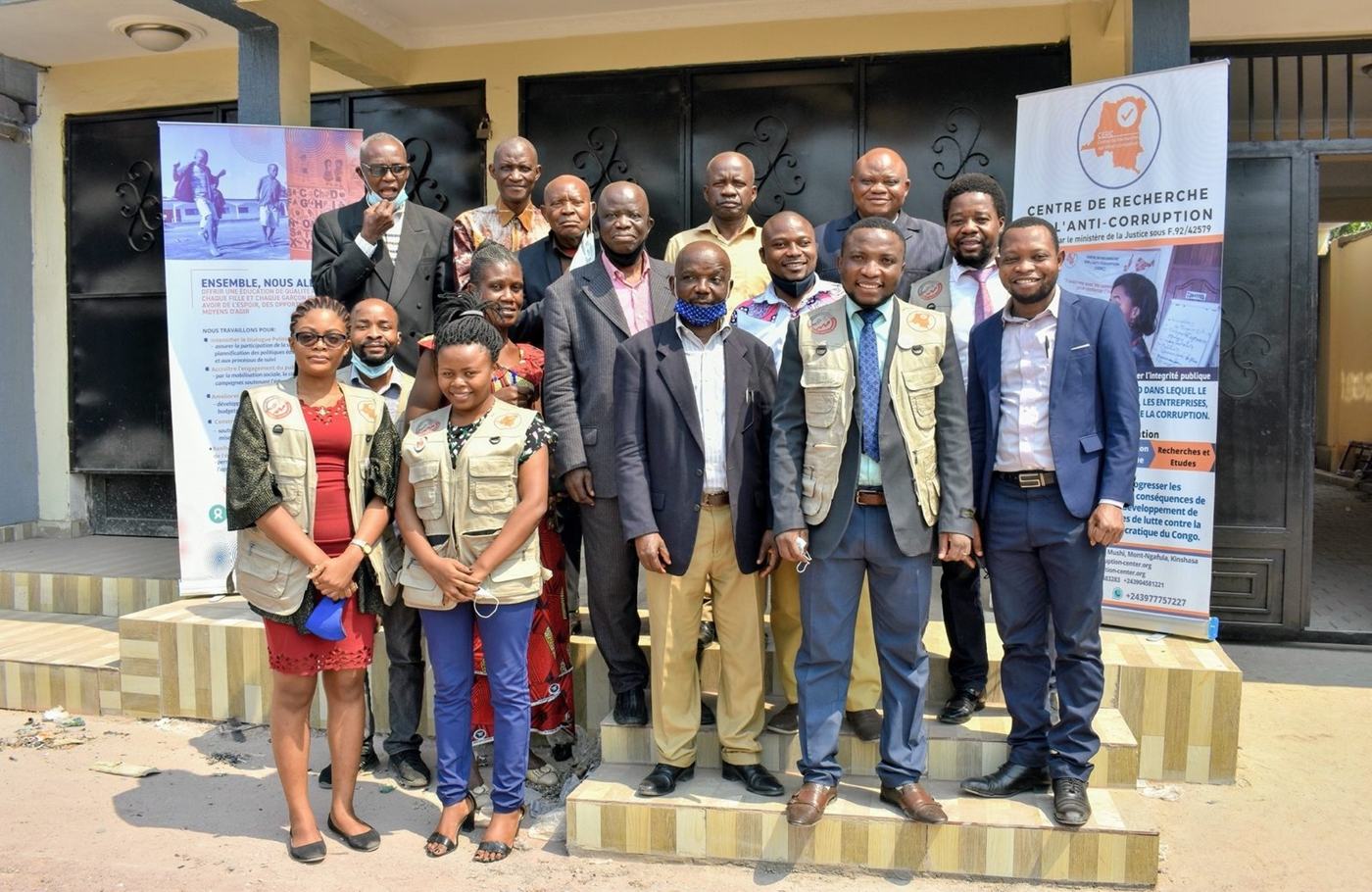
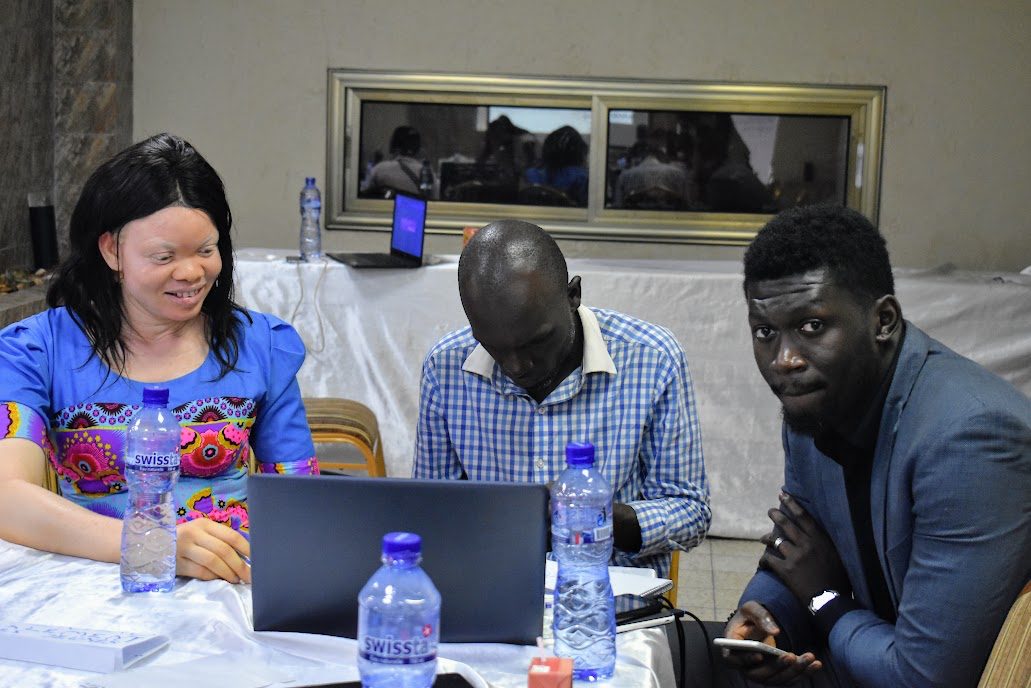
Senior officials and CERC staff at the consultative workshop in Kinshasa
Figure 2: Senior officials and CERC staff during Consultative Workshop In Kinshasa. Photo: CERC

Goal 2Build and support partnerships and coalitions of civil society organizations to fight corruption more effectively

Fighting corruption by any means in DRC is still very dangerous. Doing so safely requires a joint effort of many institutions and individuals from all different societal spectrums, including state and non-state actors and individuals.

Achievements in 2021

As part of reaching Goal 2 of our Strategic Plan, CERC consulted national and local anti-corruption organizations, including la Ligue Congolaise Contre la Corruption (LUCOCO), l'Association pour l'Accès à la Justice (ACAJ), la Coalition des Organisations Congolaises de Lutte Contre la Corruption (COCOCULO), l'Observatoire pour les Dépenses Publiques (ODEP) to set up a Coordination mechanism through which regular dialogues and exchange of information among these stakeholders and individuals, such as the high-level anti-corruption dialogue, can be held.

The coordination mechanism aims to promote effectiveness and efficiency in using resources and expertise in implementing project activities to fight corruption. Moreover, it is also an excellent avenue to facilitate sharing experience and knowledge among active anti-corruption institutions and advocates to continue improving and adapting their work and strategy as needed on time.

Plan for 2022 :

To fight corruption successfully also requires widespread public engagement on the issue. It also needs people to be equipped to act. Consequently, a focus of CERC in 2022 will be to build and support coalitions among institutions and individuals from across DRC. These will include relevant government ministries, NGOs, youth and students, media, private companies, law enforcement institutions, and local authorities. Wherever and whenever possible and appropriate, joint projects will be developed to address corruption issues and promote accountability and transparency. Relevant institutions and interested organizations will implement these in cooperation with the APLC.

Expected results in 2022

  • Resources to fight corruption will be more effectively and efficiently distributed among key stakeholders, while effective learning avenues will be facilitated regularly.
  • Cooperation and networking that multiply the impact of the work to fight against corruption will be established among many anti-corruption stakeholders.
  • A more significant number of individuals and organizations in the Coalition will increase the influence to advocate for a better anti-corruption policy framework and law enforcement.

Goal 3Engage citizens and young people in promoting integrity more actively

Raising awareness of the negative impacts of corruption among the citizens is essential, but it is even more crucial to secure their active participation in the fight against corruption. Youth become more engaged once they understand the benefits of their involvement and are provided with the means and skills.

Wivine Byamungu giving a presentation on Gender Equality and Social Inclusion
Figure 3: Wivine Byamungu giving a presentation on Gender Equality and Social Inclusion, Kinshasa, August 2021. Photo: CERC

Achievements in 2021

In 2021, CERC received 23,986.00 US dollars from the Global Partnership for Education through OXFAM IBIS to prepare the establishment of Integrity Clubs in 150 secondary schools in Kinshasa and South-Kivu aimed at educating youth not only about the harmful effects of corruption but also the skills and knowledge necessary for them to get involved in monitoring the DRC Education and Training Sector Strategy 2016-2025 reform in 6 municipalities of South Kivu and 6 municipalities of Kinshasa with the goal for students, especially girls, receive accountable, inclusive and equitable quality education services.

We will do this by ensuring that (a) Students, teachers, and parents can successfully demand that the reform meets students' needs; (b) Integrity Clubs (ICs)1 is established in the education system. (c) Education authorities are committed and can implement quality change, and d) the approach to transparently consult and collaborate is institutionalized in South Kivu and Kinshasa and replicated across the country.

1 In Integrity Clubs, students representing all groups discuss integrity and learn skills to become active citizens. This includes how to access information and know their rights, how to engage powerholders and how to become monitors of education services and infrastructures using the tech tool EduCheck,

Plan for 2022 :

  • Working closely with 10 parliamentarians, 50 senior education officials, and 6 NGOs to embed anti-corruption sector and transparency protocols in the education sector.
  • Establishing 150 Integrity Clubs and 150 Education Clusters in selected secondary schools in Kinshasa and South Kivu.
  • Training and supporting 2250 (14–19-year-old) students to become active agents of positive change championing anti-corruption and accountability behavior and demand that education reforms meet their needs.

Expected results in 2022

  • Students have more opportunities and are encouraged to promote integrity in the education sector actively.
  • Students receive Integrity Education through formal or informal education programs. The hope is that they will uphold such values as they enter the workforce and create greater demand for integrity in society.
  • The Ministry of Education agrees to incorporate the anti-corruption and integrity Course in the education curriculum.
  • Various youth engagement initiatives were established and led by youth organizations and networks, bringing more vital voices from youth in DRC.

Goal 4Build governance foundations and operational structures and processes for scaling up anti-corruption and integrity building works in other provinces

For CERC to fight corruption successfully, we must be equipped with the necessary skills and expertise. Therefore, one of our prioritized areas for 2021 was to build the capacity of our organization and its core staff members.

Achievements in 2021

  • CERC has successfully mobilized a group of eminent individuals who will establish a sustainable presence in Kinshasa, South-Kivu, and North-Kivu.
  • CERC moved its Headquarters from local to National level (Uvira to Kinshasa) and is now nationally registered with the Ministry of Justice and has total legality and legitimacy to conduct its anti-corruption work across the country.
  • To make CERC institutionally strong in its internal governance, leadership, credibility, and legitimacy in the country, in January 2021, CERC recruited a Consultancy Firm to develop the Organization Development Plan, governance systems Manual, and policies. As a result, all necessary legal frameworks and organizational policies, including bylaws, financial management manuals, and safeguarding and anti-corruption policies, are in place and implemented. And CERC and its core members have strong commitment and are working towards compliance with the criteria and requirements of donors.
  • Tapping into the national expertise and resources, 6 CERC staff members benefited 2 pieces of training, including Adaptive Learning and the Theory of Change development delivered by learning experts recruited by OXFAM IBIS under the Education Out Loud Year Zero project.
  • As part of our learning agenda developed OXFAM IBIS's Education Out Loud Funded Year Zero project, CERC recruited in August 2021 a Consultancy Firm to provide tailor-made pieces of training to all CERC staff, including in program design and management, in Monitoring, Evaluation, Learning and Accountability (MEAL), in Advocacy and Policy Engagement, in Finance management and Internal Audit and Human and Logistics Management.

Plan for 2022 :

As CERC will progressively develop and monitor its institutional capacity, it will gradually be seen as a bridge to national anti-corruption resources and expertise on anti-corruption in 2022. It will begin to transform itself to be one of the capacity development institutions in anti-corruption work for DRC.

Expected results in 2022

  • CERC's Board of directors comprises eminent individuals from diverse backgrounds and expertise (development, human rights, democratic governance, youth development, private sectors, and capacity development).
  • CERC's Executive Director and Board are given opportunities to participate in regional and international anti-corruption events to learn from and network with other partners and international experts.
  • Mutual understanding, trust, and confidence between Congolese institutions and CERC are improved.
6
Funded by United States Agency for International Development (USAID)

Youth Excel – Youth Represent RDC

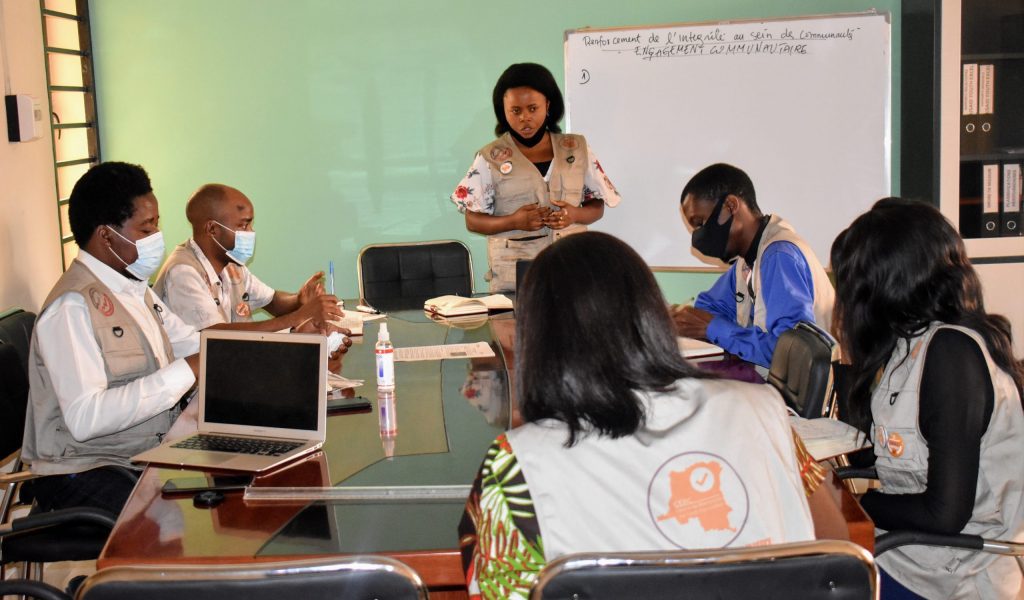
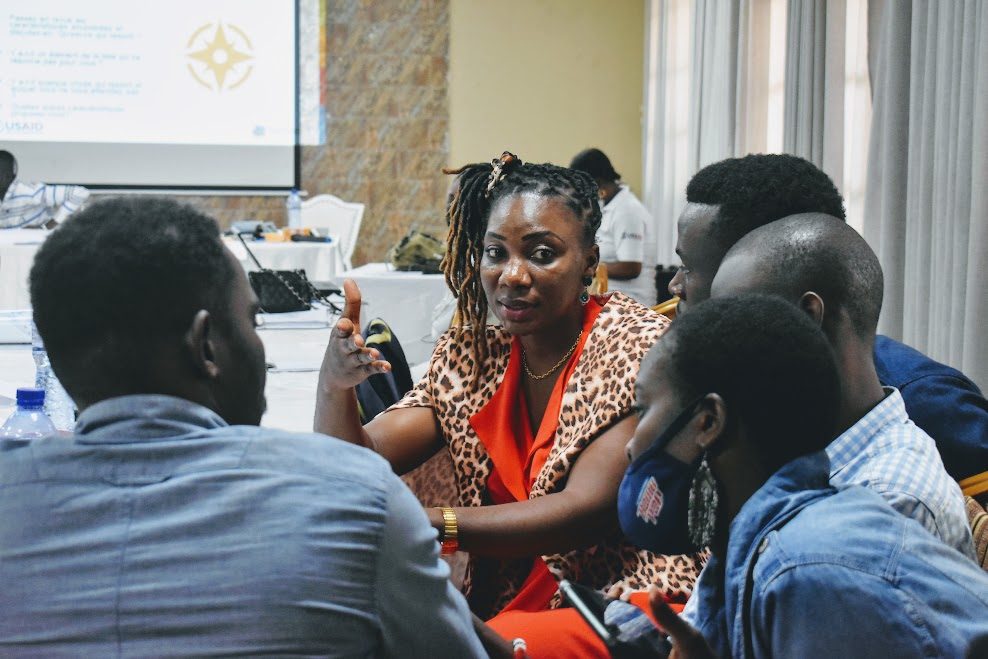
Participants to the Youth Excel project during a training in Kinshasa
Figure 4: Participants to Youth Excel project during a training in Kinshasa. Photo: CERC

Overview of Youth Excel project

Youth Excel recipients in discussion during a CERC training in Kinshasa
Figure 5: Youth Excel recipients during the training held by CERC in Kinshasa. Photo: CERC

In 2021, the Centre de Recherche sur l'Anti-Corruption (CERC) received $32,506.71 from the US Agency for International Development (USAID) through International Research & Exchanges Board (IREX) to implement the "Youth Excel" project in Kinshasa.

Launched on July 19, 2021, in Kinshasa and implemented by the CENTRE DE RECHERCHE SUR L'ANTI-CORRUPTION with technical support from the SEARCH FOR COMMON GROUND, Youth Excel is a 13-months Project that supports young leaders and youth-led and youth-serving organizations in Kinshasa to conduct quality implementation research; use data and learnings to improve their own cross-sectoral, positive youth development programs; synthesize data and learning; and engage in intergenerational dialogue with adult decision-makers so that together youth and adults can shape and advance data-informed development policies, agendas, and programs.

Quick facts

  • IMPLEMENTATION RESEARCH is a mixed-methods approach to collecting data during program implementation to improve implementation. Implementation research helps teams learn how to adapt tested programs to new contexts, scale and achieve cost-effectiveness, and strengthen impact.
  • Youth Excel addresses USAID's, IREX's, and CERC shared imperative to empower young people to solve local, national, and global development challenges using data-driven and research-based approaches.
  • Youth Excel confronts barriers that youth face in leading development, including the lack of a broadly credible research and evidence base for youth programming and other obstacles that prevent youth from influencing decisions about policy and funding in their societies.
  • Youth Excel will build the global knowledge base on cross-sectoral youth development, support USAID's Global LEAD initiative, expand USAID's Youth Lead network, and advance USAID's Journey to Self-Reliance agenda on sustainable local development.

Goals

  • Diverse youth in Kinshasa create and lead data-informed, inclusive youth development at local, national, and global levels.
  • Youth-led and youth-serving programs strengthen their ability to gather and use evidence about their programs to strengthen and expand their impact.
  • Youth in Kinshasa disseminate learning from their implementation research efforts so that the evidence can inform programs and policies.
  • In Kinshasa, youth and adults use data as an inclusive intergenerational language to collaborate and inform decision-making.
  • Youth-led and place-based networks facilitate collaboration between crucial development stakeholders, including public, private, and civil society actors, to expand development impact.

Project activities

  • SUPPORT YOUTH ORGANIZATIONS AND NETWORKS: Support youth-led and youth-serving organizations and youth-led, issue-based collaborative networks in Kinshasa to address local development issues through implementation research.
  • STRENGTHEN SKILLS: Build youth's skills in digital leadership, data leadership, and advocacy.
  • BE INCLUSIVE: Prioritize gender and social inclusion and use power equity tools to ensure that every activity is inclusive.
  • SUPPORT IMPLEMENTATION RESEARCH: Strengthen networks of youth researchers in Kinshasa to support implementation research activities.
  • STRENGTHEN INTERGENERATIONAL PARTNERSHIPS: Work through issue-based collaborative networks and data summits to facilitate dialogue between youth and adults.
  • ENGAGE THE PUBLIC AND PRIVATE SECTORS: Build partnerships to support youth-led data and learning.
  • PROMOTE RESEARCH: Synthesize and disseminate youth's evidence and learning.
  • SUPPORT ADVOCACY: Leverage youth-led research and adults' support to influence development agendas and policies.

Results achieved in 2021

  • 10 youth-led and youth-serving organizations, including 1 LGBTQI-led organization and 2 organizations led by People Living with Disability selected to form the Issue-Based Collaborative Network (ICON) in Kinshasa.
  • 6 CERC staff members trained in Positive Youth Development, Implementation Research approach, and Gender Equality and Social Inclusion.
  • 20 participants from 10 ICON participants organizations trained in Implementation Research approach and Gender Equality and Social Inclusion.
7
Education Out Loud (Operational Component 2), with Oxfam IBIS · 2021

Year Zero: preparing the project

In 2021, Year Zero allowed CERC to gather evidence with students, teachers, parents, civil society and education officials, to build its team’s skills and to write the project with them.

Year Zero prepared the Students Acting for Accountability and Quality of Education project. CERC received the Year Zero funds in mid-June 2021, about three months after the period began, and adjusted its work plan; because of Covid-19, workshops were limited to 20 participants, so more of them were held. The full proposal process ended on 21 January 2022.

May–July 2021Evidence from the field

CERC consulted 534 students (271 boys and 263 girls), 39 principals and 50 teachers, 21 parents’ committees, 19 representatives of 8 civil society organisations working in education, and 12 senior education officials. It used mixed methods: participative workshops on what motivates young people to act, formal meetings with the Provincial Directorates and Ministries of Education of South Kivu and Kinshasa and the National Ministry of Education, and 16 key informant interviews. Evidence was collected over 40 days, and analysed and written up in three weeks; US$7,540 was spent on it, from the stakeholder analysis and data collection to the theory of change, the GESI strategy and the reports.

The study of the Integrity Club model showed that:

  • students aged 14 to 18 are highly positive agents of change, motivated to improve the services and projects delivered to their communities;
  • teaching young people the benefits of integrity, and the skills to practise and demand it, gives them the confidence to choose integrity over corruption;
  • Integrity Clubs encourage young people to keep taking part in civil society;
  • education officials and service providers who expect to be monitored by students are encouraged to act with integrity;
  • even where the status of girls is low, over 40% of the monitors trained by CERC are girls.

July 2021Four consultative workshops

In July 2021, four consultative workshops brought together organisations working in education and Ministry of Education officials to discuss the challenges of transparency and accountability in the sector and how to overcome them. The civil society side included the national association of parents of students, the parents’ associations of Catholic and Protestant schools, three teachers’ unions, the African Zone League for the Defence of Children and Students’ Rights and the National Coalition for Education for All; 9 participants from 6 faith-based education coordinations also took part. With 12 senior officials of the Ministry of Education, the workshop focused on bringing Integrity Clubs into every secondary school and the Integrity Education Handbook into the national curriculum.

July–September 2021Writing the project

Building on these results, the whole programme team defined the project’s context, objectives, outcomes and outputs, its theory of change and overall strategy, the monitoring framework and the budget, and wrote the proposal. The Year Zero produced a gender equality and social inclusion (GESI) strategy, a KAP baseline survey, the theory of change and a research report with recommendations for integrity education and student-led monitoring in secondary schools.

2021Stronger skills

  • Training of the programme team in programme development and management, and in monitoring, evaluation and learning;
  • training in adaptive management and theory of change, and in bringing human rights, gender and inclusion into programme design, implementation and evaluation;
  • in October 2021, training of 6 programme staff in high-level advocacy and policy engagement;
  • a due diligence action plan, drawn up during Year Zero and implemented, which strengthened CERC’s governance and management systems.

LessonsWhat Year Zero taught

  • Key stakeholders must take part in every phase of the proposal, not only in the initial analysis; their participation made the project respond to the need for more advocacy and accountability in education.
  • The programme team needs strong skills in research, project development and budgeting.
  • Female students reported sexual harassment and sexual bribery in exchange for grades; there was not enough time to study these issues, which CERC committed to research further.

CERC rated the process followed during Year Zero as satisfactory, and the final products – proposal, logical framework, budget and monitoring framework – and the learning outputs as highly satisfactory.

8
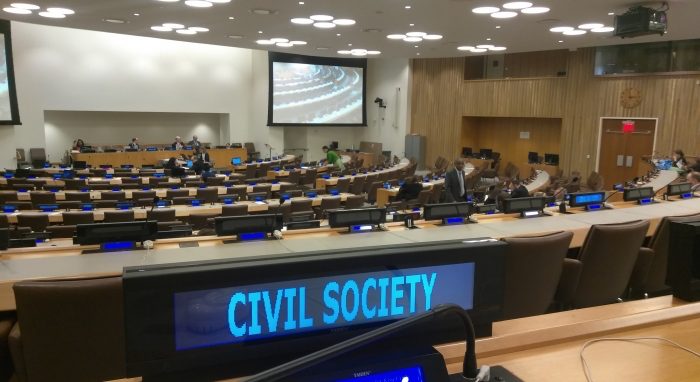
United Nations meeting room, civil society seat

CERC granted special consultative status at the United Nations Economic and Social Council (ECOSOC)

In July 2021, the United Nations Economic and Social Council (ECOSOC) granted the special consultative status to the Centre de Recherche sur l'Anti-Corruption (CERC) upon recommendation of the Committee on NGOs, which comprises 19 Member States.

Depending on the level, Consultative status gives NGOs several rights to participate in the UN's work, present their views, and deliver testimony. Organizations enjoying general and special status can attend the Council's meetings and circulate statements. Special consultative status is granted to non-governmental organizations (NGOs) that have special competence in, and are concerned with, only a few fields of activity covered by the ECOSOC.

In CERC's case, our work straddles corruption and human rights. Being awarded Special Consultative Status means that CERC's advocacy work with the UN will be a little bit easier as this will allow us access to high-level sessions and facilitate easier participation within these processes.

ECOSOC serves as the central forum for formulating policy recommendations addressed to member states and the United Nations system.

ECOSOC engages a wide variety of stakeholders in a productive dialogue on sustainable development through programmatic meetings. Consultative status provides NGOs with access to ECOSOC and its many subsidiary bodies, the various human rights mechanisms of the UN ad-hoc processes on small arms, and special events organized by the President of the UN General Assembly.

The Consultative Status award follows a rigorous application and thorough vetting of an organization's governance and financial systems, including its credibility as a leader in its field.

"CERC is very grateful for this recognition and the opportunities it presents for our global advocacy work. We will use this Consultative Status to strengthen our work championing anti-corruption, human rights, and governance; in the Democratic Republic of the Congo."

9

Structure, governance, and management

The organization started as a Non-Profit Association in 2017. Today its operations are governed by its Statutes dated April 15, 2017 (as amended in May 2021). Centre de Recherche sur l'Anti-Corruption is registered under Law 004/2001 as a Public Utility Organization under registration number F92/42579.

Good governance

The governing structure of our local organization is transparent and conforms to relevant laws. We seek to follow the principles of best governance practices.

We have :

  • A GOVERNING BODY that supervises and evaluates the executive director oversees the program and budgetary matters. It defines overall strategy, is consistent with the organization's mission, ensures that resources are used efficiently and appropriately, that performance is measured, that financial integrity is assured and that social commitment is maintained.
  • WRITTEN PROCEDURES determining the appointment, responsibilities, and terms of members of the governing body, preventing and managing conflicts of interest.
  • A REGULAR GENERAL MEETING with authority to appoint and replace members of the governing body.

The Board meets quarterly. Its role is one of governance and strategic oversight. It approves the budget, operational and strategic plans, appoints the President and Chief Executive, and approves overall policy concerning staff employment. The Board contributes in many ways to aspects of CERC's work, for example, through sub-committees, approving strategy, approving new policies, and advising on fundraising. The Board also determines significant issues that affect CERC's public image - for example, whether to endorse campaigns promoted by other organizations, engage in fundraising forms that might be deemed sensitive, and any issues with significant legal implications. All other decisions are delegated to the Chief Executive, who consults the Board collectively or individually where they have the expertise to contribute or are thought likely to have strong views on a particular issue.

Professional management

We manage our organizations professionally and effectively. Our policies and procedures seek to promote excellence in all respects.

  • FINANCIAL CONTROLS: internal financial control procedures ensure that all funds are used effectively and minimize the risk of misused funds. We follow principles of best practices in financial management.
  • EVALUATION: we seek to improve our effectiveness on an ongoing basis. We have defined evaluation procedures for our boards, staff, programs, and projects based on mutual accountability.
  • PARTNERS: our organizational integrity includes ensuring that our partners also meet the highest standards of honesty and accountability and that they take all steps to ensure that they have no dealings with organizations or persons involved in illegal or unethical practices.
  • HUMAN RESOURCES: our performance and success reflect the quality of our staff volunteers and management practices, and we are committed to investing in human resource development. Remuneration and benefits strike a balance between public expectations of nonprofit organizations and the need to attract and retain the staff that we need to fulfill our mission. Our human resources policies seek to conform fully with relevant international and national labor regulations, in addition to applying the best voluntary sector practices in terms of team member and volunteer rights and safety, health and hygiene at work, and work/life balance. Human resources policies include procedures for evaluating the performance of all staff regularly.
  • BRIBERY AND CORRUPTION: human resources policies expressly prohibit acts of bribery or corruption by staff or other persons working for or on behalf of the organization.
  • WHISTLE-BLOWERS: staff members are encouraged to draw management's attention to activities that may not comply with the law or our mission and commitments.

Our policies and regulations

Our legitimacy is derived from the quality of our work and the recognition and support of the people with and for whom we work, in addition to our donors and the wider public. CERC is committed to openness, transparency, and honesty about its structures, objectives, policies, and activities, and we communicate actively to stakeholders and make information publicly available.

As a small organization, we know how difficult it is to formalize policies and procedures. So we're committed to sharing our policies for your use and will update the policies provided here on an ongoing basis. Feel free to use them and contextualize them for your organizational needs.

  • 001 – Human resources Policy
  • 002 – Administrative, Financial, Accounting and Procurement Policy,
  • 003 – General Risk Management Policy
  • 004 – Travel Policy
  • 005 – Environment Protection Policy
  • 006 – Safeguarding Policy
  • 007- Gender Equality and Social Inclusion Policy
  • 008 – Data Protection Policy
  • 009 – Social Media Policy
  • 010 – Human Trafficking Policy
  • 011 – Recruitment and Staff Evaluation Policy
  • 011.2 CERC Organogram
  • 012 - Anti-Corruption and Gift Policy
  • 013 – Anti-harassment policy and complaint procedure
  • 014 – Conflicts of Interest Policy

Bylaws and membership policy

  • 001- Bylaws
  • 002- Membership Policy

Our anti-corruption policy

In 2020, CERC revised its policy to align it to evolving best accountability practices in the nonprofit sector. The policy aims to prevent fraud and corruption in CERC-supported projects and contracts at the local and national levels.

Download our Anti-Corruption and Anti-Bribery Policy

Our whistleblowing policy

Our Whistleblowing policy supports our staff and stakeholders to speak up about unacceptable behavior and wrongdoing. There is an independent, confidential reporting mechanism for teams or stakeholders who don't feel comfortable reporting malpractice to the relevant CERC governance body.

Find out more about our Whistleblowing mechanism: HERE.

10
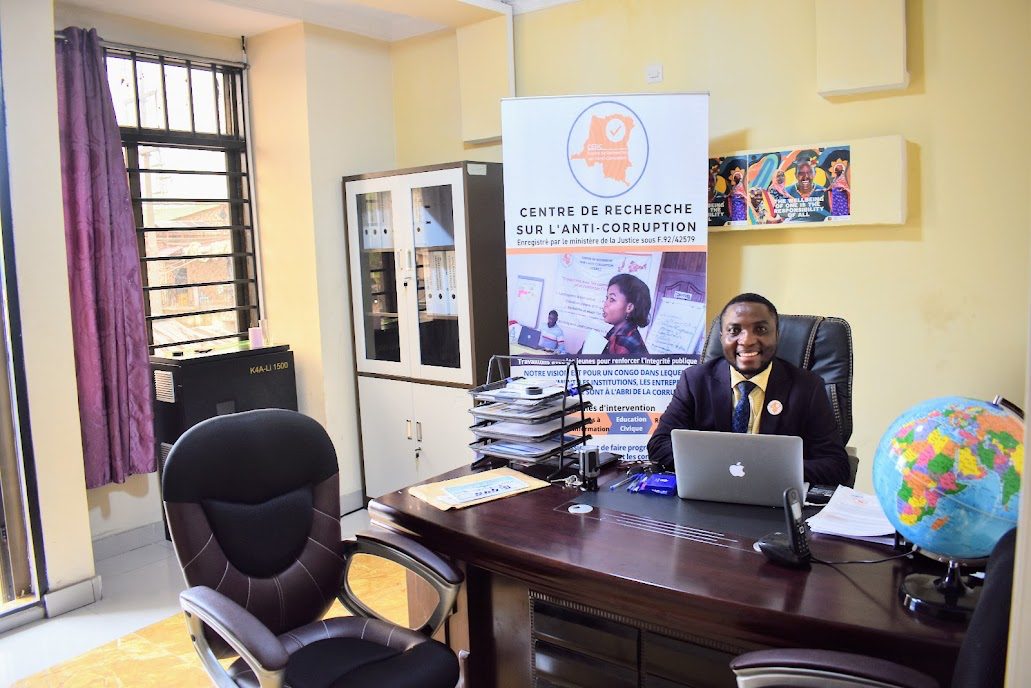
Heri Bitamala, Executive Director of CERC, at his desk

Recognition and thanks

As always, we owe a debt of gratitude first to our staff working on the frontlines of corruption, at significant personal risk, to make integrity work for the people. We continue to be inspired by their bravery and are honored to be working with them.

As in previous years, we could not have achieved our goals without the funding support of a range of donors and supporters.

We are grateful to the following governments and multilateral bodies for their financial support: the Global Partnership for Education (GPE), the OXFAM IBIS, and the US Agency for International Development (USAID).

As in previous years, we would like to thank Twilio.org for providing us with the US $6500 to support our Covid-19 Vaccine education project and the Microsoft Corporation for providing Microsoft 365 Business Premium Licenses of US$ 24,000, which help us to host our Professional Emails until 2030.

Last but not least, we would like to thank the staff and Advisory Council member, who has dedicated significant time and effort to make sure that the organization has a long-lasting and positive impact on those living in poverty.

Heri Bitamala
Executive Director

11
Financial years 2020 and 2021 – fund accountability statements (unaudited) and audited 2020 accounts

Financial review

This financial review covers the 2020 and 2021 financial years. It is based on CERC’s consolidated statements of financial activities (fund accountability statements) for 2020 and 2021, and on the audit reports on CERC’s 2020 and 2021 accounts by the firm Group BEAG (lead auditor: ALUMA Armand, chartered accountant), signed in Uvira on 3 February 2021 and 28 January 2022. All amounts are in US dollars. The 2020 and 2021 accounts have been audited (notes 4 to 10). Notes 1 to 3 reproduce CERC’s fund accountability statements as prepared before the audits; where the 2021 audit differs from them, this review uses the audited figures and note 10 explains each difference.

All projectsConsolidated statement – all projects

Income, expenditure and balances of all projects combined, for 2021 compared with 2020.

Income and expenditure2021
US$
2020
US$
Income received
Integrity Action – SHINE, phase 3–30,306.30
Accountability Lab – Building Integrity in the DRC–18,651.75
Twilio.org – Covid-19 vaccine education (credits in kind)–6,500.00
Microsoft – licences (in kind)–24,000.00
UNCAC Coalition3,431.50–
USAID / IREX – Youth Excel32,506.71–
GPE / Oxfam IBIS – Education Out Loud23,986.00–
CERC’s own resources9,380.75–
Total income received69,304.9679,458.05
Expenditure, all projects combined
Staff costs18,150.7222,441.08
Programme activities26,290.0014,282.54
Travel and transport392.00–
Rent, running costs and equipment12,956.7531,619.54
Professional fees, staff training and audit–45.15
Administration and overheads2,023.782,138.05
Return of unspent funds to a donor6,424.23–
Total expenditure66,237.4870,526.36
Income less expenditure3,067.488,931.69
Balance brought forward from the previous year9,945.591,013.90
Balance carried forward to the next year13,013.079,945.59

Categories: staff costs (salaries and benefits); programme activities (work with students, schools, communities and youth organisations, research, advocacy, awareness raising and training of beneficiaries); travel and transport where reported separately; rent, running costs and equipment (rent, office, utilities, communication, supplies, printing, equipment, other direct costs and bank charges); professional fees, staff training and audit; administration and overheads. Audited: 2021 audit by Group BEAG (28 January 2022): income US$69,304.96, expenditure and refund US$66,237.48, cash at 31 December 2021 US$13,013.07. The 2021 figures are those of the audit; they differ slightly from the Year Zero finance report to Oxfam IBIS (US$70.36), from the UNCAC figure of the fund accountability statement (US$0.15) and from the refund to Accountability Lab it showed (US$0.80): see the statement of funds. Rent, running costs and equipment include US$9,380.75 of office equipment bought with CERC’s own resources. Audited: 2020 audit by Group BEAG (fund accountability statement, note 1; expenditure by donor, note 5). Rent, running costs and equipment include the Microsoft licences (in kind). The US$6,730.34 CERC held at 31 December 2019 is part of the 2020 grants in the audited statement (see the statement of funds).

Statement of funds, by grant

For each grant: the balance brought forward from the previous year, the funds received, the funds spent, the funds returned to the donor or transferred to another grant (and adjustments), and the balance carried forward. A negative balance means spending ahead of funding. Each line says whether its figures are audited, and by which audit.

Grant and donorBrought forward
US$
Received
US$
Spent
US$
Returned, transfers
US$
Carried forward
US$
2020
Students Acting for Honesty, Integrity and Equality (SHINE)1
Integrity Action (NORAD) · Audited – 2020 audit (Group BEAG)
1,255.4030,306.3027,798.84−241.503,521.36
Building Integrity in the DRC2
US Department of State (INL), through Accountability Lab · Audited – 2020 audit (Group BEAG)
–18,651.7512,227.52–6,424.23
Covid-19 Vaccine Education Project
Twilio · Audited – 2020 audit (Group BEAG)
–6,500.006,500.00––
Microsoft 365 licences and email hosting3
Microsoft (in kind) · Audited – 2020 audit (Group BEAG)
–24,000.0024,000.00––
Total 20201,255.4079,458.0570,526.36−241.509,945.59
2021
Students Acting for Honesty, Integrity and Equality (SHINE)4
Integrity Action (NORAD) · Audited – 2021 audit (Group BEAG)
3,521.36–––3,521.36
Building Integrity in the DRC5
US Department of State (INL), through Accountability Lab · Audited – 2021 audit (Group BEAG)
6,424.23––−6,424.23–
Civil society parallel report on the UNCAC6
UNCAC Coalition · Audited – 2021 audit (Group BEAG)
–3,431.503,431.50––
Youth Excel – Youth Represent DRC7
CERC’s own resources · Audited – 2021 audit (Group BEAG)
–32,506.7123,761.50–8,745.21
Year Zero – Students Acting for Accountability and Quality of Education8
Global Partnership for Education, through Oxfam IBIS · Audited – 2021 audit (Group BEAG)
–23,986.0023,239.50–746.50
Office equipment (CERC’s own resources)9
CERC’s own resources · Audited – 2021 audit (Group BEAG)
–9,380.759,380.75––
Total 20219,945.5969,304.9659,813.25−6,424.2313,013.07

1 Students Acting for Honesty, Integrity and Equality (SHINE), 2020. Phase 3 continues the SHINE grant. Opening: the year 2 balance of 30 September 2019, 2,027,803 CDF (US$1,255.40 at the 2019 rate); the 2020 audit converts it at 2,000 CDF per US$ (US$1,013.90), an exchange difference of −US$241.50. Received: US$30,306.30 – the US$31,320.20 of the audited 2020 statement, which includes the 13,460,680 CDF (US$6,730.34) CERC held at 31 December 2019, less the year 2 balance already counted: the first phase 3 funds of October–December 2019 net of that quarter’s spending (11,432,877 CDF, US$5,716.44, CERC’s 2019 financial report) and the US$24,589.86 received in 2020.

2 Building Integrity in the DRC, 2020. Building Integrity in the DRC, funded by the US Department of State’s Bureau of International Narcotics and Law Enforcement Affairs (INL) through Accountability Lab.

3 Microsoft 365 licences and email hosting, 2020. In kind: Microsoft 365 licences and e-mail hosting, valued at US$24,000.

4 Students Acting for Honesty, Integrity and Equality (SHINE), 2021. Unspent balance of phase 3, owed to Integrity Action (short-term debt in note 3 of the 2021 audit).

5 Building Integrity in the DRC, 2021. Unspent balance returned to Accountability Lab in 2021: US$6,424.23 according to the 2021 audit, the whole 2020 balance (18,651.75 − 12,227.52). The 2020–2021 report showed US$6,423.43: the bank transfer of US$6,367.73 plus US$55.70 of fees; the audit charges US$56.50 of fees on the transfer, hence the US$0.80 difference.

6 Civil society parallel report on the UNCAC, 2021. Civil society parallel report on the UNCAC: US$3,431.50 received and spent according to the 2021 audit. The 2020–2021 report showed US$3,431.65 received: the audit takes the amount actually credited to CERC’s bank account, US$0.15 less, which the audited cash at 31 December 2021 confirms.

7 Youth Excel – Youth Represent DRC, 2021. Advances received in 2021 and not yet spent at 31 December 2021: owed to USAID/IREX (note 3 of the 2021 audit).

8 Year Zero – Students Acting for Accountability and Quality of Education, 2021. Year Zero of Education Out Loud. Spent: US$23,239.50 according to the 2021 audit; the Year Zero finance report to Oxfam IBIS shows US$23,309.86. Its four activity lines total US$22,960 (8,200 + 7,540 + 1,800 + 5,420), so the US$70.36 difference lies in the bank charges: US$349.86 in the report, US$279.50 in the audited accounts. The audited cash (bank statement and cash count, US$13,013.07) confirms that the US$70.36 stayed in the account: the balance owed to GPE/Oxfam IBIS is US$746.50 (note 3 of the 2021 audit), not US$676.14.

9 Office equipment (CERC’s own resources), 2021. Office equipment bought with CERC’s own resources (2021 audit: “contributions internes” and fixed assets, notes 2 to 4).

Policy 002Compliance and reporting standards

This section applies to this report the corrections made on CERC’s financial accountability page (cerc.cd/en/our-financial-accountability/): the compliance of each grant with Policy 002, every difference between reports, accounts and audits – explained, or open and shown in red – and the score of this report against the reporting standard of Policy 002, for a target of 80%.

Compliance with Policy 002: 99%

Average of the rules met (1), partly met (½) and not met (0) by each grant in 2020, 2021.

Grant and year – rules partly or not metLevel
Students Acting for Honesty, Integrity and Equality (SHINE)
2020 · Reports agree with the accounts
Partly compliant
90%
Building Integrity in the DRC
2020
Compliant
100%
Covid-19 Vaccine Education Project
2020
Compliant
100%
Microsoft 365 licences and email hosting
2020
Compliant
100%
Students Acting for Honesty, Integrity and Equality (SHINE)
2021
Compliant
100%
Building Integrity in the DRC
2021
Compliant
100%
Civil society parallel report on the UNCAC
2021
Compliant
100%
Youth Excel – Youth Represent DRC
2021
Compliant
100%
Year Zero – Students Acting for Accountability and Quality of Education
2021
Compliant
100%
Office equipment (CERC’s own resources)
2021
Compliant
100%

Differences between reports, accounts and audits

DifferenceAmount
US$
Explained – SHINE: October–December 2019
The SHINE balance was 2,027,803 CDF at 30 September 2019 (year 2 audit) and 13,460,680 CDF at 31 December 2019 (CERC’s 2019 financial report): +11,432,877 CDF net, the first phase 3 funds from Integrity Action less the quarter’s spending (US$5,716.44 at 2,000 CDF per US$). The 2020 audit opens with these 13,460,680 CDF converted at 2,000 CDF per US$: US$6,730.34. The quarter itself lies between two audits.
5,716.44
Explained – Building Integrity: refund to Accountability Lab
The 2020–2021 report showed US$6,423.43 returned (transfer US$6,367.73 + fees US$55.70); the 2021 audit records the whole balance, US$6,424.23, with US$56.50 of fees. The audited figure is used.
0.80
Explained – UNCAC report: funds received
The 2020–2021 report showed US$3,431.65 received; the audit takes the US$3,431.50 credited to the bank account, which the audited cash confirms. The audited figure is used.
0.15
Explained – Year Zero: bank charges
The Year Zero finance report to Oxfam IBIS shows US$23,309.86 spent, the 2021 audit US$23,239.50. The four activity lines total US$22,960 in both; the report has US$349.86 of bank charges, the audited accounts US$279.50. The audited bank balance confirms the US$70.36 stayed in the account: US$746.50 owed to GPE/Oxfam IBIS, carried into Education Out Loud in 2022. The audited figure is used.
70.36
Explained – Education Out Loud: opening cash
The 2022 audit opens the project with US$751; the 2021 audit left US$746.50. CERC’s ledger takes over US$746.41 (US$330 in cash, US$416.41 in bank) and the account also held US$5.06 of CERC’s own funds kept for bank fees (bank reconciliation, 28 February 2022): US$751.47, which the audit, in whole dollars, shows as US$751. Residual: US$0.09 between the ledger and the 2021 audit.
4.50

Budget and actual, 2021

Budget
US$
Actual
US$
Rate
Staff costs18,150.7218,150.72100%
Running costs of the organisation3,651.783,651.78100%
Equipment and materials20,000.009,380.7547%
Programme activities44,545.9435,054.2379%
Total86,348.4466,237.4877%

2021 audit by Group BEAG, note 2.

Reporting standard of Policy 002: 88%

This report meets the target of 80%.

CriterionStatus
Funds received, by donor and project (IV.12)
Income by donor, both years (audited).
Met
Expenditure by category (II.6.4)
By category and by donor.
Met
Budget and actual, by budget line (II.6.4)
2020: note 6; 2021: budget and actual from the 2021 audit (note 2), added in this report.
Met
Cash position at year end (II.6.4)
US$9,945.59 at 31 December 2020 and US$13,013.07 at 31 December 2021 (audited).
Met
Commitments and balances owed (II.6.4)
Amounts owed to Youth Excel, Integrity Action and GPE/Oxfam IBIS.
Met
Statement of funds, by grant (III.2.2)
Statement of funds by grant.
Met
Comparison with the previous year (II.6.4)
2021 compared with 2020.
Met
External audit: auditor and opinion (III.3.2)
Group BEAG, 2020 and 2021: true and fair view.
Met
Audit findings and follow-up action plan (III.3.5)
The 2020 audit rated the financial management risk as significant; the follow-up is the due diligence action plan of 2022, whose implementation is not yet documented.
Partly met
Differences between reports, accounts and audits explained (III.3.3)
Note 10 reconciles the statement with the 2021 audit.
Met
Compliance with the financial policies assessed (Policy 002)
Assessed in this report.
Met
Assets and equipment (inventory) (VI.8, VII.1)
Assets of US$3,218 (2020) and US$9,380.75 of equipment (2021), audited.
Met
Financial report approved by the Board of Directors (IV.12)
No record of the Board’s approval of the financial report is published.
Not met

Restricted fundsFunded projects

In 2020 and 2021, CERC’s income came from grants for specific projects.

ProjectDonorPeriodAmount received
US$
Building Integrity in the Democratic Republic of the Congo (DRC)US Department of State (INL), through Accountability Lab202018,651.75
Students Acting for Honesty, Integrity and Equality – Phase 3Integrity Action202031,320.20
Covid-19 Vaccine Education ProjectTwilio20206,500
Microsoft 365 Business Premium LicensesMicrosoft202024,000
Production of the UNCAC Parallel Civil Society ReportUNCAC CoalitionJun – Dec 20213,431.50
Youth ExcelUSAID, through IREXFrom Jul 2021 (13 months)32,506.71
Students Acting for Accountability and Quality of EducationGlobal Partnership for Education (GPE), through OXFAM IBIS202123,986.00
Office equipmentCERC’s own resources20219,380.75

Amounts received in 2020 (2020 audit, notes 1 and 4) and in 2021 (2021 audit, note 10).

  • Building Integrity in the DRC – Funded by the US Department of State’s Bureau of International Narcotics and Law Enforcement Affairs (INL) through Accountability Lab: staff salaries, a rent contribution, office set-up, electricity, communication and bank fees (note 1).
  • Students Acting for Honesty, Integrity and Equality – Staff salaries, engagement with schools, training and capacity building, Integrity Clubs expenses and monitoring, and advocacy and policy engagement (note 1).
  • Covid-19 Vaccine Education Project – CERC’s Covid-19 vaccine education project, supported by Twilio.org.
  • Microsoft 365 – Microsoft 365 Business Premium Licenses, which host CERC’s professional emails until 2030.
  • UNCAC Parallel Civil Society Report – The civil society parallel assessment of the DRC’s implementation of the UN Convention against Corruption, covering Chapter II (Preventive Measures) and Chapter V (Asset Recovery): honorarium for researchers and evidence collection and analysis (note 2).
  • Youth Excel – A 13-month project, launched in Kinshasa on 19 July 2021 with technical support from Search for Common Ground, that supports youth-led and youth-serving organizations to conduct implementation research; in 2021, 10 organizations formed the Issue-Based Collaborative Network (ICON) (note 2).
  • Students Acting for Accountability and Quality of Education – to establish Integrity Clubs in 150 secondary schools in Kinshasa and South Kivu; in 2021, the funds received (US$23,986.00) covered capacity building, evidence collection and analysis, the development of tools and strategies, and proposal development (note 2).

IncomeIncome

In 2020, CERC received US$49,971.95 from its two project donors: US$18,651.75 from Accountability Lab and US$31,320.20 from Integrity Action (note 1). The audited accounts also include the Twilio grant (US$6,500) and the Microsoft licenses (US$24,000), bringing 2020 income to US$80,471.95, with no variance between the amounts expected and received (note 4).

In 2021, according to the audit, incoming resources amounted to US$69,304.96: US$32,506.71 from USAID through IREX for Youth Excel, US$23,986.00 from GPE through OXFAM IBIS, US$3,431.50 from the UNCAC Coalition and US$9,380.75 of CERC’s own resources, used for office equipment. With the US$9,945.59 balance of 2020, CERC had US$79,250.55 available (note 10).

ExpenditureExpenditure

In 2020, CERC spent US$40,026.36 on the two projects of the fund accountability statement: US$27,798.84 on Students Acting for Honesty, Integrity and Equality – mainly staff salaries (US$15,605.58) and engagement with schools (US$4,799.45) – and US$12,227.52 on Building Integrity in the DRC (note 1). Including the Twilio and Microsoft funds, audited expenditure amounted to US$70,526.36 against a budget of US$80,471.95, an execution rate of 88%: staff costs, running costs and equipment were spent in full, and program activity expenditure reached 79% of its budget (notes 5 and 6).

The unspent balances of the two projects at 31 December 2020 – US$6,424.23 for Building Integrity in the DRC (US$6,423.43 in the fund accountability statement, note 10) and US$3,521.36 for Students Acting for Honesty, Integrity and Equality (note 1) – appear as short-term debts to Accountability Lab and Integrity Action in the statement of assets and liabilities (note 9).

In 2021, according to the audit, expenditure and refunds amounted to US$66,237.48: US$23,761.50 on Youth Excel, including US$18,150.72 in salaries and fringe benefits; US$23,239.50 on the Year Zero of Students Acting for Accountability and Quality of Education (US$23,309.86 in the Year Zero finance report to Oxfam IBIS); US$3,431.50 on the UNCAC parallel report; US$9,380.75 of office equipment bought with CERC’s own resources; and the refund of US$6,424.23 to Accountability Lab – a bank transfer of US$6,367.73 plus bank fees (notes 2, 3 and 10). At 31 December 2021, Youth Excel had a balance of US$8,745.21 and the Year Zero a balance of US$746.50.

CERC’s audited cash was US$9,945.59 at 31 December 2020, held at Trust Merchant Bank (note 7), and US$13,013.07 at 31 December 2021 – US$12,683.07 in bank and US$330 in cash – all of it owed to projects: US$8,745.21 to Youth Excel (USAID/IREX), US$3,521.36 to Integrity Action and US$746.50 to GPE/Oxfam IBIS for the Year Zero (note 10). The fund accountability statements showed net positions of US$9,944.79 and US$12,942.86; note 10 explains the differences.

AuditIndependent auditor’s report

CERC's annual accounts for the 2020 financial year, from 1st January to 31 December 2020, were audited and certified by the firm Group BEAG (Bureau d'Études, Audit et Capacitation en Gestion), based in Uvira (South Kivu), under the direction of its lead auditor, ALUMA Armand, chartered accountant. The audit report was signed in Uvira on 03 February 2021.

Based on the checks carried out, our opinion is that the financial statements of CERC “Centre de Recherche sur l'Anti-corruption”, closed at 31 December 2020 by CERC's finance and accounting services, give a true and fair view, in all material respects, of its situation and position at 31 December 2020, in accordance with accounting rules, CERC's procedures and the donors' guidelines for the justification of expenditure.

(translated from French)

The figures of the audit report are reproduced in notes 4 to 9 as they appear in the original, with the differences noted below note 9.

CERC’s accounts for 2021 were audited by the same firm, whose report was signed in Uvira on 28 January 2022: “the financial statements of CERC […] closed at 31 December 2021 […] give a true and fair view, in all material respects, of its situation and position at 31 December 2021” (translated from French). The audit report is published on cerc.cd, with personal contact details and the bank account number removed; its figures are in note 10.

Funding policyOur sources of funding

CERC is funded by donors and partners, directly or through partner organizations, through grants restricted to projects: in 2020, the US Department of State (INL) through Accountability Lab, and Integrity Action, with the support of Twilio.org and Microsoft; in 2021, the UNCAC Coalition, USAID through IREX, and the Global Partnership for Education through OXFAM IBIS, while CERC used its own resources (US$9,380.75) to equip its office. Each project is accounted for separately, by project and donor, and internal financial control procedures ensure that all funds are used effectively. The COVID-19 crisis significantly impacted fundraising in 2020 and 2021, and CERC reduced its operations by closing the Uvira and Bukavu offices in South Kivu.

Note 1Statement of financial activities, year ended December 2020

Consolidated Statement of Financial Activities (Including Income and Expenditure Account), by project and donor. The “Ref.” column gives the note references of the original statement.

Ref.Amount
US$
INFLOWS
Funds Received from Accountability Lab118,651.75
Funds Received from Integrity Action231,320.20
TOTAL INCOMING RESOURCES49,971.95
EXPENDITURE BY PROJECT / DONOR
BUILDING INTEGRITY IN THE DRC PROJECT
By Accountability Lab
Staff Salaries1.16,835.50
Rent Contribution1.23,000.00
Office Set-Up1.32,060.00
Electricity1.438.00
Bank Fees1.5236.02
Communication1.658.00
TOTAL PROJECT EXPENDITURE12,227.52
PROJECT BALANCE AT 31 DEC 20206,423.43
STUDENTS ACTING FOR HONESTY, INTEGRITY, AND EQUALITY / By Integrity Action
Staff Salaries2.115,605.58
Engagement with Schools2.24,799.45
Training & Capacity Building2.31,203.05
Integrity Clubs expenses and monitoring2.4826.60
Advocacy & Policy Engagement2.5953.44
Technical assistance & Professional Fees2.645.15
Communication, Printing, and Office Supplies)2.72,227.52
Overheads2.82,138.05
TOTAL PROJECT EXPENDITURE27,798.84
PROJECT BALANCE AT 31 DEC 20203,521.36
TOTAL RESOURCES EXPENDED IN 202040,026.36
NET INCOMING RESOURCES9,944.79
BALANCE B/F-
NET POSITION (BALANCE C/F)9,944.79

Fund accountability statement prepared by CERC for 2020; the audited 2020 figures are given in notes 4 to 9.

Note 2Statement of financial activities, year ended December 2021 (before audit)

Consolidated Statement of Financial Activities (Including Income and Expenditure Account), by project and donor.

Ref.Amount
US$
INFLOWS
Funds Received from UNCAC Coalition33,431.65
Funds Received from USAID - IREX432,506.71
Funds Received from GPE - OXFAM IBIS523,986.00
TOTAL INCOMING RESOURCES59,924.36
EXPENDITURE BY PROJECT /DONOR
Production of the UNCAC Parallel Civil Society Report / By UNCAC Coalition
Honorarium for Researchers3.13,000
Evidence Collection and Analysis3.2330.00
Bank Charges3.3101.50
TOTAL PROJECT EXPENDITURE3,431.50
PROJECT BALANCE AT 31 DEC 2021-
USAID Funded Youth Excel Project
By USAID - IREX
Salaries and Fringe Benefits4.118,150.72
Travel4.2392.00
Supplies4.3785.00
Others Direct Costs4.42410.00
Indirect Costs4.52,023.78
TOTAL PROJECT EXPENDITURE23,761.50
PROJECT BALANCE AT 31 DEC 20218,745.21
Students Acting for Accountability and Quality of Education / By GPE – OXFAM IBIS
Capacity Building5.18,200.00
Evidence Collection, Analysis5.27,540.00
Development of Tools and Strategies5.31,800.00
Proposal Development5.45,420.00
Bank Charges5.5349.86
TOTAL PROJECT EXPENDITURE23,309.86
PROJECT BALANCE AT 31 DEC 2021676.14

Fund accountability statement prepared by CERC before the 2021 audit (not audited); the audited 2021 figures and the differences are given in note 10.

Note 3Bank transfer and net position, 2021 (before audit)

Ref.Amount
US$
BANK TRANSFERT
To Accountability Lab6,367.73
Bank Fees55,70
TOTAL TRANSFERT6423,43
TOTAL RESOURCES EXPENDED IN 202156,926.29
NET INCOMING RESOURCES2,998.07
BALANCE B/F9,944.79
NET POSITION12,942.86
BALANCE C/F12,942.86

Prepared by CERC before the 2021 audit (not audited); see note 10 for the audited balance of US$13,013.07.

Note 4Audited income by donor, 2020 (USD)

Income by donorExpected amountAmount receivedVariance
Integrity Action31,320.231320.200
Accountability Lab18,651.7518,651.750
Twilio6,5006,5000
Microsoft2,400024,0000
TOTAL80,471.9580,471.950

Projects concerned:

DonorProject title
Integrity ActionStudents Acting for Honesty, Integrity and Equality/Phase 3
Accountability LabBuilding Integrity in the Democratic Republic of the Congo (DRC)
TwilioCovid-19 Vaccine Education Project
MicrosoftMicrosoft 365 Business Premium Licenses and hosting of CERC's Professional Emails until 2030.

Note 5Audited expenditure by donor, 2020 (USD)

ExpenditureBudgeted amountAmount spentVariance
Integrity Action31,320.227,798.843,521.36
Accountability Lab18651.7512,227.526,423.43
Twilio6,50065000
Microsoft2,4000240000
TOTAL80,471.9570,526.369 945,59

Note 6Expenditure by budget line, 2020: budgeted and actual

Code and budget lineBudgetedActualExecution rate
B001 Staff costs$22 441,08$22 441,08100%
B002 Costs related to the running of the organization$5 559,54$5 559,54100%
B003 Equipment and materials$4 198,05$4 198,05100%
B004 Program activity expenditure$48 273,28$38 327,6979%
TOTAL$80 471,95$70 526,3688%

Note 7Cash position at 31 December 2020 (USD)

ItemAmount
Balance at 31 December 20196,730.34
Income 202073,741.61
Expenditure 202070,526.36
Balance at 31 December 20209,945.59

The cash balance is held in CERC's bank account at Trust Merchant Bank (TMB).

Note 8Statement of assets and liabilities at 31 December 2020 — assets (USD)

AssetsGross amountDepr.Net
A — Fixed assets
A1 Intangible assets38978311
A2 Vehicles1,7421,7420
A3 Office furniture3403400
A4 IT equipment747560187
Subtotal3,2182,720498
B — Stocks
B1 Office supplies000
Subtotal000
C — Receivables
C1 Loan; advance000
C2 Sundry debtors00
Subtotal000
D — Cash and bank
Bank9,945.5909,945.59
Cash in hand00
Subtotal9,945.5909,945.59
GRAND TOTAL13,163.592,72010,444

Note 9Statement of assets and liabilities at 31 December 2020 — liabilities (USD)

LiabilitiesAmount
A — Equity and long- and medium-term debt
A1 Capital2,471
A2 Donations747
B — Short-term debt
B1 Accountability Lab6 424,23
B2 Integrity action3 521,36
GRAND TOTAL13,164

The figures are reproduced as they appear in the audit report. In the original, Microsoft's expected and budgeted amount is printed “2,4000” for 24,000; Accountability Lab's variance is given as 6,423.43, whereas 18,651.75 − 12,227.52 = 6,424.23 (the amount shown under liabilities, and the only one that gives the total of 9 945,59); the 2020 income in the cash position (73,741.61) differs from the income in the statement of income (80,471.95) by an amount equal to the balance at 31 December 2019 (6,730.34).

Source: audit report of Group BEAG (lead auditor: ALUMA Armand, chartered accountant), 3 February 2021 (translated from French). Full report: 2020 audit report (PDF). Full 2021 report: 2021 audit report (PDF).

Note 102021 audit and reconciliation with the fund accountability statement

The 2021 accounts were audited by Group BEAG (report signed in Uvira on 28 January 2022). The table compares the fund accountability statement prepared by CERC before the audit (note 2) with the audited figures used in this review; each difference is explained below it.

ItemStatement
US$
Audit
US$
Difference
US$
Balance brought forward, 1 January 202119,944.799,945.59+0.80
UNCAC Coalition, received23,431.653,431.50−0.15
CERC’s own resources3–9,380.75+9,380.75
Total income received59,924.3669,304.96+9,380.60
Year Zero (GPE/Oxfam IBIS), spent423,309.8623,239.50−70.36
Office equipment–9,380.75+9,380.75
Refund to Accountability Lab56,423.436,424.23+0.80
Total expenditure and refunds56,926.2966,237.48+9,311.19
Balance at 31 December 2021612,942.8613,013.07+70.21

1 The 2020 audit closes with US$9,945.59 in cash; the statement shows US$0.80 less because it gives the Building Integrity balance as US$6,423.43 instead of US$6,424.23 (18,651.75 − 12,227.52).

2 The audit records US$3,431.50 received and spent; the statement shows US$0.15 more received.

3 Internal contributions used to buy office equipment (2021 audit, notes 2 to 4); not in the fund accountability statement.

4 The statement follows the Year Zero finance report to Oxfam IBIS (including US$349.86 of bank charges); the activity lines (US$22,960) are the same in both; the audit records US$279.50 of bank charges instead of US$349.86, hence US$70.36 less – which stayed in the bank account, as the audited cash confirms.

5 The full unspent balance of Building Integrity: a bank transfer of US$6,367.73 plus bank fees.

6 Audited cash: US$12,683.07 in bank and US$330 in cash, owed to Youth Excel (US$8,745.21), Integrity Action (US$3,521.36) and GPE/Oxfam IBIS (US$746.50). The US$70.21 difference is that of Year Zero (US$70.36) less that of the UNCAC grant (US$0.15).