Annual Report 2022

In the pursuit of a corruption-free Congo, the Centre de Recherche sur l'Anti-Corruption (CERC) proudly unveils its Annual Report for the year 2022. Through innovative initiatives, such as the establishment of 204 Integrity Clubs and the direct training of 3060 school children, we empowered the next generation to monitor and demand improvements in their educational environments.

Download the report (PDF)

1

CERC Annual Report FY 2022

In the pursuit of a corruption-free Congo, the Centre de Recherche sur l'Anti-Corruption (CERC) proudly unveils its Annual Report for the year 2022. This document stands as a testament to our unwavering commitment to combat inefficiency and corruption within public services, and to advocate for positive change.

Throughout the year, CERC's dedicated team, in collaboration with our esteemed partners and the vibrant youth of Kinshasa and South Kivu, worked tirelessly to advance knowledge on the causes and consequences of corruption. Through innovative initiatives, such as the establishment of 204 Integrity Clubs and the direct training of 3060 school children, we empowered the next generation to monitor and demand improvements in their educational environments.

Moreover, we equipped 278 teachers and 138 principals with the necessary tools and knowledge to combat inefficiency and corruption within 150 secondary schools. The impact of these efforts is reflected in the successful resolution of 33% of identified issues, ranging from inadequate classrooms to sanitation facilities, demonstrating the tangible difference that can be made through collective action.

This report also includes the fund accountability statement, meticulously prepared in accordance with our Articles of Association and Accounting and Reporting Procedures. It serves as a testament to our unwavering dedication to transparency and responsible stewardship of resources.

As we reflect on the past year, we are inspired by the progress made and invigorated for the challenges ahead. Together, we envision a Congo where government, public institutions, politics, businesses, and civil society stand united against corruption. Thank you for joining us in this transformative journey.

Sincerely,

Signature of Heri Bitamala

Heri Bitamala
President CEO

2
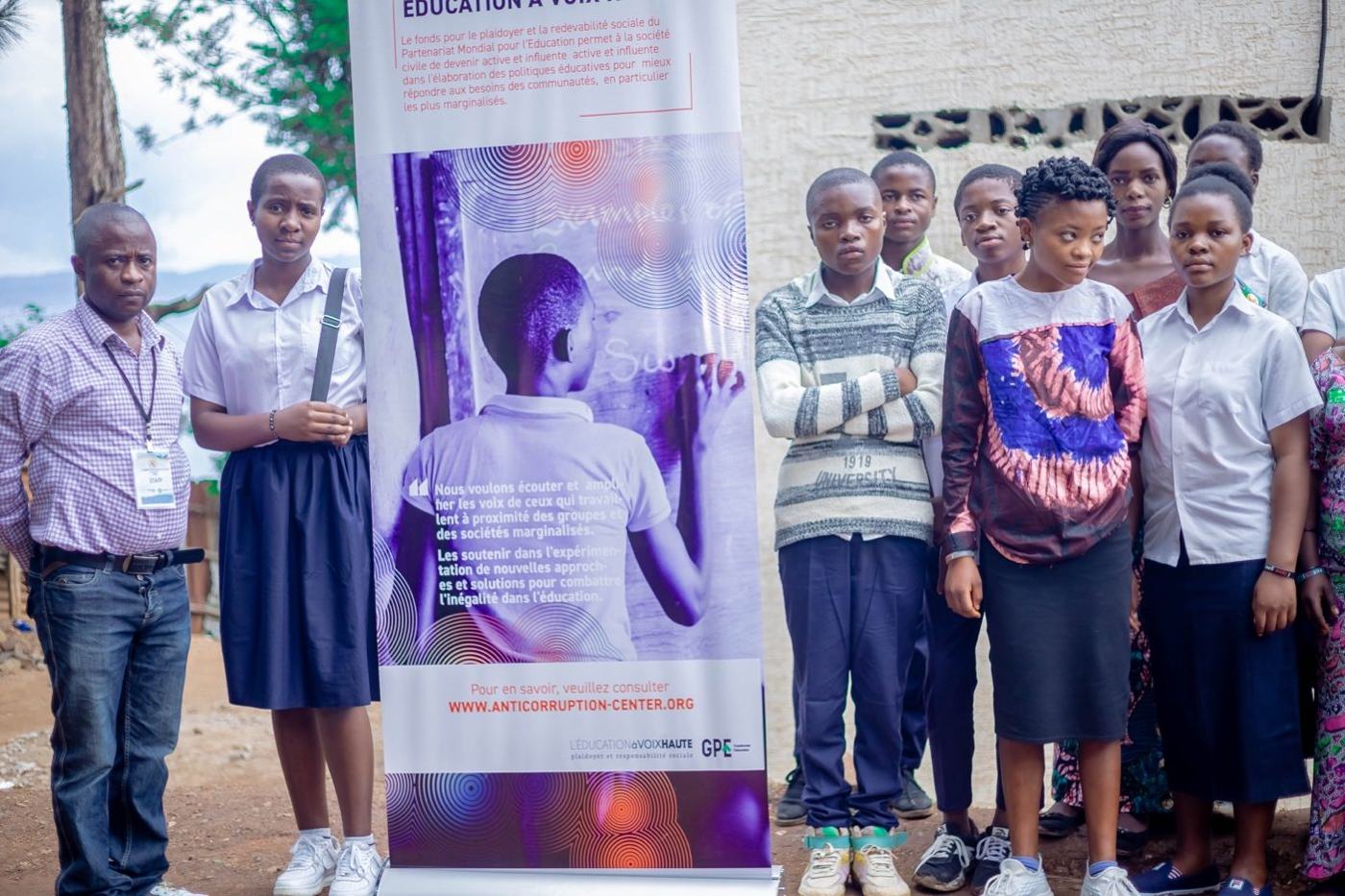
Integrity Club members and a teacher standing next to a CERC banner

Who we are

CERC is a DRC-based nonprofit organization that empowers youth and local communities to solve complex corruption-related problems.

Our mission

Our mission is to advance knowledge on the causes and consequences of corruption and support the development of new anti-corruption policies and initiatives in the Democratic Republic of the Congo.

We believe in the power and potential of young people to create solutions to some of the most pressing challenges of our time. Driven by this belief, our secondary mission is to empower young people with skills and tools to create positive change towards a more accountable, open and inclusive institutions and public services”.

Our vision

CERC is working towards a Congo in which:

  • Government, Politics, Businesses, Civil Society are free from corruption.
  • Individuals and groups are empowered with knowledge and skills to take action to claim and defend their human rights and the rights of others.
  • Local leadership capacity emerges to influence decision-makers and hold governments accountable to the needs and aspirations of citizens;
3

Executive summary

In 2022, CERC made significant strides towards its mission. 138 school principals and 278 teachers underwent extensive training on integrity-building and anti-corruption measures within the educational system. This comprehensive initiative aimed to instill a culture of accountability and ethical conduct within schools.

Furthermore, as part of the USAID-funded Youth Excel Project, CERC facilitated the socio-economic reintegration of 45 unemployed and underrepresented youth in Kinshasa. This initiative not only provided tangible support to these individuals but also contributed to broader efforts in combating corruption and inefficiency.

A pivotal aspect of CERC's work in 2022 was the training of 2250 schoolchildren on mechanisms to foster accountability within their educational environments. This investment in the younger generation empowers them with the skills and knowledge to actively participate in monitoring and advocating for improved educational services.

Collaboration was also a cornerstone of CERC's efforts in 2022. The organization joined forces with the Network of African Parliamentarians against Corruption to draft and submit two bills to integrate integrity clubs and integrity education into the DRC's education curriculum. This strategic partnership represents a significant step towards embedding anti-corruption measures within the educational framework of the country.

With this revised strategy, CERC demonstrates a commitment to innovation and a willingness to take bold steps toward achieving its mission of holding the powerful accountable for the betterment of society. Despite operating in highly challenging conditions, CERC remains resolute in pursuing a corruption-free Congo. The organization is poised to face the forthcoming years with determination, buoyed by the continued support and generosity of longstanding and newly engaged donors. This collective effort ensures that CERC's vital work continues unabated.

Highlights of the year included:

In 2022, CERC achieved several notable milestones, demonstrating its unwavering commitment to combating corruption and inefficiency in public services. Some of the highlights of the year included:

  • Comprehensive Training for School Principals and Teachers: CERC conducted intensive training sessions for 138 school principals and 278 teachers. This program focused on integrity building and imparting anti-corruption measures within the educational system, equipping them with essential skills and knowledge.
  • Socio-Economic Reintegration of Underrepresented Youth: Through the USAID-funded Youth Excel Project, CERC played a pivotal role in the socio-economic reintegration of 45 unemployed and underrepresented youth in Kinshasa. This initiative not only provided tangible support to these individuals but also contributed to broader efforts in combating unemployment.
  • Empowering School Children: 2250 schoolchildren were empowered with knowledge and skills to foster accountability within their educational environments. This investment in the younger generation is crucial in building a culture of vigilance and advocacy for improved educational services.
  • Strategic Collaboration with African Parliamentarians: CERC forged a strategic partnership with the Network of African Parliamentarians against Corruption. Together, they drafted and submitted two bills to integrate integrity clubs and integrity education into the DRC's education curriculum. This collaborative effort represents a significant step towards embedding anti-corruption measures within the country's educational framework.

These accomplishments highlight CERC's dedication to its mission and the positive impact it continues to have on the youth, educational institutions, and the broader community. Despite the challenges faced, CERC's strategic vision for 2022-2025 incorporates robust measures to not only address immediate concerns but also prepare for potential future crises. This forward-looking approach reflects the organization's commitment to holding the powerful accountable for the betterment of society. With the support of donors, both longstanding and new, CERC is poised to continue its vital work in the years to come.

4

CERC strategic goals

In 2022, we directed our attention towards four prioritized and strategic objectives. We envisioned them as interlinked components of a unified endeavor, with each one bolstering the others. These four prioritized endeavors influenced four pivotal facets of Congolese society: the populace, ethical principles, institutions, and legal frameworks.

  • GOAL 1: Diagnose corruption issues and use findings as a reference to stimulate more informed debates and formulate further projects on anti-corruption.
  • GOAL 2: Build and support partnerships and coalitions of civil society organizations to fight corruption more effectively.
  • GOAL 3: Engage citizens and young people in promoting integrity more actively.
  • GOAL 4: Build governance foundations and operational structures and processes for scaling up anti-corruption and integrity-building works in other provinces.
5

Progress in 2022

Goal 1Diagnose corruption issues and use findings as a reference to stimulate more informed debates and formulate further projects on anti-corruption

In 2022, CERC embarked on groundbreaking initiatives in corruption research and studies. This involved conducting consultation workshops with senior education officials and other influential figures in the education sector. Through these workshops, CERC delved into the root causes that contribute to corruption and the mismanagement of public funds. These findings serve as a crucial foundation for fostering informed discussions and shaping future endeavors to combat corruption Education, Health, Public Administration, and Justice sectors.

Additionally, CERC's comprehensive survey, which encompassed 2,250 students across 150 schools, played a pivotal role in understanding the level of young people's involvement and their motivations for championing integrity. This survey provided essential insights that helped in crafting a tailored and sustainable approach to engage young individuals in the promotion of integrity.

Result 1 :

CERC facilitated a consultation workshop on integrity education with 96 senior education officials including 3 members of parliament in Bukavu and Kinshasa

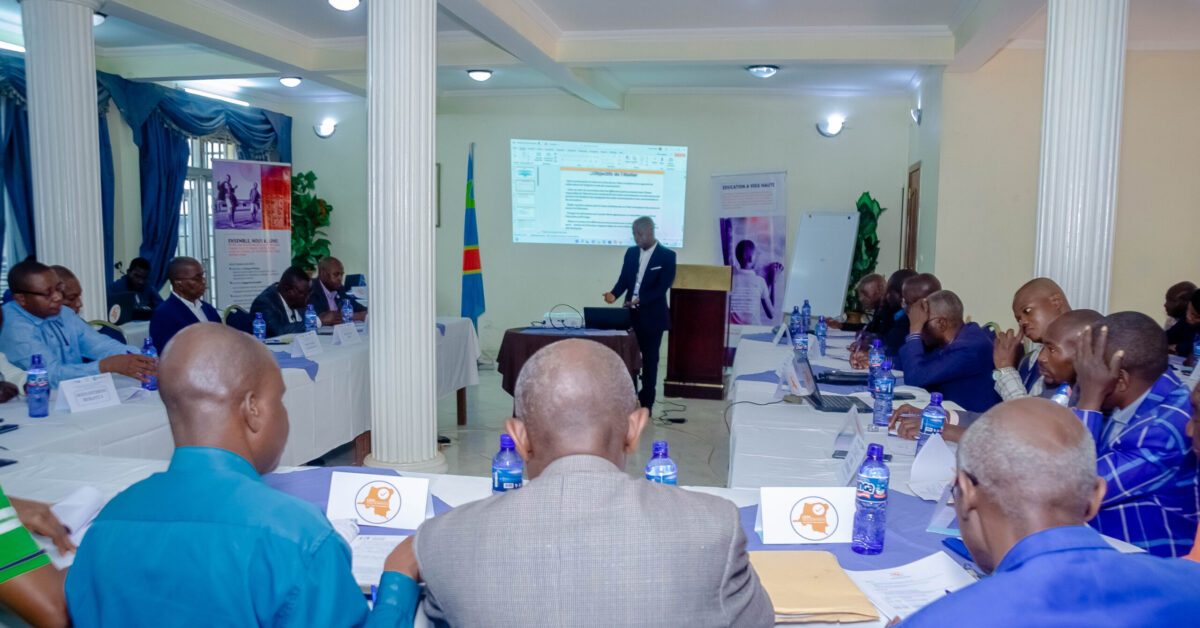
In 2022, CERC facilitated a crucial gathering, bringing together 96 participants including senior education officials, parliamentarians, Journalists, representatives from Teachers’ Union and Schools Founders. The purpose of this event, held under the Students Acting for Accountability and Quality of Education in DRC project, was to evaluate the effectiveness of CERC's approach to anti-corruption in the DRC education sector.

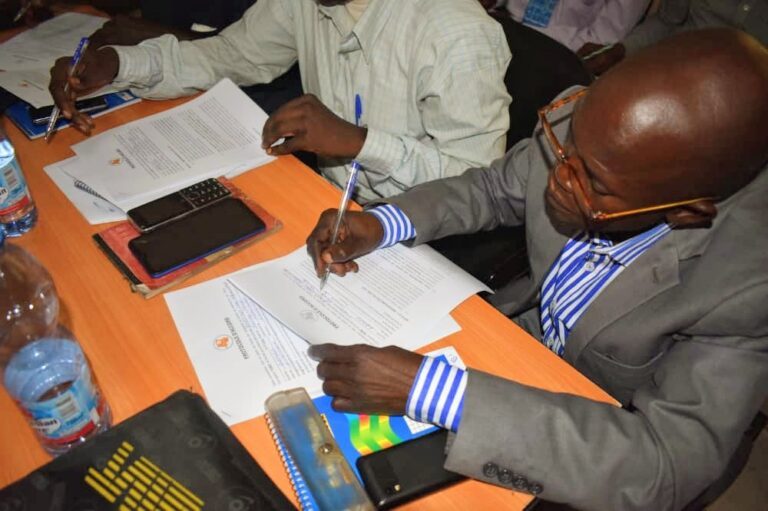
One of the foremost outcomes of this workshop was the establishment of a memorandum of understanding. This document represents a notable milestone, signifying the incorporation of integrity clubs into every secondary school in South Kivu and Kinshasa. Notably, this agreement received formal endorsement from the Ministry of Primary, Secondary, and Technical Education, with representation from the Provincial Directorate of Education of South Kivu 1, as well as CERC.

Senior education officials seated around tables at the consultation workshop in Bukavu
Figure 1 : Senior officials gathering for a workshop in Bukavu, discussing strategies to combat corruption in public services. Photo: CERC Bukavu

This collaborative effort represents a significant stride towards fostering a culture of accountability and integrity within the DRC educational landscape. The incorporation of integrity clubs in education sector will serve as a powerful tool in empowering students to actively participate in the improvement of education quality and the eradication of corruption.

Result 2 :

CERC conducted a comprehensive study on its Integrity Club model in South Kivu and Kinshasa

In 2022, under the Students Acting for Accountability and Quality of Education initiative funded by the Global Partnership for Education, CERC conducted a comprehensive KAP Survey on its Integrity Club model in South Kivu and Kinshasa (in the Democratic Republic of the Congo). This study aimed to identify effective delivery models and map out the key stakeholders for successful implementation and community support.

The research was strategically designed to align with the 4E approach to behavior understanding and influence: ENABLE, ENCOURAGE, ENGAGE, and EXEMPLIFY.

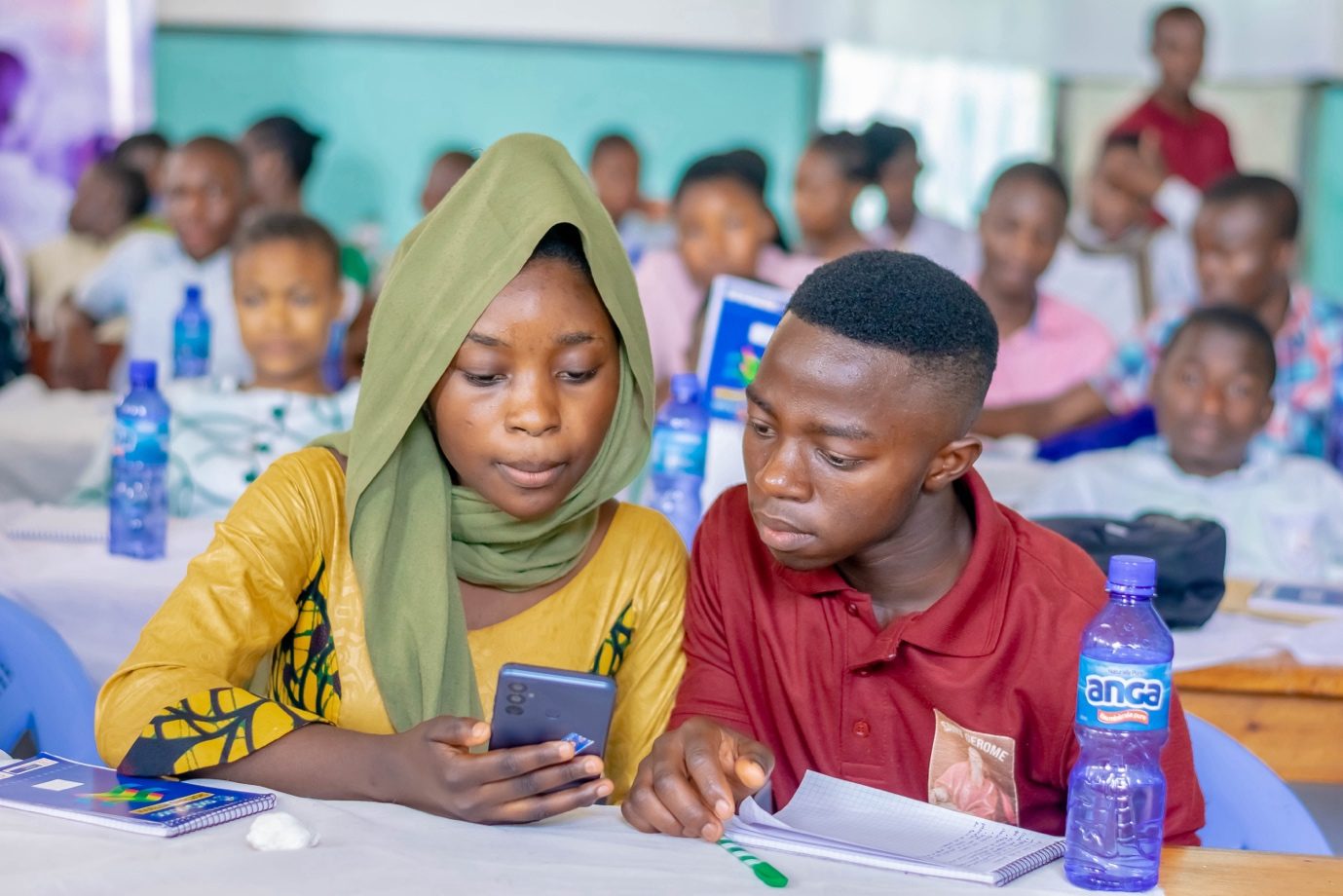
Two Integrity Club members looking at a phone during a workshop in Bukavu
Figure 2 : Integrity Clubs members during a workshop in Bukavu, discussing strategies to combat corruption in public services. Photo: CERC Bukavu.

Keys findings:

The key findings emerging from the data for South Kivu and Kinshasa are given below:

  • Youths recognize the importance of integrity and are motivated to improve the society in which they live and the schools in which they are taught. However, it is acknowledged that the rate of change will be slow in communities with strong traditions and that collective effort will be required compared to an individual.
  • The opportunity for personal development is a motivating factor for becoming a monitor. Participants have acquired new knowledge and skills to tackle integrity-related issues such as corruption by participating in Integrity clubs.
  • In schools with active focal teachers and supportive headteachers, the climate for monitoring is positive, and there is some engagement in extracurricular activities organized by the Integrity Clubs. Confidence levels and awareness of civil rights have increased for youth involved in monitoring activities.
  • CERC has provided some support; however, this is considered inadequate in frequency and content. This has acted as a demotivating factor and, in some cases, contributed to the loss of trust.
  • Lack of family support remains a challenge, particularly for youth from more financially disadvantaged backgrounds. However, when families had attended sensitisation sessions, they were more likely to support monitoring activities.
  • Competing school priorities and a lack of time are also factors that deter students from volunteering their time.
  • There is a lack of political engagement, whereby local political representatives lack the commitment to the activities undertaken by the youth. This is linked to low engagement from the project leads of the projects the youth are monitoring and from community members. Low engagement affects the motivation levels of monitors considerably, and the low prioritisation of monitoring acts as a deterrent to non-monitors.
  • Within the school Integrity Clubs, there were complaints of low attendance, immaturity, and low engagement of youth, particularly over a long period. This loss in the momentum of the groups can be attributed to several factors, including low peer engagement, low teacher engagement and low levels of engagement from partner organisations.
  • Actions have been taken to incorporate some monitoring activities into student's everyday life. For example, putting in place mechanisms to monitor the punctuality of teachers.
  • A long-term barrier to maintaining engagement in monitoring activities across all youth is the prospect of migration for employment, further studies, and marriage (for female youth).
  • Despite the desire to see the change in schools and in the community, there is little evidence of monitors integrating long-term mechanisms to monitor. There is no mechanism to track the activities of ex-monitors, and therefore it is difficult to understand to what extent they are continuing to engage in monitoring and the impact of this.

Goal 2Build and support partnerships and coalitions of civil society organizations to fight corruption more effectively

Fighting corruption by any means in DRC is still very dangerous. Doing so safely requires a joint effort of many institutions and individuals from all different societal spectrums, including state and non-state actors and individuals.

Achievements in 2022

In 2022, CERC partnered with the African Parliamentary Network Against Corruption to formulate two legislative proposals aimed at incorporating anti-corruption protocols into the education sector of the DRC.

Through active engagement with Members of Parliament, CERC effectively influenced policymaking at a legislative level. This collaborative effort guarantees that integrity education is not only included in the curriculum but also reinforced by the legal framework. This significant milestone lays the foundation for a systematic and standardized approach to instilling values of integrity within educational institutions throughout the Democratic Republic of Congo.

Goal 3Engage citizens and young people in promoting integrity more actively

In February 2022, CERC initiated an 18-month project, generously funded by the Global Partnership for Education, with the objective of establishing Integrity Clubs in 150 secondary schools across Kinshasa and South-Kivu.

The project's focus extended beyond imparting awareness about the detrimental impact of corruption; it also sought to equip youth with the requisite skills and knowledge to actively engage in monitoring the reform outlined in the DRC Education and Training Sector Strategy 2016-2025.

This endeavor targeted six municipalities in South Kivu and six municipalities in Kinshasa, striving to ensure that all students, particularly girls, have access to accountable, inclusive, and equitable quality education services.

Achievements in 2022

300 school-children trained on mechanisms to build accountability in schools

Empowering our youth to fight corruption begins with ensuring that they understand how to recognize it. One of CERC's most impactful initiatives in 2022 has been the establishment of 204 Integrity Clubs in South Kivu and Kinshasa. These clubs empower 2250 students, ages 14-19, with the skills and resources needed to monitor education services in their schools. This innovative approach not only cultivates a sense of civic responsibility among the youth but also empowers them to hold their leaders accountable. This initiative not only improves the quality of education but also sets a precedent for ethical leadership within the educational system.

CERC's dedication to the cause has not gone unnoticed within the communities they serve. The success of student-led advocacy efforts, which resulted in the resolution of 33% of identified problems, speaks volumes about the organization's effectiveness in mobilizing and empowering the youth. This tangible impact underscores CERC's ability to translate their vision into practical, positive change on the ground.

Integrity Club members and a teacher standing next to a CERC banner

By teaching youth about integrity, we give them the knowledge, skills and behaviours to fight corrupt practices and establish new behavioural norms and values for society

The integrity Education program in schools recognizes that transformative change can only occur when young people are encouraged and equipped to act with integrity from an early age. To do so, CERC works through local schools, which actively engage students through Integrity Clubs to find out what concerns them the most and where education services and infrastructures can be improved. Students are trained on how to gather evidence and how to advocate with school officials to identify and implement solutions to education crises.

138 school principals and 278 teachers trained on integrity building and anti-corruption measures in the school system

CERC's training programs for teachers and principals from 150 secondary schools in South Kivu and Kinshasa are a testament to their holistic approach. By equipping educators with the knowledge and resources to combat inefficiency and corruption in education services, CERC is fostering a collaborative effort to create an environment conducive to learning and growth.

A workshop participant signing the memorandum of understanding
Figure 3: A workshop participant signing the memorandum of understanding. Bukavu, March 2023

Goal 4Build governance foundations and operational structures and processes for scaling up anti-corruption and integrity building works in other provinces

For CERC to fight corruption successfully, we must be equipped with the necessary skills and expertise. Therefore, one of our prioritized areas for 2021 was to build the capacity of our organization and its core staff members.

Achievements in 2022

Tapping into the national expertise and resources, 19 CERC staff members including trainees benefited from a series of training, including Program Development and Management, Monitoring, Evaluation and Learning, Advocacy and Policy Engagement, Finance management, and Finance Audit, delivered by the Group d’Etudes et Capacitation en Gestion (BEAG).

Plan for 2023 :

As CERC will progressively develop and monitor its institutional capacity, it will gradually be seen as a bridge to national anti-corruption resources and expertise on anti-corruption in 2022. It will begin to transform itself to be one of the capacity development institutions in anti-corruption work for DRC.

Expected results in 2023

  • CERC's Board of directors comprises eminent individuals from diverse backgrounds and expertise (development, human rights, democratic governance, youth development, private sectors, and capacity development).
  • CERC's Executive Director and Board are given opportunities to participate in regional and international anti-corruption events to learn from and network with other partners and international experts.
  • Mutual understanding, trust, and confidence between Congolese institutions and CERC are improved.
6
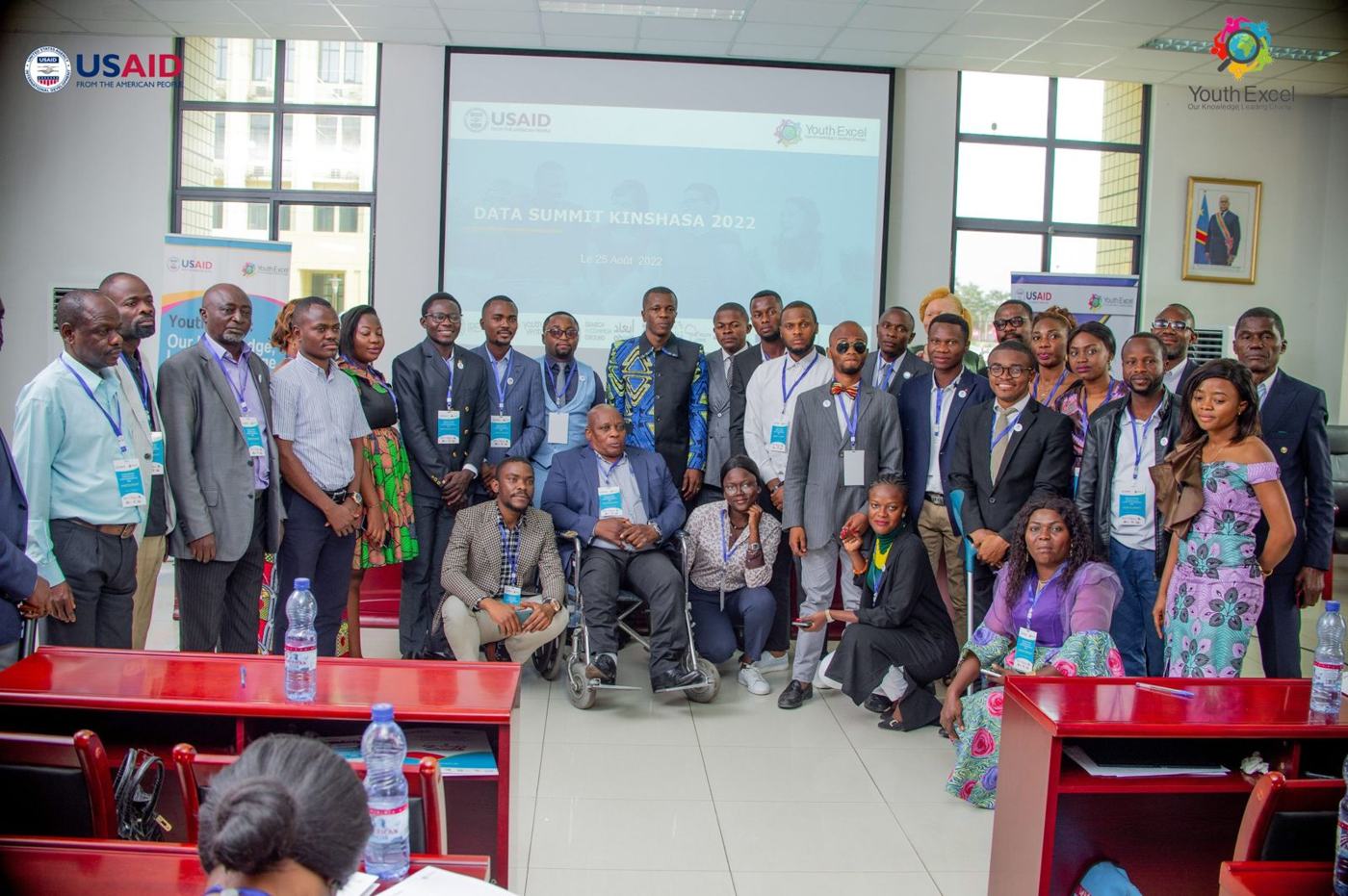
Participants of the Youth Represent DRC Data Summit, Kinshasa, August 2022
Funded by USAID through IREX

Youth Excel – Youth Represent DRC

In 2022, the network of youth organisations that CERC brought together in Kinshasa presented its research at a Data Summit and turned it into action for 45 unemployed young people.

Youth Excel: Our Knowledge, Leading Change is a global initiative funded by the United States Agency for International Development (USAID) and led by IREX. In the DRC, CERC implemented it in Kinshasa as Youth Represent DRC, with technical support from Search for Common Ground (SFCG). The project supports youth-led and youth-serving organisations to carry out implementation research, use data to improve their programmes and engage in dialogue with decision-makers.

In 2022, the project was implemented under CERC’s sub-agreement with IREX FY22-YOUTH_EXCEL-CERC-01, under which CERC received US$51,529.10 in advances from IREX in 2022. The advances received in 2021 (US$32,506.71) are reported in the 2020–2021 report, and the final disbursement (US$6,746.05) was received in February 2023.

2021–2022A network of youth organisations doing research

The work built on the issue-based collaborative network (ICON) formed in 2021: 10 youth-led and youth-serving organisations in Kinshasa, including one LGBTQI-led organisation and two organisations led by people living with disabilities. Trained by CERC in implementation research and in gender equality and social inclusion, the young members of the network designed and carried out research on how to include underrepresented and marginalised young people in education and workforce development programmes, and compiled their findings in final knowledge products.

August 2022ICON Data Summit in Kinshasa

In August 2022, CERC, in partnership with IREX and SFCG, held the ICONs Data Summit in Kinshasa. The summit was part of the Youth Excel ICONs, a youth participatory research project in Kinshasa and North Kivu that aimed to improve the ability of underrepresented youth to sustain positive livelihood outcomes and to support them in advancing development agendas.

Under the theme “Increasing inclusion of underrepresented and marginalised young people in education and in workforce development programmes”, the ICON participants presented their final knowledge products to a diverse range of stakeholders.

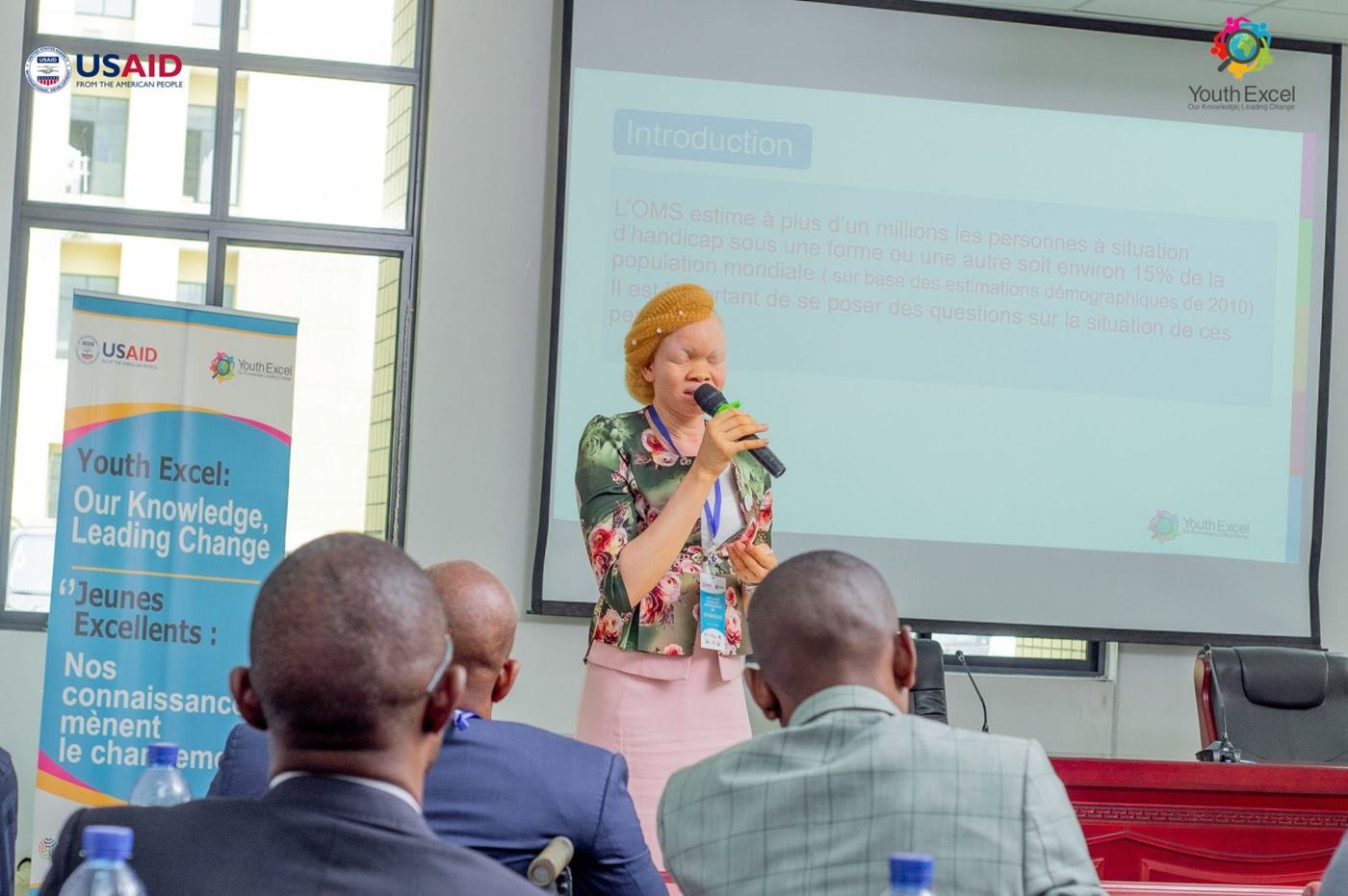
A participant presenting at the Youth Represent DRC Data Summit
Figure 4: A participant presents at the Youth Represent DRC Data Summit. Kinshasa, August 2022. Photo: CERC

November 202245 young people supported back into work

Building on their research, 9 organisations trained under the ICON project joined forces to design and implement a joint Quick Impact Project (QIP), “Socio-Economic Reintegration of 45 Unemployed and Underrepresented Youth in Kinshasa”.

The project offered the 45 young people vocational training, capacity-building workshops, mentoring and access to resources to look for a job or start a business. Group activities and networking helped them build a supportive community and exchange ideas and experiences.

In December 2022, CERC delivered the ICON trainings of Activity 4. The micro-grants for income-generating activities, the printing of the training participation certificates and the monitoring and evaluation visits were planned for the following weeks, pending the validation of the November report.

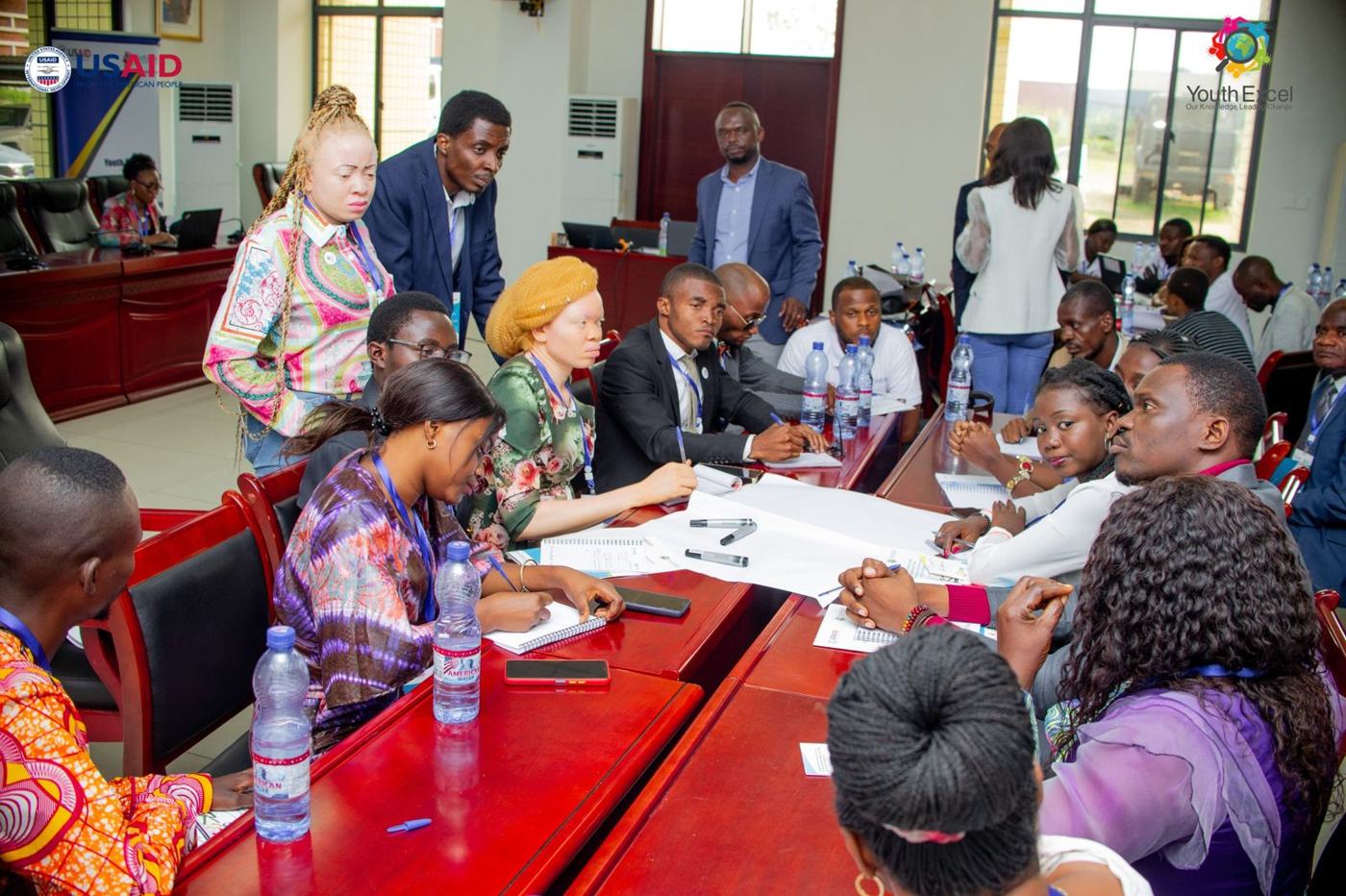
Participants working in groups at the Data Summit
Figure 5: Group work at the Youth Represent DRC Data Summit. Kinshasa, August 2022. Photo: CERC

Results in 2022

  • Youth research findings and knowledge products presented to stakeholders at the Data Summit in Kinshasa (August 2022).
  • 9 youth organisations of the ICON engaged in a joint Quick Impact Project.
  • 45 unemployed and underrepresented young people supported towards socio-economic reintegration in Kinshasa.
  • Monthly financial reports for November and December 2022 approved by IREX.

The project’s expenditure is presented in the financial review at the end of this report, and in detail in the Youth Excel project report.

7

Structure, governance, and management

The organization started as a Non-Profit Association in 2017. Today its operations are governed by its Statutes dated April 15, 2017 (as amended in May 2021). Centre de Recherche sur l'Anti-Corruption is registered under Law 004/2001 as a Public Utility Organization under registration number F92/42579.

Good governance

The governing structure of our local organization is transparent and conforms to relevant laws. We seek to follow the principles of best governance practices.

We have :

  • A GOVERNING BODY that supervises and evaluates the executive director oversees the program and budgetary matters. It defines overall strategy, is consistent with the organization's mission, ensures that resources are used efficiently and appropriately, that performance is measured, that financial integrity is assured and that social commitment is maintained.
  • WRITTEN PROCEDURES determining the appointment, responsibilities, and terms of members of the governing body, preventing and managing conflicts of interest.
  • A REGULAR GENERAL MEETING with authority to appoint and replace members of the governing body. The Board meets quarterly. Its role is one of governance and strategic oversight. It approves the budget, operational and strategic plans, appoints the President and Chief Executive, and approves overall policy concerning staff employment. The Board contributes in many ways to aspects of CERC's work, for example, through sub-committees, approving strategy, approving new policies, and advising on fundraising. The Board also determines significant issues that affect CERC's public image - for example, whether to endorse campaigns promoted by other organizations, engage in fundraising forms that might be deemed sensitive, and any issues with significant legal implications. All other decisions are delegated to the Chief Executive, who consults the Board collectively or individually where they have the expertise to contribute or are thought likely to have strong views on a particular issue.

Professional management

We manage our organizations professionally and effectively. Our policies and procedures seek to promote excellence in all respects.

  • FINANCIAL CONTROLS: internal financial control procedures ensure that all funds are used effectively and minimize the risk of misused funds. We follow principles of best practices in financial management.
  • EVALUATION: we seek to improve our effectiveness on an ongoing basis. We have defined evaluation procedures for our boards, staff, programs, and projects based on mutual accountability.
  • PARTNERS: our organizational integrity includes ensuring that our partners also meet the highest standards of honesty and accountability and that they take all steps to ensure that they have no dealings with organizations or persons involved in illegal or unethical practices.
  • HUMAN RESOURCES: our performance and success reflect the quality of our staff volunteers and management practices, and we are committed to investing in human resource development. Remuneration and benefits strike a balance between public expectations of nonprofit organizations and the need to attract and retain the staff that we need to fulfill our mission. Our human resources policies seek to conform fully with relevant international and national labor regulations, in addition to applying the best voluntary sector practices in terms of team member and volunteer rights and safety, health and hygiene at work, and work/life balance. Human resources policies include procedures for evaluating the performance of all staff regularly.
  • BRIBERY AND CORRUPTION: human resources policies expressly prohibit acts of bribery or corruption by staff or other persons working for or on behalf of the organization.
  • WHISTLE-BLOWERS: staff members are encouraged to draw management's attention to activities that may not comply with the law or our mission and commitments.

Our policies and regulations

Our legitimacy is derived from the quality of our work and the recognition and support of the people with and for whom we work, in addition to our donors and the wider public. CERC is committed to openness, transparency, and honesty about its structures, objectives, policies, and activities, and we communicate actively to stakeholders and make information publicly available.

As a small organization, we know how difficult it is to formalize policies and procedures. So we're committed to sharing our policies for your use and will update the policies provided here on an ongoing basis. Feel free to use them and contextualize them for your organizational needs.

8
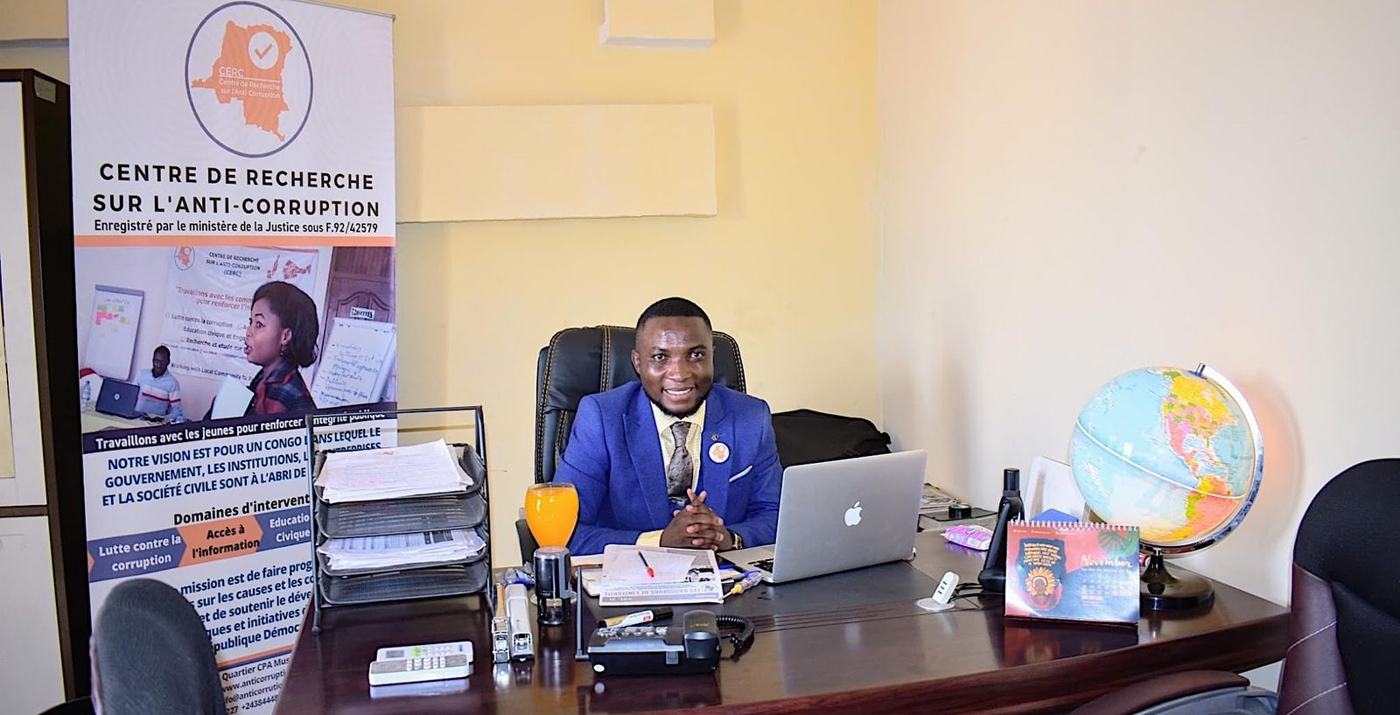
Heri Bitamala at his desk in the CERC office

Recognition and thanks

Dear Members and Supporters of CERC,

As we conclude the year 2022, it is with a sense of profound gratitude and accomplishment that we reflect on the strides made in pursuit of our shared vision for a corruption-free Congo. The tireless dedication of our team, the unwavering commitment of our partners, and the steadfast resolve of the youth involved have been the cornerstones of our progress.

Through our Integrity Clubs, we have empowered over 2250 young minds, equipping them with the knowledge and skills to monitor and advocate for improved education services in their schools. This grassroots initiative has not only fostered a sense of ownership among the youth but has also proven instrumental in driving positive change. Furthermore, our training programs for teachers and principals have been pivotal in arming the education sector with the tools necessary to combat inefficiency and corruption. By investing in the educators, themselves, we recognize that we are effecting change at its very source, ensuring a sustainable impact for years to come.

The numbers speak volumes - with the concerted efforts of our student-led advocacy, we successfully addressed 33% of the identified issues, ranging from inadequate infrastructure to sanitation facilities. These tangible outcomes are a testament to the power of collective action and the potential that lies within the youth of our nation.

As we move forward, let us remain steadfast in our pursuit of a Congo where integrity permeates every facet of public life. Together, we have shown that change is not only possible but achievable through concerted, principled efforts. Let our shared vision continue to inspire us in the days ahead.

With warm regards,

Signature of Heri Bitamala

Heri Bitamala
Executive Director

9
Financial year 2022 – Education Out Loud project audited, Youth Excel not audited

Financial review

This financial review covers the 2022 financial year. Its main part is the statement of expenditure and income of the project “Students Acting for Accountability and Quality of Education”, funded by Education Out Loud (EOL) through Oxfam IBIS and implemented by CERC, for the period from 1 January to 31 December 2022. This statement was audited by DWAC (Divine wisdom For assisting and consulting), Kinshasa, in accordance with International Standards on Auditing (ISAs); the audit report is signed by Mac NGUBI, Chartered Accountant, and dated 7 April 2023. The review also presents the expenditure of the Youth Excel project at 31 December 2022, taken from CERC’s financial report to IREX for December 2022, approved by IREX: these figures have not been audited. The accounts of the Education Out Loud project are kept in USD, on a cash basis; the Youth Excel figures are also in US dollars.

All projectsConsolidated statement – all projects

Income, expenditure and balances of all projects combined, for 2022 compared with 2021.

Income and expenditure2022
US$
2021
US$
Income received
UNCAC Coalition–3,431.50
USAID / IREX – Youth Excel51,529.1032,506.71
GPE / Oxfam IBIS – Education Out Loud361,361.0023,986.00
CERC’s own resources–9,380.75
Total income received412,890.1069,304.96
Expenditure, all projects combined
Staff costs107,330.4218,150.72
Programme activities168,350.3626,290.00
Travel and transport12,825.65392.00
Rent, running costs and equipment46,459.7312,956.75
Professional fees, staff training and audit5,000.00–
Administration and overheads5,852.292,023.78
Return of unspent funds to a donor–6,424.23
Total expenditure345,817.4566,237.48
Income less expenditure67,072.653,067.48
Balance brought forward from the previous year13,013.079,945.59
Adjustments (see the statement of funds)4.50–
Balance carried forward to the next year80,090.2213,013.07

Categories: staff costs (salaries and benefits); programme activities (work with students, schools, communities and youth organisations, research, advocacy, awareness raising and training of beneficiaries); travel and transport where reported separately; rent, running costs and equipment (rent, office, utilities, communication, supplies, printing, equipment, other direct costs and bank charges); professional fees, staff training and audit; administration and overheads. Partly audited: the Education Out Loud project was audited by DWAC (notes 1 to 4; the audit rounds its total, so the categories add up to US$1 more); Youth Excel is not audited (December 2022 financial report approved by IREX, notes 5 and 6, less the expenditure to December 2021, which is that of 2021). Education Out Loud income: the two transfers of 2022 (US$361,361). The project’s audit opens with US$751 in cash on 1 March 2022: the Year Zero balance of US$746.50 brought forward and US$4.50 of adjustment – CERC’s ledger took over US$746.41 and the bank account also held US$5.06 of CERC’s own funds kept for fees: US$751.47, shown as US$751 by the audit, which works in whole dollars. Audited: 2021 audit by Group BEAG (28 January 2022): income US$69,304.96, expenditure and refund US$66,237.48, cash at 31 December 2021 US$13,013.07. The 2021 figures are those of the audit; they differ slightly from the Year Zero finance report to Oxfam IBIS (US$70.36), from the UNCAC figure of the fund accountability statement (US$0.15) and from the refund to Accountability Lab it showed (US$0.80): see the statement of funds. Rent, running costs and equipment include US$9,380.75 of office equipment bought with CERC’s own resources.

Statement of funds, by grant

For each grant: the balance brought forward from the previous year, the funds received, the funds spent, the funds returned to the donor or transferred to another grant (and adjustments), and the balance carried forward. A negative balance means spending ahead of funding. Each line says whether its figures are audited, and by which audit.

Grant and donorBrought forward
US$
Received
US$
Spent
US$
Returned, transfers
US$
Carried forward
US$
Students Acting for Honesty, Integrity and Equality (SHINE)1
Integrity Action (NORAD) · Not audited
3,521.36–3,521.36––
Youth Excel – Youth Represent DRC2
CERC’s own resources · Not audited – Monthly financial report to IREX, approved by IREX
8,745.2151,529.1068,955.09–−8,680.78
Year Zero – Students Acting for Accountability and Quality of Education3
Global Partnership for Education, through Oxfam IBIS · Not audited
746.50––−746.50–
Students Acting for Accountability and Quality of Education4
Global Partnership for Education, through Oxfam IBIS · Audited – 2022 audit of Education Out Loud (DWAC)
–361,361.00273,342.00752.0088,771.00
Total13,013.07412,890.10345,818.455.5080,090.22

1 Students Acting for Honesty, Integrity and Equality (SHINE), 2022. Owed to Integrity Action at the end of 2021 (2021 audit). Used in 2022 to develop EduCheck: DevelopmentCheck, the monitoring tool of the SHINE project, belonged to Integrity Action, and CERC wanted its own platform, managed by CERC, for the long-term monitoring of schools by students (CERC’s statement).

2 Youth Excel – Youth Represent DRC, 2022. Expenditure to December 2022 was ahead of the advances received, hence a negative balance, covered by the final IREX disbursement of February 2023 and by CERC’s own resources (see 2023).

3 Year Zero – Students Acting for Accountability and Quality of Education, 2022. The Year Zero balance (US$746.50) went into the Education Out Loud project.

4 Students Acting for Accountability and Quality of Education, 2022. Received from Oxfam IBIS: US$258,115 on 17 March and US$103,246 on 21 October 2022 (US$361,361). Brought in from Year Zero: US$746.50 (2021 audit). The 2022 audit opens the project on 1 March 2022 with US$751, US$4.50 more: CERC’s ledger takes over US$746.41 (US$330 in cash and US$416.41 in bank, US$0.09 less than the 2021 audit) and the bank account also held US$5.06 of CERC’s own funds kept for account fees; the audit, in whole dollars, counts the US$751.47 as US$751. Its expense headings add up to US$1 more than its total of US$273,341. Audited balance: US$88,771 – CERC’s report to Oxfam IBIS gives US$88,765.92, the same balance before these roundings. The auditor (DWAC) gave a qualified (“except for”) opinion: US$81,651 actually held (US$80,951 in bank, US$700 in hand) and US$7,120 of advances not yet justified at 31 December 2022 – three advances for activities under way, listed in CERC’s fourth-quarter report: US$5,000 for identifying and training education clusters, US$2,000 for a mission to Bukavu, US$120 for transport to equip the Integrity Clubs; US$5,158 of expenses without Oxfam IBIS’s prior approval (rental deposits US$3,800, unbudgeted staff US$1,358); US$2,517 more administrative staff costs in the financial report (US$16,590) than in the general ledger (US$14,073); insufficient evidence for US$3,800 of accommodation costs of a 152-day mission.

Policy 002Compliance and reporting standards

This section applies to this report the corrections made on CERC’s financial accountability page (cerc.cd/en/our-financial-accountability/): the compliance of each grant with Policy 002, every difference between reports, accounts and audits – explained, or open and shown in red – and the score of this report against the reporting standard of Policy 002, for a target of 80%.

Compliance with Policy 002: 76%

Average of the rules met (1), partly met (½) and not met (0) by each grant in 2022.

Grant and year – rules partly or not metLevel
Students Acting for Honesty, Integrity and Equality (SHINE)
2022 · External audit; Donor funds and balances; Expenses approved and supported
Partly compliant
70%
Youth Excel – Youth Represent DRC
2022 · External audit; Expenses approved and supported
Partly compliant
75%
Year Zero – Students Acting for Accountability and Quality of Education
2022 · External audit; Expenses approved and supported
Partly compliant
80%
Students Acting for Accountability and Quality of Education
2022 · Expenses approved and supported; Reports agree with the accounts
Partly compliant
80%

Differences between reports, accounts and audits

DifferenceAmount
US$
Explained – Education Out Loud: opening cash
The 2022 audit opens the project with US$751; the 2021 audit left US$746.50. CERC’s ledger takes over US$746.41 (US$330 in cash, US$416.41 in bank) and the account also held US$5.06 of CERC’s own funds kept for bank fees (bank reconciliation, 28 February 2022): US$751.47, which the audit, in whole dollars, shows as US$751. Residual: US$0.09 between the ledger and the 2021 audit.
4.50
Explained – Education Out Loud: rounding in the 2022 audit
The audit works in whole dollars: its expense headings add up to US$273,342, its total is US$273,341 (CERC’s ledger: US$273,341.49). The audited balance of US$88,771 is the balance of CERC’s report to Oxfam IBIS, US$88,765.92, plus the US$5.06 of own funds and the roundings.
1.00
Explained – Education Out Loud: advances not justified at 31 December 2022
Cash held US$81,651 against a balance of US$88,771 (2022 audit). The US$7,120 are three advances for activities under way, listed in CERC’s fourth-quarter report to Oxfam IBIS: US$5,000 for identifying and training education clusters, US$2,000 for a mission to Bukavu, US$120 for transport to equip the Integrity Clubs. The 2023 ledger shows the cluster work starting in January 2023. The three advances were justified or refunded by June 2025 (CERC’s statement). These documents are kept by CERC and not audited.
7,120.00
Explained – Education Out Loud: administrative staff costs
The financial report shows US$16,590 for budget line 6.1 (administrative staff), the general ledger US$14,073. The auditor calls the US$2,517 an unjustified difference: the expenditure may be overstated. The difference was corrected by June 2025 (CERC’s statement). These documents are kept by CERC and not audited.
2,517.00
Explained – Education Out Loud: expenses without prior approval
US$5,158 spent without Oxfam IBIS’s formal approval: rental deposits for the Bukavu and Kinshasa offices (US$3,800, recorded in the ledger in March 2022) and unbudgeted staff (US$1,358). Regularised with Oxfam IBIS by June 2025 (CERC’s statement). These documents are kept by CERC and not audited.
5,158.00
Explained – Education Out Loud: accommodation costs of a mission
US$3,800 of accommodation reimbursed for a 152-day mission of the Executive Director in Bukavu (March–December 2022): the auditor did not receive the mission reports and terms of reference, nor the reason for the five-month mission and the late reimbursement. The supporting documents were provided by June 2025 (CERC’s statement). These documents are kept by CERC and not audited.
3,800.00
Explained – SHINE: balance used to develop EduCheck
The unspent balance of SHINE phase 3, US$3,521.36, was owed to Integrity Action in the 2020 and 2021 audits. CERC used it in 2022 to develop EduCheck: DevelopmentCheck, the monitoring tool of the SHINE project, belonged to Integrity Action, and CERC wanted its own digital platform, managed by CERC, for the long-term monitoring of schools by students. Integrity Action’s written agreement to this reallocation is not documented, so the rule on donor balances is shown as partly met.
3,521.36
Explained – Youth Excel: spending above the award, covered by CERC
The USAID/IREX subaward was funded by advances against monthly financial reports, each approved by IREX, which paid US$90,781.86 in all, the last instalment in February 2023. Cumulative spending reported to IREX at December 2022 was US$92,716.59: the US$1,934.73 above the funds received – the “cash available” of CERC’s December 2022 report – were paid from CERC’s own resources (members’ contributions). The project closes at zero.
1,934.73

Follow-up of the 2022 audit and of Oxfam IBIS’s recommendations

Finding or recommendationStatus
2022 audit – US$7,120 of cash advances not justified at 31 December 2022.Done
by June 2025 – CERC’s statement
2022 audit – US$2,517 more administrative staff costs in the financial report than in the general ledger.Done
by June 2025 – CERC’s statement
2022 audit – US$5,158 spent without the donor’s formal approval (rental deposits US$3,800, unbudgeted staff US$1,358).Done
by June 2025 – CERC’s statement
2022 audit – US$3,800 of accommodation costs of a 152-day mission without terms of reference or mission reports.Done
by June 2025 – CERC’s statement
2022 audit – Purchases above the procurement threshold (US$1,250) insufficiently documented: selection method and competition not always followed (other information, without effect on the opinion).Done
by June 2025 – CERC’s statement
2022 audit – US$5,100 of salaries paid for months not covered by a contract (March, April and December 2022; other information).Done
by June 2025 – CERC’s statement
Oxfam IBIS – A functional Board of Directors with democratic governance powers (condition for the 2023 disbursements).Done
Oxfam IBIS – A single authorised signatory on the bank account.Done
Oxfam IBIS – Annual audit of the project accounts.Under way
Oxfam IBIS – No internal audit team.Done
by June 2025 – CERC’s statement
Oxfam IBIS – A more detailed electronic inventory tool.Done
by June 2025 – CERC’s statement
Oxfam IBIS – Attendance lists kept by the programme team, apart from the payment sheets.Done
by June 2025 – CERC’s statement

Reporting standard of Policy 002: 85%

This report meets the target of 80%.

CriterionStatus
Funds received, by donor and project (IV.12)
Income by donor and project.
Met
Expenditure by category (II.6.4)
By category and by objective.
Met
Budget and actual, by budget line (II.6.4)
Education Out Loud: 76% of the budget (audit); Youth Excel: by budget line.
Met
Cash position at year end (II.6.4)
Education Out Loud: US$81,651 held at 31 December 2022 (audit).
Met
Commitments and balances owed (II.6.4)
Advances to be justified and balances owed, from the statement of funds.
Met
Statement of funds, by grant (III.2.2)
Statement of funds by grant.
Met
Comparison with the previous year (II.6.4)
2022 compared with 2021.
Met
External audit: auditor and opinion (III.3.2)
DWAC, Education Out Loud: qualified (“except for”) opinion; the other grants are not audited.
Met
Audit findings and follow-up action plan (III.3.5)
The findings of the 2022 audit and Oxfam IBIS’s recommendations are published with the status of each; the detailed action plan is kept internal (CERC’s plan of January 2023, Oxfam IBIS’s follow-up, the Board minutes of 10 February 2023).
Met
Differences between reports, accounts and audits explained (III.3.3)
Every difference between reports, accounts and audits is explained; the 2022 audit findings were regularised by June 2025 (CERC’s statement, not yet audited).
Met
Compliance with the financial policies assessed (Policy 002)
Assessed in this report.
Met
Assets and equipment (inventory) (VI.8, VII.1)
No fixed-asset register or inventory for 2022 is published.
Not met
Financial report approved by the Board of Directors (IV.12)
No record of the Board’s approval of the financial report is published.
Not met

Restricted fundsFunded projects

The figures in this review relate to two projects, each funded by a project grant.

ProjectDonorPeriodReceived
US$
Students Acting for Accountability and Quality of EducationGlobal Partnership for Education, through Education Out Loud (Oxfam IBIS)18 months from February 2022361,361
Youth Excel – Youth Represent DRCUSAID, through IREX202251,529.10

Funds received in 2022. Education Out Loud: the two transfers of 2022 (US$361,361, note 2); the US$751 in cash at the start of the project is the Year Zero balance brought forward from 2021 (note 1 and the statement of funds). Youth Excel: the advances received from IREX in 2022, under sub-agreement FY22-YOUTH_EXCEL-CERC-01 (not audited); those of 2021 are in the 2020–2021 report.

  • Students Acting for Accountability and Quality of Education – Integrity Clubs in 150 secondary schools across Kinshasa and South Kivu, where students trained as young monitors monitor education services and share their results on EduCheck, together with the training of teachers and principals and advocacy with education officials and parliamentarians.
  • Youth Excel – Youth Represent DRC – Implementation research by a network of 10 youth-led and youth-serving organisations in Kinshasa, the ICON Data Summit (August 2022) and a joint Quick Impact Project for the socio-economic reintegration of 45 unemployed and underrepresented young people.

IncomeIncome

In 2022, CERC received US$361,361 for the Education Out Loud project: two transfers to its bank account at the Trust Merchant Bank (TMB), US$258,115 on 17 March and US$103,246 on 21 October 2022 (note 2). With the US$751 in cash at the start of the project – the Year Zero balance brought forward, US$746.50 in the 2021 audit – the project had US$362,112 (note 1).

For Youth Excel, CERC received US$51,529.10 from IREX in 2022; the advances of 2021 (US$32,506.71) are reported in the 2020–2021 report. In its December 2022 report, CERC requested the final disbursement, an advance of US$6,746.05 (note 6). These figures have not been audited.

ExpenditureExpenditure

Expenditure on the Education Out Loud project in 2022 amounted to US$273,341, against a budget of US$361,361 – a rate of 76%, leaving US$88,020 unspent (note 1). Every heading was under budget, from 44% for the advocacy campaigns (objective 4) to 93% for direct costs.

The four specific objectives accounted for US$10,032 (objective 1, education officials, civil society organizations and parliamentarians), US$124,956 (objective 2, students as agents of change – including US$114,079 for young monitors trained to monitor education services and share their results on EduCheck), US$24,282 (objective 3, awareness-raising in schools) and US$1,689 (objective 4, national awareness campaigns). Direct costs amounted to US$92,849, mainly programme staff (US$50,762) and operating costs (US$26,149), and administrative costs to US$19,534 (note 3).

At 31 December 2022, the theoretical cash balance was US$88,771 and the physical cash balance US$81,651 (US$700 in hand and US$80,951 in bank). The difference of US$7,120 represents unjustified cash advances at 31.12.2022 (note 4).

For Youth Excel, cumulative expenditure to 31 December 2022 amounted to US$92,716.59. Labor (US$34,551.13) and fringe benefits (US$23,578.01) exceeded their budget lines by US$2,914.47 and US$3,718.00, and supplies by US$10.00; travel, contractual services and other direct costs were below budget (note 5). These figures have not been audited.

AuditIndependent auditor’s report

DWAC audited the 2022 statement of expenditure and income of the Education Out Loud project (note 1). The Youth Excel figures are not covered by this audit.

The auditor expressed a qualified opinion (“except for”), based on the following findings:

  • Unforeseen expenses totaling USD 5,158 incurred without the formal approval of Oxfam Ibis. These are mainly the payment of rental deposit (USD 3,800) and the salaries of unbudgeted staff (USD 1,358).
  • Reconciliation of the total expenses of budget line 6.1 (administrative staff) in the GL (USD 14,073) with the balance disclosed in the financial report (USD 16,590) shows an unjustified difference of USD 2,517. Expenditure may be overestimated.
  • The necessary and consistent evidence that can justify reimbursement accommodation costs of USD 3,800 for the 152-day mission (March-December 2022) carried out by the Executive Director in BUKAVU were not presented. Apart from the fact that the reports of the various activities of the mission have not made available, but also the ToRs, the need for a 5-month mission has not been demonstrated and the reason for the late reimbursement (4 months after the mission) was not explained at the request of the funds.

In our opinion, except for the facts noted above, the accompanying statement gives a true and fair view of the expenditure and income of the Project “Students acting for accountability and quality of education” implemented by CERC for the period from 1st january to 31 december 2022 in accordance with the terms of the agreement.

Funding policyOur sources of funding

CERC is funded by institutional donors, directly or through partner organisations, through grants restricted to projects. In 2022, these were the Global Partnership for Education, through Education Out Loud (Oxfam IBIS), and USAID, through IREX. Each project has its approved budget; CERC reports to its donors through narrative and financial reports – the Youth Excel monthly financial reports for November and December 2022 were approved by IREX – and project accounts are audited as each donor requires: the Education Out Loud project was audited for 2022.

Note 1Education Out Loud project – statement of expenditure and income, 1 January to 31 December 2022

Budget and actual expenditure by budget heading, and funding, in USD.

CodeHeadingBudget
USD (1)
Actual
USD (2)
Variance
(1) – (2)
Rate
% (2)/(1)
1By the end of 2024, 50 senior education officials, 6 civil society organizations and 10 parliamentarians are working closely with CERC to embed anti-corruption and accountability protocols in the education sector16 90610 0326 87459
2By the end of the project, 2,250 students (aged 14-19) have been engaged and supported to become active agents of positive change by championing anti-corruption and accountability behaviors and demanding that education reforms respond to their needs172 635124 95647 67972
3By the end of 2023, 150 secondary schools encouraged to join integrity clubs to ensure the long-term sustainability of anti-corruption and accountability efforts in the education sector39 44524 28215 16362
4Advocacy campaigns and student-led campaigns generate wider support and demand for anti-corruption measures3 8001 6892 11144
5Direct costs100 22092 8497 37193
6Administrative costs28 35519 5348 82169
Subtotal project costs (A)361 361273 34188 02076
Cash at the start of the project: 01/03/2022751
Funding received361 361
Subtotal funding (B)362 112
Theoretical balance C = (B) – (A)88 771
Physical cash balance D81 651
Difference = C – D7 120

This difference represents unjustified cash advances at 31.12.2022.

Note 2Education Out Loud project – funds received in 2022

Funds received from Education Out Loud (EOL) during the period, in USD. The transfers were made to the bank account opened at the Trust Merchant Bank (TMB).

DateDescriptionAmount
(USD)
17/03/2022Transfer 1258 115
21/10/2022Transfer 2103 246
Total transfers361 361

Note 3Education Out Loud project – expenditure by heading

Detail of the actual expenditure of each budget heading, from the notes to the statement.

DescriptionExpenditure at
31/12/2022 (USD)
1. OS1: senior education officials, civil society organizations and parliamentarians
Selected education officials, civil society organizations and parliamentarians lead the integration of anti-corruption and accountability measures in the sector6 522
Improving the legal framework that allows children to hold their government institutions to account3 510
Total10 032
2. OS2: 2,250 students engaged as agents of change
Results of anti-corruption and integrity education among secondary school students are assessed every year in each school involved in the project (KAP survey used as methodology)7 638
Young monitors trained and engaged to monitor education services and projects and share their results on EduCheck114 079
Integrity Club meetings held3 240
Total124 956
3. OS3: 150 secondary schools and integrity clubs
Awareness-raising in schools24 282
Total24 282
4. OS4: advocacy and student-led campaigns
National awareness campaigns implemented targeting the general public1 689
Total1 689
5. Direct costs
Programme staff50 762
Travel and accommodation10 938
Operating costs26 149
Staff capacity development5 000
Total92 849
6. Administrative costs
Administrative staff16 590
Administration transport costs473
Bank charges2 471
Total19 534

Note 4Education Out Loud project – statement of cash at 31 December 2022

DescriptionAmount at
31/12/2022 (USD)
Opening balance751
Total of fundings from EOL361 361
Total expenditures273 341
Cash balance88 771
Cash in hand700
Cash in bank80 951
Cash physical balance81 651
Difference7 120

This difference represents unjustified cash advances at 31.12.2022.

Source: audit report of DWAC (Mac NGUBI, Chartered Accountant), 7 April 2023. Full report: audit report 2022 (PDF).

Note 5 – Not auditedYouth Excel (USAID / IREX) – expenditure at 31 December 2022

Figures from CERC’s financial report to IREX for December 2022 (sub-agreement FY22-YOUTH_EXCEL-CERC-01), approved by IREX. They have not been audited and are not covered by the audit of the Education Out Loud project (notes 1 to 4).

Budget categoryApproved budget
US$
Cumulative expenditure
to 31/12/2022
Budget variance
Labor31,636.6634,551.13−2,914.47
Fringe benefits19,860.0123,578.01−3,718.00
Travel3,480.001,806.651,673.35
Equipment0.000.000.00
Supplies900.00910.00−10.00
Contractual10,000.003,870.006,130.00
Other direct costs (ODC)23,150.5220,124.733,025.79
Subtotal direct costs89,027.1984,840.524,186.67
Indirect costs8,500.727,876.07624.65
Total expenses97,527.9192,716.594,811.33

Youth Excel – by yearExpenditure and funds received, 2021 and 2022

The expenditure to December 2021 is that of 2021 (2020–2021 report, note 2); the 2022 expenditure is the cumulative expenditure to 31 December 2022 less 2021.

Budget category2021
US$
2022
US$
Cumulative to
31/12/2022
Salaries and fringe benefits (labor and fringe)18,150.7239,978.4258,129.14
Travel392.001,414.651,806.65
Supplies785.00125.00910.00
Contractual–3,870.003,870.00
Other direct costs (ODC)2,410.0017,714.7320,124.73
Indirect costs2,023.785,852.297,876.07
Total expenditure23,761.5068,955.0992,716.59
Funds received from IREX32,506.7151,529.1084,035.81

Funds received: US$32,506.71 in 2021 and US$51,529.10 in 2022; the final disbursement, US$6,746.05, was received in February 2023 – US$90,781.86 in all.

Note 6 – Not auditedYouth Excel (USAID / IREX) – funding and final advance request, December 2022

Advances received from IREX and final advance requested in CERC’s financial report for December 2022.

FundingUS$
Cumulative advances to date, through December 202290,781.86
Cash available−1,934.73
Projected expenses4,811.32
Advance requested, December 2022 (final disbursement)6,746.05

Source: CERC, Monthly Financial Report and Cash Advance Form, 1–31 December 2022. Not audited.