


EduCheck
Pupils trained in Integrity Clubs report on teacher attendance, school fees, water, sanitation and equipment, and follow each problem until it is fixed.
Open EduCheckFive free apps let pupils, patients, residents and civil society report what does not work, follow each problem until it is fixed, and see where public money goes. Our next step: one app for every citizen, in every sector, across the DRC.

Since 2017, our Integrity Clubs have shown that when citizens report problems, services improve: with Integrity Action’s DevelopmentCheck, 810 students in 54 clubs got 32% of the problems they reported fixed.
In March 2022 we launched EduCheck, our first app of our own, built for the DRC. Four more followed on the same model. CERC has no team of developers: we write a plain-language specification of each tool and build it with AI-assisted coding, at a fraction of an agency’s cost, and we own the code.
In 2025 we had to close our Bukavu office, when the city fell during the AFC/M23–Rwanda war, and our Kinshasa office for lack of funding. The apps became the main way for students, parents and citizens to keep reporting on public services – and our small team, now working from our office in Uvira, kept them running.
Pupils trained in Integrity Clubs report on teacher attendance, school fees, water, sanitation and equipment, and follow each problem until it is fixed.
Open EduCheck
Residents report a problem to their Commune, City or Province, see who answers and follow the case; they also follow the budget, the revenue and the public projects of their entity.
Open GovCheck
Patients, health workers and health committees report what their health facility lacks; CERC checks each report and follows it in public, and each funding is traced to the facility.
Open HealthCheck
Follows how the DRC implements the UN Convention against Corruption and the recommendations of our civil society report.
Open UNCAC Tracker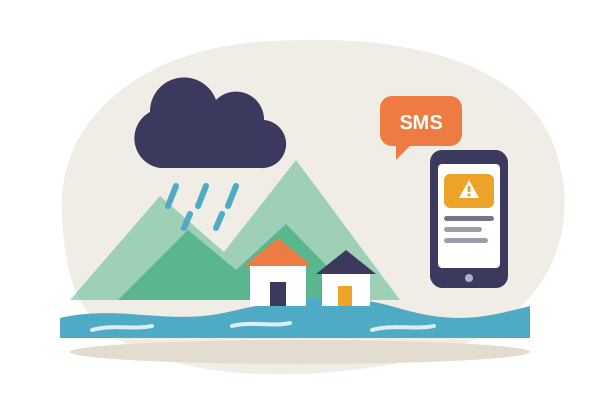
Free SMS and WhatsApp alerts before heavy rain, and reports of floods, erosion or blocked drains, sent to the right office – piloted in Uvira.
Open ClimateCheckOn the web and on Android, in French, English and Kiswahili; GovCheck’s app works without internet.
Reports by web, app, WhatsApp or SMS, in the resident’s own words; AI summarises, translates and sends them to the right office – officials decide.
Reports are checked before they are published, and a problem counts as fixed only once it has been checked.
The people who report are never named, and anyone can report anonymously.
Everyone sees who answers, how long it takes and when the problem is fixed.
Budgets, revenue and funding are followed from the source to the school, the health facility or the building site.
Today a parent uses EduCheck for the school, GovCheck for the street and HealthCheck for the health centre. We want to bring the five apps together into one CERC app: one door to every public service.
One sign-in and one place to report, whether the problem is a school, a health facility, a street, a tax or a flood – on the web, in the app, by WhatsApp or by SMS.
Education, health, local government, climate and anti-corruption run as modules of the same app, with the questions of each sector’s monitoring guide.
The same verification, the same routing to the right office and the same public follow-up for every report, whatever the sector.
Data from every sector in one place, so that citizens, authorities and partners see where services fail and where public money goes.
Our 2027–2030 strategy extends citizen monitoring to all basic services – schools, health centres and public offices. Beyond it, we see the single app as a national public good, used in every province with civil society, public authorities and partners.
One app and one account for the five apps, with the people who use them today.
South Kivu, Kinshasa and Tanganyika: more entities, more services and the authorities answering in the app.
With civil society organisations and public authorities in every province, who adapt the modules to their services.
New modules on the same model: water and electricity, roads and public works, public revenue and the extractive sector, justice and social protection.
Technology companies’ programmes for non-profits help keep our apps online at low cost.
Non-profit cloud credits hosting EduCheck, GovCheck, HealthCheck and UNCAC Tracker – US$2,000 in 2025.

Twilio.org credits for SMS, voice calls and messaging, used for the Covid-19 vaccine education project – US$6,500 in 2020.

Microsoft 365 Business Premium licences and professional email hosting – US$24,000 in 2020.

Google for Nonprofits: Google’s programme of tools for non-profit organisations.
NetSuite Social Impact: Oracle NetSuite’s programme for non-profit organisations.
Governments, donors, technology companies and civil society organisations: help us bring citizen monitoring to every province and every sector.

CERC’s assistant
Hello, I’m Exaucée, CERC’s assistant. How can I help you?
You can write your question, we will reply instantly.
Do not share personal information here. To report a case of corruption, use the whistleblowing page: it protects you.
Report what you see in your school or health centre. Your feedback helps make education and health services in the DRC better and more transparent.
 EduCheckMonitor your school: teacher attendance, school fees, water and sanitation, equipment.Go to EduCheck (opens in a new tab)
 HealthCheckMonitor your health centre: quality of care, medicines, fees and hygiene.Go to HealthCheck (opens in a new tab)
 GovCheckA problem in your neighbourhood or with a public service? Report it to your city or commune, and advocate until it is solved.Go to GovCheck (opens in a new tab)
 UNCAC TrackerFollow how the DRC implements the UN Convention against Corruption.Go to UNCAC Tracker (opens in a new tab)