

 Feature storyIntegrity Clubs: a model first launched by CERC in Uvira to transform Congolese schools2017–2026
Impact stories2017–2026By CERC
When students report problems, schools improve: one problem in three fixed!
With DevelopmentCheck, 810 students in 54 Integrity Clubs got 32% of the problems they reported fixed. That method now runs on four tools of CERC’s own – EduCheck, HealthCheck, GovCheck and UNCAC Tracker – built and kept online at low cost, and open to other organisations.
What DevelopmentCheck achieved
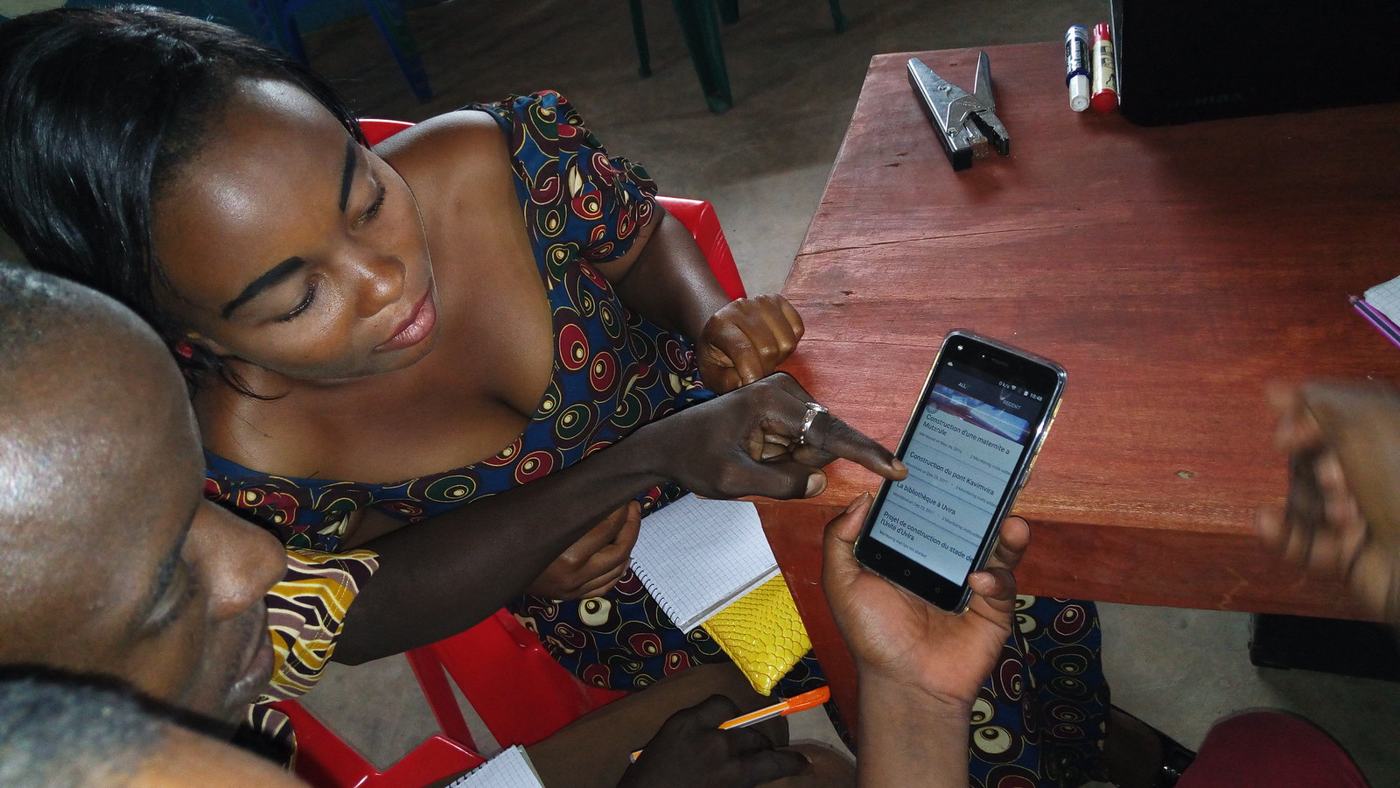
With the DevelopmentCheck app, Integrity Action’s tool, students, parents and the community obtained key information on their schools – water and toilets, libraries, number of pupils per class, teachers’ qualifications – as well as on school budgets and spending. The project supported the government’s free primary and secondary education reform by making schools more accountable.
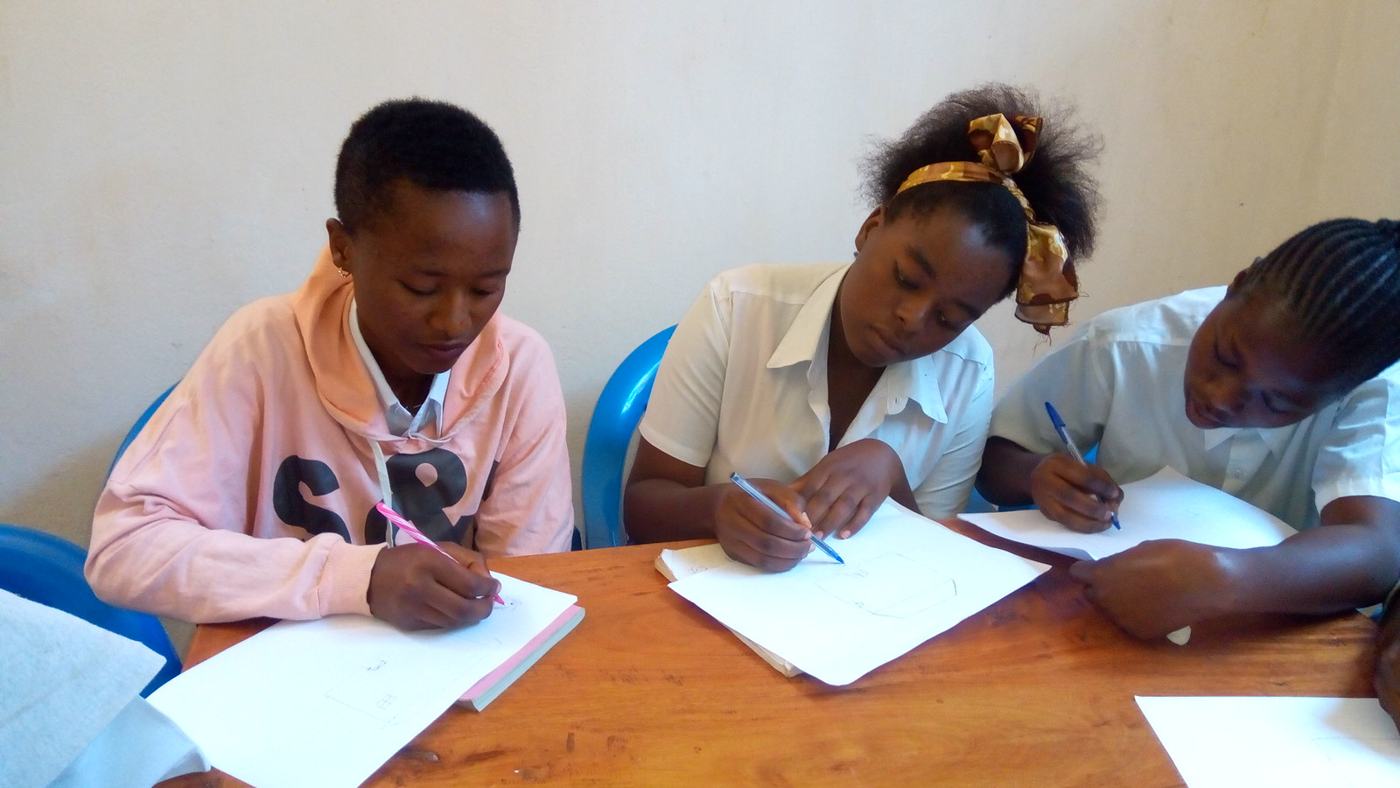
At the Itara Institute, fifteen student monitors have been following their school since February 2018. They alerted the management to overcrowded classrooms, broken desks and only three toilets for 590 students. Thanks to their dialogue with the management, the parents’ committee and teachers, the desks were repaired, three new classrooms were built and a block of eight latrines, with separate toilets for girls, was started.
Between 2017 and 2020, 810 students in 54 Integrity Clubs were trained and helped fix an average of 32% of the problems they reported.
From a borrowed tool to tools of our own
DevelopmentCheck proved the method. But CERC wanted a platform of its own, built for the DRC, in French, English, Lingala and Kikongo, that it could extend to other sectors without depending on an outside contractor. In March 2022 it launched EduCheck, its first web and mobile app: students trained in Integrity Clubs report on teacher attendance, school fees, water, sanitation and equipment, and follow each problem until it is fixed. By 2022, 3,060 students in 204 schools in South Kivu and Kinshasa had been trained as monitors.
Four tools, one method
From EduCheck, CERC built three more tools on the same model:
HealthCheck applies the EduCheck approach to health: citizens monitor their health centre – quality of care, medicines, fees and hygiene – and each problem is followed up with the health authorities. GovCheck, developed in 2023, lets citizens document and report irregularities in public projects and follow the budget of a province, city, commune or chiefdom. UNCAC Tracker follows up the DRC’s commitments under the United Nations Convention against Corruption, building on the civil society parallel report CERC produced with the UNCAC Coalition.
All four follow the same principles: reports are checked before they are published, the people who report are never named, and a problem counts as fixed only once it has been checked on site.
A sustainability model
Built at low cost. CERC has no team of developers. It writes a plain-language specification of each tool – roles, data, question sets from its monitoring guides, confidentiality rules – and builds the tool with AI-assisted coding, then tests it with real monitors. The three apps cost a fraction of an agency’s quote, mainly in AI tool subscriptions and staff time. Reusing the model saves more: HealthCheck was derived from EduCheck in weeks rather than months.
Kept online at low cost. Hosting is covered in kind: in 2025, DigitalOcean’s non-profit cloud credits, worth about US$2,000, hosted all four tools, so every dollar of programme funds went to training monitors and following up problems.
Independent. CERC owns its code, on its own GitHub account. When a monitor asks for a change, the team makes it the same day, without a ticket to a contractor.
Resilient. When CERC lost its offices in Bukavu and Kinshasa in 2025, the tools became the main channel through which students, parents and citizens could keep reporting on public services – and a small remote team kept them running.
Open to other organisations and governments
Many civil society organisations have a strong field method and no means to digitise it. CERC’s experience shows that with a well-written specification, an AI coding assistant and low-cost hosting, a team without developers can put a citizen monitoring tool online in a few weeks. To share it, CERC is preparing a guide in French and a template repository of a reporting module modelled on EduCheck, to be published as open source, and a hands-on workshop in Kinshasa and Bukavu where participants rebuild such a module in one day, from GitHub repository to deployment.
Civil society organisations can take the model and replace the school with the service they monitor, as HealthCheck did for health centres, using the questions of their own monitoring guides. Governments and public authorities can use the data to act on the problems reported, publish official fees and school and health budgets, and make citizen monitoring a condition of funding for school and health infrastructure. Universities and researchers can analyse the data to understand where and how corruption affects public services.
Organisations and authorities that want to use or adapt the tools can write to heri.bitamala@cerc.cd.
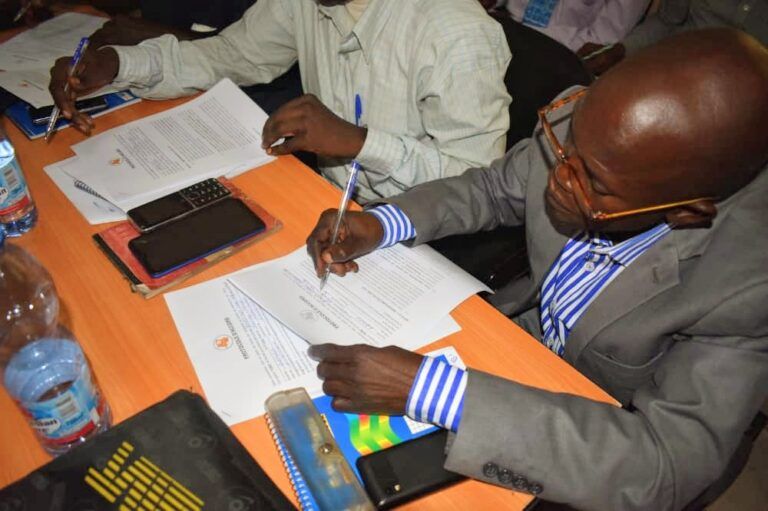
« Thanks to the joint working group meetings held in our school, the whole process has become clearer and more transparent. »
Kahindo Ndjungu, head of ITIP Uvira
About CERC
The Centre de Recherche sur l’Anti-Corruption (CERC) is a Congolese non-governmental organisation founded in April 2017 in South Kivu. With young people at its heart, CERC works with schools, communities, public institutions and partners to promote transparency, accountability and integrity in the Democratic Republic of the Congo. It has held special consultative status with the United Nations Economic and Social Council (ECOSOC) since 2021. Learn more: Who we are.
Feature storyIntegrity Clubs: a model first launched by CERC in Uvira to transform Congolese schools2017–2026 Feature storyAn alert system for citizens to report corruption within the justice system2024
 Feature storyEducation authorities adopt Integrity Clubs for all their schools in South Kivu2018–2023
 Feature storyTowards a law to teach integrity in every school in the country2023–2024


