The Integrity Builder (Les Bâtisseurs de l’intégrité)
Your quarterly magazine on transparency, access to information and the promotion of integrity.
ECOSOC grants CERC special consultative status, Year Zero of the Students Acting for Accountability project begins, Youth Excel is launched in Kinshasa and the team trains on the UNCAC.
ECOSOC grants special consultative status to the Centre de Recherche sur l’Anti-Corruption
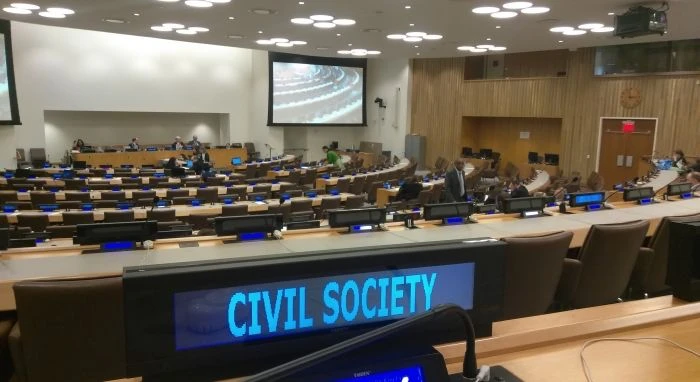
Special consultative status with ECOSOC, granted to CERC in July 2021. Photo: CERC
On 21 July 2021, at UN headquarters in New York, the Economic and Social Council (ECOSOC) adopted three resolutions and six decisions, among them granting special consultative status to the Centre de Recherche sur l’Anti-Corruption.
Special consultative status gives NGOs access not only to the Council’s meetings, but also to its many subsidiary bodies, to the United Nations human rights mechanisms and to the special events organised by the President of the General Assembly.
ECOSOC is one of the six principal organs of the United Nations. It is responsible for coordination, policy review, dialogue and recommendations on economic, social and environmental issues, and for the implementation of internationally agreed development goals.
“This is a great achievement for the Centre de Recherche sur l’Anti-Corruption and for our work with communities affected by corruption. With special consultative status, we can appoint official CERC representatives to United Nations headquarters in New York and Geneva, and make written and oral statements at the UN’s international events.”
Heri Bitamala, Executive Director of CERC
02Education
Oxfam IBIS supports Year Zero of the “Students Acting for Accountability and Quality of Education” project
CERC at the Ministry of Education in Kinshasa, 2021. Photo: CERC
In April 2021, the Global Partnership for Education, through the Education Out Loud programme run by the Danish organisation Oxfam IBIS, granted CERC close to US$24,000 for Year Zero of the “Students Acting for Accountability and Quality of Education” project.
The project responds to the effects of corruption and lack of transparency on young people’s access to education and on their wish to take part in the life of their community. With secondary schools, it will bring Integrity Clubs into the education system: students will learn to collect information on education services with the EduCheck tool and to talk with education officials to solve the problems identified.
Year Zero is part of Education Out Loud’s learning programme. For nine months from April 2021, CERC receives financial and technical support to strengthen its capacity, consult the main stakeholders and develop the project’s theory of change, results framework and monitoring and evaluation system.
03Youth
USAID, through IREX, supports the Youth Excel project in Kinshasa
The launch of Youth Excel in Kinshasa, 2021. Photo: CERC
The United States Agency for International Development (USAID) granted CERC, through the American organisation IREX (International Research & Exchanges Board), funding for the first phase of the Youth Excel project in the city of Kinshasa.
Launched on 19 July 2021, the project introduces “implementation research”: it helps young people and youth-led and youth-serving organisations to carry out quality research, to use data to improve their programmes, and to talk with adult decision-makers so that, together, they advance data-based policies and programmes.
04Consultation
Parents, teachers and heads of education sub-divisions discuss education reforms
The consultation workshop in Kinshasa, July 2021. Photo: CERC
As part of the “Students Acting for Accountability and Quality of Education” project, CERC held two consultation workshops on 26 and 27 July 2021 on the challenges of transparency and accountability in education, and on ways to overcome them.
The first day brought together 19 participants from parents’ organisations (ANAPECO, APEC, APEP), teachers’ unions (SYECO, SYNECATH, SYNEP) and civil society (LIZADEL, CONEPT RDC). The second gathered 12 heads of education sub-divisions from 12 communes of Kinshasa, including Ngaliema, Mont-Ngafula, Matete, Limete, Barumbu, Kasa-Vubu, Kalamu, Kinshasa and Bandalungwa.
Participants discussed the introduction of an integrity education course, the setting up of Integrity Clubs in every secondary school in the country and the roll-out of the EduCheck app, which lets students collect data on transparency and corruption in their schools.
They welcomed the work CERC has done in South Kivu since 2017 and its extension to schools in Kinshasa, and recommended widening the dialogue to the Ministries of Budget and Finance, which are directly concerned by education financing.
05Capacity building
The CERC team trained on the UNCAC and its review mechanism
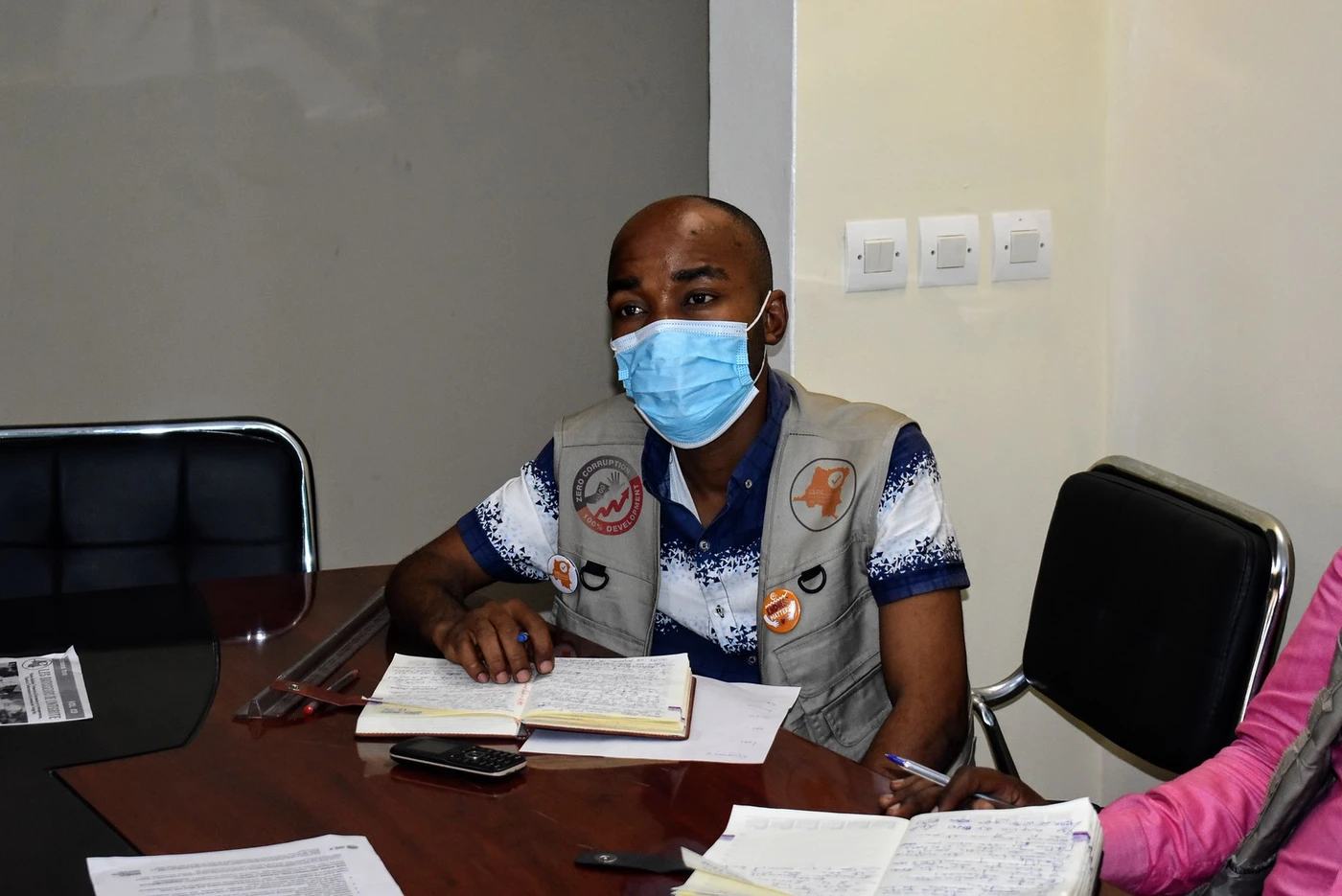
Capacity building for the CERC team, August 2021. Photo: CERC
On 5 and 6 August 2021, seven CERC staff took a training at the Kinshasa office on the United Nations Convention against Corruption (UNCAC) and its review mechanism. It prepared the first civil society parallel report on the implementation of the UNCAC by the Democratic Republic of the Congo.
The aim: to know more about the role of civil society and its participation in the review of the implementation of the Convention, the only global legal instrument against corruption. Its Article 13 asks States Parties to promote the active participation of civil society in preventing and fighting corruption.
06Capacity building
Implementation research, adaptive management and inclusion: three days of training
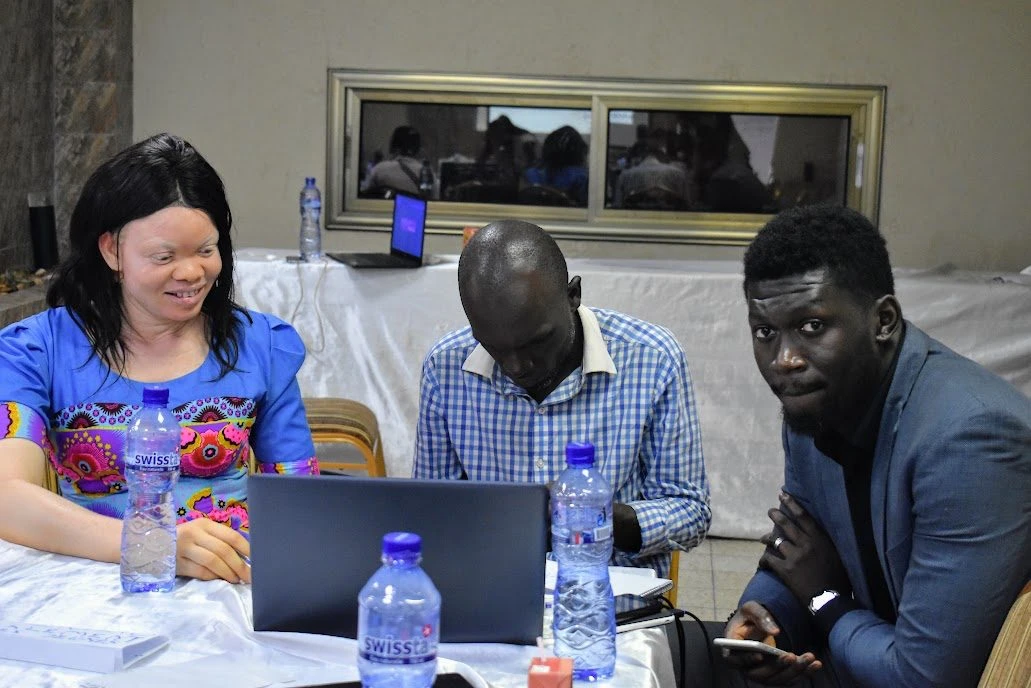
The session on gender equality and inclusion, Kinshasa, August 2021. Photo: CERC
From 2 to 4 August 2021, several training sessions were held at CERC’s head office for its staff.
The first day covered implementation research and the challenges facing young Congolese, in particular ethnic minorities and indigenous peoples, young women, people with disabilities and LGBTQI+ people, as well as the causes of their exclusion and the opportunities offered by the Youth Represent DRC programme.
The second day was devoted to the theory of change and adaptive management: using data and lessons learned to adapt strategies while a project is being implemented. The third dealt with building public integrity, then with gender and inclusion.
At the end of the training, CERC’s members agreed to appoint a gender focal point each year, responsible for representing and following up the interests of people who are marginalised or at risk of exclusion.
“Adaptive management recognises that management actions create opportunities to learn and improve: it is a structured, continuous process that grounds sound decisions in the face of uncertainty, through monitoring and feedback.”
CERC’s Programme Officer, who facilitated the session
Centre de Recherche sur l’Anti-Corruption (CERC) · info@cerc.cd · www.cerc.cd
CERC is a Congolese non-governmental organisation with special consultative status with the United Nations Economic and Social Council (ECOSOC) since 2021.
Exaucée
CERC’s assistant
Hello, I’m Exaucée, CERC’s assistant. How can I help you?
You can write your question, we will reply instantly.
Do not share personal information here. To report a case of corruption, use the whistleblowing page: it protects you.
CERC citizen monitoring apps
Help improve public services
Report what you see in your school or health centre. Your feedback helps make education and health services in the DRC better and more transparent.