Strategy evaluation 2022–2026

January 2022 – December 2025: 204 Integrity Clubs and 2,250 students in 2022, a bill, an alert system in the justice sector – then the end of funding: US$516,493 received of US$1,250,000 planned. A strategy that carried Integrity Clubs far, without giving CERC the means to last.

Translated from the original French edition.

Download the report (PDF)

1

About this report

AuthorsCERC’s monitoring, evaluation and learning team

The report was prepared by CERC’s monitoring, evaluation and learning team, with the executive management and the finance team.

The opinions, conclusions and recommendations in this report are those of the evaluation team. They do not necessarily reflect the views of the donors and partners that funded the projects evaluated.

AcknowledgementsThank you

CERC thanks the students, teachers, head teachers and parents of the Integrity Clubs of South Kivu and Kinshasa, the students of the university clubs and the focal points of the social alert system, as well as its partners:

  • The Global Partnership for Education and Oxfam IBIS, through Education Out Loud
  • USAID, through IREX, and Search for Common Ground
  • The European Union and Belgian cooperation (DGD), through RCN Justice & Démocratie
  • DigitalOcean
  • The African Parliamentarians’ Network Against Corruption (APNAC DRC) and the Congolese Association for Access to Justice (ACAJ)
  • The education authorities of South Kivu and Kinshasa, our partner universities in Kinshasa, and DWAC, which audited the Education Out Loud project

CERCCentre de Recherche sur l’Anti-Corruption

CERC is a registered non-governmental organisation (NGO) (Registration number: F.92/42579) and given Legal Personality by the Ministry of Justice: JUST/SG/20/21311/2021. CERC holds Special Consultative Status with the United Nations Economic and Social Council (ECOSOC) since 2021.

info@cerc.cd · www.cerc.cd

LicenceCC BY-NC-ND 4.0

This work is licensed under Attribution-NonCommercial-NoDerivatives 4.0 International. To view a copy of this licence, visit creativecommons.org/licenses/by-nc-nd/4.0/

CitationHow to cite this report

CERC (2026). Evaluation of CERC’s 2022–2026 strategy: Promoting accountability and inclusion in education and health services, January 2022 – December 2025. Centre de Recherche sur l’Anti-Corruption, Kinshasa. https://cerc.cd/en/strategy-evaluation-2022-2026/

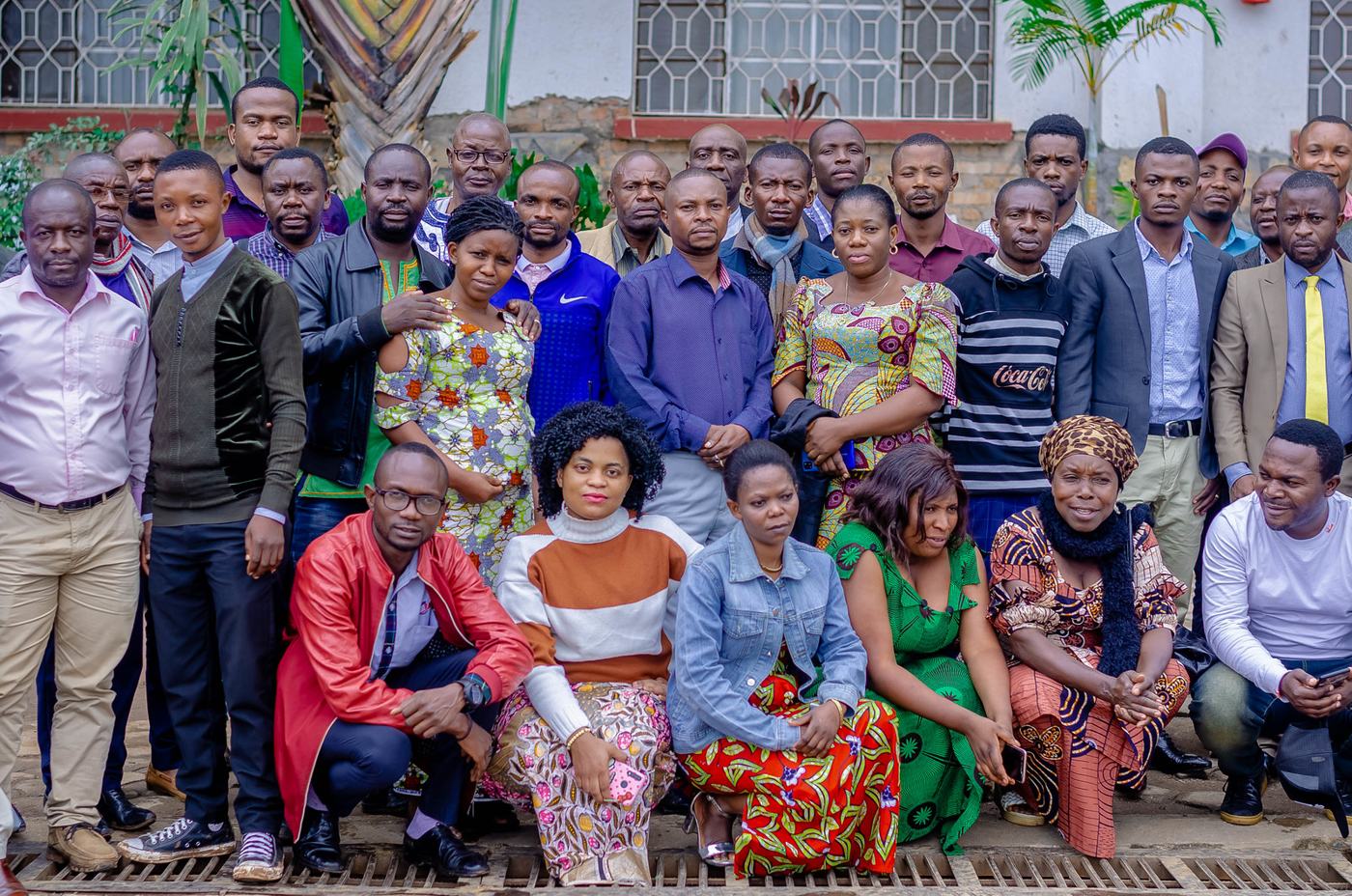
Cover photo: 138 head teachers and 278 teachers trained in integrity in Kinshasa and Bukavu, 2022. CERC.

2

Acronyms

AcronymMeaning
ACAJCongolese Association for Access to Justice
APNACAfrican Parliamentarians’ Network Against Corruption
CADOECD Development Assistance Committee (DAC)
CERCCentre de Recherche sur l’Anti-Corruption
CNUCCUnited Nations Convention against Corruption (UNCAC)
CODESAHealth area development committee
COPAParents’ committee
DGDDirectorate-General for Development Cooperation and Humanitarian Aid (Belgium)
DIVDevelopment Innovation Ventures (USAID)
ECOSOCUnited Nations Economic and Social Council
EOLEducation Out Loud
IREXInternational Research & Exchanges Board
ODDSustainable Development Goals (SDG)
PMEGlobal Partnership for Education (GPE)
RCN J&DRCN Justice & Démocratie
REPLICActing for accountable, plural and honest justice in the Congo
RDCDemocratic Republic of the Congo (DRC)
SASAStudents Acting for Social Accountability
USAIDUnited States Agency for International Development
USDUnited States dollar
3

Executive summary

Background. CERC’s 2022–2026 sector strategy, Promoting accountability and inclusion in education and health services, revised in January 2022 and extended to the end of 2026, aimed for more inclusive youth engagement in improving public services in Kinshasa and South Kivu. Its operational plan set annual targets up to 2026.

Implementation amid crises. The December 2023 elections, the war in the East – with the fall of Goma in January 2025 and of Bukavu in February 2025 – and the closure of USAID in 2025 upended implementation. CERC closed its Bukavu and Kinshasa offices and has worked remotely since 2025.

Why this report. The evaluation aims to prove and improve: to account for the first four years of the strategy, from January 2022 to December 2025, to review the recommendations of the 2022 evaluation, and to inform the 2027–2030 strategy. The year 2026, still under way, is not evaluated.

Methodology. The evaluation, an internal one, is anchored in the six OECD-DAC criteria, organised in three pillars: the strategy and its plan (pillar 1), the effectiveness and efficiency of our programmes, through four case studies (pillar 2), and the value, impact and sustainability of our work (pillar 3). It rests on a review of our reports, our accounts and the archives of our website; it includes no new interviews.

Key figures

US$516,493 received from 2022 to 2025, for US$1,250,000 planned (41%), 83% of it from a single donor · 204 Integrity Clubs and 2,250 students in 2022 · 33% of reported problems fixed · a bill before the National Assembly · 1 of 25 targets met, 10 partly met, 9 not met and 5 not measured.

Overall performance. A first year that beats its targets, then three years of decline: the end of education funding in mid-2024, the closure of USAID and the fall of Bukavu in 2025. The gains – Integrity Clubs, a bill, an alert system in the justice sector, our apps – need a stronger financial model.

Pillar 1: the strategy and its plan. Accountability in education remains an acute need, and the strategy answered it with students themselves, in close contact with the authorities, MPs and partners. But the health component, once again, was not funded, and the plan repeated the structure and some of the targets of 2017 without checking them against the funds secured.

Pillar 2: our programmes. Students Acting created 204 Integrity Clubs, trained 2,250 students, 138 head teachers and 278 teachers, and fixed 33% of reported problems, for about US$190 per student. Youth Excel brought together 10 youth organisations in Kinshasa; REPLIC set up a social alert system in three courts; our four apps kept citizen monitoring going remotely.

Pillar 3: value, impact and sustainability. Integrity Clubs entered an agreement with the education authorities and a bill. But 83% of funds came from a single donor: after June 2024, funds fell to US$19,295, then to in-kind support in 2025. Six of the ten 2022 recommendations were not implemented.

What should change. Set the 2027–2030 targets from the funds secured, diversify donors, build a reserve, catch up on the 2024 and 2025 audits, and build a model of remote work and focal points that holds in the East.

Overall conclusion. A strategy that carried Integrity Clubs all the way to the law, without giving CERC the means to last. The 2027–2030 strategy must apply the lessons of 2022 and 2026 from its first year.

Organisation of the report. Chapter 1 presents the methodology, its questions, pillars, sources and limits. Chapter 2 presents the findings, pillar by pillar, the follow-up of the 2022 recommendations and a synthesis against the DAC criteria. Chapter 3 presents the recommendations, lessons and suggestions in a table, with their category and criticality. The annexes complete the report.

4

1. Evaluation methodology

The evaluation follows an approach anchored in the six OECD-DAC criteria, attentive to the context of war in the East and to the abrupt end of international funding in 2025. It treats CERC as one actor among others in a system: schools, education authorities, Parliament, the justice sector, donors and civil society.

1.1Evaluation questions and pillars

Table 1: evaluation questions, pillars and weights

Evaluation questionPillarDAC criteriaWeight
1. Did the strategy and its plan meet users’ needs, and were they coherent with policies, partners and our tools?Pillar 1: the strategy and its planRelevance, coherence30 %
2. Did our programmes reach the plan’s targets, and at what cost?Pillar 2: programme effectiveness and efficiencyEffectiveness, efficiency45 %
3. What changed, what did we do with the 2022 recommendations, and will the gains last?Pillar 3: value, impact and sustainabilityImpact, sustainability25 %

1.2Instruments and expanded questions

Table 2: expanded questions and instruments

PillarExpanded questionsInstruments
Pillar 1Did the plan take account of the 2022 evaluation? Were the targets realistic?Review of the strategy, the plan and the annual reports; comparison of forecasts and results
Pillar 2What results, for what funds? What helped or hindered?Four case studies; analysis of the accounts and of the financial reports to donors
Pillar 3What changed? Were the 2022 recommendations followed?Agreements, bills, quadrennial report to ECOSOC; follow-up table of the recommendations

1.3Sources, data management and ethical safeguards

The evaluation rests on the documents in table 3 and on our accounts published on the “Financial accountability” page. Amounts are in US dollars; those of 2022 and 2023 for the Education Out Loud project are audited. No personal data was collected. Data follow quality principles inspired by Integrity Action’s PICTURE principles: precise, inclusive, credible, triangulated, usable, results-focused and ethically collected.

Table 3: main sources of the evaluation

DocumentDate
Strategy and operational plan 2022–2026January – February 2022
Evaluation of the 2017–2021 strategyMarch 2022
Annual reports 2022 and 2023–20242023–2025
Students Acting for Accountability and Quality of Education project report2022–2024
Youth Excel project report2022
REPLIC project report2024
Quadrennial report to ECOSOC2021–2024
DWAC audit report (Education Out Loud)2022
“Financial accountability” page2026
CERC website articles2022–2025

1.4Conflict sensitivity and “do no harm”

In areas of the East under the control of armed groups, publishing the name of a monitor, a focal point or a school can put people in danger. The evaluation names neither the people nor the schools concerned by reports, and publishes no data from our apps that could identify a user.

1.5Limitations and risks

Table 4: risks and limitations of the evaluation

Risk or limitationPotential impact on the evaluationReal impact and mitigation
Internal evaluationA less critical view of our own work.Findings rest on verifiable figures and the report publishes what did not work, including the follow-up of our own recommendations.
War in the EastImpossible to return to the schools of Bukavu.Document review; no personal data collected, no school named.
2024–2025 accounts not auditedLess certain amounts for these two years.Amounts come from the financial reports to donors (US$21,295 in total); a catch-up audit is recommended.
Missing dataSeveral targets cannot be assessed.They are classed as “not measured”; measuring them is part of the recommendations.
A strategy still under wayThe year 2026 is not covered.Forecasts are compared over 2022–2025 only; 2026 will be covered by the strategy’s final review.
5

2.1 Pillar 1 – The strategy and its operational plan

A relevant strategy, well connected to national policies; a plan that repeated the 2017 targets without checking them against resources.

2.1.1Relevance: an acute need, an answer with students

The year-zero consultations, with 534 young people and 89 teachers and head teachers, shaped Students Acting: students chose what they wanted to monitor. The 2022 and 2023 workshops, with 96 and then 97 officials and policymakers, confirmed the demand for integrity education, up to a bill. In 2024 and 2025, CERC extended citizen monitoring to justice and public services with its apps – sound adaptations that prepare the 2027–2030 strategy.

Two limits: the health component, as in 2017, was not funded – 250 active CODESA were planned for 2025, none were; and the 2022 plan repeats the structure and some of the targets of the 2017 plan – a growing budget, fellowships, blogs – without taking account of the evaluation that found them too far from resources.

Rating: satisfactory. A sound diagnosis and useful adaptations; unrealistic targets, a second time.

2.1.2Coherence: strong partnerships

The Global Partnership for Education, through Education Out Loud and Oxfam IBIS, funded a project that supported the DRC’s education sector strategy. Education authorities signed agreements with 150 head teachers, with the province of South Kivu and for clubs in all secondary schools of South Kivu and Kinshasa. APNAC DRC carried a bill with CERC; RCN Justice & Démocratie, the anti-corruption component of the EU-funded justice reform; ACAJ, civil society training. As in 2017–2021, the annual reports present activities rather than the plan’s targets.

Rating: satisfactory. Strong external coherence; internal monitoring still separate from the plan.

2.1.3The plan’s targets and the results

Table 5 compares the operational plan’s forecasts for 2022 to 2025 with the results achieved.

Table 5: plan forecasts and results, 2022–2025

TargetPlanned (2022–2025)ResultStatus
Programme
National trainings with government and civil society2 trainings, 24 participantsWorkshop with 96 education officials, including 3 MPs (2022); 97 policymakers in Kinshasa and Bukavu (2023); training with ACAJ (2024)Met
New Integrity Clubs325204 (2022) and 4 university clubs (2024): 64%Partly met
Students trained, 50% of them girls4,8752,250 (2022) and 61 university students (2024): 47%; share of girls not publishedPartly met
Training of head teachers and teachers20138 head teachers and 278 teachers from 150 schools trained (2022)Partly met
Secondary schools monitored30% in the target provinces150 partner schools: 90 in Bukavu, 60 in KinshasaNot met
Problems fixed55%33% (2022)Partly met
CODESA active in monitoring health centres250 in 2025None; the HealthCheck app developed for this monitoringNot met
Education and health clusters400 schools, 200 health facilitiesNot set upNot met
Learning and impact
Annual impact and learning surveys4Study with 534 students and 89 teachers and head teachers (2021, published 2022); quarterly reports to Oxfam IBIS (2023)Partly met
Independent surveys and evaluations1 semi-independent, 3 independentNone publishedNot met
Beneficiary satisfaction surveys7Not documentedNot measured
Fundraising
BudgetUS$1,250,000 from 2022 to 2025US$516,493 received (41%): 280% of the forecast in 2022, then 30%, 6% and 0.4%Not met
Unrestricted funding30% in 2025NoneNot met
Large institutional donors1 to 2 a year2 (2022, 2023), 1 (2024), none in cash (2025)Partly met
Individual donations15% of budget in 2025No donation recordedNot met
Management and finance
Annual audits42022 and 2023: Education Out Loud project audited (DWAC); 2024 and 2025: no auditPartly met
Review and next strategyAnnual reviews; preparation of 2027–2030Strategy extended to the end of 2026; 2027–2030 strategy in preparationPartly met
Risk managementQuarterly review in every officeBukavu and Kinshasa offices closed in 2025; remote workPartly met
Staff
Women among staff and volunteers50%Not trackedNot measured
Congo Integrity Leadership Fellowship3 universities, 10 fellowsNot launchedNot met
Communication
Social media followers50,000 in 2025Not trackedNot measured
Website visitors5,000 a month in 2025Not trackedNot measured
Posts on our website5011 articles (22%), none in 2023 or 2025Not met
International conferences, forums and events14UNCAC Conference of the States Parties (2023), Nairobi conference (2024), quadrennial report to ECOSOC (2025)Partly met
Media mentions11Not trackedNot measured

Overall: 1 of 25 targets met, 10 partly met, 9 not met and 5 not measured. The 2026 forecasts are not evaluated.

6

2.2 Pillar 2 – Programme effectiveness and efficiency

A 2022 beyond the forecasts, funds well used; then results that follow the fall in funding.

2.2.1Summary of findings

Four case studies (annex 2) cover education, youth, justice and our apps. From 2022 to 2025, CERC received US$516,493 and spent US$529,512, using the 2022 balance: 55% on programme activities, 21% on staff, 9% on rent and running costs, 7% on direct project support, 4% on administration, 2.5% on travel and 1% on fees and audit.

Table 6: funds received and spent, by year

YearReceived (US$)Spent (US$)Donors
2022419,636.15345,818.45GPE / Oxfam IBIS, USAID / IREX
202375,562.05162,398.32GPE / Oxfam IBIS, USAID / IREX
202419,295.0019,295.00European Union and DGD, through RCN J&D
20252,000.002,000.00DigitalOcean (in kind)
Total516,493.20529,511.77

2023 spending uses the 2022 balance of the Education Out Loud project (US$88,771).

2.2.2Students Acting: 204 Integrity Clubs, from the school to the law

Funded by the Global Partnership for Education through Education Out Loud and Oxfam IBIS, from January 2022 to June 2024, in 6 communes of South Kivu and 6 communes of Kinshasa, Students Acting for Accountability and Quality of Education created 204 Integrity Clubs in 2022 and trained 2,250 students aged 14 to 19 to monitor education services, with 2,250 integrity education manuals and monitoring guides. 138 head teachers and 278 teachers from 150 schools were trained; students’ advocacy fixed 33% of the problems identified.

In 2023, 150 partner schools were bound by agreements – 90 in Bukavu, 60 in Kinshasa –, 97 policymakers were brought together and a bill was prepared with APNAC DRC. The project had US$430,928, fully spent and audited for 2022 and 2023: about US$190 per student trained, including training, manuals and advocacy. After June 2024, no funding took over.

2.2.3Youth Excel: youth organisations in Kinshasa

Funded by USAID through IREX, with technical support from Search for Common Ground, Youth Excel – Youth Represent DRC brought together 10 youth-led or youth-serving organisations in Kinshasa, engaged 9 of them in a joint project, supported 45 unemployed young people towards reintegration and trained 63 leaders from 9 organisations. The project received US$97,528 from 2021 to 2023; the 2022 overspend of US$1,935 was covered by the final 2023 instalment.

2.2.4REPLIC: citizen monitoring in the justice sector

With RCN Justice & Démocratie, as part of the justice reform funded by the European Union and Belgium, CERC set up a social alert system in Kinshasa in 2024: 9 focal points, a toll-free number and 70 posters in the Kalamu, Ndjili and Matete courts. The youth anti-corruption project incubator brought together 61 students from 4 universities, and a training was held with ACAJ. The US$19,295 received was fully spent, but these accounts were not audited.

2.2.5Our apps: holding on remotely

In 2023, CERC developed GovCheck to monitor infrastructure projects; with EduCheck, HealthCheck and UNCAC Tracker, our four apps cover education, health, administration and public services, and the implementation of the UNCAC. After the fall of Bukavu and the closure of our offices in 2025, they kept citizen monitoring going remotely, online thanks to DigitalOcean’s hosting credits (US$2,000 in kind).

Rating: moderately unsatisfactory (effectiveness); satisfactory (efficiency). Real results in 2022–2023 and funds used for what they were meant for; most forecasts out of reach afterwards, and audits to catch up.

7

2.3 Pillar 3 – Value, impact and sustainability

Rules that change – Integrity Clubs enter the texts – but an organisation that the end of one project was enough to weaken.

2.3.1Impact: from the school to the law

In 2022, students’ advocacy fixed 33% of the problems identified in their schools. The 2022 agreement, approved by the provincial education directorate of South Kivu, provides for Integrity Clubs in all secondary schools of South Kivu and Kinshasa. With APNAC DRC, CERC filed two bills in 2022, then carried to the National Assembly in 2024 a bill that writes the clubs and integrity education into the school curriculum. In the justice sector, the social alert system gives citizens of three Kinshasa courts a toll-free number and a network of focal points. No independent evaluation, however, has measured the clubs’ effect on students and schools.

Rating: moderately satisfactory. Real institutional impact; impact on services still little measured.

2.3.2Sustainability: one donor, then almost nothing

The Global Partnership for Education provided 83% of funds from 2022 to 2025. After the project ended, in June 2024, funds fell to US$19,295 in 2024 and to US$2,000 of in-kind support in 2025. USAID (DIV) had committed US$6.5 million to Students Acting for Social Accountability (SASA) 2025–2027, in four provinces: the closure of USAID cancelled it. The fall of Bukavu closed our Bukavu office, and the lack of funds our Kinshasa office. What remains does not depend on a project: the agreements and the bill, the trained teachers and head teachers, our partnerships and our four apps.

Rating: unsatisfactory. The institutional gains remain; the organisation still needs consolidating.

2.3.3What CERC did with the 2022 recommendations

Table 7 reviews the ten recommendations of the evaluation of the 2017–2021 strategy, published on 7 March 2022.

Table 7: follow-up of the 2022 recommendations

2022 recommendationWhat was done (2022–2025)Follow-upPillar
Set targets in two scenarios and review them every yearA single scenario, not revised when funds fell.Not implementedPillar 1
Report every year on the plan’s targetsThe 2022 and 2023–2024 annual reports present activities, not targets.Not implementedPillar 1
A health pilot, or take health out of the targetsHealth stayed in the targets without funding; HealthCheck was developed.PartlyPillar 1
At least three donors a year, none above halfThe Global Partnership for Education provided 83% of funds.Not implementedPillar 3
A reserve of three months of running costsNo reserve was built.Not implementedPillar 3
Embed the clubs in the rules of schools and authorities2022 agreement for clubs in all secondary schools of South Kivu and Kinshasa; bill with APNAC DRC.ImplementedPillar 3
An external evaluation of the education projectNo external evaluation published.Not implementedPillar 2
Measure followers, visitors and people reachedNo regular measurement.Not implementedPillar 2
Continue to audit every financial year2022 and 2023 audited; 2024 and 2025 not.PartlyPillar 2
Continue the Integrity Club model204 clubs in 2022; no monitoring after June 2024.PartlyPillar 2

One recommendation implemented, three partly, six not implemented.

8

2.4 Synthesis: assessment against the DAC criteria

Table 8: assessment against the six OECD-DAC criteria

CriterionRatingMain findings
RelevanceSatisfactoryAn acute need in education, useful adaptations; health without funding, targets carried over from 2017.
CoherenceSatisfactoryStrong partnerships with the authorities, Parliament, justice and the United Nations; internal monitoring separate from the plan.
EffectivenessModerately unsatisfactory1 of 25 targets met, 10 partly met, 9 not met and 5 not measured; 2022 beyond the forecasts, 2023 to 2025 out of reach.
EfficiencySatisfactoryUS$430,928 of the education project fully used; 55% of spending on programmes; 2024 and 2025 not audited.
ImpactModerately satisfactoryThe clubs in an agreement and a bill; an alert system in the justice sector; no independent measurement.
SustainabilityUnsatisfactory83% of funds from one donor; US$6.5 million lost with the closure of USAID; two offices closed.

Scale: highly satisfactory, satisfactory, moderately satisfactory, moderately unsatisfactory, unsatisfactory (annex 7).

9

3. Recommendations, lessons and suggestions

The recommendations address the end of the strategy in 2026 and the 2027–2030 strategy. Like the whole evaluation, they aim to prove and improve. Each is classed by category – start, stop, continue, grow, consider – and by criticality.

Table 9: recommendations, lessons and suggestions

№CategoryRecommendation, lesson or suggestionCriticalityPillar
1StartSet the 2027–2030 targets in two scenarios – funded and to be funded –, tied to signed agreements, and review them every year.HighPillar 1
2StopStop carrying targets over from one plan to the next without checking them against the funds secured.MediumPillar 1
3StartA single results framework, with baselines, presented in every annual report – communication included.MediumPillar 1
4ConsiderStart health with a HealthCheck pilot with a few CODESA in Uvira, before any figure target.MediumPillar 1
5StartCommission a catch-up audit for 2023 to 2025, then audit all accounts every year, small grants and in-kind support included.HighPillar 2
6StartPlan an external mid-term evaluation of the 2027–2030 strategy, in 2028.MediumPillar 2
7GrowAim for at least three donors a year, none above half of the funds, with the European Union, foundations and bilateral cooperation.HighPillar 3
8StartBuild a reserve of three months of running costs, from a share of each grant and from individual donations.HighPillar 3
9StartAdopt a model of remote work and focal points, with a security and data protection plan, for the East.HighPillar 3
10ContinueSee the bill through and monitor the clubs with EduCheck and school facilitators, without depending on a project.HighPillar 3
11ContinueContinue the partnerships with APNAC DRC, RCN Justice & Démocratie, ACAJ and the universities.SuggestionPillar 3
10

Annexes

Annex 1Evaluation requirements

  • Assess the implementation of the 2022–2026 strategy from January 2022 to December 2025, against the six OECD-DAC criteria.
  • Compare each forecast of the plan for 2022–2025 with the results, and the funds planned with the funds received.
  • Review the recommendations of the 2022 evaluation.
  • Make recommendations for 2026 and for the 2027–2030 strategy; publish the report online and in PDF, in French and English.

Annex 2The choice of case studies

ProjectPeriodDonorFundsWhy this choice
Students Acting for Accountability and Quality of Education2022–2024GPE / Oxfam IBIS (Education Out Loud)US$430,17783% of funds; the Integrity Club model at scale
Youth Excel – Youth Represent DRC2021–2023USAID / IREXUS$97,528Youth organisations in Kinshasa
REPLIC2024European Union and DGD, through RCN J&DUS$19,295Citizen monitoring in the justice sector
Our apps2023–2025DigitalOceanUS$2,000 in kindThe continuity of citizen monitoring remotely

Annex 3The team and its roles

RoleResponsibilities
Evaluation leadThe monitoring, evaluation and learning team: questions, document review, drafting
Financial analysisThe finance team: reconciliation of the accounts and of the financial reports to donors
ValidationThe executive management: review of findings and recommendations

Annex 4The work plan

StagePeriod
Document reviewJune 2026
Financial analysisJuly 2026
DraftingAugust 2026
Validationearly September 2026
Publication17 September 2026

Annex 5Documents reviewed

Sector strategy and operational plan 2022–2026; evaluation of the 2017–2021 strategy (March 2022); annual reports 2022 and 2023–2024; the reports of Students Acting for Accountability and Quality of Education (2022–2024), Youth Excel (2022) and REPLIC (2024); quadrennial report to ECOSOC (2021–2024); DWAC audit report (2022); our “Financial accountability” page; CERC website articles, 2022–2025.

Annex 6Funds received by donor, 2022–2025

DonorUS$Share
Global Partnership for Education, through Oxfam IBIS430,177.0083.3%
USAID, through IREX65,021.2012.6%
European Union and Belgium (DGD), through RCN J&D19,295.003.7%
DigitalOcean (in kind)2,000.000.4%
Total516,493.20100 %

Annex 7The rating scales

  • Highly satisfactory: expectations exceeded.
  • Satisfactory: expectations mostly met.
  • Moderately satisfactory: real results, with notable gaps.
  • Moderately unsatisfactory: major gaps outweigh the results.
  • Unsatisfactory: expectations not met.

Each forecast of the plan is classed as met, partly met (real results, but below the forecast), not met or not measured (no data).