

 Feature storyCase study: how DigitalOcean’s cloud credits keep citizen monitoring online in the DRC
Press releaseBy CERC
How CERC builds its citizen accountability platforms with AI-assisted coding
With no full-time developers, CERC builds EduCheck, HealthCheck and GovCheck with AI coding assistants. What it has made possible, what does not work, and what other civil society organisations can take from it.
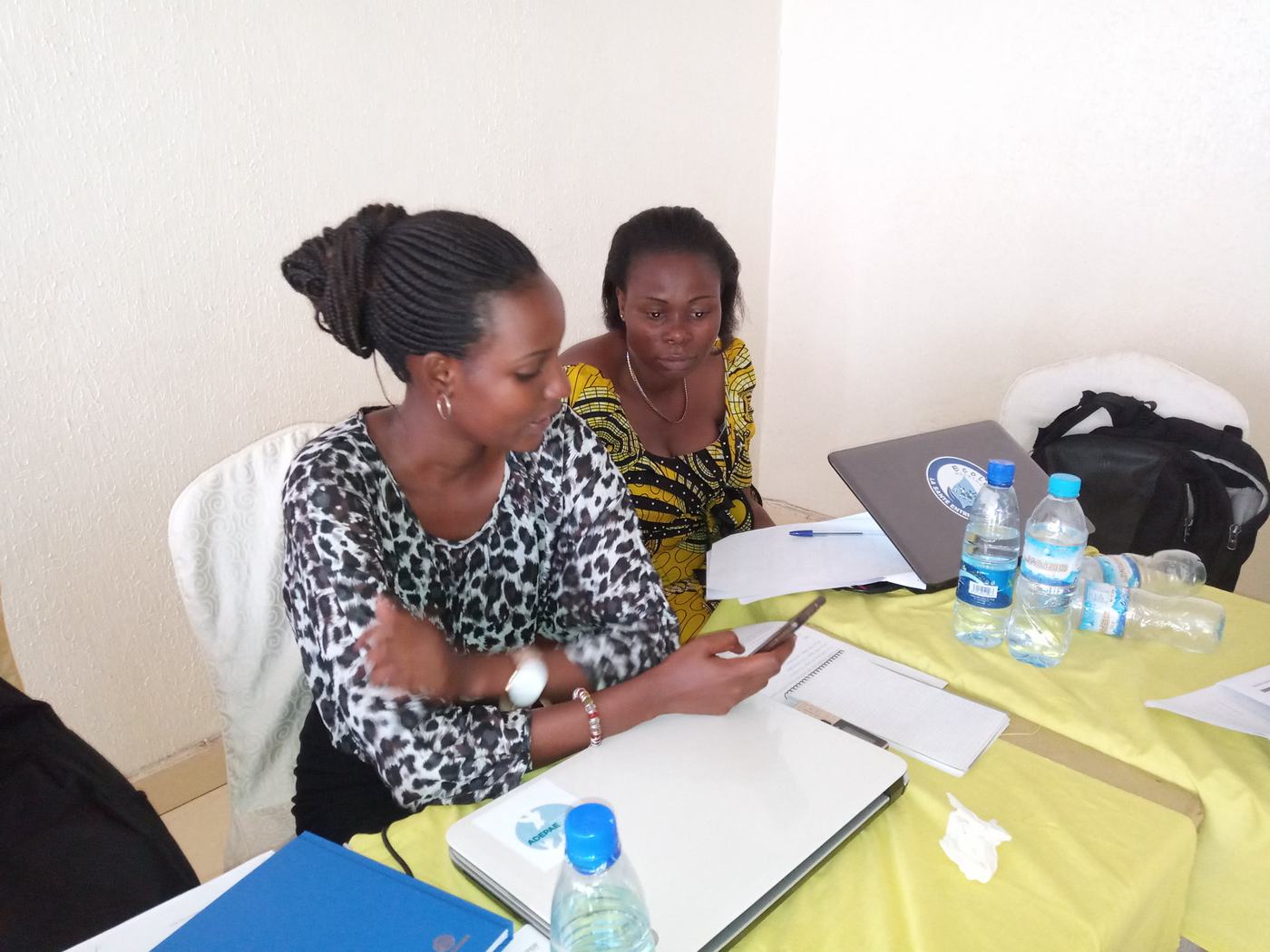
Kinshasa, 18 March 2026 – The Centre de Recherche sur l’Anti-Corruption (CERC) has no team of developers. Yet in a few months it has put three citizen monitoring apps online: EduCheck for schools, HealthCheck for health facilities and GovCheck for local budgets. What made this possible is AI-assisted coding: tools that write, fix and deploy code from instructions in plain language. This account describes how we work, what it has changed for a civil society organisation in the Global South, and the limits we have run into.
The starting point: a proven method, a tool to replace
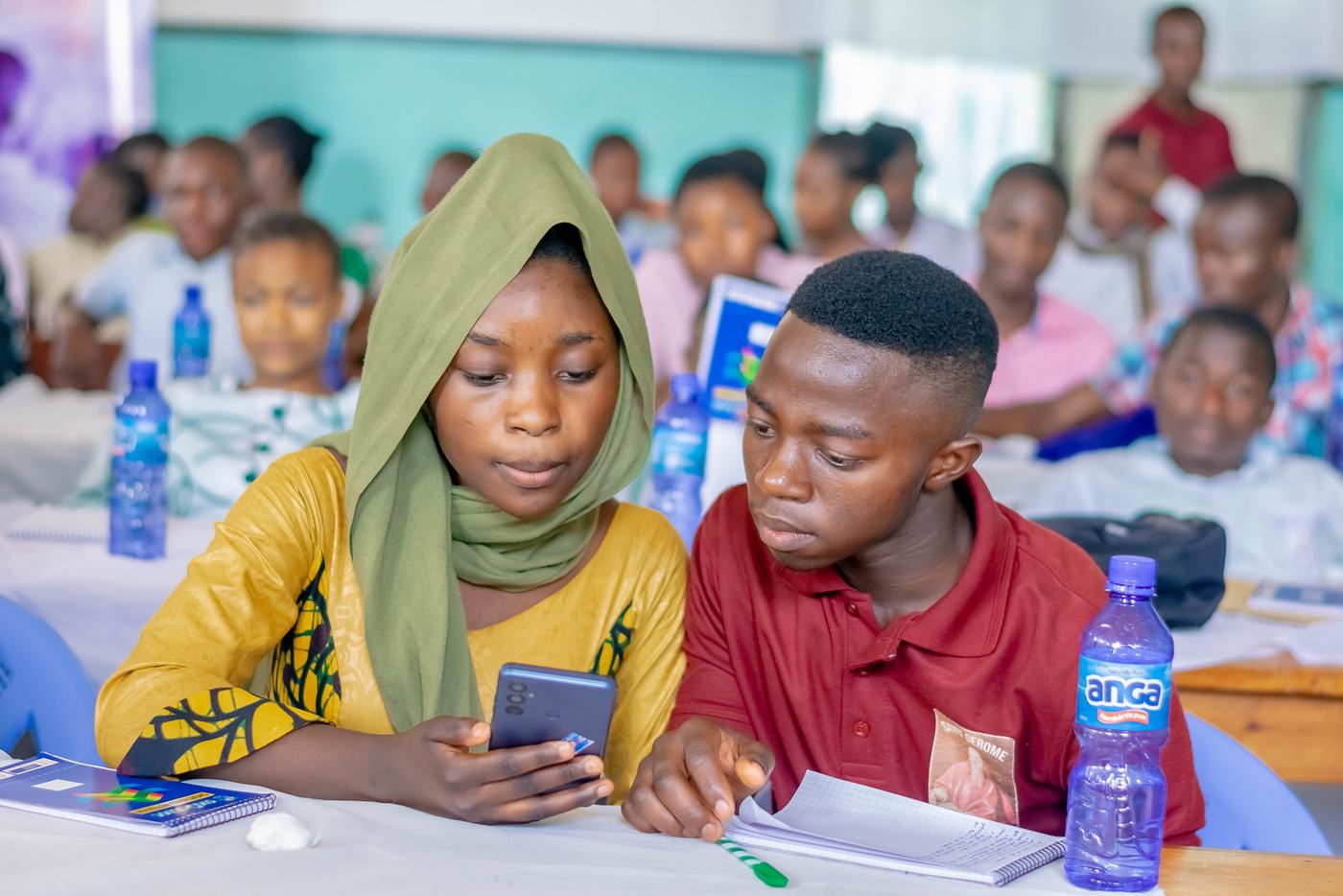
Since 2017, CERC’s Integrity Clubs have trained pupils to monitor the services of their school – teacher attendance, school fees, water, toilets, classrooms – and to work with those in charge until problems are fixed. For years, the monitors used DevelopmentCheck, Integrity Action’s tool. We wanted a platform of our own, built for the DRC, in French, English, Lingala and Kikongo, that we could extend to other sectors without depending on an outside contractor.
An agency’s quote for such an app was far beyond the organisation’s annual budget. Hiring developers was not realistic either: since 2025, CERC has lost its offices in Bukavu and Kinshasa and works remotely with very limited resources.
How we work with AI
Our approach rests on three principles.
1. Write the specification before the code. For each app, we first write a reference document in plain language: the roles (monitors, head teachers, CERC analysts, the public), the data model (a school, a visit, a problem, its follow-up until the fix is verified), the question sets taken from our monitoring guides, the confidentiality rules. This document becomes the contract the coding assistant must follow. It is the most important work, and the work only CERC’s team can do: it puts ten years of citizen monitoring practice into words.
2. Let the assistant build, then check in the field. The coding assistant, running directly on our server, generates the modules, screens and deployment scripts from the specification. Each feature is then tested with real monitors: a form that 15-year-old pupils do not understand is a failed form, however good the code.
3. Reuse the model. Once EduCheck was stable, HealthCheck was derived from it by replacing the school with the health centre and the school questions with questions on access to care. GovCheck applies the same pattern to the budget of a province, city, commune or chiefdom: giving one’s views while it is drawn up, checking how it is spent, visiting the projects it funds. What used to take months now takes weeks.
What it has changed
Cost. Building the three apps cost a fraction of the original quote, mainly in subscriptions to AI tools and staff time. Hosting is covered by non-profit cloud credits.
Independence. When a monitor reports that a field is missing or that a report needs a different layout, CERC’s team makes the fix the same day, without a ticket to a contractor. The organisation owns its code, hosted on its own GitHub account.
Continuity. While CERC was losing its offices, the apps remained the main channel through which pupils, parents and citizens could keep reporting on the state of public services. A small remote team could keep them running.
What does not work, or not yet
We do not want to sell a miracle. These are the real difficulties.
Connectivity. AI tools work online. In Uvira or the Ruzizi plain, a work session can be cut off several times an hour. We have learnt to work in short sessions, save often and pick up where we left off.
Security. A coding assistant can, by mistake, leave an access key in the code history or grant a permission that is too broad. Our platforms receive sensitive reports; every release goes through a review of permissions and secrets, and the people who report are never named in published data.
Drift. Without a solid specification, AI produces code that looks right but misses the need. The vaguer the request, the vaguer the result. That is why we invest in the specification above all.
Skills. AI does not remove the need to understand what it does. A manager who cannot read an error log or check a database backup will get stuck. We train our team in these basics.
What we offer other organisations
Many civil society organisations in French-speaking Africa have a strong field method and no means to digitise it. Our experience shows that with a well-written specification, an AI coding assistant and low-cost hosting, a team without developers can put a citizen monitoring tool online in a few weeks.
CERC is preparing a hands-on workshop, in Kinshasa and Bukavu, where participants rebuild in one day a reporting module modelled on EduCheck, from GitHub repository to deployment. The guide in French and the template repository will be published as open source. Interested organisations can write to us at heri.bitamala@cerc.cd.
About CERC
The Centre de Recherche sur l’Anti-Corruption (CERC) is a Congolese non-governmental organisation founded in April 2017 in South Kivu. With young people at its heart, CERC works with schools, communities, public institutions and partners to promote transparency, accountability and integrity in the Democratic Republic of the Congo. It has held special consultative status with the United Nations Economic and Social Council (ECOSOC) since 2021. Learn more: Discover CERC.
Feature storyCase study: how DigitalOcean’s cloud credits keep citizen monitoring online in the DRC Feature storyFighting Corruption in Schools: CERC and APNAC DRC to propose Legislative Initiative to the National Assembly of the DRC
 Press releaseSASA: the US$6.5 million scale-up swept away by the closure of USAID
 Press releaseEbola: Africa CDC demands accountability for more than US$700 million


