

2021
An independent civil society report on the UN Convention against Corruption
Commissioned by the UNCAC Coalition, CERC assessed how the DRC applies the Convention and made around a hundred recommendations.
Invited as an expert by the Ministry of Justice, CERC spoke on prevention, integrity education and technology for transparency.

From 19 to 23 October 2021, CERC took part in the Anti-Corruption States-General held by the Ministry of Justice under the Support Project for the Fight against Corruption in the Democratic Republic of the Congo.
The meetings set out to make a full diagnosis of the fight against corruption in the DRC, build consensus on the priority actions and reforms needed for a lasting reduction of corruption, and define how their recommendations would be implemented and followed up.
Invited as an expert, CERC addressed corruption prevention through its approach to building public integrity, the use of technology for transparency and accountability in public services, and the introduction of an integrity education course in schools. Its proposals were judged relevant and included in the national anti-corruption strategy.
A few weeks later, from 29 November to 3 December 2021, CERC contributed to the workshop held by the Agency for the Prevention and Fight against Corruption (APLC) to develop and validate the new national anti-corruption strategy, built with state and non-state experts on the basis of the 2010 strategy and the recommendations of the States-General.
2021
Commissioned by the UNCAC Coalition, CERC assessed how the DRC applies the Convention and made around a hundred recommendations.
2021
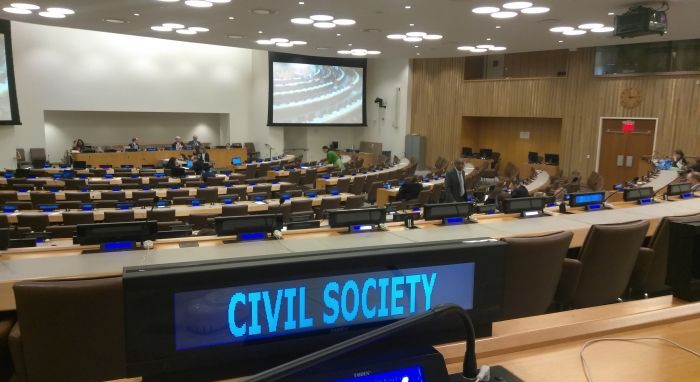
In July 2021, the UN Economic and Social Council granted CERC special consultative status.

2020
Two global networks: more than 350 civil society organisations for the UN Convention against Corruption, and a movement of social innovators for the SDGs.
Report what you see in your school or health centre. Your feedback helps make education and health services in the DRC better and more transparent.