

 Feature storyIn Kinshasa, 9 youth organisations turn their research into jobs for marginalised young people2021–2023
Impact stories2021By CERC
Understanding young people to better fight corruption in schools
A knowledge, attitudes and practices study with 534 students and 89 teachers and head teachers to improve how Integrity Clubs work.
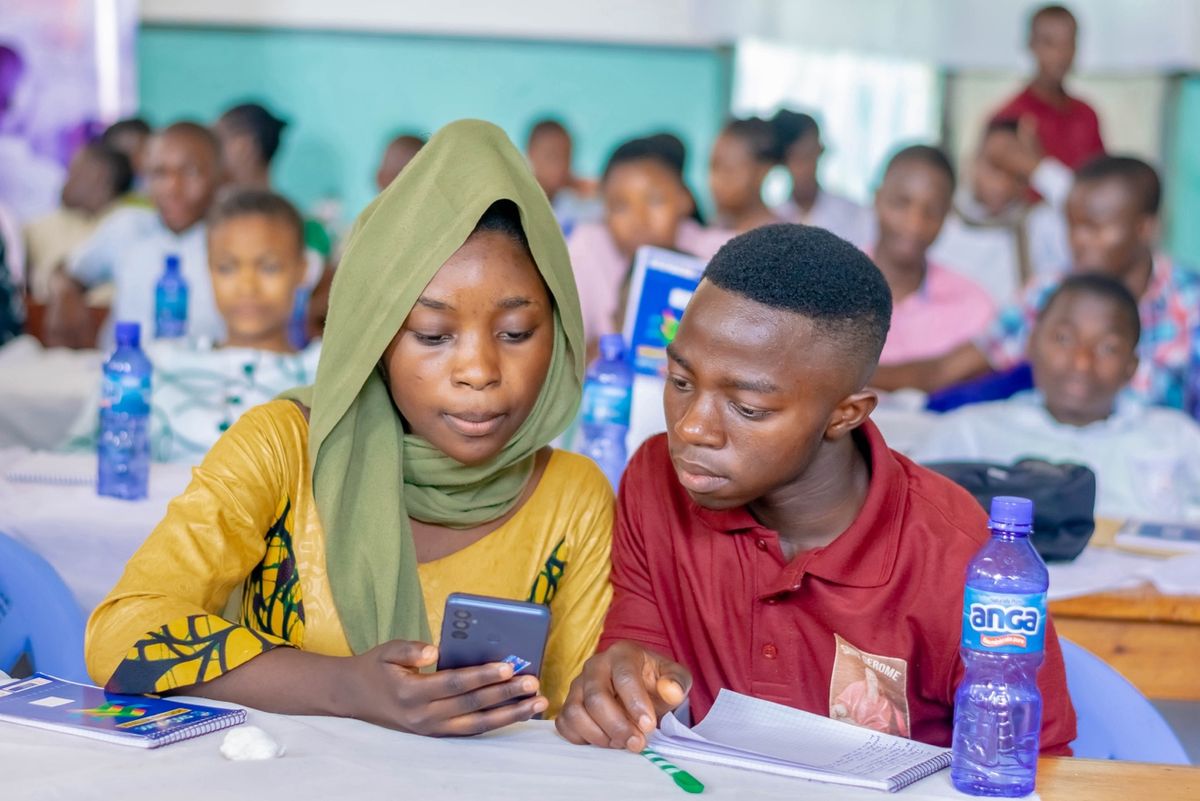
After several years of Integrity Clubs, CERC wanted to understand what really works, what motivates students and what holds them back. In June and July 2021, as it prepared the project funded by the Global Partnership for Education, it carried out a knowledge, attitudes and practices (KAP) study with 534 students – 373 members of 27 Integrity Clubs in Bukavu and Uvira, and 161 students from 12 schools without a club in Kinshasa – and 89 teachers, head teachers and education officials. The report was published in February 2022.
The study set out to identify the most effective delivery models and the people whose support matters most. It followed the 4E approach to behaviour change: enable, encourage, engage and exemplify. Its key findings:
- Young people recognise the importance of integrity and want to improve their schools and communities, although change is slow where traditions are strong and requires collective effort.
- Personal development is a strong motivation to become a monitor: students gain knowledge, confidence and awareness of their civil rights.
- Where focal teachers are active and head teachers supportive, the climate for monitoring and club activities is positive.
- Family support remains a challenge, especially for students from poorer backgrounds – but families who attended awareness sessions were more likely to support monitoring.
- Low engagement from local political representatives and project leads weighs on monitors’ motivation.
- Some clubs have built monitoring into daily school life, for example by tracking teachers’ punctuality.
- Young people moving away – for work, studies or marriage – and the lack of follow-up of former monitors limit long-term engagement.
These findings now shape CERC’s work: more regular support for the clubs, closer involvement of families and local authorities, and tools to follow students’ engagement after they leave an Integrity Club.
About CERC
The Centre de Recherche sur l’Anti-Corruption (CERC) is a Congolese non-governmental organisation founded in April 2017 in South Kivu. With young people at its heart, CERC works with schools, communities, public institutions and partners to promote transparency, accountability and integrity in the Democratic Republic of the Congo. It has held special consultative status with the United Nations Economic and Social Council (ECOSOC) since 2021. Learn more: Who we are.
Feature storyIn Kinshasa, 9 youth organisations turn their research into jobs for marginalised young people2021–2023 Feature storySouth Kivu and Kinshasa: thanks to advocacy by CERC-trained students, 150 schools repair their facilities2021–2025
 Feature storyMore than 600 education actors mobilised for corruption-free schools2021
 Feature storyCERC gets its proposals into the national anti-corruption strategy2021


