

Promoting accountability and inclusion in education and health services
Our sector strategy, revised in January 2022 and extended to the end of 2026 to bridge to the 2027–2030 strategy, and its operational plan of February 2022.
5 years
from January 2022 to December 2026
2 provinces
Kinshasa and South Kivu
13 staff
and over 3,000 volunteers in 2022
US$500,000
annual budget targeted for 2025 and 2026
The goal
More inclusive youth engagement in improving public services, in education and health: investing in young people’s skills, removing the barriers that keep girls out of decisions, supporting their transparency initiatives and building lasting partnerships.
How
- Extending Community Integrity Building to schools and health centres in Kinshasa and South Kivu.
- Involving user committees – Integrity Clubs, local development committees, CODESA – in designing and monitoring services.
- Monitoring service quality with apps, complaint systems and user surveys; building gender and social inclusion into every project.
The changes sought
The operational plan’s targets
| 2022 | 2023 | 2024 | 2025 | 2026 | Total 2022–2026 | |
|---|---|---|---|---|---|---|
| Annual budget | US$150,000 | US$250,000 | US$350,000 | US$500,000 | US$500,000 | US$1,750,000 |
| Unrestricted funding | 10% | 15% | 25% | 30% | 30% | 30% (end of period) |
| Large institutional donors | 1 | 1 | 2 | 2 | 2 | 2 (end of period) |
| Individual donations (share of budget) | 10% | 10% | 12% | 15% | 15% | 15% (end of period) |
The document
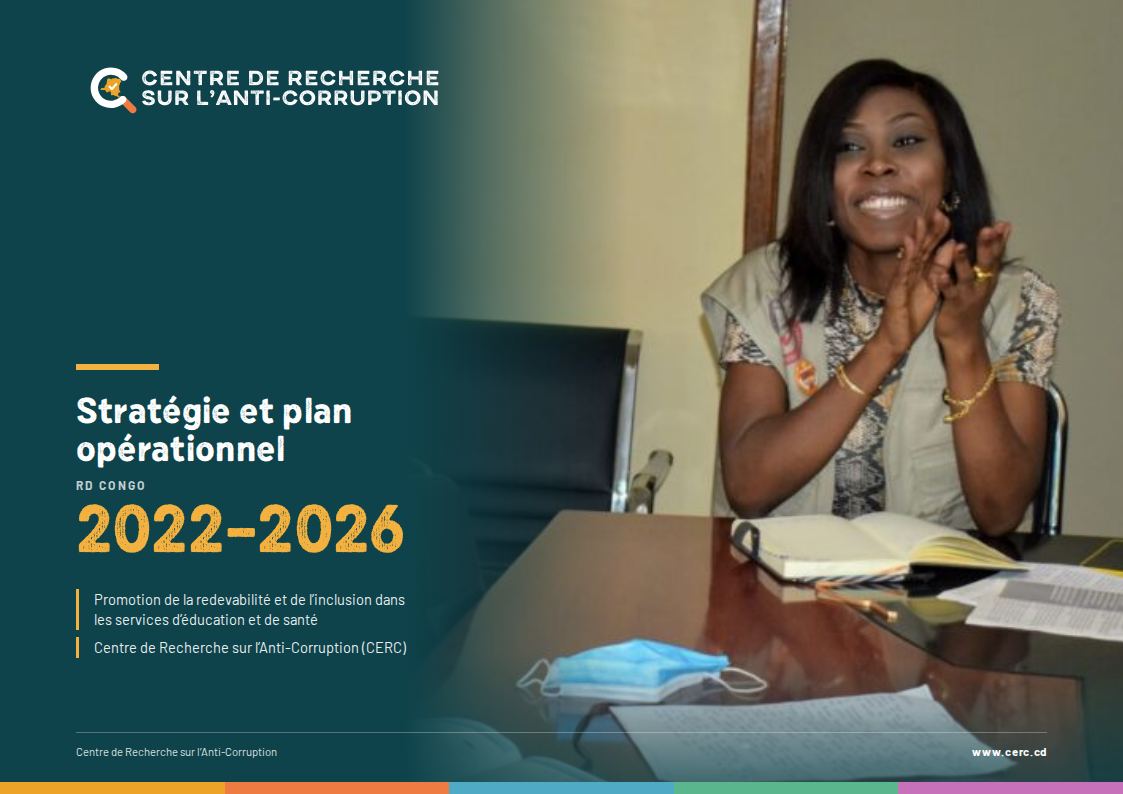
The sector strategy and its operational plan in one document (27 pages, in French).
The evaluation of this strategy
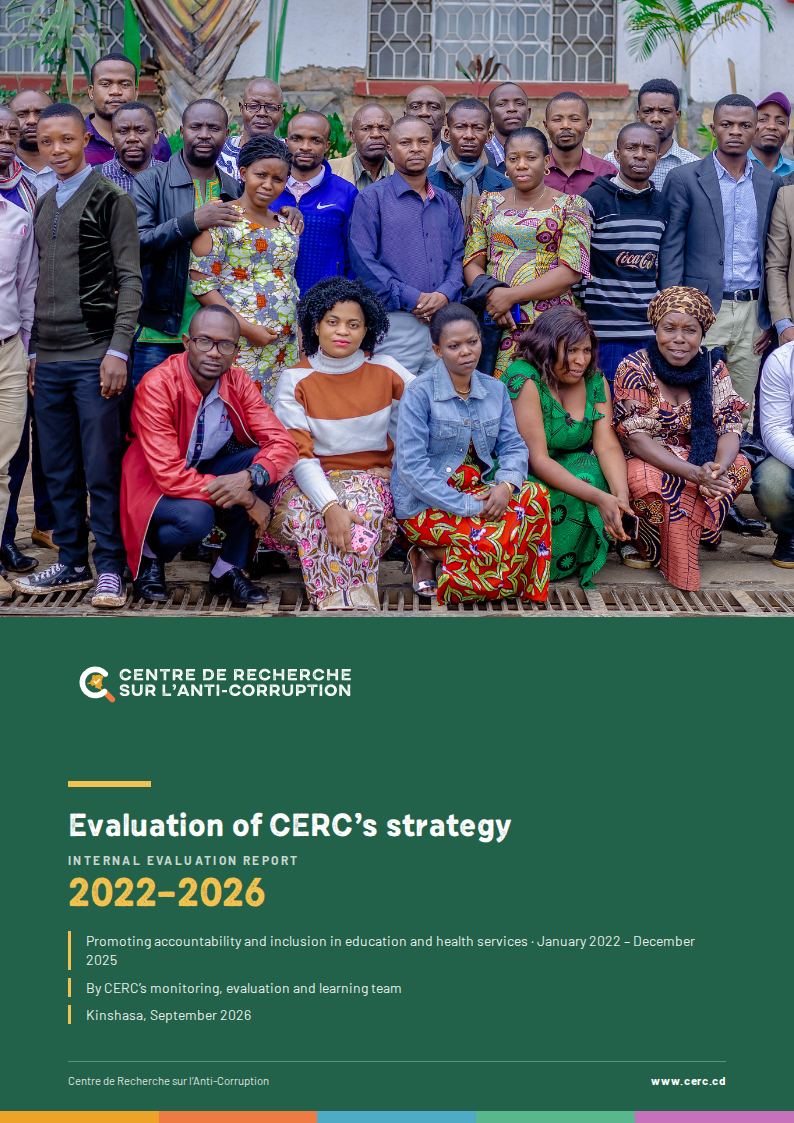
January 2022 – December 2025: 204 Integrity Clubs and 2,250 students in 2022, a bill, an alert system in the justice sector – then the end of funding: US$516,493 received of US$1,250,000 planned. A strategy that carried Integrity Clubs far, without giving CERC the means to last.


