

20–23 December 2017
in the city of Uvira;
Feature storyBy CERC
Under the SHINE project, CERC trained 20 principals, 40 teachers and 60 Integrity Club leaders in Uvira and Sange to launch student monitoring in 20 secondary schools.
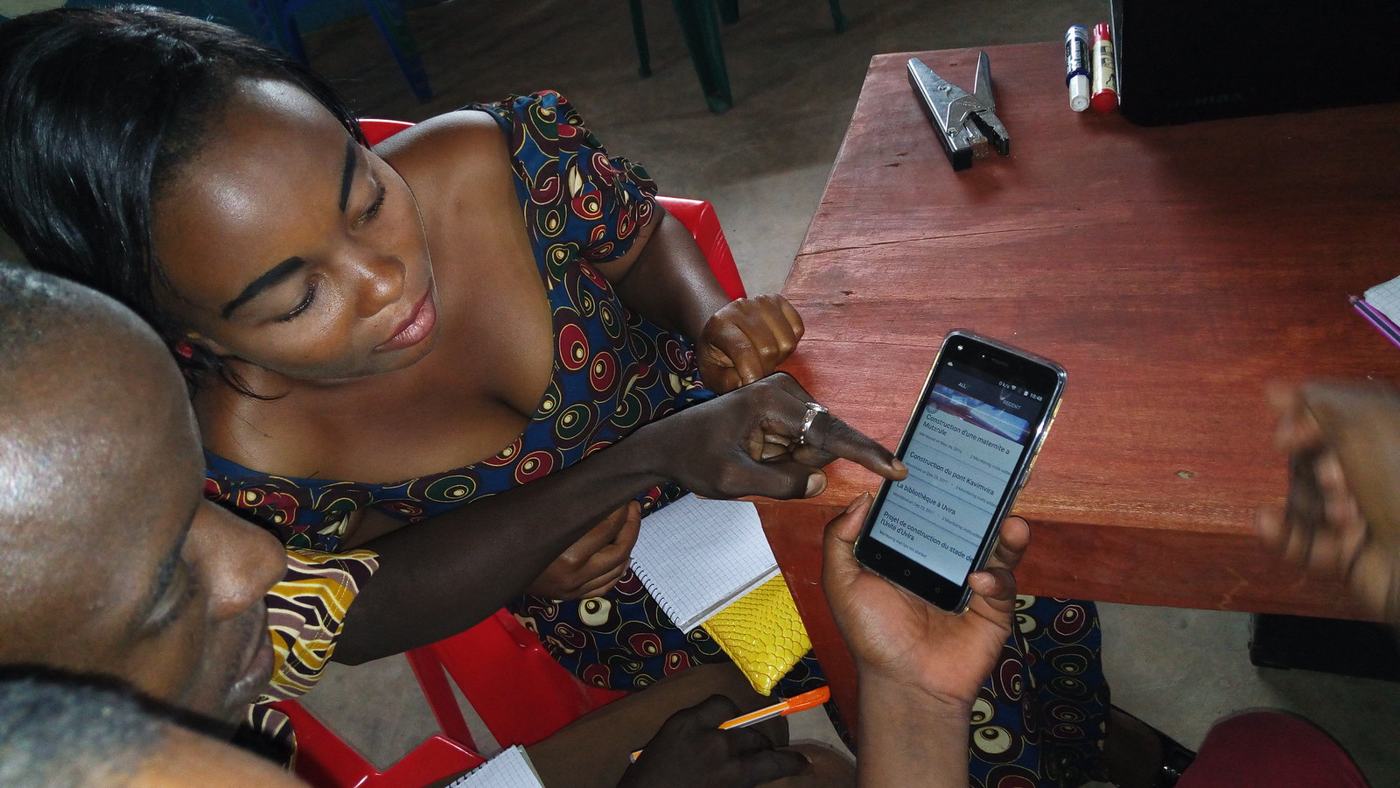
Sange, January 2018 – In Sange, in the Ruzizi plain, teachers, principals and young club leaders have just spent four days learning to monitor public services and projects with DevelopmentCheck. The training of trainers in Community Integrity Building, which ended on 5 January, was organised under Students Acting for Honesty, Integrity and Equality (SHINE), a project implemented by CERC with Integrity Action and funded by NORAD and Sida.
SHINE brings integrity education and community monitoring into secondary schools. On 8 December 2017, CERC launched Integrity Clubs in 20 secondary schools of Uvira territory, in Uvira, Kiliba, Sange, Luberizi, Bwegera and Luvungi. To run them, CERC organised two four-day trainings of trainers:
in the city of Uvira;
in Sange, for the schools of the Ruzizi plain.
For each school, the principal, two teachers and three club leaders took part – 20 school principals, 40 teachers and 60 Integrity Club leaders in all. Using Integrity Action's Community Integrity Building method, they learned how to identify a public service or project to monitor, collect evidence, report problems and work with officials until they are fixed. They practised with DevelopmentCheck, Integrity Action's monitoring tool.
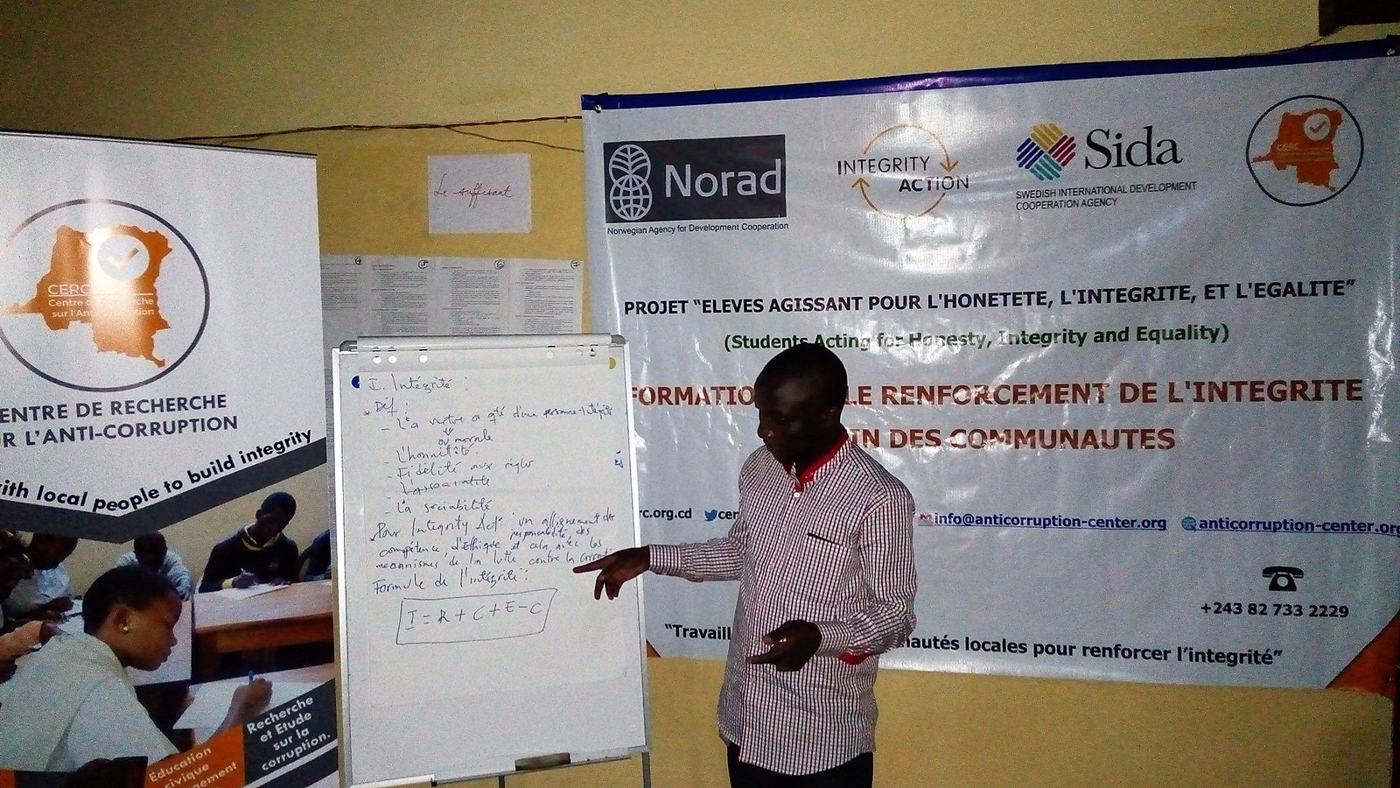
The trainers will now coach the students of their clubs. Trained in anti-corruption, citizenship, transparency and accountability, inclusion and gender equality and leadership, club members will monitor their school's services – class sizes, toilets, water, library, teachers' attendance, budgets and spending – and infrastructure projects in their communities, then look for solutions with school managers, parents and providers in joint working group meetings.
The approach reflects a conviction that CERC's founder shared in October 2017. “I have found that the answers to corruption lie in the participation of young people who live in the environment plagued by corruption,” wrote Heri Bitamala.
The goals for the first year of SHINE are ambitious. In the coming weeks, the trainers will support 300 young monitors aged 15 to 19. The project aims for girls to make up half of club members and at least 30% of club leaders, and for the 20 clubs to reach 2,000 young people.
Make a donation to help CERC train more teachers and club leaders, or become a supporter to bring Integrity Clubs to more schools in the DRC.
The Centre de Recherche sur l’Anti-Corruption (CERC) is a Congolese non-governmental organisation founded in April 2017 in South Kivu. With young people at its heart, CERC works with schools, communities, public institutions and partners to promote transparency, accountability and integrity in the Democratic Republic of the Congo. It has held special consultative status with the United Nations Economic and Social Council (ECOSOC) since 2021. Learn more: Who we are.
 Feature storyCase study: how DigitalOcean’s cloud credits keep citizen monitoring online in the DRC
 Feature storyFighting Corruption in Schools: CERC and APNAC DRC to propose Legislative Initiative to the National Assembly of the DRC
 Press releaseThe DRC leaves the FATF grey list: a CERC recommendation implemented
 Press releaseConflict gold now funds the ISIL-affiliated ADF in the DRC

CERC’s assistant
Hello, I’m Exaucée, CERC’s assistant. How can I help you?
You can write your question, we will reply instantly.
Do not share personal information here. To report a case of corruption, use the whistleblowing page: it protects you.
Report what you see in your school or health centre. Your feedback helps make education and health services in the DRC better and more transparent.
 EduCheckMonitor your school: teacher attendance, school fees, water and sanitation, equipment.Go to EduCheck (opens in a new tab)
 HealthCheckMonitor your health centre: quality of care, medicines, fees and hygiene.Go to HealthCheck (opens in a new tab)
 GovCheckA problem in your neighbourhood or with a public service? Report it to your city or commune, and advocate until it is solved.Go to GovCheck (opens in a new tab)
 UNCAC TrackerFollow how the DRC implements the UN Convention against Corruption.Go to UNCAC Tracker (opens in a new tab)