

 Feature storyCase study: how DigitalOcean’s cloud credits keep citizen monitoring online in the DRC
Press releaseBy CERC
CERC and the South Kivu Ministry of Education discuss corruption in schools
Under the SHINE project, CERC met the South Kivu provincial Minister of Education in Bukavu to discuss corruption, inequality and exclusion in schools – and how Integrity Clubs can help.
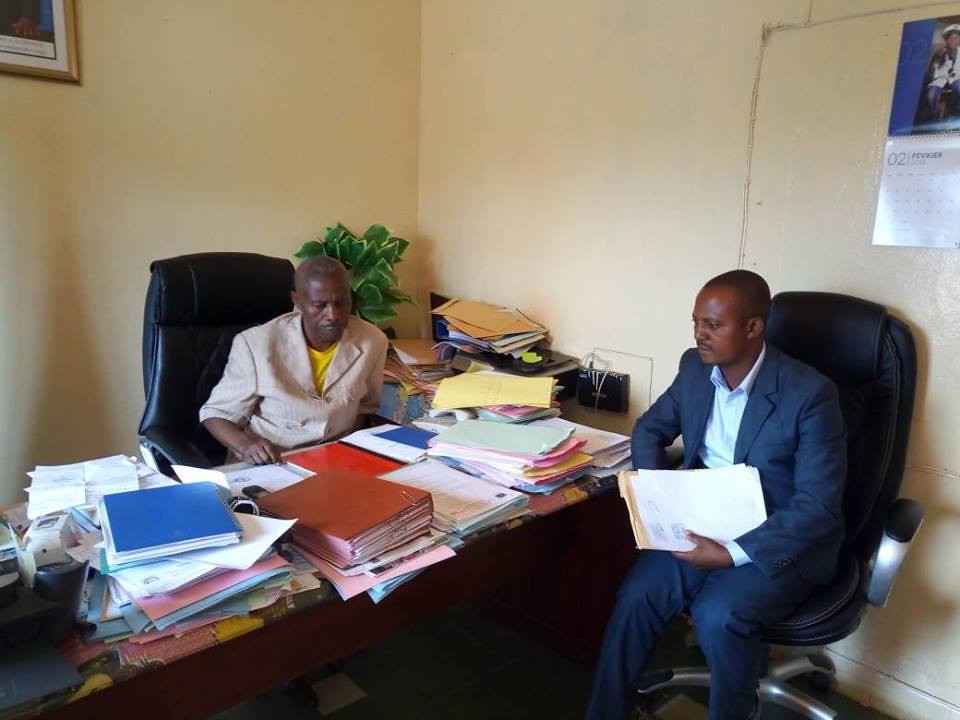
Bukavu, 16 February 2018 – Yesterday, Thursday 15 February, CERC held a working session at the provincial Ministry of Education, Youth and Sports of South Kivu on corruption, inequality and exclusion in the Congolese education sector. The meeting took place under Students Acting for Honesty, Integrity and Equality (SHINE), a project implemented by CERC with Integrity Action and funded by NORAD and Sida.
CERC was represented by Albert Msambya Labani, its Executive Assistant in charge of administration, advocacy and policy engagement. The provincial minister of Education, Youth and Sports, Isaac Buchekabiri, received the delegation. The stakes are high: in CERC's May 2017 survey of 980 households in South Kivu, 48.5% of respondents considered the provincial ministry of education corrupt.
CERC came with something concrete to show. On 8 December 2017, SHINE launched Integrity Clubs in 20 secondary schools of Uvira territory. Between December 2017 and January 2018, two trainings of trainers prepared 20 principals, 40 teachers and 60 club leaders to run them.
The delegation explained how the clubs work. Students trained in anti-corruption, citizenship, transparency, inclusion and leadership monitor their school's services – class sizes, toilets, water, teachers' attendance, budgets – with Integrity Action's DevelopmentCheck tool, then look for solutions with school managers, parents and providers in joint working group meetings. For that to work, the problems students report must reach someone who can act – which is why CERC is seeking the support of the provincial authorities.
The project's first-year plans depend on that dialogue. In the coming months, 300 young monitors aged 15 to 19 are to follow the services and infrastructure of the 20 schools, and the clubs aim to reach 2,000 young people. SHINE also aims to encourage and support secondary schools to take on Integrity Clubs and make them last.
For CERC, working with the institutions is part of its mission. Heri Bitamala, CERC's founder, wrote in October 2017 that he created the organisation out of “a lifelong passion to see DRC institutions more accountable, inclusive, free from corruption and responsive to expectations and aspirations of Congolese citizens.”
The next step belongs to the students. As the first monitors start visiting their schools with DevelopmentCheck, CERC will keep the provincial ministry informed of what they find – and of what gets fixed.
Make a donation to help CERC train more teachers and club leaders, or become a supporter to bring Integrity Clubs to more schools in the DRC.
About CERC
The Centre de Recherche sur l’Anti-Corruption (CERC) is a Congolese non-governmental organisation founded in April 2017 in South Kivu. With young people at its heart, CERC works with schools, communities, public institutions and partners to promote transparency, accountability and integrity in the Democratic Republic of the Congo. It has held special consultative status with the United Nations Economic and Social Council (ECOSOC) since 2021. Learn more: Who we are.
Feature storyCase study: how DigitalOcean’s cloud credits keep citizen monitoring online in the DRC Feature storyFighting Corruption in Schools: CERC and APNAC DRC to propose Legislative Initiative to the National Assembly of the DRC
 Press releaseThe DRC leaves the FATF grey list: a CERC recommendation implemented
 Press releaseConflict gold now funds the ISIL-affiliated ADF in the DRC


