

 Feature storyIs the DRC keeping its anti-corruption commitments? The civil society report2021
Impact stories2020By CERC
A global fight: CERC joins more than 350 organisations against corruption
Corruption crosses borders, and so must the fight against it. In 2020, CERC joined two global networks – and turned membership into action: a civil society report on the DRC, and Congolese evidence carried to the United Nations.

The world’s anti-corruption network
In November 2020, CERC became a full member of the UNCAC Coalition, a global network of more than 350 civil society organisations in over 100 countries. Together, they push for the ratification, implementation and monitoring of the United Nations Convention against Corruption – the first global instrument against corruption, organised crime and economic crime, including money laundering. The DRC ratified it in 2010.
From member to author of the DRC report
Membership soon became responsibility. On 14 May 2021, CERC met the DRC’s representative in the review of the Convention at the Ministry of Justice to discuss the place of civil society.
In June 2021, the Coalition entrusted CERC with assessing how the DRC applies the Convention – preventive measures and asset recovery – and with writing the civil society report for the second review cycle. The report shares around a hundred recommendations with the Congolese government. The full report is published by the UNCAC Coalition, in English and French.
Congolese evidence on the global stage
Membership of the Coalition was part of the record that earned CERC special consultative status with the UN Economic and Social Council in July 2021.
In December 2023, CERC took part online in the Tenth Conference of the States Parties to the Convention, in Atlanta, speaking on the links between corruption, the financing of crime and conflict in eastern Congo. In May 2024, it presented its citizen monitoring tools, EduCheck and GovCheck, at the United Nations Civil Society Conference in Nairobi.
Changing the systems that keep people poor
Also in 2020, CERC joined Catalyst 2030 – now Catalyst Now – a global movement of social entrepreneurs, NGOs, funders and other innovators working together to transform the systems that keep millions of people in poverty. At the current pace, the Sustainable Development Goals would not be reached before 2094, 64 years after the UN deadline: the movement was created to respond to this emergency.
Stronger together at home
The same conviction guides CERC’s work in the DRC. In 2021, it brought together LICOCO (the Ligue congolaise de lutte contre la corruption), ACAJ (the Association congolaise pour l’accès à la justice), COCOCULO and ODEP to set up a coordination mechanism for anti-corruption work.
In 2024, it worked with six civil society organisations and anti-corruption networks to collect citizens’ alerts on corruption in Kinshasa’s courts.
Each of these alliances gives more weight to the evidence gathered by Congolese students and citizens – from Integrity Clubs in schools to citizens’ alerts in the courts.
About CERC
The Centre de Recherche sur l’Anti-Corruption (CERC) is a Congolese non-governmental organisation founded in April 2017 in South Kivu. With young people at its heart, CERC works with schools, communities, public institutions and partners to promote transparency, accountability and integrity in the Democratic Republic of the Congo. It has held special consultative status with the United Nations Economic and Social Council (ECOSOC) since 2021. Learn more: Who we are.
Feature storyIs the DRC keeping its anti-corruption commitments? The civil society report2021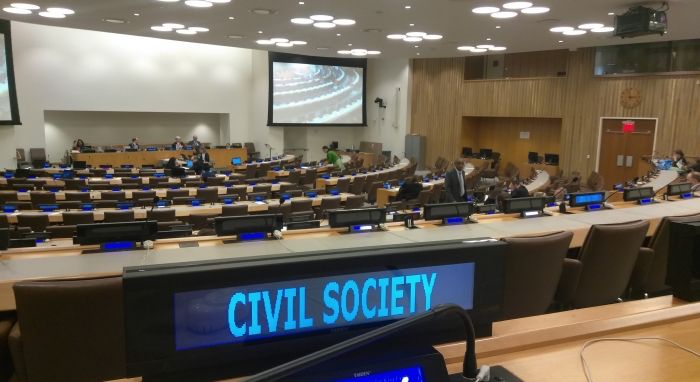 Feature storyCorruption and governance in the DRC: CERC takes evidence from the ground to the UN2021–2025
 Feature storyCERC gets its proposals into the national anti-corruption strategy2021
 Feature storyAn alert system for citizens to report corruption within the justice system2024


