

 Feature storyIs the DRC keeping its anti-corruption commitments? The civil society report2021
Impact stories2021–2025By CERC
Corruption and governance in the DRC: CERC takes evidence from the ground to the UN
In July 2021, four years after its founding in Uvira, CERC won special consultative status with the UN Economic and Social Council. It has used it to bring what Congolese students and citizens see on the ground to the United Nations – from the civil society report on the Convention against Corruption to the States Parties conference and Nairobi.
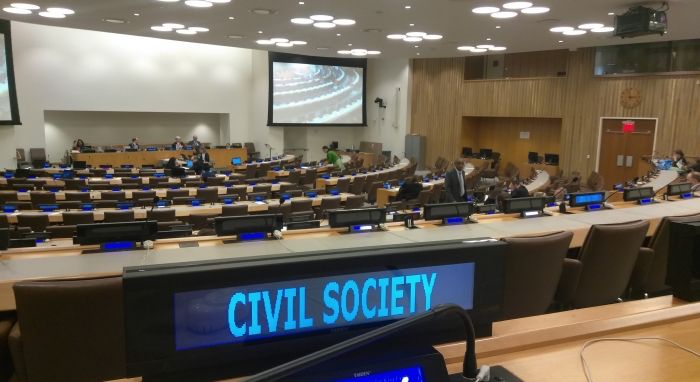
Decisions on corruption, development and peace are also made at the United Nations – usually without the voices of the people they affect most. In 2021, a young organisation from South Kivu earned the right to speak there. Since then, CERC has used it to carry the evidence gathered by Congolese students and citizens where governments meet.
From Uvira to the United Nations
CERC’s application rested on its record: a household survey on corruption with around 980 people in 7 territories of South Kivu in 2017; 810 students in 54 Integrity Clubs trained between 2017 and 2020, who got an average of 32% of the problems they reported fixed; and membership of the UNCAC Coalition since November 2020.
On 17 May 2021, as it opened its annual session, the UN Committee on NGOs – 19 member states – recommended that the Economic and Social Council (ECOSOC) grant CERC special consultative status.
In July 2021, after a rigorous review of its governance, finances and credibility, ECOSOC granted it.
A seat where decisions are made
Consultative status gives CERC access to the meetings of ECOSOC and its subsidiary bodies, to the UN human rights mechanisms and to special events organised by the President of the General Assembly. CERC can appoint official representatives to the UN in New York and Geneva and make written and oral statements.
It came at a key moment: 2021 saw the first special session of the UN General Assembly against corruption (UNGASS).
Congolese evidence in the review of the Convention
The status was put to work at once. On 14 May 2021, CERC met the DRC’s representative in the review of the UN Convention against Corruption at the Ministry of Justice.
In August 2021, CERC’s staff were trained on the Convention and its review mechanism.
Entrusted by the UNCAC Coalition, CERC then wrote the civil society report on how the DRC applies the Convention, with around a hundred recommendations to the government – among them an anti-corruption law and the protection of whistleblowers.
At home and at the UN
In October 2021, CERC took part as an expert in the Anti-Corruption States-General organised by the Ministry of Justice with the UN Development Programme; its proposals were included in the national anti-corruption strategy.
From 11 to 15 December 2023, CERC’s Programme Manager Musa Nzamu and CEO Heri Bitamala took part online in the Tenth Conference of the States Parties to the UN Convention against Corruption (CoSP10) in Atlanta. They spoke on the links between corruption, the financing of crime and conflict in eastern Congo, drawing on the civil society report.
On 9 and 10 May 2024, Heri Bitamala represented CERC at the United Nations Civil Society Conference in Nairobi. CERC showed how corruption holds back the Sustainable Development Goals and can stand in the way of the Pact for the Future, and presented its citizen monitoring tools, EduCheck and GovCheck.
Accounting to the United Nations
The status comes with duties. Every four years, organisations with consultative status report to the Committee on NGOs on their contribution to the work of the United Nations, under ECOSOC resolution 1996/31; those who fail to report on time can lose their status.
On 20 January 2025, CERC submitted its quadrennial report for 2021–2024: the civil society report on the Convention; Integrity Clubs in 150 schools with 2,250 students and the EduCheck app (SDG 4); GovCheck; its work with parliamentarians (APNAC DRC) and 97 policymakers, CoSP10 and the States-General (SDG 16); and the training of 63 youth leaders from 9 youth-led organisations, including organisations led by LGBTQI people and people living with disabilities (SDGs 8 and 10).
« With special consultative status, we can influence decision-making at the highest level. We can now appoint official representatives to the United Nations in New York and Geneva and make written and oral statements at UN events. »
Heri Bitamala, Executive Director of CERC, after the NGO Committee’s recommendation on 17 May 2021
About CERC
The Centre de Recherche sur l’Anti-Corruption (CERC) is a Congolese non-governmental organisation founded in April 2017 in South Kivu. With young people at its heart, CERC works with schools, communities, public institutions and partners to promote transparency, accountability and integrity in the Democratic Republic of the Congo. It has held special consultative status with the United Nations Economic and Social Council (ECOSOC) since 2021. Learn more: Who we are.
Feature storyIs the DRC keeping its anti-corruption commitments? The civil society report2021 Feature storyCERC gets its proposals into the national anti-corruption strategy2021
 Feature storyA global fight: CERC joins more than 350 organisations against corruption2020
 Feature storyWhen students report problems, schools improve: one problem in three fixed!2017–2026


