

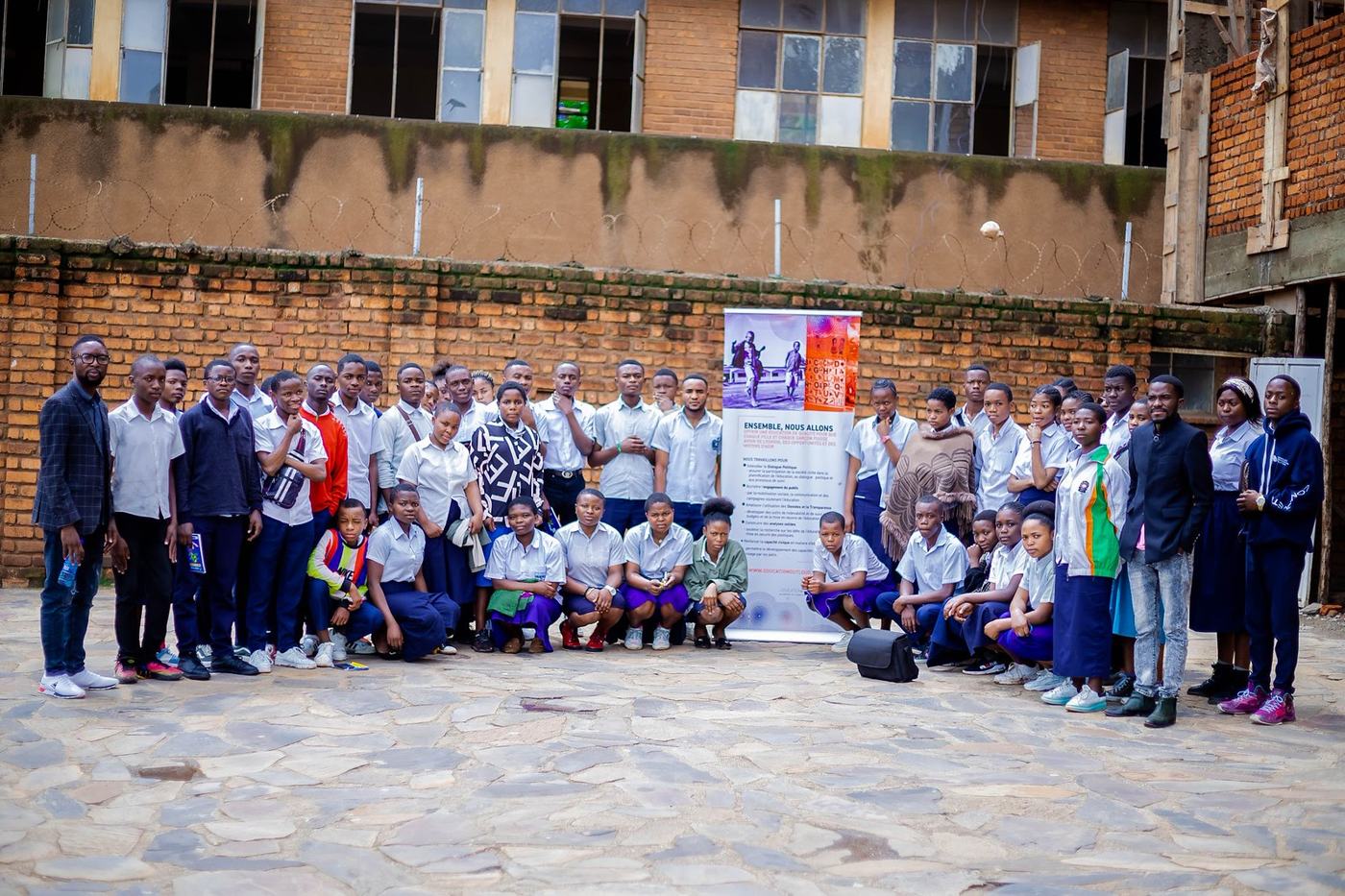
 Feature storySouth Kivu and Kinshasa: thanks to advocacy by CERC-trained students, 150 schools repair their facilities2021–2025
Impact stories2021–2023By CERC
In Kinshasa, 9 youth organisations turn their research into jobs for marginalised young people
With USAID and IREX, CERC helped ten youth organisations in Kinshasa – including organisations led by LGBTQI people and by people living with disabilities – produce research on inclusion, present it to decision-makers and turn it into jobs and businesses for 45 young people.
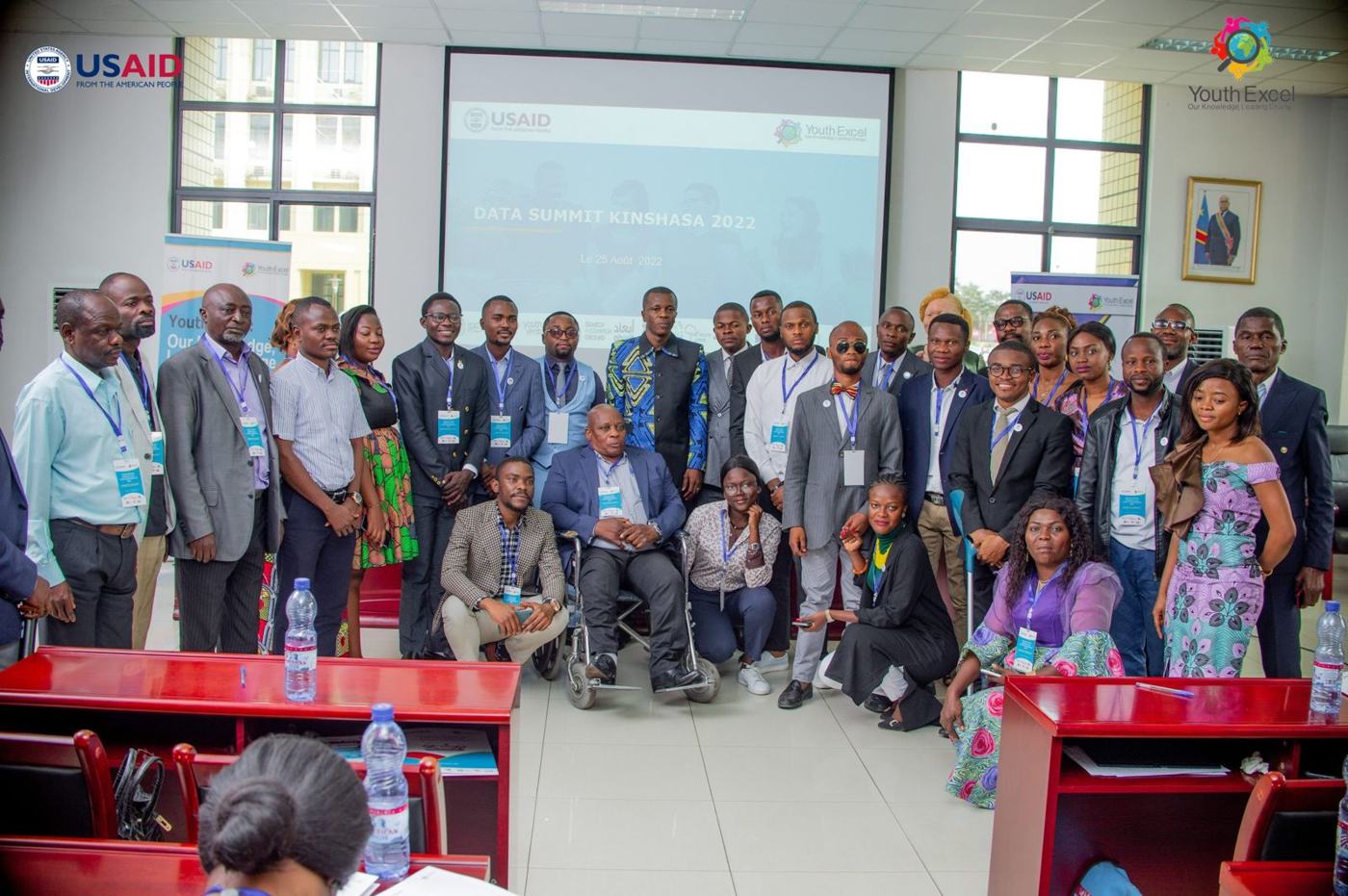
What if young people produced the evidence that should guide the policies that affect them? That is the ambition of Youth Excel: Our Knowledge, Leading Change, a global initiative funded by USAID and led by IREX. CERC implemented it in Kinshasa as Youth Represent DRC, with technical support from Search for Common Ground (SFCG).
Selected by IREX
In July 2021, IREX and its consortium partners selected CERC to implement the project in the DRC. Youth Excel strengthens youth leadership by supporting youth-led and youth-serving organisations to generate evidence through implementation research – a mixed-methods approach to collecting data while a programme runs in order to improve it – to use data to improve their programmes, and to foster dialogue between young people and decision-makers.
The project was launched on 19 July 2021.
A network of youth organisations doing research
CERC brought together an issue-based collaborative network (ICON) of 10 youth-led and youth-serving organisations in Kinshasa, including one led by LGBTQI people and two led by people living with disabilities. Trained by CERC in implementation research, positive youth development, gender equality and social inclusion, the young members of the network designed and carried out research on how to include underrepresented and marginalised young people in education and workforce development programmes.
A Data Summit in Kinshasa
In August 2022, CERC, IREX and SFCG held the ICON Data Summit in Kinshasa, under the theme “Increasing inclusion of underrepresented and marginalised young people in education and in workforce development programmes”. The young researchers presented their findings to a diverse range of stakeholders.
From research to jobs
The network then acted on its findings. Nine organisations joined forces in a joint Quick Impact Project, “Socio-Economic Reintegration of 45 Unemployed and Underrepresented Youth in Kinshasa”, offering vocational training, capacity-building workshops, mentoring and access to resources to find a job or start a business.
After identification, psycho-social support and training in trades and entrepreneurship, the young people formed five micro-enterprises in January and February 2023, with equipment and start-up funds from CERC:
- two groups producing dairy products, bakery products and cosmetic and non-cosmetic products;
- two computer centres, at Camp Nkokolo and Camp Malula, training young people in computing, design, printing and photocopying;
- a tailoring and sewing workshop in Ngaba.
CERC helped the five groups write their business plans and find local donors. Collaboration and mutual acceptance grew between young people of different backgrounds, genders and sexual orientations; one ICON organisation made its office available for computer training. In all, 63 youth leaders from 9 youth-led organisations took part in inclusive professional training in Kinshasa.
What was hard
The funds available for the network’s action plan were limited, and the business plans of the micro-enterprises were ambitious. CERC planned to mentor the ICON organisations to raise funds from local businesses, international organisations and UN agencies, strengthened coordination through regular meetings at its office, and approached other allies when state partners showed little interest in the action plan.
Every dollar accounted for
IREX fully approved CERC’s monthly reports and paid the full award: US$97,527.91 – US$32,506.71 in 2021, US$58,275.15 in 2022 and the final US$6,746.05 in February 2023. A one-month no-cost extension carried the project through 28 February 2023. With the final balance, IREX disbursed a second instalment of US$71,169.16 for Phase 2, including US$50,000 of microgrants to 5 youth micro-enterprises – US$168,697.07 in all.
About CERC
The Centre de Recherche sur l’Anti-Corruption (CERC) is a Congolese non-governmental organisation founded in April 2017 in South Kivu. With young people at its heart, CERC works with schools, communities, public institutions and partners to promote transparency, accountability and integrity in the Democratic Republic of the Congo. It has held special consultative status with the United Nations Economic and Social Council (ECOSOC) since 2021. Learn more: Who we are.
Feature storySouth Kivu and Kinshasa: thanks to advocacy by CERC-trained students, 150 schools repair their facilities2021–2025 Feature storyMore than 600 education actors mobilised for corruption-free schools2021
 Feature storyCERC gets its proposals into the national anti-corruption strategy2021
 Feature storyIs the DRC keeping its anti-corruption commitments? The civil society report2021


