

Integrity Clubs managed by the students themselves
, not by teachers – so that the clubs remain the students’ own voice;
Press releaseBy Heri Bitamala, Executive Director since April 2017
Invited by USAID’s Development Innovation Ventures, CERC designed with schools and the Ministry of Education Students Acting for Social Accountability (SASA), a US$6.5 million plan to bring Integrity Clubs and EduCheck to every secondary school in four provinces. It passed every review and was signed in October 2024 – then it was cancelled when the new US administration closed USAID.
It all started with an email. Grace Kim, then a Program Manager at USAID’s Development Innovation Ventures (DIV), wrote to tell me she would be in Kinshasa from 15 to 18 November and wanted to meet me – on the 15th at 1 pm – about an opportunity with USAID. She attached DIV’s grant programme description and its online portfolio, so that I could prepare.
DIV is USAID’s open innovation fund. It backs new solutions to the problems that affect people living in poverty, and funds them by stages: a pilot (up to US$200,000), testing and positioning for scale (up to US$1.5 million), transitioning to scale (up to US$15 million) and evidence generation (up to US$1.5 million). It judges every proposal on three principles: rigorous evidence of impact, cost-effectiveness, and potential for scale and sustainability.
I met Grace Kim in Kinshasa on the 15th, as planned. She had looked at what our Integrity Clubs and EduCheck had achieved in South Kivu and Kinshasa, and her advice was clear: given the size of that impact, we should not apply for a pilot, but propose our innovation under DIV’s Transitioning to Scale portfolio – the stage for approaches that have been piloted and tested and are ready to spread to new places.
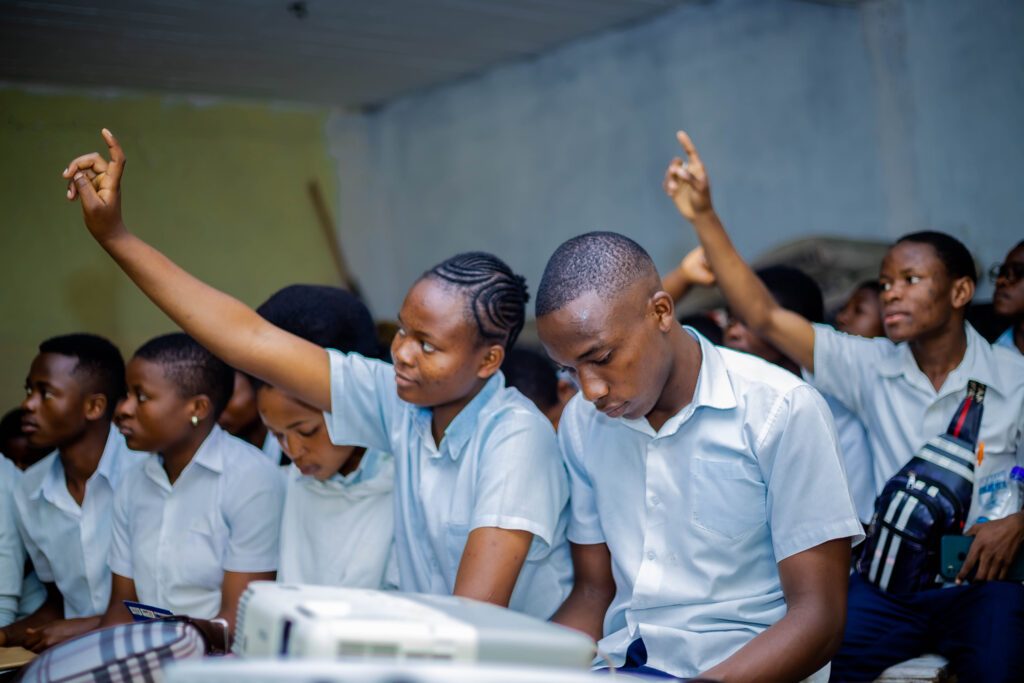
The evidence was there. With the Global Partnership for Education, CERC had set up Integrity Clubs in 150 secondary schools and trained 2,250 students aged 14 to 19 – among them 396 girls and 44 students at risk of exclusion – to monitor their schools with EduCheck. It had trained 138 principals and 278 teachers. The students’ advocacy had fixed one problem in three that the students identified (classrooms, toilets, water), and school officials had agreed to extend the approach across the whole Province of South Kivu. Read more: Scaling up Integrity Clubs: from South Kivu to Kinshasa with the Global Partnership for Education.
CERC’s team of experts designed the proposal under the name Students Acting for Social Accountability (SASA). Every member of the team was involved, from programmes to finance, and the partner schools – principals, teachers and the students of the clubs – gave their input on what had worked and what should change.
The aim was ambitious: in three years, 30,000 students aged 14 to 19 engaged as agents of change, 2,000 secondary schools embedding Integrity Clubs for the long term, and 300 senior education officials, 15 civil society organisations and 20 parliamentarians working with CERC to build anti-corruption and accountability into the education sector. Students would report through EduCheck on teacher attendance, infrastructure, water, sanitation and corruption, and the data would guide the Ministry’s decisions and resources.
Before it went to USAID, the proposal was reviewed by the Ministry of Education, which gave three pieces of feedback that shaped SASA:
, not by teachers – so that the clubs remain the students’ own voice;
, not only to club members – so that anyone in a school community can report what they see;
so that the platform stays independent and its data trustworthy.
These choices built on what the clubs had become since the memorandum signed with the education authorities of South Kivu. Read more: A memorandum of understanding to bring Integrity Clubs into every school.
April 2023. CERC submits the concept to DIV.
September 2023. DIV sends its feedback.
November 2023. CERC submits the full proposal, the budget and all the project documents.
March 2024. USAID completes a thorough due diligence of CERC. CERC carries out every recommendation to improve its internal governance, and USAID finds them all satisfied.
October 2024. USAID and CERC sign the Cooperative Agreement, for the project to start in February 2025.
The due diligence left CERC stronger: its policies, procedures and financial controls were reviewed and improved to meet USAID’s standards – work that still serves every partner today.
With US$6.5 million for 2025–2027, SASA was to bring Integrity Clubs and EduCheck to every secondary school in four provinces, including South Kivu, North Kivu and Kinshasa, under a new agreement with the Ministry of Education to incorporate them in all secondary schools of the selected provinces. Programme coordinators were planned in South Kivu, North Kivu and Kinshasa. For a model that began in 2017 in 20 schools in Uvira, it was the step from a project to a national system. Read more: From 20 schools in Uvira to a national model: the story of the Integrity Clubs.
The project never started. In 2025, the new US administration closed USAID and cancelled every commitment, SASA’s with them – weeks after its planned start.
SASA was one casualty among thousands. On 20 January 2025, the new US administration froze foreign aid for 90 days, and USAID’s partners received stop-work orders. On 10 March, Secretary of State Marco Rubio announced that 83% of USAID’s programmes – some 5,200 contracts – were cancelled; the remaining programmes passed to the State Department, which absorbed the agency on 1 July 2025.
The United States had provided about 40% of the world’s humanitarian funding in 2024. In 2025, its humanitarian spending fell by about three quarters, and international humanitarian assistance as a whole was some 30% lower than in 2022, according to ALNAP. The United Nations launched a “humanitarian reset” and cut its appeals to the most urgent needs. A study published in The Lancet estimated that USAID’s programmes had prevented 91 million deaths between 2001 and 2021 – and that the cuts, if maintained, could cause more than 14 million additional deaths by 2030, 4.5 million of them children under five.
For NGOs, the blow was immediate. In a global survey by Accountability Lab and Humentum, 64% of respondents had USAID projects terminated, more than half had to lay off or furlough staff, and about a third said their organisation was at risk of closing. In a survey of 246 NGOs by the International Council of Voluntary Agencies (ICVA), two in three had received stop-work orders, which meant programmes shut down and staff laid off overnight.
Few countries were hit harder than the DRC. In 2024, the United States funded more than 70% of humanitarian action in the country and 88% of its food security funding; US aid to the DRC reached nearly US$1.2 billion in fiscal year 2024. The cuts came just as M23 took Goma and Bukavu and hundreds of thousands of people fled the fighting.
Oxfam warned that most aid agencies in the DRC relied on USAID and would face “terrible triage decisions”: one terminated project was the only source of water for some 250,000 displaced people in the camps near Goma. Health programmes lost their medicines and their staff; in 2026, aid workers said the cuts had slowed the response to the Ebola outbreak. Congolese organisations – health and HIV services, women’s groups, education and governance programmes – lost their funding overnight, often with staff to pay and activities half done. Civil society working for accountability lost one of its main sources of support at the very moment when public money most needed watching.
For CERC, the closure took away SASA’s US$6.5 million for 2025–2027 – the largest commitment in its history, some four times its average annual budget for each of the three years. The coordinators planned in South Kivu, North Kivu and Kinshasa were never recruited, and the secondary schools of the four provinces never received their Integrity Clubs and EduCheck.
In the same weeks, the fall of Bukavu in February 2025 forced CERC to close its office there; funding difficulties then forced it to close its Kinshasa office too. The team now works remotely, and CERC’s four apps – EduCheck, HealthCheck, GovCheck and UNCAC Tracker – keep citizen monitoring going where the team can no longer go.
What was built remains. The Integrity Club model, tested in hundreds of schools and refined with the Ministry; EduCheck, run by CERC and open to every student and parent; a proposal that passed USAID’s scrutiny at every stage; and an organisation whose governance came out of due diligence stronger. CERC is looking for partners to take SASA to every school. Read more: After a difficult 2025, CERC works on remotely and keeps its partnerships.
The Centre de Recherche sur l’Anti-Corruption (CERC) is a Congolese non-governmental organisation founded in April 2017 in South Kivu. With young people at its heart, CERC works with schools, communities, public institutions and partners to promote transparency, accountability and integrity in the Democratic Republic of the Congo. It has held special consultative status with the United Nations Economic and Social Council (ECOSOC) since 2021. Learn more: Discover CERC.
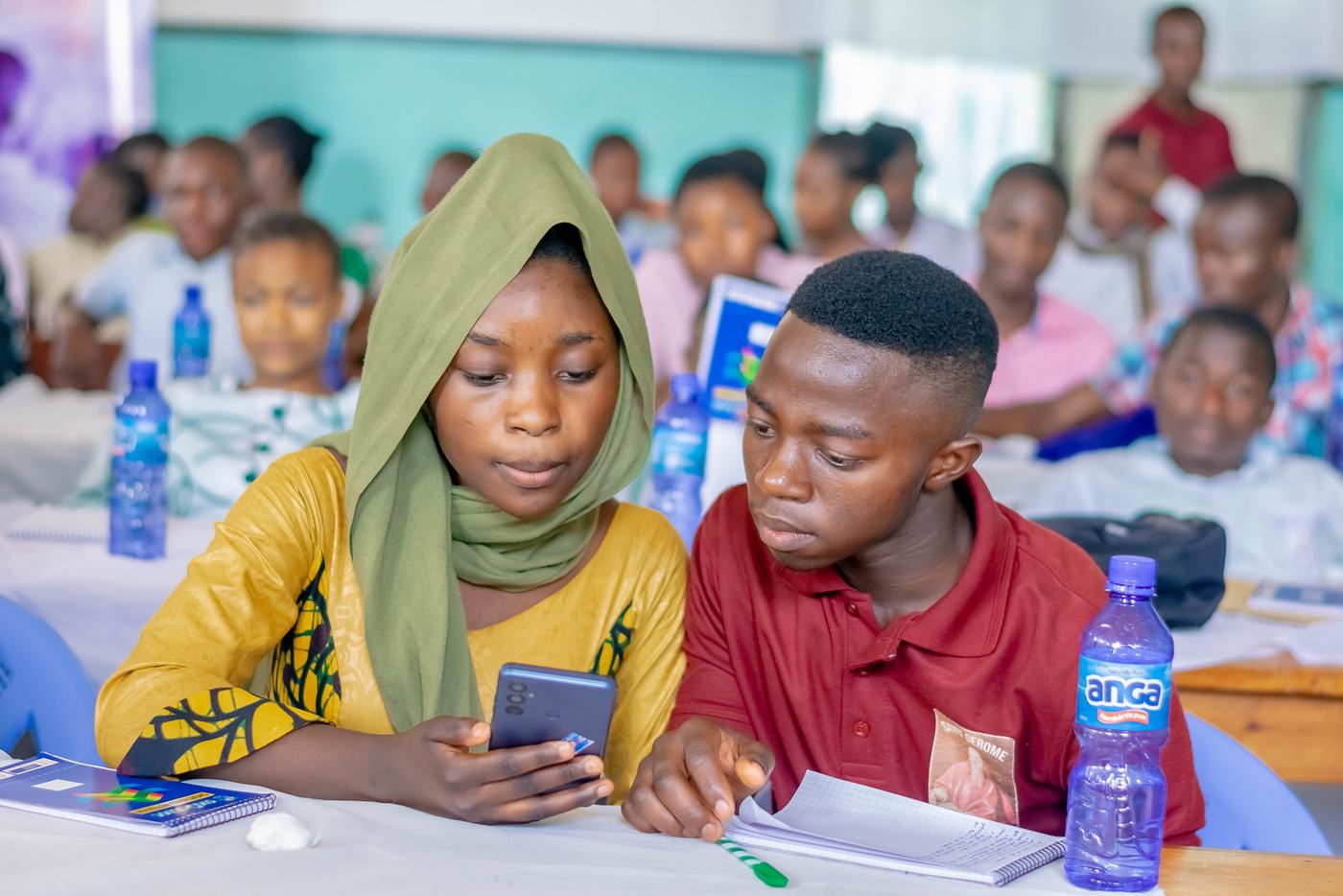 Feature storyCase study: how DigitalOcean’s cloud credits keep citizen monitoring online in the DRC
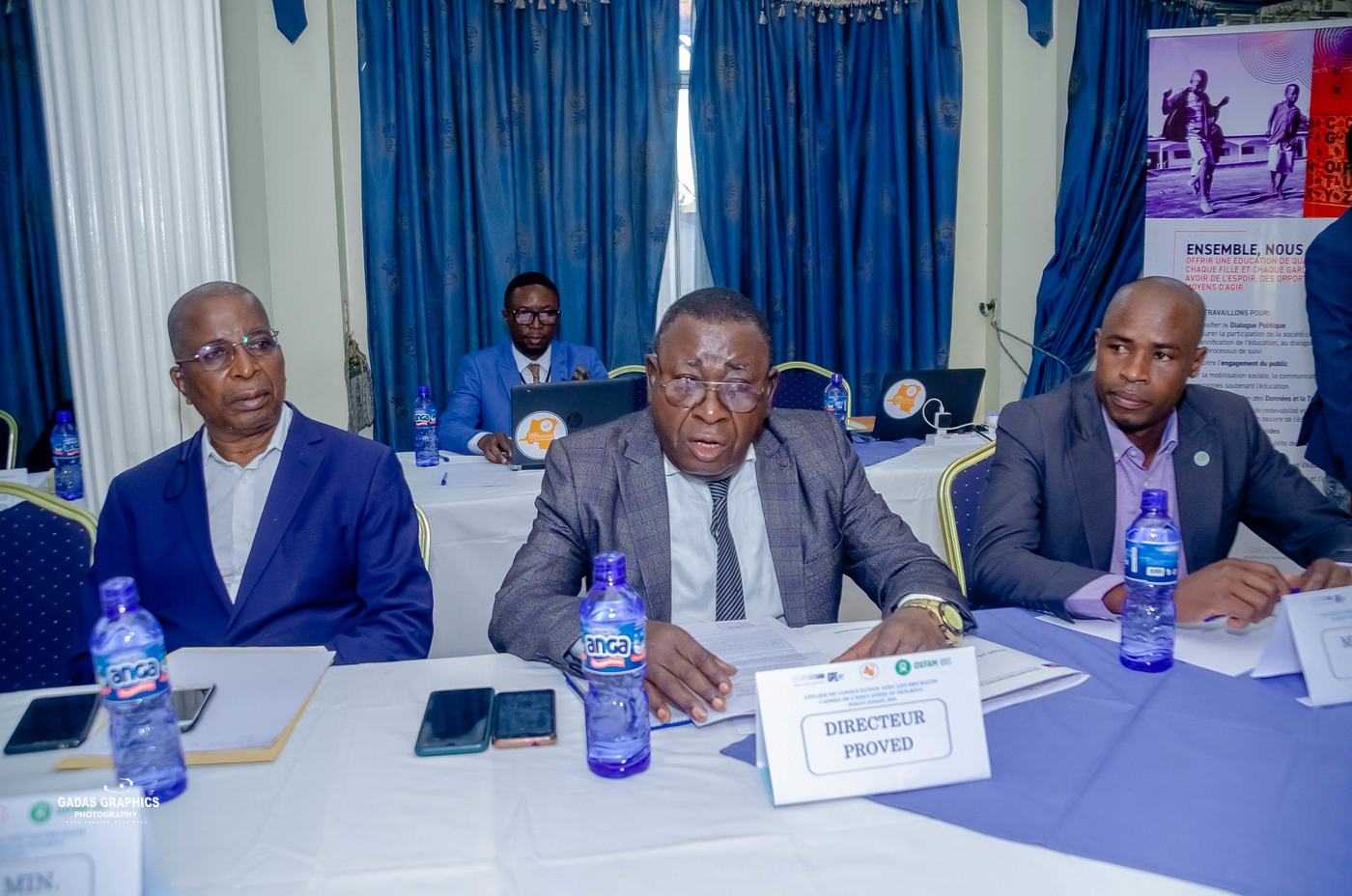 Feature storyFighting Corruption in Schools: CERC and APNAC DRC to propose Legislative Initiative to the National Assembly of the DRC
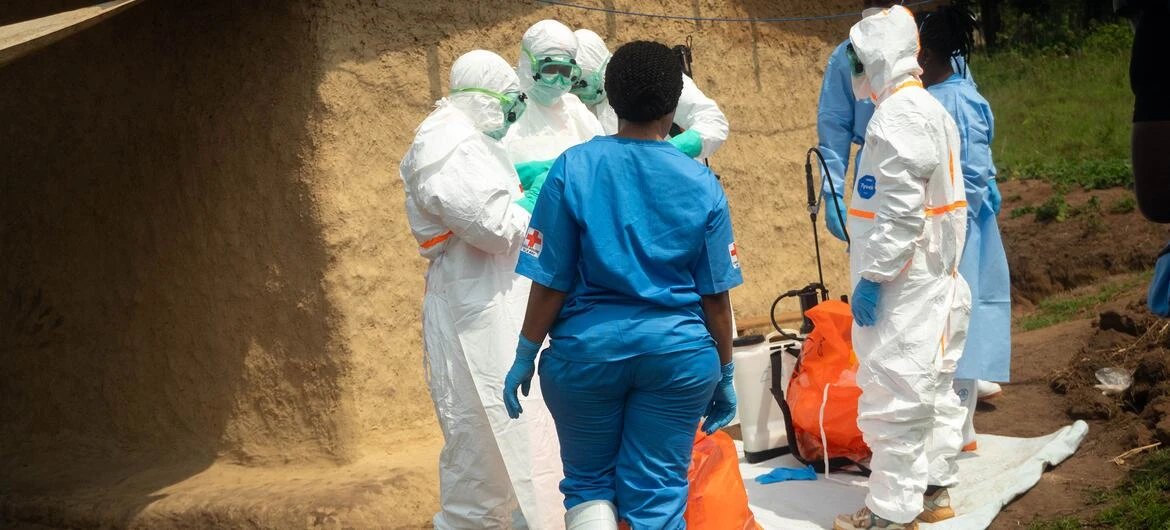 Press releaseEbola: Africa CDC demands accountability for more than US$700 million
 Press releaseCERC has a new logo: what we do, and what we fix

CERC’s assistant
Hello! I’m Exaucée, CERC’s assistant. Ask me about CERC, our work, our apps, our reports, or how to donate, partner or report corruption.
Do not share personal information here. To report a case of corruption, use the whistleblowing page: it protects you.
Report what you see in your school or health centre. Your feedback helps make education and health services in the DRC better and more transparent.
 EduCheckMonitor your school: teacher attendance, school fees, water and sanitation, equipment.Go to EduCheck (opens in a new tab)
 HealthCheckMonitor your health centre: quality of care, medicines, fees and hygiene.Go to HealthCheck (opens in a new tab)
 GovCheckA problem in your neighbourhood or with a public service? Report it to your city or commune, and advocate until it is solved.Go to GovCheck (opens in a new tab)
 UNCAC TrackerFollow how the DRC implements the UN Convention against Corruption.Go to UNCAC Tracker (opens in a new tab)