

 Feature storyTowards a law to teach integrity in every school in the country2023–2024
Impact stories2018–2023By CERC
Education authorities adopt Integrity Clubs for all their schools in South Kivu
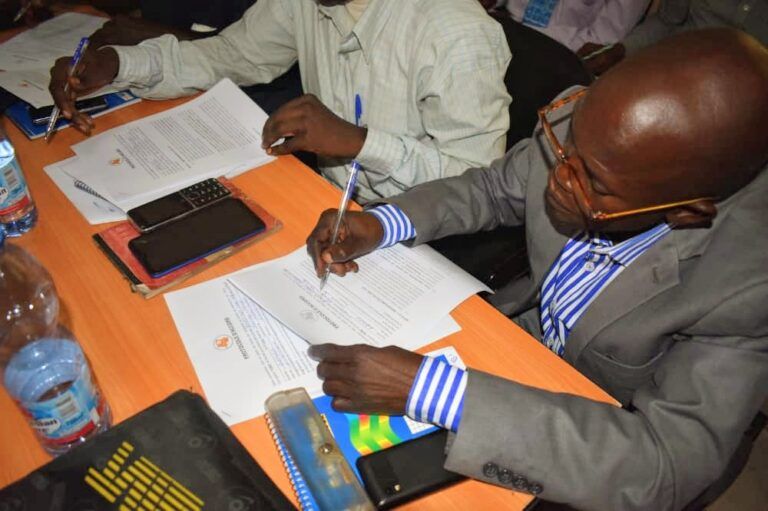
On 28 July 2022 in Bukavu, the Ministry of Education, through the Provincial Directorate of Education of South Kivu 1, signed a memorandum of understanding with CERC to bring Integrity Clubs into every secondary school in South Kivu – the result of four years of dialogue with the education authorities.
Schools first
Before the first Integrity Clubs were launched in 20 secondary schools of Uvira territory on 8 December 2017, CERC signed agreements with its partner schools under the Students Acting for Honesty, Integrity and Equality (SHINE) project, funded by NORAD and Sida through Integrity Action.
Bringing the provincial authorities in
On 15 February 2018, CERC held a working session at the provincial Ministry of Education, Youth and Sports of South Kivu, where the provincial minister, Isaac Buchekabiri, received its delegation. The stakes were high: in CERC’s May 2017 survey of 980 households in South Kivu, 48.5% of respondents considered the provincial ministry of education corrupt. CERC’s message was simple: the problems students report must reach someone who can act. The dialogue continued, including at a tripartite meeting in Bukavu between CERC, the provincial Ministry of Education and the Provincial Directorate of Education.
Listening before proposing
In 2021, as it prepared the project funded by the Global Partnership for Education, CERC consulted students, teachers, parents, civil society and 12 senior education officials. With the officials, discussions focused on bringing Integrity Clubs into every secondary school and the Integrity Education Handbook into the national curriculum. The same year, studies with 54 senior Ministry of Education officials and 19 anti-corruption experts produced a baseline strategy for the education sector.
96 participants, one commitment
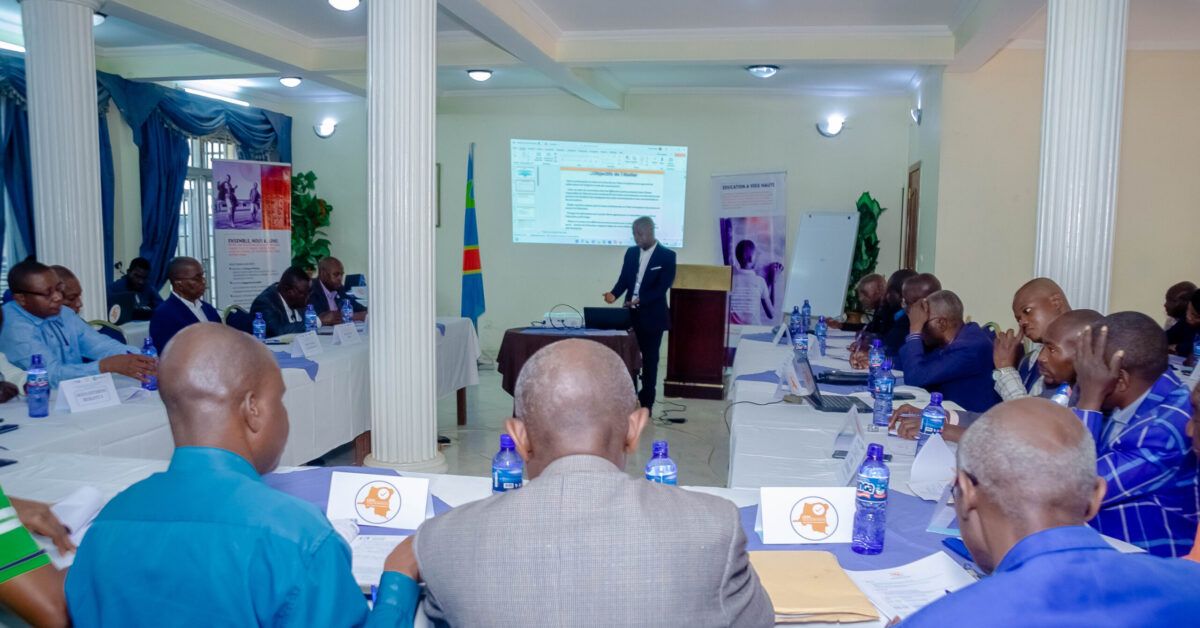
During 2022, CERC brought together 96 participants in Bukavu and Kinshasa: senior education officials, 3 members of parliament, journalists, representatives of teachers’ unions and parents’ associations, school founders and experts.
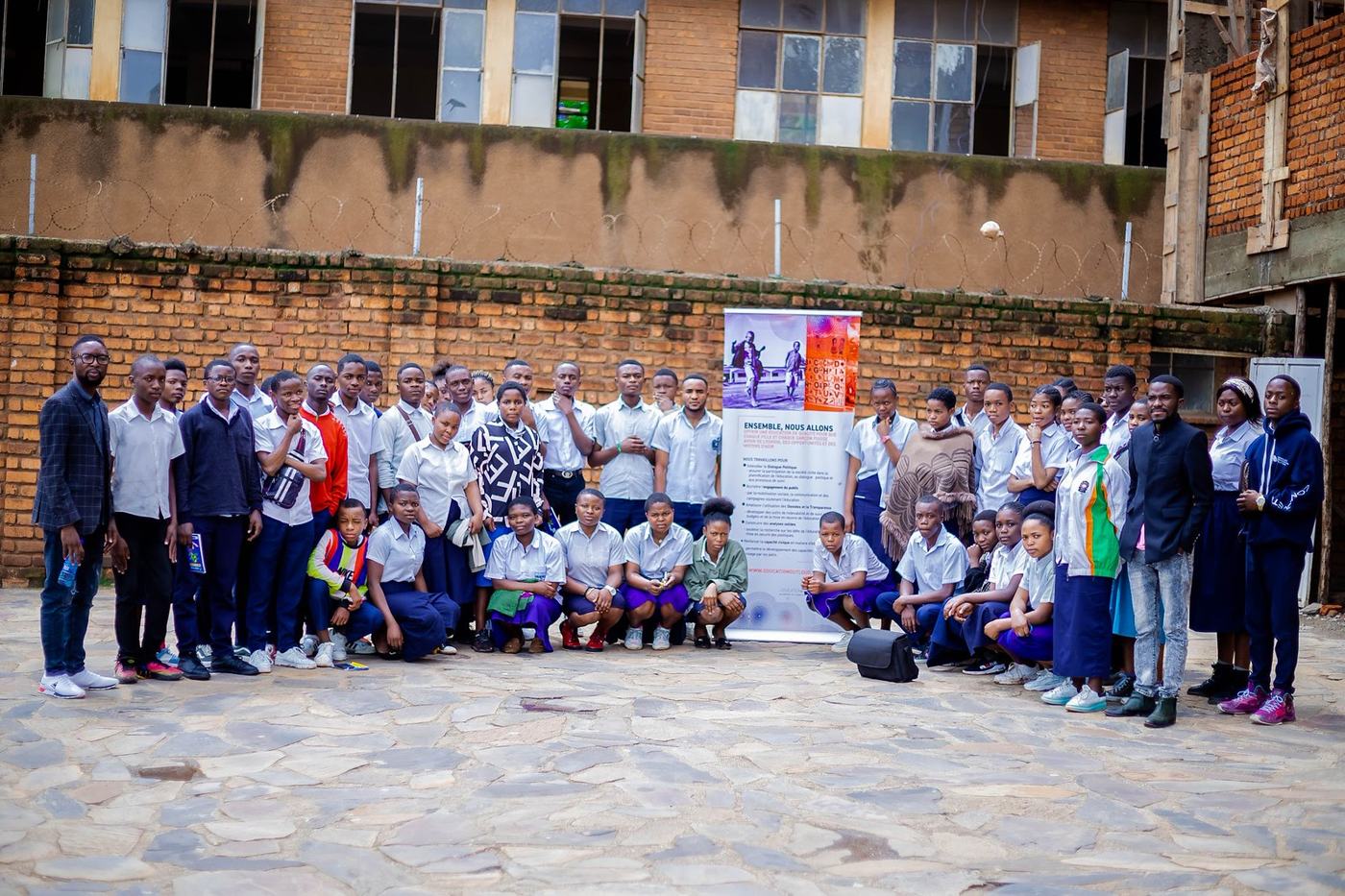
On 28 July 2022, at the Horizon Hotel in Bukavu, a consultation workshop of 41 participants – representatives of the Ministry of Education, parents’ associations, teachers’ unions, education experts and NGOs – reviewed CERC’s policies, programmes and curricula on transparency, integrity and anti-corruption in secondary schools. At the end of the workshop, the Ministry of Primary, Secondary and Technical Education, through the Provincial Directorate of Education of South Kivu 1, and CERC signed a memorandum of understanding to integrate Integrity Clubs into every secondary school in South Kivu.
What changed
This was a decisive step: Integrity Clubs were no longer just a project run by an NGO, but a mechanism recognised by the school administration, in which students become full players in improving the quality of education and fighting corruption in their schools.
In September 2022, at the end of the training of 138 principals and 278 teachers, memoranda of understanding were signed between CERC and the heads of its 150 partner schools – 90 in Bukavu and 60 in Kinshasa – paving the way for 150 Integrity Clubs and the integrity education course for 2,250 students.
Beyond South Kivu
By March 2023, a provincial protocol for Kinshasa and a national protocol were being negotiated. More than 50 education officials – among them the Secretary General for Education, the provincial ministries and directorates of education, the sub-provincial directors, the coordinators of faith-based schools, the Agency for the Prevention and Fight against Corruption (APLC) and the Observatory of Corruption Monitoring and Professional Ethics (OSCEP) – civil society organisations such as CONEPT and 10 parliamentarians took part in the consultations and expressed broad support. In 2023, two more workshops in Kinshasa and Bukavu brought together 97 policymakers.
To make the commitment hold for every school in the country, CERC then turned to the law: with APNAC DRC, it drafted two bills on Integrity Clubs and integrity education, taken to the National Assembly in April 2024.
An agreement for four provinces, cancelled
The next step was to be bigger still. The project Students Acting for Social Accountability (SASA), validated by USAID’s Development Innovation Ventures in 2024, was to bring Integrity Clubs and EduCheck to every secondary school in four provinces, including South Kivu, North Kivu and Kinshasa, as part of a new agreement with the Ministry of Education. USAID was closed in 2025 and every commitment cancelled.
About CERC
The Centre de Recherche sur l’Anti-Corruption (CERC) is a Congolese non-governmental organisation founded in April 2017 in South Kivu. With young people at its heart, CERC works with schools, communities, public institutions and partners to promote transparency, accountability and integrity in the Democratic Republic of the Congo. It has held special consultative status with the United Nations Economic and Social Council (ECOSOC) since 2021. Learn more: Who we are.
Feature storyTowards a law to teach integrity in every school in the country2023–2024 Feature storyUnderstanding young people to better fight corruption in schools2021
 Feature storyIn Kinshasa, 9 youth organisations turn their research into jobs for marginalised young people2021–2023
 Feature storySouth Kivu and Kinshasa: thanks to advocacy by CERC-trained students, 150 schools repair their facilities2021–2025


