

 Feature storyAn alert system for citizens to report corruption within the justice system2024
Impact stories2017–2026By CERC
Integrity Clubs: a model first launched by CERC in Uvira to transform Congolese schools
It began in December 2017 with 20 secondary schools in Uvira. The Integrity Clubs grew to 204 clubs, brought in a new donor, entered the school system, inspired two bills and became the model for CERC’s citizen monitoring apps.
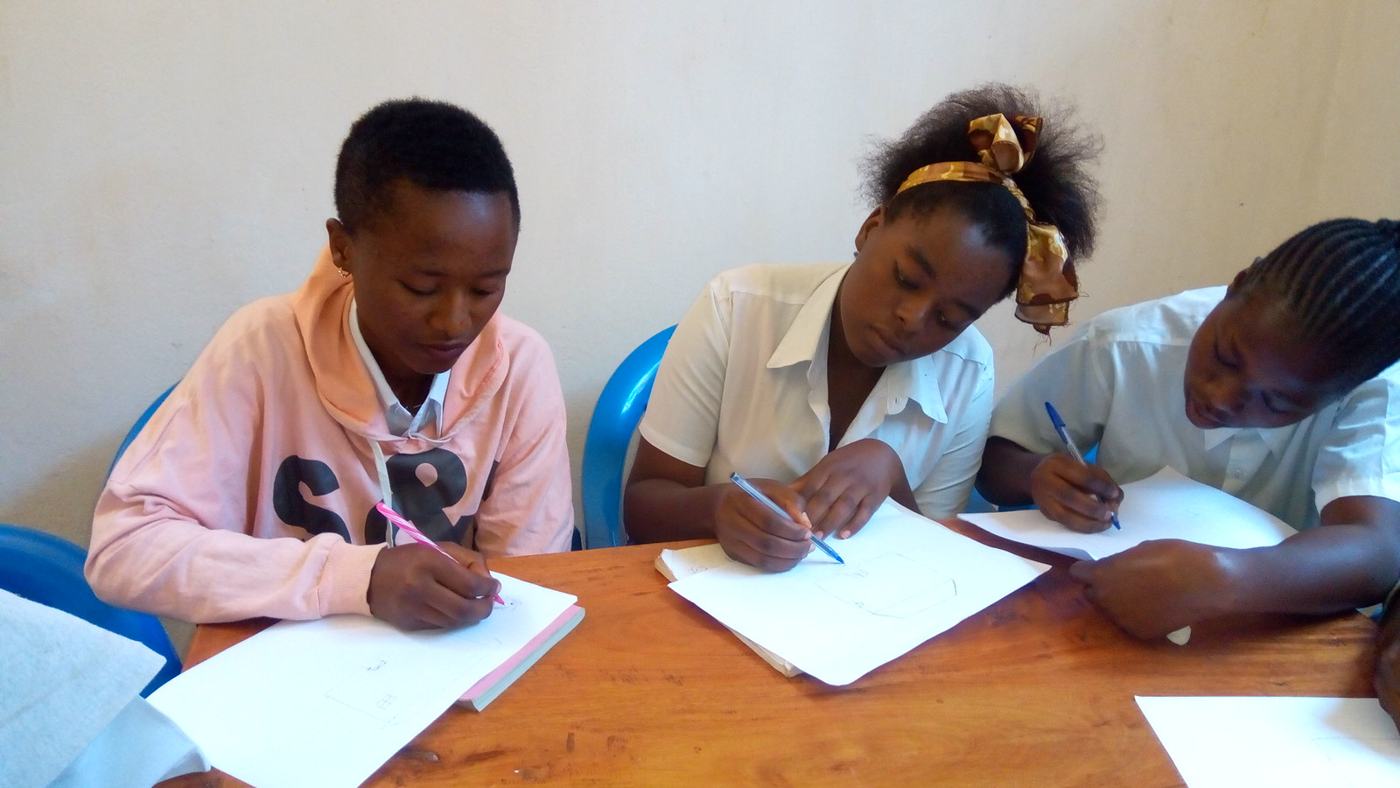
On 8 December 2017, under the Students Acting for Honesty, Integrity and Equality (SHINE) project, funded by NORAD and Sida through Integrity Action, CERC launched Integrity Clubs in 20 secondary schools in Uvira territory. The aim: to introduce students to democracy and good governance, initiative, responsibility and the joint management of public goods, and to train 300 students as community integrity monitors.
A first network of trainers
To prepare the launch, five CERC staff members became certified trainers in Community Integrity Building in Dar es Salaam, Tanzania, from 27 November to 1 December 2017, where they tested the new version of DevelopmentCheck. CERC then trained 20 school principals, 40 teachers and 60 Integrity Club leaders as trainers: in Uvira from 20 to 23 December 2017, then in the Ruzizi plain from 2 to 5 January 2018.
Students who get problems fixed
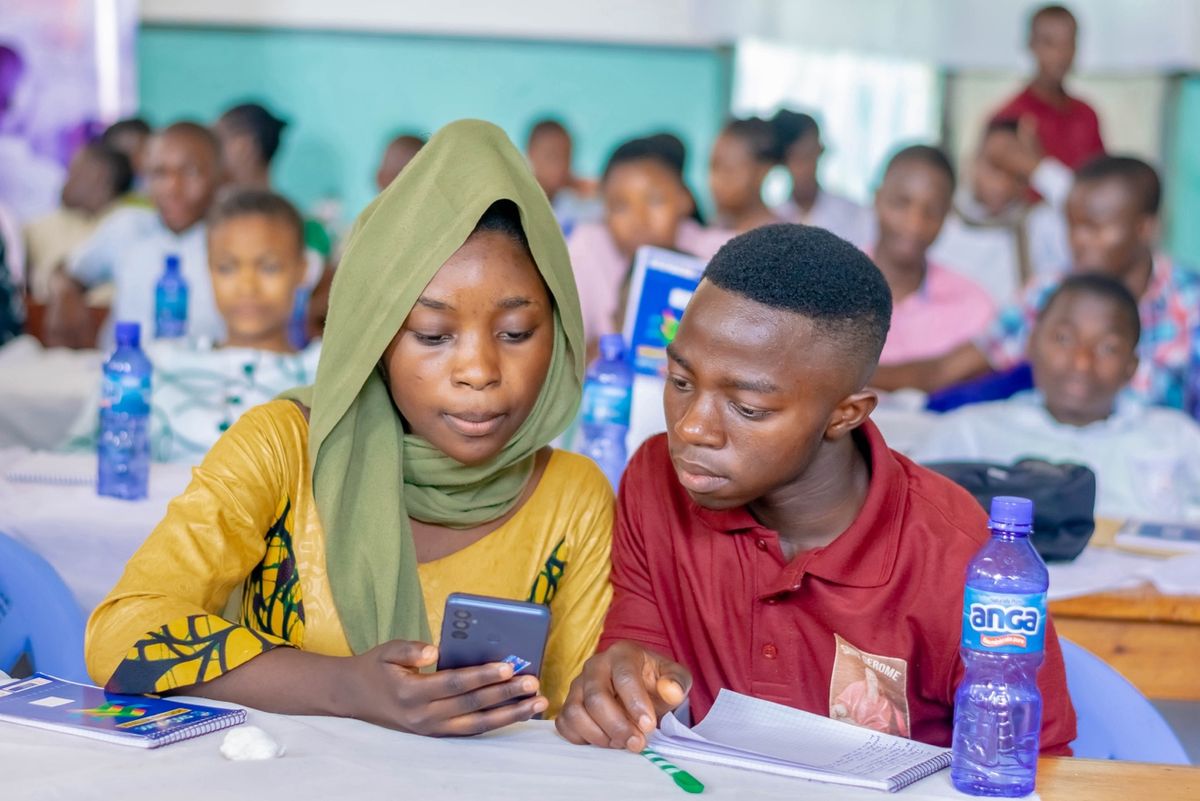
With the DevelopmentCheck app, students, parents and the community obtained key information on their schools – water and toilets, libraries, pupils per class, teachers’ qualifications, budgets and spending – and raised problems with school management boards. Between 2017 and 2020, 810 students in 54 Integrity Clubs in Uvira and Bukavu were trained and helped fix an average of 32% of the problems they reported. At the Itara Institute, where 590 students shared three toilets, their dialogue with the management led to repaired desks, three new classrooms and a block of eight latrines, with separate toilets for girls.
Learning what works
In 2021, CERC studied its own model: a knowledge, attitudes and practices study with 534 students and 89 teachers, head teachers and education officials showed what motivates student monitors and what holds them back – and led to more regular support for the clubs and closer involvement of families and local authorities.
A new donor and a new province
Having proved itself in South Kivu, the model was ready to scale up. In 2021, CERC won funding from the Global Partnership for Education, through Education Out Loud and Oxfam IBIS – US$361,361 in 2022 and US$68,816 in 2023 – for the Students Acting for Accountability and Quality of Education project in Kinshasa and South Kivu.
The results followed: 204 Integrity Clubs bringing together 2,250 students aged 14 to 19 in 150 schools, 138 school principals and 278 teachers trained, students reporting on their schools with the EduCheck app launched in March 2022 – and 33% of the problems they identified fixed thanks to their advocacy.
From a project to the school system
For the clubs to last, education authorities had to make them their own. After consultations with more than 600 education actors in 2021, and with 96 senior officials, members of parliament and experts in 2022, CERC signed a memorandum of understanding with the Provincial Education Directorate of South Kivu 1: Integrity Clubs are to be set up in every secondary school.
From Integrity Clubs to two bills
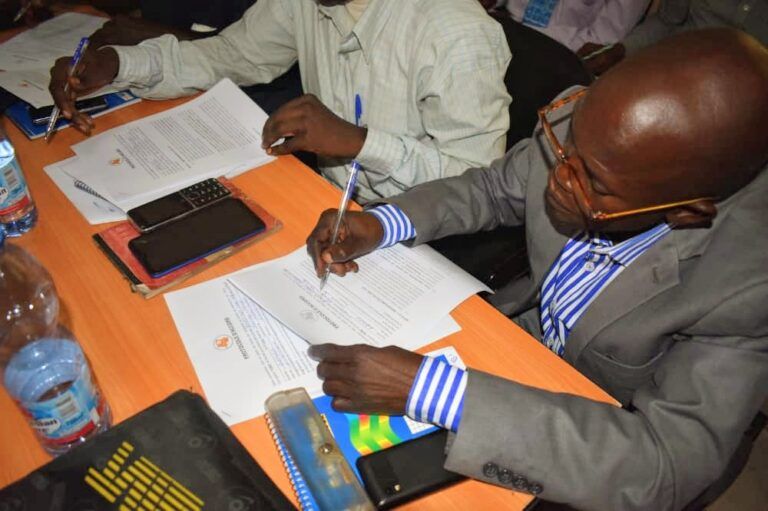
The next step was the law. In 2023, CERC and the African Parliamentarians’ Network Against Corruption (APNAC DRC) drafted two bills: one establishes Integrity Clubs, the other introduces an integrity education course in every secondary school in the country. APNAC DRC members of the National Assembly endorsed the initiative the same year, and in April 2024 CERC and APNAC DRC took the bill to the National Assembly.
A scale-up that did not happen
In 2023, USAID’s Development Innovation Ventures invited CERC to submit a scale-up proposal. Validated in 2024, after due diligence and the signature of the contract, the project Students Acting for Social Accountability (SASA) – US$6.5 million for 2025–2027 – was to bring Integrity Clubs and EduCheck to every secondary school in four provinces, including South Kivu, North Kivu and Kinshasa, under a new agreement with the Ministry of Education. Unfortunately, this ambition was not realised: USAID was closed in 2025 and every commitment was cancelled.
A model for HealthCheck and GovCheck
The Integrity Club method – people who use a public service monitor it, report what goes wrong and work with those in charge until it is fixed – now underpins all of CERC’s citizen monitoring. After EduCheck for schools came GovCheck, developed in 2023 for citizens to document and report irregularities in infrastructure projects, and HealthCheck for health centres, alongside UNCAC Tracker for the DRC’s commitments under the UN Convention against Corruption. All follow the same principles: reports are checked before they are published, the people who report are never named, and a problem counts as fixed only once it has been checked on site.
Back to Uvira
CERC’s 2027–2030 strategy will begin where it all started: in Uvira, in 2027, before the rest of South Kivu and then North Kivu.
« The DevelopmentCheck app gives students, parents, teachers and the whole community key information on how schools work, their budgets and their performance, which they can use in policy debates, budgeting and setting development priorities at school level. »
Ngoya Bundu Harmonie, project coordinator at CERC
About CERC
The Centre de Recherche sur l’Anti-Corruption (CERC) is a Congolese non-governmental organisation founded in April 2017 in South Kivu. With young people at its heart, CERC works with schools, communities, public institutions and partners to promote transparency, accountability and integrity in the Democratic Republic of the Congo. It has held special consultative status with the United Nations Economic and Social Council (ECOSOC) since 2021. Learn more: Who we are.
Feature storyAn alert system for citizens to report corruption within the justice system2024 Feature storyEducation authorities adopt Integrity Clubs for all their schools in South Kivu2018–2023
 Feature storyTowards a law to teach integrity in every school in the country2023–2024
 Feature storyUnderstanding young people to better fight corruption in schools2021


